
Main Courses
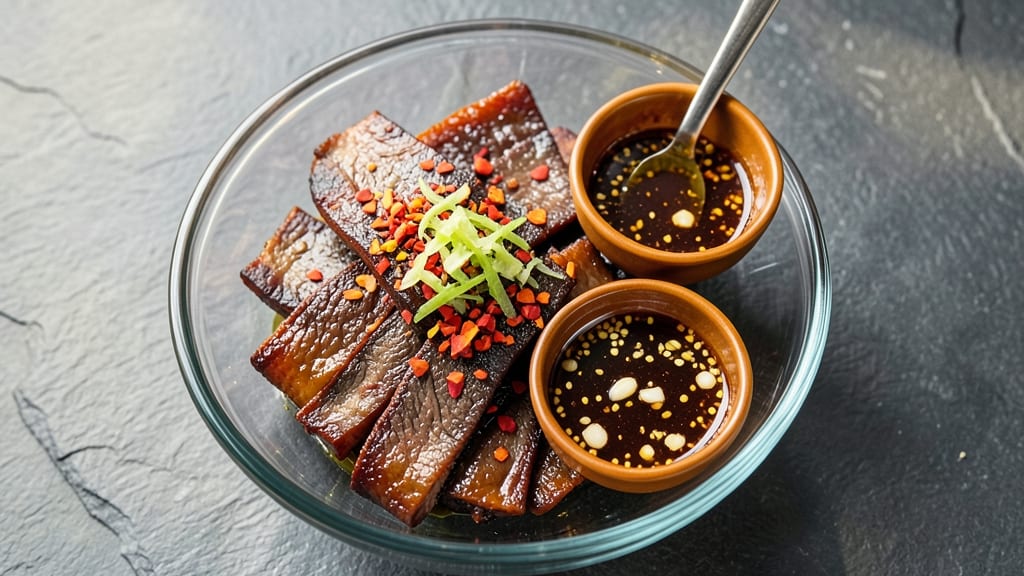
This Asian beef jerky recipe using a dehydrator transforms tough cuts into crispy, flavor-packed protein that rivals store-bought versions—but with authentic, restaurant-quality taste. The secret lies in a marinade of soy sauce, ginger, garlic, and sesame oil that tenderizes while infusing bold umami and aromatic depth.
Unlike traditional jerky, this method uses a dehydrator to preserve texture without overcooking, delivering a satisfying crunch in just 4 hours—perfect for snacking, meal prep, or gifting.
The process starts with thin, even slices of beef (top round works best) marinated for at least 4 hours in a blend of soy sauce, brown sugar, and chili flakes for heat.
After dehydrating at 160°F for 4-6 hours, the jerky emerges with a crispy exterior and chewy interior, packed with layers of savory, spicy, and slightly sweet flavors. Unlike oven-baked versions, the dehydrator ensures consistent results without drying out the meat.
What sets this recipe apart is the balance of traditional Asian flavors—ginger and garlic for warmth, fish sauce for depth, and sesame oil for nuttiness—while modern twists like chili flakes add a kick.
The jerky keeps for 2 weeks in the fridge or 3 months in the freezer, making it ideal for stocking emergency snacks or adding protein to salads and wraps.
For best results, slice the beef thin and even (¼-inch thick) and pat it dry before marinating to ensure even dehydration. The crispy texture comes from proper slicing and dehydrator settings—too hot, and it burns; too cool, and it stays chewy.
Follow these steps, and you’ll have restaurant-quality jerky that’s addictively crispy and packed with flavor.
Ingredients for asian beef jerky recipe dehydrator
Transform tough beef into addictively crispy jerky with these bold, aromatic ingredients—perfect for dehydrator magic.
| Ingredient | Amount | Notes |
|---|---|---|
| Top Round Beef 🥩 | 1 ½ lb | Thinly sliced, 1/4-inch thick |
| Soy Sauce 🍶 | ½ cup | Low-sodium preferred for balance |
| Brown Sugar 🍚 | ¼ cup | Light or dark variety |
| Sesame Oil 🫒 | 1 tbsp | Toasted for authentic aroma |
| Fresh Ginger 🌿 | 2 tbsp | Finely grated, peeled |
| Garlic Cloves 🧄 | 4 cloves | Minced, fresh preferred |
| Fish Sauce 🍶 | 1 tbsp | Red Boat brand recommended |
| Chili Flakes 🌶️ | 1 tbsp | Adjust for heat preference |
| Lime Juice 🍋 | 2 tbsp | Freshly squeezed |
| Toasted Sesame Seeds 🌾 | 1 tbsp | For garnish, optional |
| Diamond Crystal Kosher Salt 🧂 | 1 tsp | For seasoning |
| Ground Black Pepper 🌶️ | ½ tsp | Freshly ground |
| Cornstarch 🌾 | 1 tbsp | For coating, optional |
The beef is everything here—top round delivers that perfect chewy-crispy texture when sliced 1/4-inch thick (a meat slicer at Costco or Whole Foods makes this easy). Look for well-marbled cuts, and pat slices dry before marinating to ensure even dehydration. The marinade ingredients are non-negotiable: Red Boat fish sauce adds that authentic umami punch, while toasted sesame oil brings nutty depth. I always double-check the ginger—freshly grated has way more impact than powdered. For the chili flakes, Trader Joe's carries the best quality, and a little goes a long way.
No soy sauce? Coconut aminos work in a pinch, though the flavor will be subtly different. Running low on fish sauce? Worcestershire sauce (vegan version) adds depth, but reduce to 1 tsp—it's stronger. Skip the sesame oil? A pinch of ground coriander mimics the earthy notes, but you'll miss that toasty aroma. For the brown sugar, coconut sugar is a 1:1 swap, though it has a caramel-like aftertaste. The lime juice is critical—bottled works, but fresh brightens everything. Pro tip: If your dehydrator tray is too big, use parchment paper to create smaller sections for even airflow.
Marinated beef keeps 3-4 days in the fridge, but dehydrate within 24 hours for best texture. Store finished jerky in airtight containers with parchment between layers to prevent sticking—it stays crispy for 2 weeks in the fridge or 3 months frozen. For gifting, vacuum-seal portions and add a handwritten tag. Leftovers? Toss them into salads, ramen, or tacos for a protein boost. The crispiness fades after 3 days, so eat it fast—trust me, you'll go through this in hours.
Why You'll Love This Recipe
- No-Fuss Prep: I swear by this marinade—just slice the beef thin, toss it in soy sauce, brown sugar, and a splash of sesame oil, then let it sit while you dehydrate. Five minutes of hands-on work, and the rest is hands-off magic.
- Umami Bomb: That ginger-sesame kick? It’s the kind of flavor that lingers—sweet, salty, and just a hint of heat. The soy caramelizes into a sticky glaze, making every bite taste like a tiny, crispy hug.
- Snack Attack Ready: Honestly, this jerky is my secret weapon for road trips, gym bags, or when I’m too tired to cook. It keeps for weeks in the pantry, and I always grab a handful before heading out the door.
- Budget Powerhouse: Top round beef is cheap, and a pound stretches forever. I make giant batches, stash them in my pantry, and never stress about last-minute snacks. Plus, it’s way cheaper than store-bought jerky.
Step-by-step instructions for Asian beef jerky
Here's how to transform tough top round beef into irresistibly crispy, flavor-packed jerky using your dehydrator.
Prepare the Marinade for Maximum Flavor
In a medium bowl, combine the 0.5 cup soy sauce, 0.25 cup brown sugar, 1 tbsp sesame oil, 2 tbsp finely grated fresh ginger, 4 minced garlic cloves, 1 tbsp fish sauce, 1 tbsp chili flakes, and 2 tbsp lime juice. Whisk vigorously until the brown sugar dissolves completely—this ensures even flavor distribution throughout the beef. The marinade should be thick but pourable, with a deep umami aroma from the soy and fish sauce.
Here's the thing—don't skip the fish sauce. It might seem odd if you're not familiar with it, but that 1 tbsp adds the perfect savory depth that balances the sweetness. Taste the marinade now and adjust the salt or chili to your preference. You want it to be bold because the beef will absorb it like a sponge.
Tenderize and Marinate the Beef
Lay out the 1.5 lb top round beef on a cutting board and use a sharp knife to slice it against the grain into ¼-inch thick strips. This step is crucial—cutting against the grain ensures the jerky will be tender, not chewy. You should end up with about 40-50 strips depending on your knife skills.
Transfer the beef strips to a resealable plastic bag and pour the marinade over them. Seal the bag and massage the marinade into the beef, ensuring every strip is thoroughly coated. Refrigerate for at least 4 hours, but I recommend overnight if you have the time. The longer it marinates, the more intense the flavors become, and the beef will stay juicier during dehydration.
Coat for Crispy Perfection
After marinating, remove the beef strips from the refrigerator and let them sit at room temperature for 15 minutes. This prevents condensation from forming in your dehydrator. In a shallow dish, mix the 1 tbsp cornstarch with 1 tsp diamond crystal kosher salt and 0.5 tsp ground black pepper. Toss the beef strips in this mixture until they're evenly coated—this creates that irresistible crispy texture we're after.
Real talk: the cornstarch isn't just for texture. It also helps absorb any excess moisture, which is key for that perfect dehydrator finish. If you skip this step, your jerky might end up leathery instead of crispy. Trust me on this one.
Arrange for Even Dehydration
Preheat your dehydrator to 160°F—this is the magic temperature for jerky. It's hot enough to kill bacteria but cool enough to preserve texture. Arrange the beef strips in a single layer on the dehydrator trays, leaving about ½ inch between each strip. This spacing ensures proper air circulation, which prevents soggy jerky.
Here's where it gets important: don't overcrowd the trays. If you stack them or place them too close together, some pieces will dry slower than others, leading to uneven texture. You might need to use multiple trays depending on how much jerky you're making, but always keep them level for even drying.
Dehydrate to Crispy Perfection
Place the trays in your dehydrator and set the timer for 4 hours. This is the standard time, but you'll need to check periodically. After 2 hours, carefully flip each strip using tongs to ensure even drying on both sides. You're looking for jerky that's flexible but not brittle—it should bend slightly without snapping.
When you're ready to check for doneness, pick up a strip and let it cool for a minute. It should be dry to the touch with no moisture remaining, and it should snap with a satisfying crack when bent. If it's still slightly pliable, return it to the dehydrator for another 30 minutes. The final product should have a deep mahogany color with a glossy sheen from the marinade.
Cool and Store for Maximum Freshness
Once fully dehydrated, remove the jerky strips from the dehydrator and let them cool completely on a wire rack. This cooling step is essential—it prevents condensation from forming when you store them. While cooling, sprinkle the 1 tbsp toasted sesame seeds over the top for added texture and aroma.
Store the jerky in an airtight container in a cool, dark place. It will keep for up to 2 weeks at room temperature, but for longer storage, vacuum-seal it and freeze for up to 6 months. When you're ready to enjoy, let it come to room temperature for about 10 minutes before eating—this enhances the flavors and makes it more pliable.
Pro Tips For Making Asian Beef Jerky Recipe Dehydrator
- Trim Thin, Not Thinly: Slice your top round beef ¼-inch thick—any thicker and it’ll dry unevenly, any thinner and it’ll turn to jerky dust. I learned this after watching my first batch turn into brittle shards. Use a sharp knife and a ruler for consistency.
- Marinate Overnight, Not Hours: The soy sauce and ginger need at least 12 hours to penetrate that tough top round. I used to rush it, and the flavor was always stuck on the surface. Cold storage makes it happen without overpowering the beef.
- Skip the Sesame Oil Until Last: Add sesame oil right before dehydrating—it burns fast and turns bitter if heated too long. Drizzle it lightly over the marinated strips just before placing them on the trays. Trust me, it’s worth the extra step.
- Rotate Trays Mid-Dry: Your dehydrator’s top and bottom racks run hotter in different spots. Swap trays after 6 hours to guarantee even drying. I ignored this once and ended up with chewy strips in the middle and crispy edges—no one wants that.
Dietary considerations for this asian beef jerky recipe dehydrator
Gluten-Free Adaptation
This recipe is naturally gluten-free, but always double-check your soy sauce—many store-bought brands contain wheat. Use tamari or certified gluten-free soy sauce like San-J Tamari instead. The cornstarch coating can also be swapped for arrowroot powder (1 tbsp) to maintain crispiness without gluten. 🌾
Low-Sodium Options
For heart-healthy adjustments, reduce the soy sauce to ¼ cup and replace the rest with ¼ cup coconut aminos (like Annie Chun's). Cut the kosher salt to ½ tsp and omit the fish sauce, substituting 1 tsp liquid aminos instead.
Taste as you go—this keeps flavors bold while lowering sodium.
Vegetarian Substitutes
Replace beef with extra-firm tofu (pressed and sliced into strips) or tempeh for a protein-packed alternative. Marinate both for 6-8 hours to ensure flavor penetration. For texture, coat in 1 tbsp nutritional yeast (instead of cornstarch) before dehydrating. 🌱
Spice Level Control
Adjust heat by reducing chili flakes to ½ tbsp for mild or adding 1 tsp gochujang (Korean chili paste) for smoky depth. For extra kick, sprinkle 1 tsp crushed red pepper flakes on cooled jerky. Always taste the marinade first—balance is key! 🌶️
Allergen-Friendly Notes
This recipe contains sesame (from oil and seeds) and fish (from fish sauce). For allergies, omit sesame oil and seeds, and use vegan fish sauce (like Red Boat Vegan). Ensure your cornstarch is gluten-free and soy-free if needed. Always label your jerky clearly for safety.
Nut-Free Variations
Skip the sesame seeds entirely or replace them with crushed potato chips (for a salty crunch) or toasted pumpkin seeds. These alternatives add texture without nuts. Just ensure your dehydrator setting remains at 160°F to avoid burning. 🥜
Nutrition facts
Frequently asked questions
Can I use different cuts of beef for this recipe?
Top round is ideal for its lean texture, but you can also use flank steak or sirloin. Avoid fatty cuts like ribeye—the extra fat can make the jerky greasy. If using sirloin, trim visible fat first. The key is ¼-inch thick slices cut against the grain for tenderness.
Why does my jerky turn out chewy instead of crispy?
Chewy jerky usually means uneven drying. Check your dehydrator temperature—it should be 160°F consistently. Also ensure slices are ¼-inch thick and spaced ½ inch apart for airflow. If using cornstarch coating, make sure it's evenly applied and the beef is completely dry before dehydrating.
How do I adjust the spice level for sensitive eaters?
Start by reducing chili flakes to ½ tbsp and omit the fish sauce (replace with 1 tsp liquid aminos). For extra mildness, skip the chili entirely and add ½ tsp ground white pepper instead. Always taste the marinade before applying—you can adjust salt and sweetness too.
Can I make this jerky without a dehydrator?
Yes! Use an oven set to 175°F with the door slightly open (about 1 inch) for airflow. Place strips on a wire rack over a baking sheet and dehydrate for 4-5 hours, flipping halfway. A food dehydrator gives more consistent results, but the oven method works in a pinch.
How long can I store homemade jerky?
Store in an airtight container at room temperature for up to 2 weeks. For longer storage, vacuum-seal and freeze for 6 months. The crispiness starts fading after 3 days at room temp, but it remains safe to eat for 2 weeks. Freezing preserves texture and flavor best.