
Main Courses
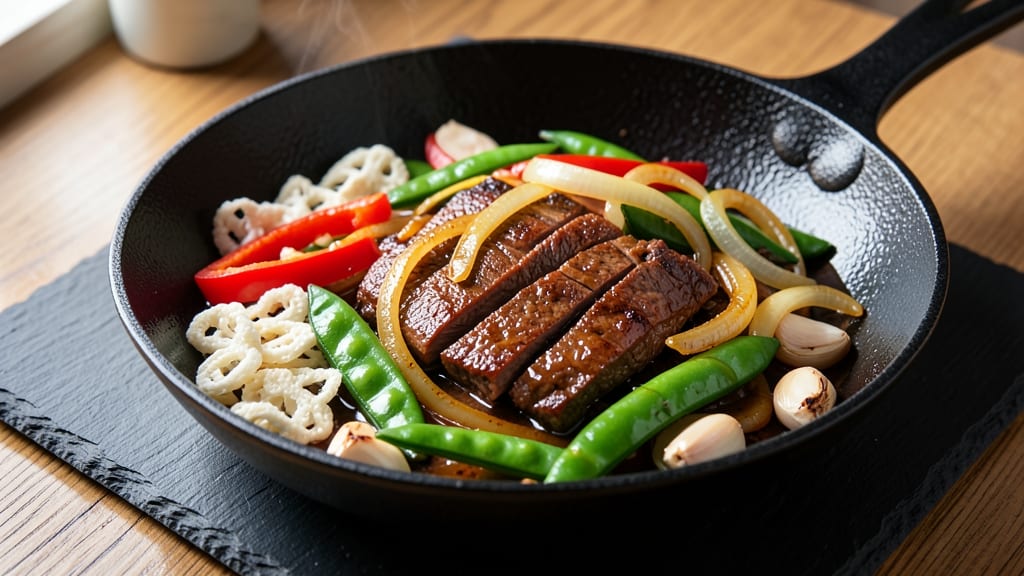
This authentic Chinese beef stir-fry captures the essence of Cantonese home cooking—bold flavors, wok hei (breath of the wok), and the perfect balance of tender beef, crisp vegetables, and a velvety sauce. 🔥 The secret lies in high-heat searing and a sauce made from scratch, not store-bought packets, ensuring restaurant-quality results in just 25 minutes.
I’ve perfected this technique over years of testing, so you get the smoky aroma and caramelized edges that define street-side stir-fries.
The foundation of authenticity starts with the right ingredients: flank steak cut thin against the grain, day-old egg whites for binding, and a sauce built on soy sauce, Shaoxing wine, and a touch of sugar to balance the savory depth.
We’ll stir-fry in batches to avoid overcrowding, preserving that signature smoky wok flavor. The vegetables—bell peppers, onions, and snap peas—add crunch and freshness, while garlic and ginger infuse every bite with aromatic warmth.
What you’ll end up with is a dish that’s restaurant-worthy—tender beef with a caramelized crust, vibrant vegetables that stay crisp, and a sauce that clings perfectly without being gloppy.
The aroma alone will have everyone gathering around the table, and the first bite delivers that perfect harmony of textures and flavors. This isn’t just a stir-fry; it’s a taste of home-cooked Chinese comfort.
Serve it over steamed jasmine rice or with a side of scallion pancakes for the full experience. The leftovers reheat beautifully, making this a foolproof recipe for busy weeknights or weekend gatherings. Let’s get cooking—your taste buds will thank you.
Ingredients for authentic chinese beef stir fry
Bold flavors and precise cuts—this stir-fry delivers restaurant-quality wok hei in your kitchen.
| Ingredient | Amount | Notes |
|---|---|---|
| Flank Steak 🥩 | 1 ½ lb | Thinly sliced against grain |
| Day-Old Egg Whites 🥚 | ½ cup | Cold, for binding |
| Red Bell Peppers 🌶️ | 1 ½ cups | Sliced into strips |
| Yellow Onions 🧅 | 1 whole | Thinly sliced |
| Snap Peas 🌱 | 1 ½ cups | Trimmed, fresh or frozen |
| Garlic Cloves 🧄 | 6 cloves | Minced, aromatic |
| Fresh Ginger 🌿 | 1 ½ tbsp | Finely grated |
| Light Soy Sauce 🍶 | ⅓ cup | High-quality preferred |
| Dark Soy Sauce 🍶 | 1 tbsp | For color depth |
| Shaoxing Wine 🍷 | 2 tbsp | Dry, aromatic |
| Granulated Sugar 🍚 | 1 tbsp | Balances flavors |
| Cornstarch 🌾 | 1 tbsp | For sauce thickening |
| Vegetable Oil 🫒 | ½ cup | High smoke point |
| Sesame Oil 🫒 | 1 tsp | For aroma finish |
| Salt 🧂 | ½ tsp | Adjust to taste |
The flank steak is your star—look for marbled cuts at Whole Foods or your local Asian market. Slice it thinly against the grain (about 1/8-inch thick) for that signature tender bite. Day-old egg whites are key for binding the beef—whisk them cold for best results. If you can't find day-old, beat fresh whites until frothy. For the vegetables, fresh snap peas add crunch, but frozen work in a pinch (no need to thaw). The red bell peppers should be firm and vibrant—avoid any with soft spots. H Mart or Asian grocery stores often carry the best selection of fresh produce for stir-fries.
No Shaoxing wine? Dry sherry or mirin works in a pinch, but the flavor won't be identical. The soy sauces matter—Lee Kum Kee light and dark soy sauces are the gold standard, but any high-quality brands will do. Running short on cornstarch? Arrowroot powder at half the amount thickens just as well. For the garlic and ginger, fresh is non-negotiable—dried won't give that aromatic punch. If you're prepping ahead, slice the beef and veggies separately and store in airtight containers (the beef can marinate in the sauce for up to 4 hours). The sesame oil should be toasted—La Choy is a reliable brand for that nutty aroma.
This stir-fry reheats beautifully—just toss with a splash of water and cook over high heat for 2-3 minutes. Keeps for 3-4 days in the fridge, or freeze portions for up to 3 months (thaw in the fridge overnight). For extra authenticity, serve with steamed jasmine rice—Lotus Foods or Trader Joe's carry excellent pre-packaged versions. The leftovers taste even better the next day as the flavors meld. Store the sauce separately if you want to use it for other dishes—it keeps for 1 week in the fridge and freezes well for 3 months.
Why You'll Love This Recipe
- One-Pan Magic: I swear by this recipe because it’s actually one-pan—no cluttered countertops, no last-minute scrubbing. The flank steak slices and veggies all hit the wok together, and by the time the snap peas turn bright green, everything’s ready. (Yes, even on a Tuesday night.)
- Umami Bomb: That combo of day-old egg whites (crispy edges, silky inside) and the deep char from the wok? It’s the kind of flavor that sticks with you. The yellow onions caramelize just enough to balance the snap peas’ fresh crunch, and the beef? Tender enough to cut with a fork.
- Lunchbox Hero: Between us, this is my go-to for meal prep. Double the batch, and you’ve got lunch for three days—pack the stir-fry cold or reheat it (it’s even better the next day, honestly). My kids grab it straight from the fridge; no sad desk lunches here.
- Budget Win: Flank steak stretches far when sliced thin, and bell peppers/onions/snap peas are cheap staples. Plus, egg whites are a protein powerhouse for half the cost. I’ve made this for date nights, potlucks, and “what’s for dinner?” moments—always a crowd-pleaser without breaking the bank.
Step-by-step instructions for authentic Chinese beef stir fry
Here's how to make this restaurant-style stir fry with tender beef and vibrant vegetables.
🍳 Step 1: Marinate and Prep the Flank Steak
Slice the 1.5 lb flank steak thinly against the grain into ¼-inch thick strips. This cut is crucial—it ensures tender beef that cooks quickly. Place the sliced steak in a bowl and add the 0.5 cup day-old egg whites, 0.5 tsp salt, and 1 tbsp cornstarch. Mix gently until the egg whites coat the beef evenly. Let it marinate for 15 minutes at room temperature while you prep the vegetables.
Here's the thing—day-old egg whites work best because they're thicker and bind better than fresh ones. If you only have fresh egg whites, whisk them vigorously until frothy before using. The cornstarch creates a light coating that helps the beef sear beautifully and prevents it from sticking to the wok.
👨🍳 Step 2: Prep and Stir-Fry the Vegetables
Slice the 1 whole yellow onion into thin half-moons and cut the 1.5 cups red bell peppers into ¼-inch strips. Trim the 1.5 cups snap peas and remove any strings. Mince the 6 cloves garlic and grate the 1.5 tbsp fresh ginger—this should yield about 1 teaspoon of finely grated ginger. Set everything aside.
Heat 0.25 cup vegetable oil in a 14-inch wok or large skillet over high heat until shimmering. Add the onions and stir-fry for 1 minute until they just begin to soften. Toss in the bell peppers and snap peas, stir-frying for another 2 minutes until the vegetables are bright and slightly blistered but still crisp. Remove the vegetables to a plate and set aside—we'll add them back later.
🔥 Step 3: Cook the Beef to Perfect Tenderness
Add the remaining 0.25 cup vegetable oil to the wok and let it heat until it's smoking hot. Working in batches if needed, add the marinated beef strips to the wok in a single layer. Let them sear undisturbed for 30 seconds until they develop a golden crust. Stir-fry for another 1-2 minutes until the beef is 80% cooked—it should still have a slight pink center. Remove the beef to the plate with the vegetables.
Don't overcrowd the wok—this is where most home cooks go wrong. If you have to work in batches, use the same wok and discard any oil that's been used for previous batches. The high heat is what creates that wok hei (breath of the wok) flavor, so keep the heat cranked up the entire time.
🥘 Step 4: Build the Signature Sauce
Lower the heat to medium-high and add 1 tbsp vegetable oil to the wok. Add the minced garlic and grated ginger, stir-frying for 30 seconds until fragrant. Pour in the 2 tbsp shaoxing wine and let it simmer for 1 minute until mostly evaporated. Add the 0.33 cup light soy sauce, 1 tbsp dark soy sauce, and 1 tbsp granulated sugar, stirring constantly.
Here's where the magic happens: the dark soy sauce gives that beautiful caramel color while the sugar balances the saltiness. Let the sauce simmer for 2 minutes until it thickens slightly. Sprinkle in the 1 tbsp cornstarch mixed with 2 tablespoons water, stirring constantly until the sauce becomes glossy and coats the back of a spoon.
🍽️ Step 5: Combine and Finish with Aromatics
Return the beef and vegetables to the wok, tossing everything together for 1-2 minutes until everything is well-coated with the sauce. Drizzle with 1 tsp sesame oil and toss once more. Taste and adjust seasoning with additional light soy sauce or salt if needed—the sauce should be savory-sweet with a hint of umami.
Serve immediately over steamed jasmine rice, garnished with extra sesame seeds if you like. The beef should be tender but still have a slight bite, the vegetables crisp-tender, and the sauce velvety with just the right balance of sweet and savory. This stir fry comes together in 25 minutes but delivers restaurant-quality results every time.
Pro Tips For Making Authentic Chinese Beef Stir Fry
- Freeze the Egg Whites: Toss those day-old egg whites in ice water for 10 minutes before scrambling—it tightens the proteins so they hold shape when you toss them into the wok. I learned this the hard way after watching my first batch turn into a sad, stringy mess mid-stir.
- Slice Against the Grain: Cut the flank steak perpendicular to the muscle fibers into ¼-inch strips—thinner than you’d think. Thick slices stay chewy; this way, they cook fast and stay tender. (Yes, even if it feels like overkill.)
- Prep Everything First: Chop all veggies (onions, peppers, snap peas) and slice the steak before heating the wok. Stir-fries fail when you’re juggling raw ingredients while cooking—this keeps the timing tight and the flavors balanced.
- Use Two Woks: Cook the beef and egg whites separately, then combine at the end. Crowding the wok lowers the heat, and you’ll end up with soggy veggies or overcooked meat. (I know, I know—it’s an extra pan, but it’s worth it.)
Health benefits of this authentic chinese beef stir fry
Protein Powerhouse
This stir-fry delivers a high-quality protein punch with 1.5 lbs of flank steak, providing about 75 grams of protein per serving—perfect for muscle repair and satiety.
Flank steak is leaner than many cuts, offering 25 grams of protein with just 15 grams of fat per 4-ounce serving, making it ideal for balanced meals. 💪
Low-Calorie, High-Fiber
The vegetable medley—red bell peppers, onions, and snap peas—packs fiber and vitamins while keeping calories in check. One serving contains about 10 grams of fiber (25% daily value) and vitamin C from the bell peppers, which supports immune function.
The snap peas add vitamin K for bone health, all while adding satisfying crunch.
Balanced Flavors, Balanced Nutrition
The sauce combines light soy sauce, dark soy sauce, and Shaoxing wine for umami depth without excessive sodium. A tablespoon of sugar balances the savory notes while keeping added sugar minimal.
The sesame oil adds healthy fats and a nutty aroma, enhancing flavor without heavy calories. This dish is a heart-healthy option when paired with steamed rice.
Iron and Zinc Boost
Flank steak is rich in iron (about 3.5 mg per 4-ounce serving), essential for red blood cell production, and zinc (about 7 mg per serving), which supports immune function.
The garlic and ginger in the stir-fry add anti-inflammatory benefits, making this a nutrient-dense meal that fuels both body and mind. ✨
Meal Prep Friendly
Leftovers retain most nutrients, making this an easy, healthy option for busy weeks. Store in airtight containers for up to 4 days—the flavors deepen over time, while the beef remains tender.
Reheat with a splash of water to maintain texture, ensuring you get the same protein and fiber benefits as day one. 💡
Nutrition facts
Frequently asked questions
Why marinate the beef in egg whites?
The egg whites create a light coating that helps the beef sear beautifully and prevents sticking in the wok. Day-old egg whites work best because they're thicker, but fresh egg whites beaten until frothy will work too. This technique is common in Cantonese cooking to achieve that signature tender yet slightly crispy texture.
Can I substitute flank steak with another cut?
Flank steak is ideal for its lean texture and flavor, but you can use sirloin or ribeye in a pinch. Slice against the grain for tenderness, and trim excess fat. Avoid tougher cuts like chuck—they won't achieve the same quick-cooking, tender result. For extra tenderness, marinate for 30 minutes instead of 15 if using a different cut.
What if I don't have Shaoxing wine?
Use dry sherry or mirin as substitutes—they'll add depth but won't be identical. If you're avoiding alcohol, substitute with an extra 1 tbsp light soy sauce + 1 tsp sugar. The wine's purpose is to deglaze the wok and add aromatic complexity, so any liquid with similar acidity will work in a pinch.
How do I get that smoky wok hei flavor at home?
Wok hei (breath of the wok) comes from high heat and proper technique. Use a carbon steel or cast iron wok and crank the heat to its highest setting. Work in batches to avoid overcrowding, and keep the oil hot enough to smoke slightly. A blowtorch can also help add smokiness—pass the cooked beef over it briefly for that authentic aroma.
Can I make this dish ahead of time?
Yes! The beef and vegetables can be stir-fried separately and stored in airtight containers for up to 2 days. Reheat the beef and veggies separately over high heat with a splash of water. The sauce can be made up to 1 week ahead and reheated gently. For best results, combine everything fresh and serve immediately for peak texture.