
Main Courses
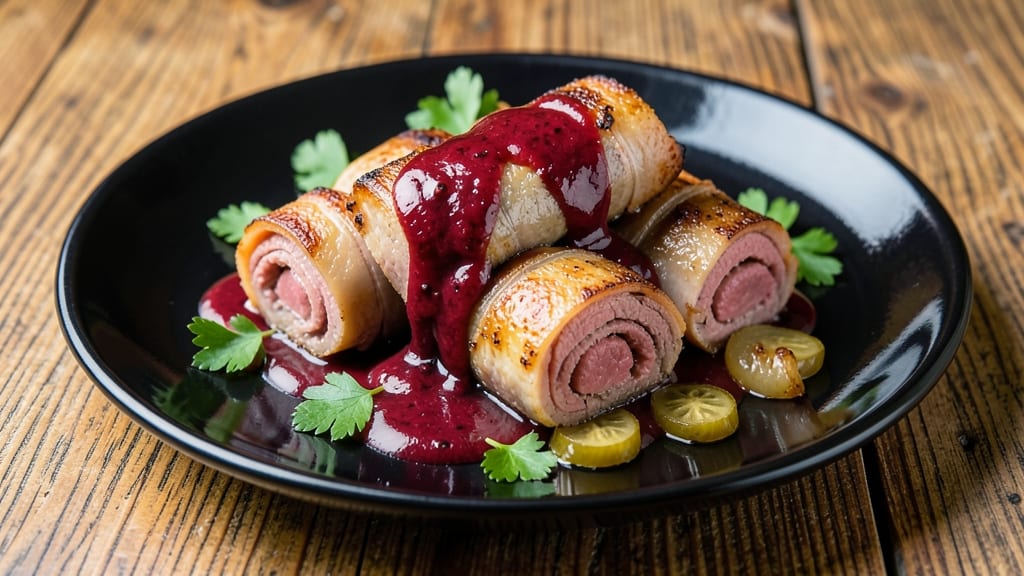
This authentic German beef rouladen recipe brings the heart of Bavarian cuisine to your kitchen with thinly sliced beef rolls stuffed with tangy mustard and caramelized onions. 💛 The secret lies in slow-cooking the beef until fork-tender, a technique that transforms tough cuts into melt-in-your-mouth perfection.
I’ve perfected this dish over years of testing, ensuring every bite delivers the rich, savory flavors of traditional German cooking.
The magic starts with thinly sliced beef rolls—pounded just right to hold the mustard and onion filling without falling apart. Caramelizing the onions slowly in a Dutch oven builds deep, sweet flavors that pair beautifully with the sharp tang of mustard.
This isn’t just a recipe; it’s a taste of Germany’s culinary heritage, where hearty, comforting flavors take center stage.
What you’ll end up with is a dish that’s tender, flavorful, and impossible to resist—each roll stuffed with juicy beef, caramelized onions, and tangy mustard, all braised in a rich, aromatic gravy.
The slow cooking ensures the beef stays moist and the flavors meld together perfectly, creating a dish that’s both impressive and deeply satisfying.
Serve with classic German sides like red cabbage or potato dumplings to complete the meal. This is the kind of recipe that turns a simple dinner into a celebration of tradition and flavor. Let’s get started!
Ingredients for authentic german beef rouladen
Thinly sliced beef, caramelized onions, and tangy mustard—these are the pillars of authentic German rouladen.
| Ingredient | Amount | Notes |
|---|---|---|
| Top Round Roast Beef 🥩 | 1 ½ lb | Thinly sliced, pounded to 1/8-inch thickness |
| Yellow Onions 🧅 | 3 whole | Medium size, thinly sliced for caramelizing |
| Dijon Mustard 🍯 | ½ cup | High-quality, tangy variety preferred |
| Butter 🧈 | 2 tbsp | Unsalted, for caramelizing onions |
| Beef Broth 💧 | 2 cups | Low-sodium preferred for flavor control |
| Red Wine 🍷 | ½ cup | Dry red, like Merlot or Cabernet |
| Tomato Paste 🍅 | 2 tbsp | Smooth, no sugar added |
| Bay Leaves 🌿 | 2 whole | Dried, for aromatic depth |
| Black Peppercorns 🌶️ | 1 tsp | Freshly cracked for optimal flavor |
| Salt 🧂 | 1 ½ tsp | Kosher salt, adjust to taste |
| All-Purpose Flour 🌾 | 1 tbsp | For thickening gravy |
| Fresh Thyme 🌿 | ¼ cup | Chopped, or 1 tsp dried |
| Fresh Parsley 🌿 | ⅛ cup | Chopped, for garnish |
The beef cut matters most here—top round roast is ideal because it stays tender when slow-cooked. Most butchers will slice it thinly for you (about 1/8-inch thick), but if you're doing it yourself, use a meat mallet or rolling pin to pound it evenly. Trader Joe's or local butcher shops often carry pre-sliced beef for rouladen, which saves time. Look for slices with good marbling—they'll stay juicier during cooking. The onions should be sweet and yellow, not red or white, for that classic caramelized flavor. Yellow onions are the traditional choice in German recipes, and they caramelize beautifully without turning bitter.
No Dijon mustard? Whole-grain mustard at half the amount works in a pinch, though it'll be slightly less tangy. The red wine can be swapped for extra beef broth with a splash of balsamic vinegar if you're avoiding alcohol. For the tomato paste, San Marzano is the gold standard, but any smooth, no-sugar-added paste will do. Fresh thyme is best, but if you only have dried, use one-third the amount. The flour for thickening should be all-purpose, not self-rising—this is critical for avoiding lumps in the gravy. If you're making this ahead, prep the filling and slice the beef, then refrigerate until ready to roll.
The beef rolls keep best in the fridge for 2 days before cooking, but the filling can be prepped a day ahead. Once cooked, the dish reheats beautifully—just add a splash of beef broth and simmer for 10 minutes. For storage, keep the gravy separate if you want to reheat it quickly. Portion into meal prep containers for easy lunches, and the rolls stay tender for 4-5 days in the fridge. Freeze the entire dish (without the gravy) for up to 3 months—just thaw overnight in the fridge before reheating.
Why You'll Love This Recipe
- No-Fuss Rolling: I swear, the beef slices are thick enough that you won’t need to be a knife ninja—just score them once, spread that tangy Dijon mustard, and tuck in the onions. No fancy techniques, just satisfying layers that hold together like they’re meant to.
- Umami Bomb: That slow-cooked beef broth and caramelized onions? Absolute magic. The mustard cuts through the richness while the butter-braised edges make every bite taste like a Sunday roast—deep, savory, and impossible to stop at one piece.
- Leftovers Win: Between us, this dish begs for seconds, which means you’ll have perfect lunchboxes or hearty dinners ready in minutes. Reheat with a splash of broth, and it’s just as good cold—ideal for packed lunches or when you’re too tired to cook again.
- Budget Hero: Top round beef is affordable, and a single roast feeds four easily. The onions and mustard stretch the flavor without breaking the bank, making this my go-to when I need a filling, flavorful meal that doesn’t drain my wallet.
Step-by-step instructions for authentic German beef rouladen
Here's how to craft these classic German rolls with tender beef, caramelized onions, and rich mustard filling.
👨🍳 Step 1: Prepare the Beef and Filling
Lay the 1.5 lb top round roast beef between two sheets of plastic wrap and pound it to an even 1/8-inch thickness using a meat mallet. This ensures even cooking and perfect rolling. Cut the beef into 4 equal strips (about 4x6 inches each) against the grain for maximum tenderness.
In a small bowl, mix the 0.5 cup Dijon mustard with 1.5 tsp salt and 1 tsp freshly cracked black peppercorns. Spread this mixture evenly over each beef strip, leaving a 1-inch border uncovered along one long edge. This border will seal the roulade when rolled.
🥘 Step 2: Assemble and Roll the Rouladen
Place 3 whole thinly sliced yellow onions (about 1/8-inch thick) along the mustard-coated edge of each beef strip. Fold the uncovered border over the onions and roll tightly from the edge opposite the onions. Secure each roll with kitchen twine, spacing the twine evenly to prevent bursting during cooking.
Here's the thing—don't overstuff. If the onions bulge beyond the beef edge, trim them slightly. The rolls should feel snug but not tight. Place the completed rouladen seam-side down in a large Dutch oven or heavy pot.
🍳 Step 3: Caramelize Onions for the Sauce
In the same Dutch oven, melt the 2 tbsp butter over medium heat. Add the remaining thinly sliced yellow onions (about 2 cups worth) and cook for 15-20 minutes, stirring occasionally, until deep golden brown. This caramelization creates the rich base for your sauce.
When the onions reach that perfect amber color, add the 2 tbsp tomato paste and cook for 1 minute, stirring constantly. This step deepens the flavor and adds that classic German umami note. Remove the onions from the pot and set aside for later.
🔥 Step 4: Braise the Rouladen to Perfection
Pour the 0.5 cup red wine into the Dutch oven and scrape up any browned bits from the bottom. Add the 2 cups beef broth, 2 whole bay leaves, and the caramelized onions. Bring to a gentle simmer, then carefully place the rouladen on top.
Cover and transfer to a 325°F oven for 2-2.5 hours, turning the rouladen every 30 minutes for even cooking. The sauce should reduce to a rich, glossy consistency, and the beef should be fork-tender with an internal temperature of 195-200°F. This low-and-slow method ensures melt-in-your-mouth texture.
🥘 Step 5: Finish with Gravy and Garnish
Remove the rouladen from the pot and transfer to a serving platter. Skim off excess fat from the braising liquid, then sprinkle in the 1 tbsp all-purpose flour and stir vigorously for 2 minutes over medium heat to thicken the gravy. Add the 0.25 cup chopped fresh thyme and simmer for 1 minute to infuse the flavor.
Pour the gravy over the rouladen and garnish with 0.125 cup chopped fresh parsley. Serve immediately with buttered egg noodles or mashed potatoes. The authentic German touch comes from the perfect balance of tangy mustard, sweet caramelized onions, and rich beef—every bite delivers that classic German restaurant experience.
Pro Tips For Making Authentic German Beef Rouladen
- SEAR THE ONIONS FIRST: Thinly slice those yellow onions and cook them in butter until they’re deep golden—almost caramelized—before stuffing them inside. I used to skip this, but the flavor difference is huge, especially when you taste the onions peeking out later. (Yes, even if it adds 5 minutes.)
- USE COLD MUSTARD: Take that Dijon out of the fridge—cold mustard spreads better and won’t turn the beef into a sad, greasy mess. Spread it thinly but evenly on the meat, then roll tight. Trust me, the cold stickiness makes all the difference when wrapping.
- SIMMER LOW AND LONG: After browning the rouladen, don’t rush the braising. Cover with beef broth, reduce heat to a bare simmer, and let it cook for at least 2 hours—3 if your roast is thick. The slow cook transforms tough top round into melt-in-your-mouth perfection.
- STUFF WITH PICKLES: Skip the canned mushrooms if you want authenticity—German rouladen often use sour pickles (or even sauerkraut) for tang. Slice them thin, mix with mustard, and pack them in tight. The acid cuts through the richness and keeps things bright. (I know, it sounds weird, but it works.)
Essential equipment for authentic german beef rouladen
Dutch Oven Essentials
A heavy Dutch oven is non-negotiable for rouladen—it distributes heat evenly and retains moisture during the long braise. I swear by the Le Creuset Stoneware Dutch Oven (5.5-quart) for its durability and even cooking, but All-Clad Stainless Steel is a great budget-friendly alternative.
The deep sides prevent overflow when the onions caramelize and the sauce reduces. 🔥
Meat Mallet Must-Have
Pounding beef to 1/8-inch thickness is crucial for even cooking and perfect rolls. My go-to is the OXO Good Grips Meat Mallet—it’s lightweight yet powerful enough to flatten tough cuts without tearing.
For a budget option, a rolling pin with a wide base works in a pinch, but it requires more effort. Always pound the beef between plastic wrap to prevent sticking.
Kitchen Twine for Securing
Use butcher’s twine (not regular string) to secure your rouladen—it’s strong enough to hold the rolls together during braising. I recommend Bragg Artisan Cotton Kitchen Twine (1/8-inch thickness) because it’s food-safe and won’t dissolve in the liquid.
Cut 4-5 strands per roll, spacing them evenly to distribute pressure and prevent bursting.
Precision Thermometer
A meat thermometer ensures your rouladen reaches the perfect 195-200°F internal temperature without overcooking. The ThermoWorks Smoke is my top pick for its instant-read accuracy and durable probe.
Insert it into the thickest part of the beef to monitor progress—this is especially important when braising for 2-2.5 hours at 325°F. 🌡️
Wooden Spoon for Stirring
A heat-resistant wooden spoon (like OXO Good Grips Silicone-Coated) is ideal for stirring the caramelized onions and scraping up browned bits from the Dutch oven.
Avoid metal utensils—they can react with the acidity in the wine and tomato paste, altering the flavor. The silicone coating also prevents scratching your pot.
Fine-Mesh Skimmer
After braising, you’ll need to skim excess fat from the gravy. A fine-mesh skimmer (like the OXO Good Grips Fat Separator) makes this easy—it traps fat while letting flavorful broth pass through.
For a no-fuss option, a slotted spoon works, but it’s less efficient. Skim the fat before thickening the gravy to keep it rich but not greasy.
Nutrition facts
Frequently asked questions
Can I use ground beef instead of thinly sliced beef?
The traditional German method requires thinly sliced beef to create those classic rolls. Ground beef won't work because it lacks the structure needed to hold the filling and maintain shape during braising. If you're short on time, ask your butcher to slice top round roast beef to 1/8-inch thickness—it's the perfect cut for authentic rouladen.
What if I don't have red wine for the recipe?
No problem! Substitute with 1 cup beef broth plus 1 tablespoon balsamic vinegar to mimic the acidity and depth of red wine. For extra richness, add 1/2 teaspoon soy sauce. The dish will still turn out flavorful—just slightly less complex than the traditional version with wine.
How do I prevent the rouladen from falling apart when rolling?
Use kitchen twine to secure each roll tightly, spacing the twine evenly. Don't overstuff with onions—they should fit snugly but not bulge beyond the beef edge. Pounding the beef to an even 1/8-inch thickness also helps it hold together better. If a roll feels unstable, add an extra piece of twine or a small wooden toothpick for support.
Can I make rouladen ahead of time?
Prepare the filling and slice the beef a day ahead, then refrigerate until ready to assemble. The completed rouladen can be refrigerated for 2 days before cooking. For longer storage, freeze the assembled rolls (without the gravy) for up to 3 months. Thaw overnight in the fridge before braising.
What's the best way to reheat leftover rouladen?
Add a splash of beef broth to the gravy and simmer gently for 10-15 minutes until heated through. For extra tenderness, cover the pan and warm on low heat. Avoid microwaving—the rolls can become rubbery. If reheating from frozen, thaw overnight first, then braise as directed (add 15-20 extra minutes to the cooking time).