
Main Courses
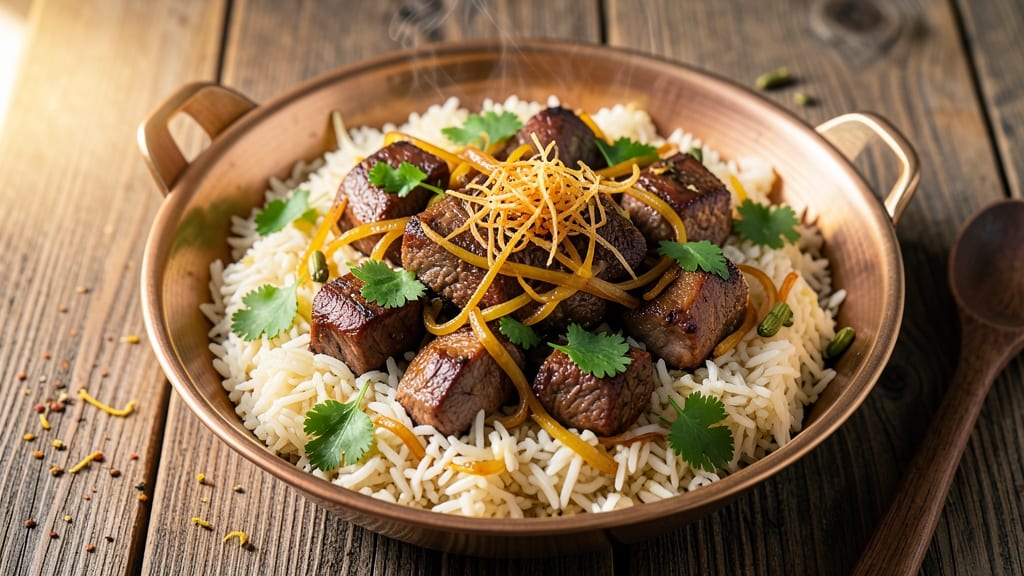
This Bannu beef pulao recipe brings the rich, aromatic flavors of Pakistan’s Khyber Pakhtunkhwa region to your kitchen, where tender beef and fragrant basmati rice cook together in a spiced broth.
The secret lies in slow-cooking the beef with whole spices until fall-apart tender, then layering it with partially cooked rice for that signature pulao texture. Every bite delivers layers of warmth from cumin, cardamom, and saffron—traditional touches that elevate this dish beyond ordinary beef and rice.
The beauty of Bannu beef pulao is in its balance: the beef stays juicy while the rice absorbs just enough broth to remain separate yet flavorful. We’ll use shahi jeera (black cumin) and a touch of charcoal for that signature smoky depth, while fried onions add crunch to every spoonful.
This isn’t just a meal—it’s a celebration of slow-cooked perfection, where spices meld over time to create something deeply comforting yet sophisticated.
What makes this recipe special is the two-step cooking method: first marinating the beef with yogurt and spices for deep flavor, then slow-cooking it until tender before combining with the rice. The result?
A dish where each grain of rice carries the essence of the beef and spices, yet remains distinct. Serve it with a side of raita or a simple cucumber salad to cut through the richness—this is the kind of meal that transforms a weeknight into a festive occasion.
Perfect for gatherings or when you crave restaurant-quality comfort food at home, this pulao delivers restaurant-quality results with minimal effort. The key is patience—letting the spices and beef develop their flavors gradually.
Once you try it, you’ll understand why Bannu’s version stands apart from other beef pulao recipes. Let’s get started!
Ingredients for bannu beef pulao
Fragrant spices, tender beef, and saffron-infused rice—this is your Bannu beef pulao shopping list.
| Ingredient | Amount | Notes |
|---|---|---|
| Beef Chuck Roast 🥩 | 1 ½ lb | Cut into 1.5-inch cubes |
| Basmati Rice 🍚 | 1 ½ cups | Long-grain, rinsed thoroughly |
| Plain Yogurt 🥛 | ½ cup | Whole-milk, unsweetened |
| Yellow Onions 🧅 | 2 large | Finely chopped, about 2 cups |
| Fresh Ginger 🧄 | 1 ½ oz | Peeled, grated (about 2 tbsp) |
| Garlic Cloves 🧄 | 8 cloves | Minced, about 2 tbsp |
| Whole Shahi Jeera 🌿 | 1 tsp | Black cumin seeds |
| Green Cardamom Pods 🌿 | 6 whole | Lightly crushed |
| Black Cardamom Pods 🌿 | 2 whole | Lightly crushed |
| Cinnamon Sticks 🌿 | 2 whole | 2-inch pieces |
| Bay Leaves 🌿 | 2 whole | Fresh preferred |
| Saffron Threads 🌼 | ⅛ tsp | Soaked in 2 tbsp warm water |
| Vegetable Oil 🫒 | ½ cup | High smoke point |
| Charcoal Powder ⚫ | ½ tsp | Food-grade, optional |
| Diamond Crystal Kosher Salt 🧂 | 1 ½ tsp | Divided usage |
| Ground Black Pepper 🌶️ | ½ tsp | Freshly cracked |
| Fresh Cilantro 🌿 | ¼ cup | Chopped, for garnish |
The beef is the star, so chuck roast is non-negotiable—it stays tender while absorbing flavors. Costco or local butchers often have it pre-cubed, but if buying whole, ask for a well-marbled piece. Fresh spices make all the difference: Penzeys or Indian grocery stores carry whole shahi jeera and cardamom pods that outshine supermarket versions. For saffron, Kashmiri saffron from specialty shops delivers the deepest color and aroma—don't skimp here. The basmati rice should be long-grain and aged at least 6 months for optimal texture; check the package date.
No shahi jeera? Substitute 1 tsp regular cumin seeds, but you'll miss that signature smoky depth. Running low on saffron? Turmeric at 1/4 tsp adds color but lacks the floral notes. Fresh ginger and garlic can be swapped for 1 tbsp each of paste, though fresh gives better flavor. The charcoal powder is optional but worth it for that authentic Bannu smokiness—find it in Indian markets or online. For the onions, yellow or red work best; white onions add bitterness. And if you're prepping ahead, marinate the beef overnight with yogurt and spices for maximum tenderness.
This pulao tastes even better the next day as flavors meld. Store leftovers in an airtight container in the fridge for 3-4 days, or freeze portions for up to 3 months. The rice stays separate best when reheated gently with a splash of water. For serving, fried onions on top add that signature crunch—keep them in a jar at room temperature for up to 2 weeks. Garnish with cilantro just before serving to keep it vibrant. The saffron-infused water can be saved for 1 week in the fridge; use it in drinks or other rice dishes.
Why You'll Love This Recipe
- Here’s what sold me: that tangy yogurt marinade turns tough beef into melt-in-your-mouth perfection. The ginger and onions caramelize right into the rice, giving every bite this deep, savory warmth—like a hug in a bowl.
- One-Pot Wonder: I swear by this recipe when I’m too tired to juggle multiple pans. The beef chucks slow-cook in the same pot where the rice steams—no transferring, no extra dishes. Just layer the onions, ginger, and yogurt, then let the rice absorb everything like a sponge.
- Yogurt Magic: Here’s what sold me: that tangy yogurt marinade turns tough beef into melt-in-your-mouth perfection. The ginger and onions caramelize right into the rice, giving every bite this deep, savory warmth—like a hug in a bowl.
- Weeknight to Party: Between us, this feeds a crowd without stress. Double the recipe for guests, or pack leftovers for lunch—it reheats like a dream. My in-laws asked for the recipe after one bite at a Sunday dinner. (Yes, even on a Tuesday night.)
Step-by-step instructions for Bannu beef pulao
Let's bring this richly spiced Pakistani classic to life with perfectly tender beef and fragrant saffron-infused rice.
Marinate the Beef for Maximum Flavor
In a large bowl, combine the 1.5 lb beef chuck roast cut into 1.5-inch cubes, 0.5 cup plain yogurt, 1.5 oz grated fresh ginger, 2 tablespoons minced garlic cloves, 1 teaspoon whole shahi jeera, 6 lightly crushed green cardamom pods, 2 lightly crushed black cardamom pods, 2-inch pieces of 2 cinnamon sticks, 2 bay leaves, 0.5 teaspoon ground black pepper, and 0.75 teaspoon diamond crystal kosher salt (reserving 0.75 teaspoon for later). Mix thoroughly until every beef piece is evenly coated.
Cover and refrigerate for at least 4 hours, preferably overnight. This long marinating time transforms tough beef into melt-in-your-mouth bites by tenderizing the meat and allowing the spices to deeply penetrate. The yogurt also helps create that signature Bannu beef texture - juicy yet firm.
Parboil the Rice with Aromatics
In a large pot, combine 1.5 cups basmati rice with 3 cups water and bring to a boil. Add 0.5 teaspoon diamond crystal kosher salt, 1 bay leaf, and 1-inch piece of 1 cinnamon stick. Cook for 5 minutes until the rice is just tender but still slightly firm to the bite - you should see small white dots appear in the center of each grain.
Drain immediately in a fine-mesh strainer and rinse under cold water to stop the cooking process. This parboiling step is crucial - it prevents the rice from becoming mushy while absorbing the aromatic spices. Set aside while you prepare the beef.
Brown the Marinated Beef
Heat 0.5 cup vegetable oil in a heavy-bottomed pot over medium-high heat. Working in batches if needed, add the marinated beef pieces and cook for 3-4 minutes per side until deeply browned. The beef should develop a rich, caramelized crust while remaining tender inside. Remove the beef and set aside.
This browning step creates the deep, meaty flavor that defines Bannu beef pulao. Don't rush this - you're building layers of flavor that will infuse throughout the dish. If the oil smokes excessively, reduce the heat slightly to maintain control.
Layer and Steam the Pulao
Return the browned beef to the same pot along with the drained rice. Add 0.5 cup finely chopped yellow onions, 0.125 teaspoon saffron threads soaked in 2 tablespoons warm water, and the remaining 0.75 teaspoon diamond crystal kosher salt. Gently fold everything together just until combined.
Bring to a simmer over medium-low heat, then cover tightly with a lid. The key here is to create a sealed environment that traps steam. Cook for 20-25 minutes without disturbing the pot. You'll know it's done when the rice is tender and the beef is fork-tender with just a slight resistance.
Rest and Garnish for Perfect Texture
Remove from heat and let the pulao rest covered for 10 minutes. This resting period allows the flavors to meld and the rice to absorb all the beef juices. Gently fluff the rice with a fork, being careful not to break the grains.
For final presentation, stir in the 0.5 teaspoon charcoal powder (if using) and garnish with 0.25 cup chopped fresh cilantro. The charcoal adds that signature dark color while maintaining the dish's rich flavor profile. Serve immediately with raita or a simple cucumber salad to balance the richness.
Pro Tips For Making Bannu Beef Pulao
- SEAR THE BEEF FIRST: The chuck roast needs a deep, dark crust before it goes into the yogurt—this isn’t just for flavor, it’s for texture. Use a heavy pan (cast iron if you have it) and let it sit for 2-3 minutes per side until it’s browned like a shoe leather. I used to skip this, and the beef always ended up mushy instead of tender with a bite.
- SOAK THE RICE 20 MINUTES: Basmati rice for pulao needs to be just hydrated, not soggy. Toss the uncooked rice in cold water for 20 minutes, then drain it like you would pasta. This prevents gummy grains later—trust me, I’ve fought with sticky rice for years. Drain it well, but don’t rinse after; you want the starch to cling.
- LOW AND SLOW COOK: Once the beef is in the yogurt-onion-ginger marinade, resist the urge to rush it. After the initial sear, drop the heat to medium-low and let it simmer uncovered for at least 45 minutes. The yogurt will break down, but the beef will stay fork-tender instead of turning to rubber. I learned this the hard way—high heat curdles the yogurt and toughens the meat.
- LAYER THE RICE LAST: Add the drained rice to the pot after the beef is nearly done, not at the start. Stir it in gently, then cover and cook on the lowest heat setting for 10 minutes. This lets the rice steam in its own juices instead of absorbing all the beef’s moisture. Yes, it’s an extra step, but the result is fluffy, separate grains—not a gluey mess.
Perfect pairings for bannu beef pulao
Side Dish Harmony
Pair your Bannu beef pulao with homemade raita—a cooling yogurt dip with grated cucumber, fresh mint, and a pinch of roasted cumin. The tangy contrast balances the rich spices beautifully.
I like to add 1 tbsp chaat masala for an extra zing. For a lighter option, serve with boondi raita—crispy chickpea flour pearls in yogurt with tamarind. 🥣
Fresh Vegetable Balance
A crisp cucumber salad with thinly sliced red onions, lemon juice, and 1 tsp black salt (kala namak) cuts through the richness. For extra freshness, toss in chopped coriander and mint.
This salad also works well with tandoori chicken if you're serving multiple dishes. The acidity from the lemon keeps the palate refreshed between bites.
Bread Pairings
No Pakistani meal is complete without naan or roti! I recommend garlic naan brushed with melted butter and sprinkled with sesame seeds for extra flavor. For a lighter option, serve with missi roti—flaky, layered flatbreads that soak up the pulao juices perfectly.
Warm bread is essential for scooping up every last bite of this fragrant dish. 🍞
Drink Recommendations
Cool your palate with mango lassi—a sweet, creamy yogurt drink with ripe mangoes and cardamom-infused milk. For something refreshing and tangy, try nimbu pani (Indian lemonade) with a pinch of roasted cumin and black salt.
Both drinks complement the spiced beef and saffron rice beautifully. Avoid heavy sodas—they can overpower the dish's delicate flavors.
Spice-Forward Additions
For an extra kick, serve with pickled onions—thinly sliced red onions soaked in vinegar, sugar, and a pinch of red chili powder. The tangy, spicy contrast elevates the pulao.
Another great addition is mirchi ka salan—a spicy green chili curry that adds heat and depth to the meal. These sides turn a simple pulao into a full, satisfying feast. 🌶️
Nutrition facts
Frequently asked questions
Why does Bannu beef pulao need such a long marinating time?
The 4+ hour marinade (or overnight) is essential because it tenderizes the beef while allowing the spices to deeply penetrate each piece. The yogurt in the marinade breaks down muscle fibers, creating that signature melt-in-your-mouth texture. This slow infusion process is what gives Bannu beef its distinct, restaurant-quality flavor profile.
Can I substitute basmati rice with another type?
While basmati rice is ideal for its long grains and aromatic qualities, you can use jasmine rice as a substitute. Avoid short-grain rice like sushi rice, as it will become mushy. If using jasmine, reduce cooking time by 2-3 minutes since it cooks slightly faster than basmati. The key is maintaining that distinct texture where each grain stays separate.
What's the secret to getting perfectly tender beef?
The secret lies in three key steps: marinating overnight, browning thoroughly (until deeply caramelized), and slow-cooking on low heat. The marinade tenderizes, browning creates flavor, and slow cooking ensures the beef becomes fork-tender without drying out. Never rush this step—patience is what transforms tough beef into melt-in-your-mouth bites.
How do I prevent my pulao from becoming mushy?
Mushy pulao happens when rice absorbs too much liquid. To prevent this: parboil the rice first (just until tender but still firm), drain thoroughly, and use medium-low heat during the final cooking. Also, avoid opening the lid while cooking—this traps steam and maintains the right moisture level. The rice should be tender but still hold its shape.
Can I make this recipe in an Instant Pot?
Yes, but with adjustments! First, follow the marinating and browning steps as written. Then, add the rice and 1 cup water (instead of simmering) to your Instant Pot. Cook on high pressure for 8 minutes, then let it naturally release for 10 minutes. The pressure cooking time is shorter than stovetop, but the flavors develop differently—expect slightly softer rice. For best results, finish with the charcoal powder and cilantro.