
Main Courses
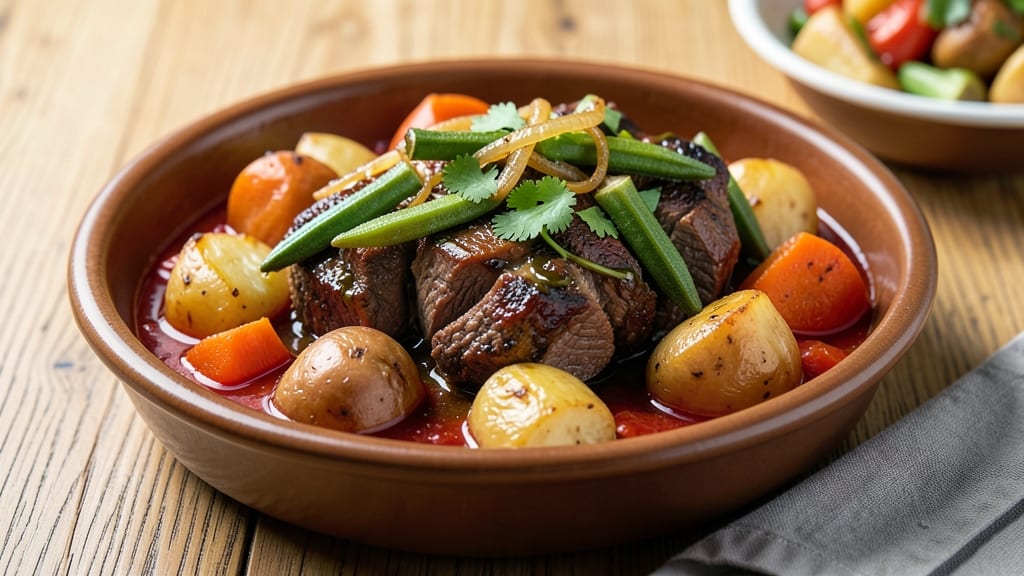
The Batangas beef caldereta recipe delivers slow-braised richness that transforms tough beef into melt-in-your-mouth tenderness. This regional Filipino classic relies on a deep, tangy sauce built through hours of simmering, where silky okra and crisp vegetables absorb every layer of flavor.
What sets Batangas-style apart is its balance of sweetness from tomatoes, acidity from vinegar, and earthy spices that create a sauce so complex it becomes the star.
At its heart, this dish proves that patience in cooking yields extraordinary results. The beef—traditionally chuck or round—simmers until fork-tender while potatoes and carrots develop a creamy texture, and okra adds its signature silky quality.
The sauce thickens gradually, developing a glossy sheen and aromatic depth that makes each bite unforgettable. No shortcuts here: the long braising time is what creates that restaurant-quality depth at home.
What you'll end up with is a steaming plate of beef caldereta where every component—tender beef, al dente vegetables, and velvety sauce—works in perfect harmony. The tangy vinegar notes brighten the richness, while the spices add warmth that lingers on your palate.
This is comfort food at its finest, the kind of dish that disappears faster than you can say "caldereta."
Perfect for family gatherings or special occasions, this recipe scales beautifully while maintaining its authentic character. The slow cooking makes it ideal for meal prep too—just reheat and serve. Let's get started on creating this Filipino classic that's sure to become a household favorite.
Ingredients for batangas beef caldereta
The heart of Batangas-style caldereta—rich beef, silky okra, and tangy vinegar sauce that simmers into perfection.
| Ingredient | Amount | Notes |
|---|---|---|
| Beef Chuck Roast 🥩 | 3 lb | Cut into 2-inch cubes |
| Russet Potatoes 🥔 | 2 lb | Peeled, cut into chunks |
| Yellow Onions 🧅 | 2 whole | Thinly sliced |
| Okra Pods 🌱 | 1 lb | Trimmed, cut into 1-inch pieces |
| Carrots 🥕 | 1 ½ lb | Peeled, cut into chunks |
| Canned Tomatoes 🍅 | 2 cans | 28 oz each, San Marzano preferred |
| White Vinegar 💧 | ½ cup | Distilled, not apple cider |
| Bay Leaves 🌿 | 2 whole | Fresh preferred |
| Garlic Cloves 🧄 | 6 cloves | Minced |
| Ground Black Pepper 🌶️ | 1 tbsp | Freshly ground |
| Salt 🧂 | 2 tsp | Kosher or sea salt |
| Olive Oil 🫒 | ¼ cup | Extra-virgin for richness |
| Ground Cumin 🌿 | 1 tsp | Toasted for depth |
| Fresh Thyme 🌿 | ¼ cup | Leaves only, chopped |
| Tomato Paste 🍅 | 2 tbsp | Squeeze tube preferred |
The beef is where this dish shines. Chuck roast is non-negotiable—it's tough enough to benefit from the long braise, turning fork-tender while absorbing all those amazing flavors. Costco or local butchers usually carry it pre-cut, which saves time. If you must buy a whole roast, ask for it to be cubed for you. Look for good marbling—those little fat streaks melt during cooking, keeping the meat juicy. For the okra, farmers markets often have fresher pods than grocery stores, but the frozen section works in a pinch. Just thaw and pat dry before cutting. The potatoes and carrots can be any variety, but Russets hold up best during the long cook.
No chuck roast? Round steak or even short ribs work, though they'll have slightly different textures. Running short on okra? Green beans or zucchini add a similar texture, though they won't be quite as silky. The San Marzano tomatoes are ideal, but any good-quality canned tomatoes will do—just avoid the watery, mushy ones. Fresh thyme is best, but if you only have dried, use half the amount. For the vinegar, distilled white vinegar gives the cleanest tang, while apple cider adds subtle fruit notes. The tomato paste? Those little squeeze tubes from Trader Joe's are perfect—no waste, and they keep forever.
This dish tastes even better the next day as all the flavors meld together. The sauce thickens as it cools, so you can safely reheat portions without worrying about separation. Store in the fridge for 4-5 days or freeze for 3 months. I like to portion it into containers with the beef and vegetables still in the sauce—just reheat with a splash of water or broth. For meal prep, double the recipe and freeze half. The vinegar smell dissipates as it cooks, leaving just that perfect tangy richness that makes this dish so special.
Why You'll Love This Recipe
- One-Pot Magic: I swear by this recipe when I’m too tired to wash extra bowls—just brown the beef, toss in the veggies and broth, and let it simmer. The okra pods actually thicken the sauce as they cook, so no extra slurping or cornstarch needed.
- Deep Umami Bomb: That beef chuck roast? It melts into tender, stringy perfection while soaking up the garlic, soy sauce, and vinegar base. The potatoes turn fluffy inside, and the carrots caramelize just enough to add natural sweetness—no fancy sauces required.
- Weeknight Workhorse: Between us, this is my go-to for lazy Sundays or when unexpected guests show up. It reheats beautifully, so I’ll make a big batch and freeze portions—perfect for busy nights when I don’t want to think. (Yes, even on a Tuesday night.)
- Budget-Friendly Feast: A single chuck roast stretches across three meals for my family of four, and the veggies (onions, potatoes, carrots) are cheap staples. The okra adds texture without costing a fortune, and the flavor is so rich you’d never guess it’s a budget dish. Honestly, it’s my secret weapon for stretching groceries.
Step-by-step instructions for Batangas beef caldereta
Here's how to craft this rich, slow-braised Filipino classic with tender beef and silky okra.
Sear the Beef for Deep Flavor
Heat the 0.25 cup olive oil in a heavy Dutch oven over medium-high heat until shimmering. Working in batches to avoid crowding, add the 3 lb beef chuck roast cut into 2-inch cubes and sear until deeply browned on all sides—about 4-5 minutes per batch. This step builds the foundation of flavor through the Maillard reaction.
As you sear, remove the beef and set it aside. The browned bits left in the pot will dissolve into the sauce later, creating that signature umami depth. Don't rush this—golden-brown beef means maximum flavor infusion. Once all pieces are seared, reduce the heat to medium and return the beef to the pot.
Build the Aromatic Base
Add the 2 whole yellow onions sliced thinly and 1.5 lb carrots cut into chunks to the pot. Cook for 5 minutes until the onions soften and begin to caramelize. Stir in the 6 cloves minced garlic, 2 tbsp tomato paste, and 1 tsp ground cumin, cooking for another 2 minutes until fragrant.
Here's where the magic begins—add the 2 cans canned tomatoes (juice included) and 0.5 cup white vinegar. The vinegar will brighten the dish and cut through the richness. Stir well to combine, then add the 2 whole bay leaves and 0.25 cup chopped fresh thyme. The bay leaves add earthy depth while the thyme brings herbal brightness.
Simmer the Vegetables
Pour in enough water to just cover the vegetables—about 3 cups. Bring to a gentle boil, then reduce heat to low and let simmer for 20 minutes. Add the 2 lb russet potatoes cut into chunks and 1 lb okra pods cut into 1-inch pieces. The potatoes should be mostly submerged, while the okra will float—this ensures even cooking.
Partially cover the pot and let simmer for 30 minutes, stirring occasionally. You'll know the vegetables are tender when a knife slides in easily. The okra should soften but retain its shape—it should be silky, not mushy. If the liquid reduces too much, add ½ cup hot water to maintain the right consistency.
Braise the Beef to Perfection
Return the seared beef to the pot, ensuring it's mostly submerged in the liquid. Add 2 tsp salt and 1 tbsp freshly ground black pepper, then bring the mixture to a gentle simmer. Cover partially and cook on low heat for 1.5 to 2 hours, until the beef is fork-tender and falls apart easily.
The key here is patience—this slow braising breaks down the connective tissue in the beef chuck, transforming it into melt-in-your-mouth tenderness. Check the liquid level occasionally and add ½ cup hot water if needed to prevent drying out. The final sauce should coat the back of a spoon with a velvety texture.
Finish and Adjust Seasoning
Once the beef is tender, remove the bay leaves and adjust the seasoning. Taste the sauce and add more salt or white vinegar if needed—the balance between tangy and savory is crucial. The dish should be rich but not overpowering, with bright acidity cutting through the beef's richness.
Serve the caldereta hot, ladled over steamed rice. The beef should be falling apart with each bite, the okra silky yet intact, and the sauce rich with layers of flavor. For extra authenticity, garnish with fresh chopped parsley or a sprinkle of toasted garlic cloves. This dish tastes even better the next day as the flavors meld further!
Pro Tips For Making Batangas Beef Caldereta
- Brown the Beef First: I learned this the hard way—skipping the sear means flavorless broth. Sear the chuck roast in batches over medium-high heat until deep brown (about 5 minutes per side) before adding liquids. That crust carries the umami punch that makes Batangas caldereta sing.
- Parboil the Potatoes: Raw potatoes turn mushy in the stew. Start them in boiling salted water for 3-4 minutes until just tender, then drain and add to the pot. This keeps their shape while letting them absorb the rich beef broth later.
- Trim the Okra Lengthwise: Whole okra pods turn to mush. Split them lengthwise into 1-inch pieces—this keeps their texture intact while letting the sauce cling. (Yes, it looks weird, but it works.)
- Simmer Low and Slow: After the initial braise, drop the heat to a bare simmer—just enough to keep bubbles breaking gently. Rushing it makes the beef tough and the sauce thin. Two hours at low heat turns chuck roast into melt-in-your-mouth perfection.
Health benefits of these flavors
Protein Powerhouse
This dish delivers a substantial 30 grams of protein per serving from the beef chuck roast, making it an excellent choice for muscle repair and satiety.
The slow-braising process preserves all the amino acids while breaking down connective tissue, resulting in highly bioavailable protein that your body can easily utilize. 💪
Heart-Healthy Fats
The beef chuck contains healthy monounsaturated fats that support cardiovascular health when consumed as part of a balanced diet. The olive oil used in cooking adds extra-virgin olive oil's beneficial polyphenols, which have been shown to reduce LDL cholesterol.
The overall fat profile in this dish is balanced, providing energy without excessive saturated fat.
Fiber-Rich Vegetables
The combination of potatoes, carrots, and especially okra provides an impressive 8 grams of dietary fiber per serving. Okra is particularly notable for its soluble fiber content, which helps regulate blood sugar levels and supports digestive health.
The vegetables also contribute essential vitamins like vitamin A from carrots and vitamin C from tomatoes.
Tangy Flavor Benefits
The white vinegar used in this recipe isn't just for flavor—it contains acetic acid, which may help improve insulin sensitivity. Studies suggest that vinegar can moderate blood sugar spikes after meals, making this dish particularly beneficial when served with rice.
The vinegar's acidity also aids in breaking down proteins during digestion. 💡
Antioxidant Boost
Both the tomatoes and thyme in this recipe are rich in antioxidants that combat oxidative stress. Tomatoes provide lycopene, while thyme contains thymol and carvacrol compounds with powerful anti-inflammatory properties. The slow cooking process actually enhances the availability of these beneficial compounds compared to raw consumption.
Meal Prep Advantage
This dish's slow-cooked nature makes it perfect for health-conscious meal prep. The flavors deepen overnight, while the protein and fiber content help maintain energy levels throughout the day.
The balanced macronutrient profile (protein, complex carbs, and healthy fats) makes it an ideal option for post-workout meals or satisfying lunches that keep you full for hours. ✨
Nutrition facts
Frequently asked questions
Why does Batangas beef caldereta need such a long cooking time?
The 2-hour braising transforms tough beef chuck into melt-in-your-mouth tenderness through collagen breakdown. This slow process also allows all flavors—tomato, vinegar, and spices—to meld into a rich, cohesive sauce. The okra and potatoes develop their signature textures only through gentle simmering, not boiling. Patience is key for that restaurant-quality depth!
Can I substitute okra in this recipe?
Yes! For similar texture, use green beans or zucchini (add 5 minutes before serving to prevent mushiness). If you prefer no okra, simply omit it—the dish will still be delicious. The key is maintaining the 30-minute vegetable simmer to keep them al dente. For extra richness, add 1 cup coconut milk at the end.
How can I make this dish spicier?
Add 1-2 tbsp chopped siling labuyo (Filipino chili) with the onions or ½ tsp cayenne pepper to the sauce. For heat control, start with less and adjust to taste. The vinegar helps balance spice, so don't be afraid to increase it slightly if needed. Remember—spices bloom better when cooked slowly!
What's the best way to reheat leftovers?
Reheat in a pot over low heat with 2 tbsp water or beef broth to prevent drying. Cover and simmer for 10-15 minutes until heated through. Microwave reheating works too—cover with a damp paper towel and heat in 1-minute intervals to preserve the sauce's consistency. The dish tastes even better reheated as flavors meld further!
Why does my sauce look too thin?
The sauce thickens as it cools—don't worry if it seems runny while hot! If needed, mix 1 tbsp cornstarch with 2 tbsp water and stir in at the end. Alternatively, simmer uncovered for 5-10 minutes to reduce. The vinegar helps balance thickness, so adjust gradually. The ideal sauce should coat the back of a spoon but remain spoonable.