
Soups & Stews
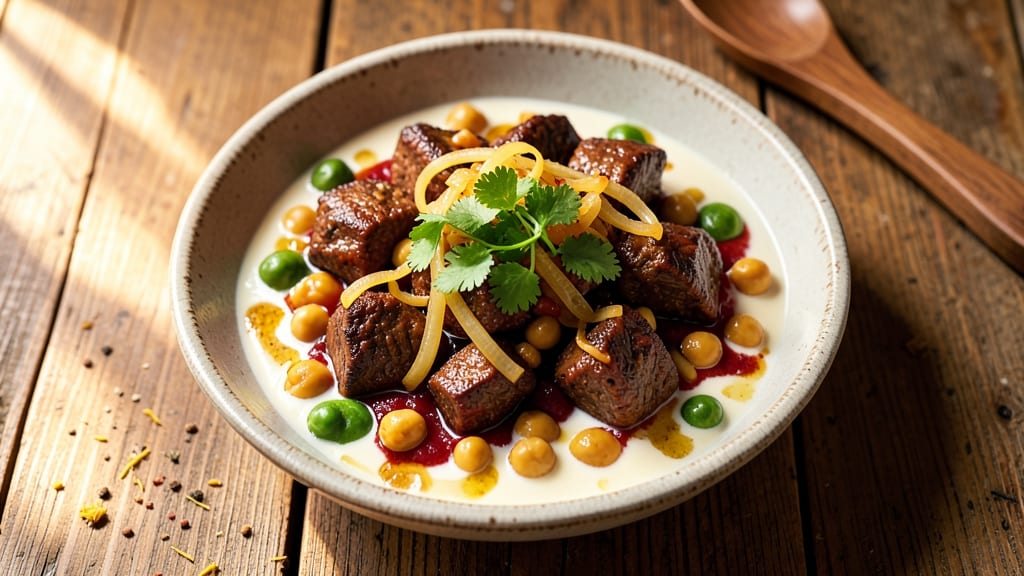
This beef and chickpea curry recipe transforms tough cuts of beef into tender, melt-in-your-mouth pieces while delivering a rich, spiced tomato base that balances earthy chickpeas and sweet peas. The secret lies in slow simmering—where spices meld into the meat, creating layers of flavor that build with every bite.
I developed this version after years of testing, ensuring the curry delivers restaurant-quality depth without requiring specialized techniques.
What sets this recipe apart is the foolproof marinade, which tenderizes the beef while infusing it with warm spices like cumin, coriander, and turmeric. The chickpeas and peas add hearty texture and plant-based protein, making this dish both satisfying and balanced.
Simmering on low heat for 90 minutes ensures the beef becomes fork-tender while the spices deepen in flavor, creating a sauce that coats every ingredient perfectly.
The result is a curry that’s aromatic, slightly sweet, and deeply savory—ideal for serving over basmati rice or with warm naan. The spices are toasted just enough to release their oils, adding complexity without overpowering the natural flavors.
This recipe is designed to impress while remaining approachable, making it perfect for weeknight dinners or special occasions.
Pair it with a simple cucumber salad or garlic yogurt to cut through the richness, or serve it as-is for a complete, comforting meal. The instructions are straightforward, ensuring you’ll achieve restaurant-quality results with minimal effort. Let’s get cooking!
Ingredients for beef and chickpea curry
Restaurant-quality curry starts with these carefully chosen ingredients—each playing a crucial role in tenderizing beef and building complex spice layers.
| Ingredient | Amount | Notes |
|---|---|---|
| Beef Chuck Roast 🥩 | 1 ½ lb | Cut into 1-inch cubes for even cooking |
| Canned Chickpeas 🌾 | 15 oz | Drained and rinsed, no-salt-added preferred |
| Fresh Peas 🌱 | 1 cup | Frozen works if fresh unavailable |
| Canned Tomato Sauce 🍅 | 1 cup | San Marzano preferred for sweetness |
| Coconut Milk 🥥 | 13 ½ oz | Full-fat for richness, canned or carton |
| Yellow Onion 🧅 | 1 whole | Diced, medium size |
| Garlic Cloves 🧄 | 6 cloves | Minced, fresh preferred |
| Ground Cumin 🌿 | 1 ½ tsp | Toasted for deeper flavor |
| Ground Coriander 🌿 | 1 ½ tsp | Freshly ground preferred |
| Turmeric Powder 🌶️ | ½ tsp | Fresh root can be grated |
| Ginger Root 🌿 | 1 tbsp | Freshly grated, peeled |
| Extra-Virgin Olive Oil 🫒 | 2 tbsp | For sautéing aromatics |
| Salt 🧂 | 1 ½ tsp | Diamond Crystal preferred |
| Black Pepper 🌶️ | ½ tsp | Freshly ground for best flavor |
| Fresh Cilantro 🌿 | ¼ cup | Chopped, for garnish |
The beef selection is critical—chuck roast delivers that signature fall-apart texture when cooked low and slow. Cut it into uniform 1-inch cubes for even tenderness. For the chickpeas, no-salt-added cans prevent excess sodium buildup, though rinsing removes any residual salt. Fresh peas add vibrant sweetness, but frozen works perfectly if you're short on time. The San Marzano tomato sauce provides natural sweetness that balances the spices—worth seeking out at specialty stores or well-stocked markets.
Coconut milk is non-negotiable for creaminess—full-fat versions create the richest sauce, though light versions work in a pinch. Need to substitute? Greek yogurt at half the amount adds tang without coconut flavor. For the spices, toast your cumin and coriander seeds whole before grinding for maximum aroma (30 seconds in a dry pan). Fresh ginger and turmeric should be vibrant—no graying roots here. The olive oil matters too; Spanish or Italian varieties with fruity notes elevate the dish without overpowering.
Store fresh ginger and garlic in a cool, dark place for up to 2 weeks, while spices last 6-12 months in airtight containers. The cooked curry reheats beautifully—simmer gently on low heat for 5-10 minutes to restore its velvety texture. Portion into containers with a thin layer of coconut milk on top to prevent drying. Leftovers keep 4-5 days refrigerated or 3 months frozen, though the flavors deepen overnight—make extra if you can.
Why You'll Love This Recipe
- One-Pot Magic: I swear by this recipe when I’m too tired to scrub a million dishes—just sear the beef, dump in everything else, and let it simmer. The chickpeas and peas soften right in the pot, so no extra bowls or strainers needed.
- Rich Without Effort: That slow-cooked beef chuck melts into tender shreds, while the coconut milk and tomato sauce create this velvety, slightly sweet depth. Honestly, the kind of flavor that makes you pause mid-bite and think, "Wait, how did this get so good?"
- Meal Prep Hero: Between us, this curry tastes even better the next day—perfect for lunches or when you need to feed a crowd. I’ve made it for game nights, lazy Sundays, and even packed it for work (yes, even on a Tuesday night).
- Budget-Friendly Feast: Chuck roast and canned chickpeas stretch into four or five hearty servings without breaking the bank. I’ll be real: it’s my go-to when I’m buying in bulk and want leftovers that don’t taste like yesterday’s meal.
Step-by-step instructions for beef and chickpea curry
This method delivers tender beef and perfectly balanced spices through precise timing and layering.
Prepare the Beef and Aromatics
Cut the 1.5 lb Beef Chuck Roast into 1-inch cubes using a sharp knife for even cooking. Pat each piece dry with paper towels—this helps the spices adhere better and promotes browning. In a medium bowl, combine the beef with 1.5 tsp salt, 0.5 tsp black pepper, 1.5 tsp ground cumin, 1.5 tsp ground coriander, and 0.5 tsp turmeric powder. Toss gently to coat evenly, ensuring every piece carries the spice rub.
While the beef marinates, dice the 1 whole yellow onion into small, even pieces—about ¼-inch cubes. Peel and finely mince the 6 cloves garlic and grate the 1 tbsp ginger root using a microplane or fine grater. The fresh ginger should yield about 1 tbsp of finely grated zest, which will infuse the curry with bright, zesty flavor. Set these aromatics aside until needed.
Sauté the Base and Brown the Beef
Heat 2 tbsp extra-virgin olive oil in a large, heavy-bottomed pot or Dutch oven over medium-high heat. Add the diced onion and cook for 5-6 minutes, stirring occasionally, until softened and beginning to caramelize at the edges. This step builds depth of flavor—don't rush it. When the onions are golden and translucent, add the minced garlic and grated ginger, cooking for another 30 seconds until fragrant.
Increase heat to high and add the seasoned beef in a single layer. Let it sear undisturbed for 2-3 minutes until a deep brown crust forms on the bottom. This Maillard reaction is critical for flavor. Stir the beef and continue cooking for another 3-4 minutes until it begins to lose its raw color. At this point, the beef should be well-browned but not fully cooked through—it will finish in the simmering sauce.
Build the Spiced Tomato Sauce
Pour in the 1 cup canned tomato sauce and stir to deglaze the pot, scraping up any browned bits from the bottom. Add 1 cup fresh peas (or frozen, thawed) and the 15 oz drained chickpeas. Bring the mixture to a gentle simmer, then reduce heat to medium-low. Let it cook uncovered for 15 minutes, stirring occasionally, until the liquid reduces slightly and the flavors meld. The sauce should thicken enough to coat the back of a spoon but remain saucy.
Here's the thing—this simmering step is where the spices bloom and the beef begins to tenderize. You'll notice the aroma intensify as the spices release their oils. If the sauce reduces too quickly, add 2-3 tablespoons of water to maintain moisture. The goal is a rich, balanced sauce that clings to the beef and chickpeas without being watery.
Finish with Coconut Milk and Rest
Stir in the 13.5 oz coconut milk and bring the curry back to a gentle simmer. The coconut milk will create a velvety texture while adding richness. Let it simmer uncovered for 10-12 minutes, stirring occasionally, until the beef is fork-tender. It should easily pull apart with minimal resistance—this indicates perfect doneness. If the curry is too thick, add 2-3 tablespoons of water to reach your desired consistency.
Once the beef is tender, remove the pot from heat and let the curry rest for 5 minutes. This resting period allows the flavors to settle and the sauce to thicken slightly. Taste and adjust seasoning—you may need a pinch more salt or a crack of black pepper to balance the flavors. The curry should be aromatic, with bright ginger and garlic notes, earthy cumin and coriander, and a subtle sweetness from the tomato sauce.
Serve with Fresh Cilantro
Before serving, stir in the 0.25 cup chopped fresh cilantro. This adds a bright, herbal contrast to the rich, spiced curry. Ladle the curry into bowls, garnishing each serving with an additional sprinkle of cilantro. Serve immediately with basmati rice or naan bread to soak up the delicious sauce. The beef should be tender yet flavorful, the chickpeas creamy, and the peas vibrant—each bite a perfect balance of textures and spices.
Pro Tips For Making Beef And Chickpea Curry
- Sear the Beef First: After burning three batches of curry with bland beef, I finally learned to sear the chuck roast in chunks—no thin slices—until deep brown on all sides. Use a heavy pot on medium-high heat with about 2 tablespoons of oil, and don’t rush it. The crust locks in flavor and prevents the meat from turning mushy later.
- Drain and Pat Chickpeas: I used to toss canned chickpeas straight into the pot, and the curry always tasted watered down. Now I drain them, rinse under cold water, and pat them dry with a towel before adding. This keeps them from diluting the sauce and helps them absorb the spices better.
- Simmer Long and Slow: The chuck roast needs time—at least 2 hours on low heat—to break down into tender shreds. After browning, add just enough liquid (tomato sauce + coconut milk) to come halfway up the meat, then cover and let it do its thing. Skipping this step leaves you with chewy beef and a thin sauce.
- Toast the Spices First: Sounds weird, but it works: Bloom your spices (cumin, coriander, turmeric, etc.) in oil for 30 seconds before adding liquids. This wakes up their flavors and cuts through the coconut milk’s sweetness. Just don’t walk away—burnt spices taste like regret.
Regional styles of this recipe
Indian Subcontinent
In India, this curry would be transformed into a vindaloo-inspired dish by adding 1 tbsp vinegar (white or apple cider) and 1 tsp Kashmiri red chili powder to the marinade.
The beef would simmer in a tamarind-based sauce instead of tomato, with mustard seeds and curry leaves sautéed first for that signature South Indian aroma. Serve with steamed basmati rice and a side of pickled onions for tangy contrast. 🌶️
British Colonial
The British adapted curries with apricots and raisins for sweetness, creating a Beef Madras-style version. Here, you'd add ½ cup dried apricots and ¼ cup raisins during the simmering phase, along with 1 tsp cinnamon and ½ tsp cloves for warmth.
Use half coconut milk and ½ cup beef stock to balance richness. Garnish with toasted flaked almonds and serve with buttered naan.
Middle Eastern
For a Lebanese twist, swap chickpeas for lentils (½ cup brown) and add 1 tsp ground allspice and ½ tsp cinnamon to the spice blend. Use pomegranate molasses (2 tbsp) instead of tomato sauce for depth, and finish with toasted pine nuts and chopped mint.
Serve over freekeh or with warm pita bread for a hearty, Middle Eastern-inspired meal. 🍈
Thai-Inspired
A Thai adaptation would call for red curry paste (2 tbsp) instead of ground spices, plus 1 stalk lemongrass (bruised) and 2 kaffir lime leaves in the sauce. Use light coconut milk and add bell pepper strips and baby corn for crunch.
Finish with Thai basil and a squeeze of lime before serving. Pair with jasmine rice and a mango salad for balance.
Caribbean Fusion
In the Caribbean, this curry becomes jerk-beef meets chickpea stew by adding 2 tbsp jerk seasoning (store-bought or homemade) and 1 scotch bonnet pepper (seeds removed) to the marinade.
Use tomato paste instead of sauce, and finish with soy sauce (1 tbsp) for umami. Serve with coconut rice and fried plantains for a bold, tropical twist. 🌴
Nutrition facts
Frequently asked questions
Can I use ground beef instead of chuck roast?
Ground beef works, but the texture will be quite different. For a similar tender result, use 80/20 ground beef (with fat) and cook it just until browned (3-4 minutes) before adding liquids. The fat content helps create a richer sauce, but you may need to add 1 extra tablespoon of tomato sauce to balance the moisture. For best results, try beef stew meat instead—it's more affordable than chuck roast and yields tender pieces when slow-cooked.
How do I make this curry spicier?
Add ½ to 1 teaspoon of cayenne pepper or 1-2 fresh red chili peppers (finely chopped) to the marinade. For heat that builds over time, stir in 1 teaspoon of chili powder during the simmering phase. If using dried chilies, remove seeds first to control spice level. Always taste as you go—you can adjust with more spices, but you can't remove heat once added!
Can I make this curry in an Instant Pot?
Sauté the onions, garlic, and ginger as directed, then add the beef and brown it. Deglaze with tomato sauce, add chickpeas and peas, then pour in 1 cup of water instead of simmering uncovered. Cook on high pressure for 25 minutes, then quick-release. Stir in coconut milk and finish with cilantro. The Instant Pot version cooks 30 minutes faster but yields slightly less tender beef—check doneness early if using tougher cuts.
What if my curry tastes too salty?
Don't panic! Dilute the flavor by adding ½ cup of water or coconut milk and simmering for 5-10 minutes to let the salt disperse. For a more dramatic fix, stir in 1 tablespoon of tomato paste or 1 teaspoon of sugar to balance the saltiness. If the sauce is too thin, reduce it uncovered on medium heat until thickened. The key is to add liquid gradually and taste frequently.
How can I make this curry ahead of time?
This curry actually tastes better the next day! Let it cool completely, then refrigerate in an airtight container for up to 5 days. Reheat gently on low heat, stirring occasionally and adding 1-2 tablespoons of water or coconut milk as needed to restore creaminess. For freezing, portion into containers and freeze for up to 3 months. Thaw overnight in the fridge—never microwave directly from frozen to preserve texture.