
Soups & Stews
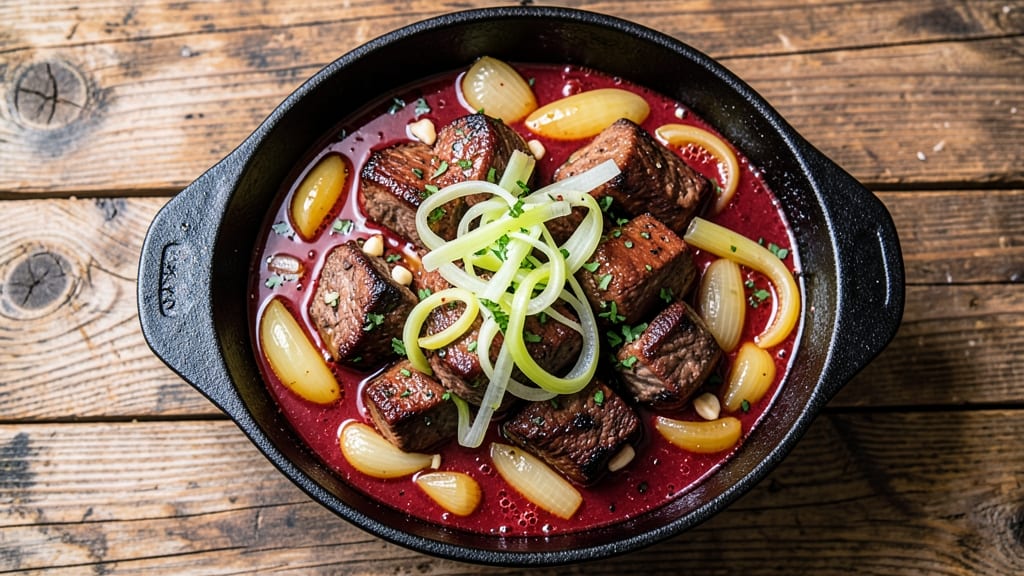
This beef and leek stew recipe transforms tough cuts into melt-in-your-mouth perfection with a deep red wine braise that simmers for hours. The secret lies in slow-cooked tenderness and caramelized leeks that sweeten as they cook, creating layers of rich, savory flavor.
I developed this version after years of testing—each bite delivers that perfect balance of wine's acidity, beef's depth, and leeks' natural sweetness.
The process begins with properly browning the beef to develop a flavorful crust, then deglazing the pan to capture every bit of caramelized goodness. Aromatics like garlic and onions form the foundation, while thyme and bay leaf add earthy complexity.
The red wine not only tenderizes the meat but also creates that signature deep color and velvety texture that defines a great stew.
By the time it's done, you'll have fork-tender beef chunks swimming in a sauce thickened just enough to coat every spoonful. The leeks will be perfectly softened yet still hold their shape, adding both texture and sweetness.
This is the kind of comforting meal that transforms a simple dinner into an experience—warm, hearty, and impossible to resist.
Pair it with crusty bread to soak up every last drop of that rich sauce, or serve alongside roasted vegetables for a complete meal. The beauty of this recipe is its versatility—it's perfect for a cozy weeknight dinner or an impressive meal for guests.
Let's get started on creating this classic comfort dish.
Ingredients for beef and leek stew
Sixteen ingredients that transform tough beef into velvety, wine-infused perfection.
| Ingredient | Amount | Notes |
|---|---|---|
| Chuck Roast 🥩 | 3 lb | Cut into 1.5-inch cubes |
| Yellow Onions 🧅 | 2 whole | Thinly sliced, 1/4-inch pieces |
| Leeks 🥬 | 4 whole | White and light green parts only, sliced |
| Garlic Cloves 🧄 | 6 cloves | Minced, for depth of flavor |
| Dry Red Wine 🍷 | 2 cups | Bold variety like Cabernet Sauvignon |
| Beef Stock 🥫 | 3 cups | Homemade or high-quality store-bought |
| Tomato Paste 🍅 | 2 tbsp | For rich, concentrated flavor |
| Fresh Thyme 🌿 | 2 tbsp | Leaves only, chopped finely |
| Bay Leaves 🍃 | 2 whole | For aromatic depth |
| All-Purpose Flour 🌾 | 2 tbsp | For thickening the sauce |
| Olive Oil 🫒 | ½ cup | Extra-virgin for browning |
| Salt 🧂 | 1 ½ tsp | Diamond Crystal preferred |
| Black Peppercorns 🌶️ | 1 tsp | Freshly cracked for brightness |
| Fresh Parsley 🌿 | ¼ cup | Chopped, for garnish |
The chuck roast is non-negotiable here—its marbling ensures melt-in-your-mouth texture. Look for cuts with visible fat at your local butcher or meat department, where they'll often trim it to your preferred size. If pre-cut cubes aren't available, Costco or Whole Foods typically carry chuck roast in bulk. Leeks require thorough cleaning—their dirt hides between layers, so split them lengthwise and rinse each section. For the wine, Cabernet Sauvignon or Merlot work best; avoid sweet varieties that will cloy the dish. The beef stock should be rich and homemade if possible, but Kitchen Basics or Pacific Foods brands are excellent store-bought alternatives.
No red wine? Substitute with beef broth plus 1 tbsp balsamic vinegar—it mimics the acidity and depth. Fresh thyme is ideal, but dried works at half the amount if you're in a pinch. For tomato paste, Rao's or Muir Glen brands are reliable, but the squeeze tubes from Trader Joe's are perfect for single-use portions. Leeks can be swapped for onions in a bind, though they'll lack the signature sweetness. The flour should be low-protein all-purpose for optimal thickening without altering the stew's texture. If you prefer gluten-free, use cornstarch instead at the same ratio.
This stew improves with time—2-3 days in the fridge allows flavors to meld beautifully. For longer storage, freeze portions in airtight containers for up to 3 months. The sauce thickens as it cools, so you may need to add a splash of broth when reheating. Garnish with fresh parsley just before serving to brighten the dish. Leftovers reheat beautifully—simmer gently on the stove with a splash of water or broth to restore the sauce's richness. Portion into individual containers for easy weeknight meals.
Why You'll Love This Recipe
- Foolproof First Step: I swear by this—just sear the chuck roast in one pot, then walk away. The onions and leeks caramelize while you open a bottle of wine (because why not?), and by the time the garlic hits, dinner’s already halfway done.
- Wine-Infused Magic: That splash of dry red wine? It’s not just for show—it tenderizes the beef and layers in this deep, savory richness that makes every bite feel like a little celebration. (Yes, even on a Tuesday night.)
- Leftovers That Beg for More: This stew only gets better the next day—flavors meld, beef gets fall-apart tender, and suddenly you’re packing it for lunch or serving it to guests who’ll swear it’s restaurant-quality. My freezer’s always stocked.
- Budget-Friendly Crowd-Pleaser: A whole chuck roast feeds six for under $20, and the leeks and onions stretch the filling factor without breaking the bank. Honestly, it’s the kind of dish that makes me feel like I’m feeding a whole football team—without the stress.
Step-by-step instructions for beef and leek stew
Here's how to transform tough chuck roast into melt-in-your-mouth beef using slow braising techniques.
Sear the Beef Until Deeply Browned
Pat the 3 lb chuck roast dry with paper towels and cut it into 1.5-inch cubes. Heat 0.25 cup olive oil in a large Dutch oven over medium-high heat until shimmering. Working in batches to avoid crowding, sear the beef cubes for 3-4 minutes per side until they develop a deep mahogany crust. This step is crucial—it builds flavor through the Maillard reaction.
Transfer the browned beef to a plate and set aside. The residual oil in the pot will help caramelize the vegetables later. If the oil starts to smoke excessively, reduce the heat slightly but maintain enough intensity to create that essential crust on the meat.
Caramelize Onions and Leeks for Sweet Depth
Add another 0.25 cup olive oil to the Dutch oven and return it to medium heat. Add the 2 whole yellow onions and 4 whole leeks (white and light green parts only, sliced). Cook for 10-12 minutes, stirring occasionally, until the onions soften and begin to caramelize—this should take longer than you might expect. The goal is to develop sweetness and color, not just cook them through.
About halfway through cooking, sprinkle with 1 tsp salt to help draw out moisture and enhance caramelization. When the vegetables are tender and golden brown with some crispy edges, add the 6 cloves minced garlic and cook for 30 seconds until fragrant. This aromatic base will form the flavor foundation of your stew.
Build the Braising Liquid
Sprinkle the 2 tbsp all-purpose flour over the onion-leek mixture and stir vigorously for 1-2 minutes to cook off the raw flour taste. Pour in the 2 cups dry red wine, scraping up any browned bits from the bottom of the pot with a wooden spoon. This deglazing step captures all the flavor you've built so far.
Add the 3 cups beef stock, 2 tbsp tomato paste, 2 tbsp fresh thyme, 2 whole bay leaves, 1.5 tsp salt, and 1 tsp black peppercorns. Stir well to combine, then return the seared beef to the pot. The liquid should come about halfway up the sides of the beef cubes—if it's too shallow, add a splash of water or stock.
Braise Until Fork-Tender
Bring the stew to a gentle simmer over medium-low heat, then reduce heat to maintain a barely perceptible bubble at the surface. Cover the Dutch oven and transfer to a 325°F oven for 2.5-3 hours. The stew should cook slowly enough that the liquid remains just below simmering—this prevents the meat from toughening.
Check the stew after 2 hours—the beef should be tender enough to pierce with a fork but still slightly resistant. If the meat isn't quite tender yet, continue cooking for another 30-60 minutes. The key is patience here; rushing will result in chewy beef. The stew will thicken as it cooks, but if it becomes too concentrated, add a splash of water or stock.
Finish and Serve
Remove the stew from the oven and let it rest for 15 minutes before serving. This resting period allows the flavors to meld and the juices to redistribute throughout the meat. Discard the bay leaves and adjust seasoning if needed—you may need to add more salt, as the flavors often concentrate during braising.
Ladle the stew into bowls and garnish with 0.25 cup chopped fresh parsley. The final presentation should show beautifully caramelized leeks, tender beef that falls apart easily, and a rich, velvety sauce. Serve immediately with crusty bread to soak up every last drop of that flavorful braising liquid.
Pro Tips For Making Beef And Leek Stew
- SEAR THE CHUCK ROAST FIRST: After I stopped rushing this, the stew actually developed real depth. Pat the chuck dry, then hit it with high heat in a heavy pot—you want that crust to form before you even think about adding liquid. If it’s not sizzling like mad within 30 seconds, crank the heat higher and wait.
- CUT LEEKS LONGWISE, NOT CROSSWISE: I used to slice them like onions, and they’d turn to mush. Instead, halve them lengthwise, rinse thoroughly under cold water (sand hides in those layers), and slice into ¼-inch pieces—this keeps them intact and adds texture. Skip the rinse, and you’ll taste grit with every bite.
- DEGLAZE WITH WINE IMMEDIATELY: That browned meat stuck to the bottom? Don’t scrape it out—just pour in the red wine and let it bubble for 2 minutes. I learned this the hard way: waiting to deglaze means losing flavor that’s already cooked into the pot. Use a wooden spoon to help it along if needed.
- LOW AND SLOW MEANS 3 HOURS MINIMUM: I’ve seen recipes say 2 hours, but chuck needs time to break down. Cover the pot, simmer at 300°F (150°C), and check at 2.5 hours—if it’s not fork-tender, add another 30 minutes. The wine will evaporate, and the leeks will melt into the meat, not just float on top.
Dietary considerations for this recipe
Gluten-Free Adaptation
This stew is naturally gluten-free if you use certified gluten-free flour for thickening. Replace the 2 tbsp all-purpose flour with 2 tbsp cornstarch or gluten-free flour blend like Bob's Red Mill 1:1.
Stir the cornstarch into a little cold water first to create a slurry, then whisk it into the simmering stew during the last 15 minutes of cooking. This prevents lumps and maintains the sauce's velvety texture. 🌾
Dairy-Free Considerations
The original recipe doesn't contain dairy, but always double-check your beef stock and tomato paste for hidden dairy additives. If you're strictly avoiding dairy, use a vegetable-based broth instead of beef stock and ensure your tomato paste is dairy-free.
The stew's richness comes from the wine and beef, so no dairy substitutes are needed for this hearty dish.
Low-Carb Options
For a lower-carb version, reduce the leeks to 2 stalks and increase the beef to 3.5 lbs for extra protein. Replace half the yellow onions with 2 cups sliced mushrooms, which add umami without significant carbs.
The mushrooms will absorb flavors beautifully and contribute to the stew's depth. Keep all other ingredients the same for a satisfying, keto-friendly adaptation.
Allergy-Friendly Swaps
If you have nut allergies, this recipe is already safe—just verify that your beef stock and tomato paste are nut-free. For soy allergies, check your wine label, as some brands may contain soy-based fining agents.
Opt for a soy-free wine like many organic or natural options. The stew's flavor profile remains intact with these simple adjustments.
Vegetarian Alternative
While not traditional, you can create a vegetarian version by replacing the beef with 1.5 lbs extra-firm tofu or portobello mushrooms. Press the tofu to remove excess water, then cube and pan-fry until golden.
Use vegetable stock instead of beef stock and add 1 tbsp soy sauce or mushroom powder for umami depth. The leeks and wine will still shine in this plant-based adaptation.
Protein Adjustments
For higher protein, increase the beef to 4 lbs and reduce the cooking time slightly to 2.5 hours. If you prefer leaner cuts, use top round roast instead of chuck, but increase the cooking time to 3.5 hours to ensure tenderness.
The wine and slow cooking process will still transform tougher cuts into melt-in-your-mouth perfection. 🥩
Nutrition facts
Frequently asked questions
Can I use a slow cooker instead of an oven?
Transfer the stew to a 6-quart slow cooker after searing the beef and building the braising liquid. Cook on low for 7-8 hours or high for 4-5 hours, ensuring the liquid remains just simmering. The slow cooker's gentle heat will achieve the same tender results with less attention needed.
What's the best way to store leftovers?
Let the stew cool completely, then transfer to airtight containers for up to 4 days in the refrigerator. For longer storage, freeze portions in single-serving containers for up to 3 months. Thaw overnight in the fridge and reheat gently on the stove with a splash of beef stock to restore sauce richness.
Why did my stew turn out too thin?
This usually happens when the liquid wasn't reduced enough during cooking. Next time, simmer the stew uncovered for the last 15-20 minutes to thicken naturally. If needed, mix 1 tbsp cornstarch with cold water and stir it in during the final minutes. The flour you used to thicken initially should have been cooked long enough to develop a roux-like consistency.
Can I make this stew in a pressure cooker?
Yes! After searing the beef and building the braising liquid, pressure cook on high pressure for 45 minutes (or low pressure for 60 minutes). The beef will become fork-tender much faster than with traditional methods. Just be careful when releasing the pressure—use the natural release method for best results.
What wine works best if I don't have red?
For a red wine substitute, mix 2 cups beef broth with 1 tbsp balsamic vinegar and 1 tsp Worcestershire sauce. This combo mimics wine's acidity and depth. Avoid sweet wines or white wine—they'll alter the stew's rich, savory profile.