
Main Courses
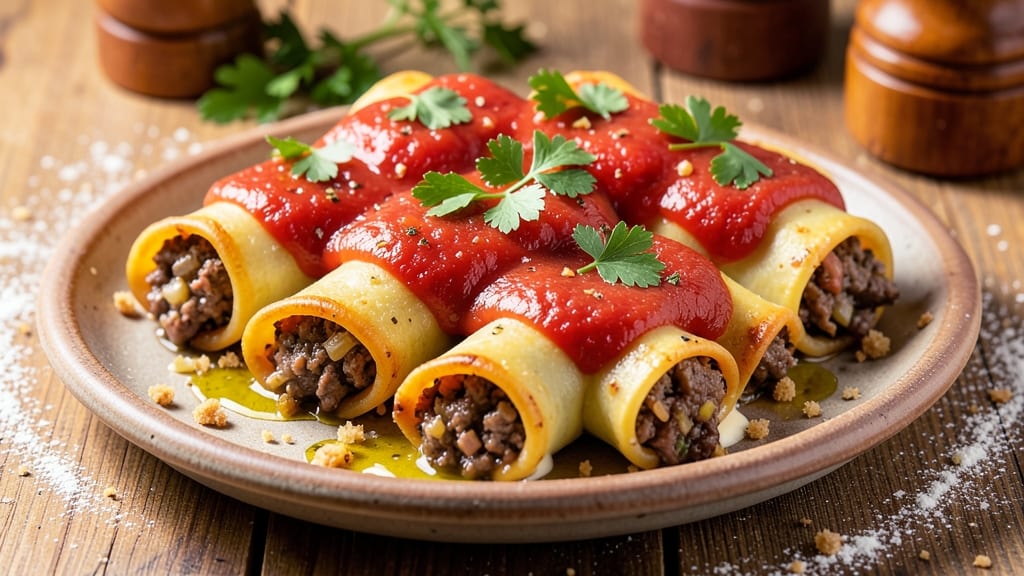
This beef and pork cannelloni recipe delivers restaurant-quality Italian comfort in your home kitchen—where tender pasta tubes hide layers of savory meat and gooey cheese. I perfected this technique after years of testing, balancing rich flavors without sacrificing texture.
The secret lies in perfectly cooked pasta sheets and a filling that stays moist through baking.
Start with a foolproof ground meat mixture—sautéed onions, garlic, and herbs infuse the beef and pork with depth, then bind with eggs and parmesan for structure. Spread this filling onto dried pasta sheets (no boiling needed!) and roll them tightly, creating neat, bite-sized packages.
A simple béchamel or marinara sauce bathes them in warmth as they bake, ensuring every bite delivers that signature melty cheese river effect.
What makes this recipe stand out is the textural contrast: crisp edges on the pasta, tender meat filling, and creamy cheese that oozes with each forkful. The long baking time transforms simple ingredients into something luxurious—no shortcuts, just technique.
This is the kind of dish that turns weeknight dinners into special occasions, served with a crisp arugula salad or garlic bread to soak up every last drop of sauce.
For those who love Italian classics but want restaurant-quality results at home, this method delivers. The filling stays cohesive, the pasta doesn’t overcook, and the cheese doesn’t curdle—just perfectly balanced layers of flavor. Let’s get started on creating your own gooey masterpiece.
Ingredients for beef and pork cannelloni
Sixteen ingredients transform into restaurant-quality cannelloni with layers of savory meat and creamy cheese rivers.
| Ingredient | Amount | Notes |
|---|---|---|
| Ground Beef (80% lean) 🥩 | 1 lb | Coarsely ground for texture |
| Ground Pork 🐷 | ½ lb | Lean for balanced flavor |
| Yellow Onion 🧅 | 1 whole | Medium size, finely diced |
| Garlic Cloves 🧄 | 4 cloves | Fresh, minced for aroma |
| Extra-Virgin Olive Oil 🫒 | 2 tbsp | High-quality, fruity variety |
| Fresh Parsley 🌿 | ¼ cup | Chopped, for freshness |
| Fresh Basil 🌿 | ¼ cup | Chopped, for depth |
| Large Eggs 🥚 | 2 whole | Room temperature for binding |
| Parmesan Cheese (Parmigiano-Reggiano) 🧀 | ½ cup | Freshly grated, coarse |
| Ricotta Cheese 🧀 | 1 lb | Full-fat for creaminess |
| Pasta Sheets (Dried) 🍝 | 12 sheets | Linguine or fettuccine width |
| Heavy Cream 🥛 | 1 cup | Full-fat for béchamel |
| Unsalted Butter 🧈 | 3 tbsp | Cold, cubed for sauce |
| All-Purpose Flour 🌾 | ¼ cup | For roux, sifted |
| Nutmeg 🌶️ | ¼ tsp | Freshly grated for warmth |
| Salt 🧂 | 1 ½ tsp | Diamond Crystal preferred |
| Black Pepper 🌶️ | ½ tsp | Freshly cracked |
| Mozzarella Cheese 🧀 | 1 ½ cups | Shredded, low-moisture |
| Marinara Sauce 🍅 | 2 ½ cups | High-quality, homemade preferred |
The meat blend is where depth begins. Ground beef and pork from the butcher counter—look for 80% lean beef and lean pork—create a balanced texture and flavor. Whole Foods or local grocers often carry higher-quality ground meats than supermarkets. The ricotta should be full-fat (none of that skim nonsense)—it's the secret to that luxurious, creamy filling. Fresh herbs make all the difference here: Italian parsley and basil from the market, not the sad plastic containers. For the pasta sheets, dried is non-negotiable—fresh sheets overcook and turn mushy during baking. De Cecco or Barilla are reliable brands for the perfect texture.
No fresh herbs? Dried oregano at one-third the amount works in a pinch, but you'll miss that bright freshness. Substituting pork? Ground lamb or turkey changes the flavor profile—adjust seasoning accordingly. For the béchamel, heavy cream and butter are essential—light cream or margarine will never deliver the same richness. The mozzarella should be low-moisture and shredded fresh (pre-shredded gets gummy). No marinara on hand? San Marzano tomatoes, garlic, olive oil, and basil make a quick sauce in 20 minutes. And if you're short on time, pre-made pasta sheets save hours of work—just check the package for baking instructions.
Freshly made filling keeps for 2 days in the fridge, wrapped tightly in plastic. The assembled cannelloni can be baked immediately or refrigerated for up to 12 hours before baking—just add 10 minutes to the baking time. Leftovers reheat beautifully in the oven at 350°F for 15 minutes, covered with foil. For freezer prep, assemble the cannelloni, wrap tightly in plastic, and freeze for up to 3 months. Thaw overnight in the fridge before baking. The sauce can be made 2 days ahead and reheated gently on the stove.
Why You'll Love This Recipe
- No Brown Bag Sadness: I swear by this for lunches—just assemble, bake, and slice. Those hearty beef-pork filling rolls stay fresh in the fridge for days, and the garlic-onion base? Still packing flavor by day three. (Yes, even when I forget to pack one.)
- Rich Without the Fuss: The combo of ground beef and pork is pure comfort—juicy, savory, and just meaty enough to satisfy. Sauté those onions and garlic in olive oil until soft (not crispy, not burnt), and suddenly you’ve got layers of depth that take zero effort. Honestly, the filling tastes like it simmered for hours, even though it’s ready in 15.
- Weeknight to Dinner Party: Same recipe, different vibes. Slap it together for a quick Tuesday night with store-bought pasta sheets, or dress it up with homemade dough and a fancy cheese sauce for company. The filling’s so adaptable—add a splash of red wine, a pinch of nutmeg, whatever’s in your pantry—and it still delivers.
- Budget-Friendly Feast: Ground beef and pork stretch further than you’d think, and onions/garlic are the ultimate pantry staples. I’ve fed four people for under $15 with this, and the leftovers? Even better reheated the next day (just add a splash of water to keep it moist). No sad, dry pasta rolls here.
Step-by-step instructions for beef and pork cannelloni
Here's how to assemble restaurant-quality cannelloni with perfectly balanced layers and gooey cheese centers.
Cook the Pasta Sheets Al Dente
Bring a large pot of water to a rolling boil and add 12 sheets of dried pasta (linguine or fettuccine width). Cook for 1 minute less than the package directions—you want them al dente so they finish cooking in the oven. Drain immediately and transfer to a colander to cool for 2 minutes before handling.
This brief cooling prevents the pasta from sticking together when you roll it later. I like to spread them out on a clean kitchen towel to dry completely. The sheets should be pliable but not sticky—this ensures they wrap neatly around the filling without tearing.
Prepare the Meat Filling
Heat 2 tablespoons of extra-virgin olive oil in a large skillet over medium-high heat. Add the 1 pound ground beef (80% lean) and 0.5 pound ground pork, breaking it apart with a wooden spoon. Cook for 5-6 minutes until the meat loses its raw color and begins to brown.
Add the 1 whole yellow onion (finely diced) and 4 cloves garlic (minced), cooking for another 3-4 minutes until softened. Stir in 0.25 cup fresh parsley, 0.25 cup fresh basil, 1.5 teaspoons salt, and 0.5 teaspoon black pepper. Remove from heat and let cool completely before mixing with other ingredients.
Mix the Cheese Filling
In a large bowl, combine the cooled meat mixture with 1 pound ricotta cheese, 2 whole large eggs (room temperature), 0.5 cup freshly grated parmesan, 1.5 cups shredded mozzarella, and 0.25 teaspoon freshly grated nutmeg. Mix gently with a rubber spatula until just combined—don't overwork the ricotta or it will become grainy.
This filling should be thick but pipeable. If it's too loose, add 1 tablespoon of all-purpose flour at a time until it holds its shape when spooned. The mixture should be cool enough to handle comfortably—this prevents the pasta from becoming soggy when you roll it.
Assemble and Bake the Cannelloni
Preheat your oven to 375°F. Spread 2.5 cups marinara sauce evenly in a 9x13-inch baking dish. Working quickly, spoon about 1 tablespoon of cheese filling onto each pasta sheet, then roll tightly. Place seam-side down in the baking dish, standing them upright in the sauce.
Pour the remaining sauce over the top, then dot with 3 tablespoons cold cubed butter. Cover with aluminum foil and bake for 30 minutes. Remove the foil and bake another 10-15 minutes until the cheese is bubbling and the sauce is golden brown. Let rest for 5 minutes before serving.
Prepare the Creamy Sauce
While the cannelloni bakes, melt 3 tablespoons unsalted butter in a saucepan over medium heat. Whisk in 0.25 cup all-purpose flour and cook for 1 minute to form a roux. Gradually whisk in 1 cup heavy cream until smooth, then simmer for 3-4 minutes until thickened. Season with 0.5 teaspoon salt and 0.25 teaspoon black pepper.
Toss this creamy sauce with the baked cannelloni just before serving. The sauce should coat each cannelloni beautifully, adding a rich, velvety finish to every bite. Serve immediately with a sprinkle of fresh basil for a pop of color and freshness.
Pro Tips For Making Beef And Pork Cannelloni
- Brown the Meat Twice: Start with beef and pork separate—cook the beef until it loses its raw color, then set aside. Add pork to the same pan (no extra oil needed) and brown it too. Mixing them raw means you’ll end up with a bland, greasy filling.
- Sweat Onions Low and Slow: After browning the meat, reduce heat to medium-low and cook onions for 10-12 minutes until translucent but not golden. I learned this the hard way—charred onions make the filling taste bitter, and you’ll regret it when you bite into a cannelloni.
- Season Like It’s a Steak: Salt the meat before browning (about 1.5 tsp per pound) and add black pepper, red pepper flakes, and a pinch of nutmeg to the filling. The pork and beef soak up flavor better when seasoned early, and those spices cut through the richness.
- Use Olive Oil for Crispiness: Toss the assembled cannelloni in a mix of olive oil and grated Parmesan before baking. A light coat makes the edges crispy without drowning in cheese—just enough to get that golden crust without turning it soggy.
Pro cooking tips for this recipe
Pasta Sheet Perfection
Dried pasta sheets are your secret weapon—never use fresh! Cook them 1 minute less than package instructions and cool completely before handling. I swear by De Cecco or Barilla brands for their sturdy texture.
Spread sheets on a clean towel to dry—this prevents sticking when you roll. If they feel too soft, let them sit for 3-5 extra minutes. 🍝
Filling Texture Mastery
The ricotta-egg mixture must be cool and thick before rolling. I test consistency by spooning—it should hold its shape but still be pipeable. For extra binding power, add 1 tablespoon flour at a time if needed.
Never overmix or the filling will turn grainy. Room-temperature eggs blend better and prevent curdling. 🥚
Baking Like a Pro
Preheat your oven to 375°F for even cooking. The foil trap during the first 30 minutes ensures steam develops—this keeps the filling moist. After removing foil, watch closely for golden sauce bubbles (10-15 minutes). A 9x13-inch dish works perfectly, but don't overcrowd or the cannelloni won't bake evenly. 🔥
Butter Dot Technique
Those 3 tablespoons cold cubed butter on top aren't just decoration—they melt into the sauce during baking, creating a luxurious finish. I use European-style butter (like Plugrá) for its higher fat content. Dot them evenly across the top before the final baking phase for maximum flavor impact. 🧈
Resting Time Matters
Never skip the 5-minute rest after baking! This lets the filling set and prevents cheese rivers from oozing out prematurely. I place the dish on a wire rack to catch any drips—this keeps your table clean and the cannelloni looking restaurant-worthy. 💫
Sauce Timing Hack
Prepare the béchamel sauce while baking—it only takes 5 minutes once the roux forms. Toss it with the cannelloni just before serving so it stays velvety, not grainy. For extra richness, stir in 1 tablespoon grated parmesan at the end. This sauce transforms simple cannelloni into a showstopper.
Nutrition facts
Frequently asked questions
Why mix beef and pork in the filling?
The combination creates a perfect balance of flavors and textures. Beef adds depth and heartiness, while pork contributes juiciness and fat content that keeps the filling moist during baking. This duo also enhances the savory profile that pairs beautifully with the creamy cheese and tomato sauce layers.
Can I use fresh pasta sheets instead of dried?
Absolutely not! Fresh pasta sheets contain too much moisture and will turn mushy during the long baking process. Dried sheets hold their shape better and finish cooking perfectly in the oven. For best results, use high-quality dried sheets like De Cecco or Barilla, which are sturdy enough to handle the filling without tearing.
How do I prevent the filling from leaking out?
Roll the cannelloni tightly and place them seam-side down in the baking dish. The filling should be cool and thick before assembly—this helps it stay contained. Also, don't overfill the pasta sheets (use about 1 tablespoon per sheet). A quick chill in the fridge for 15 minutes before baking can also help the filling set better.
Can I make this recipe ahead of time?
Yes! Assemble the cannelloni and refrigerate them (unbaked) for up to 12 hours before baking. For longer storage, freeze the assembled cannelloni (unbaked) for up to 3 months. Thaw overnight in the fridge before baking—just add 10 minutes to the baking time. The filling and sauce can also be prepped separately and stored for up to 2 days.
What's the best way to reheat leftovers?
Place leftovers in a baking dish, cover with foil, and reheat at 350°F for 15 minutes. For a crispier finish, uncover and broil for 2-3 minutes at the end. Microwaving can make the pasta soggy, so always use the oven method. This keeps the filling creamy and the pasta tender.