
Main Courses
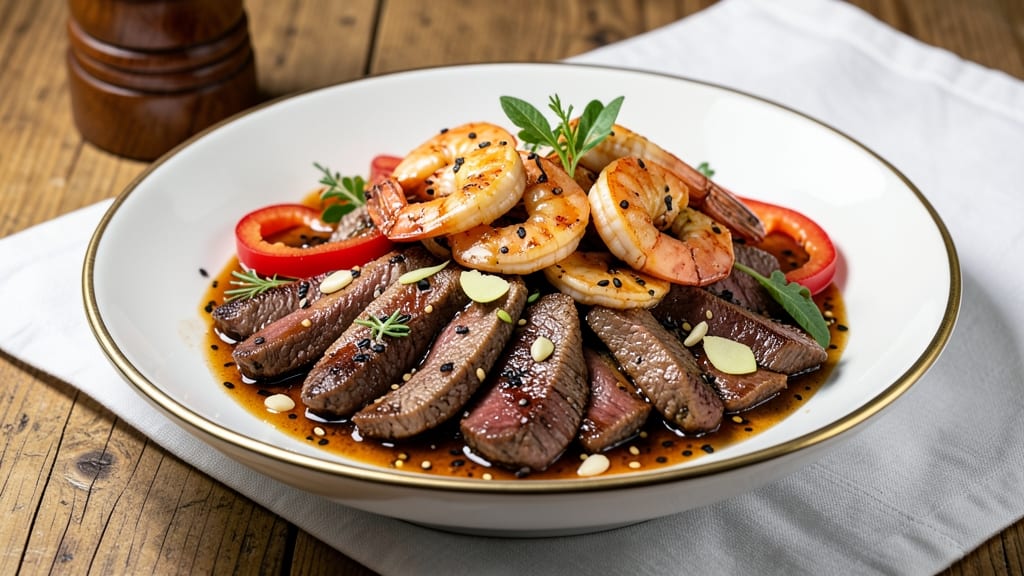
This beef and shrimp teriyaki recipe delivers a perfect balance of sweet-savory glaze and umami crunch that transforms simple proteins into a restaurant-worthy dish. The marinade and glaze, simmered with ginger, garlic, and soy, create a rich, sticky sauce that caramelizes beautifully while searing the beef and shrimp.
I developed this recipe after years of experimenting with teriyaki—it’s the one that finally nailed both textures and flavors without overpowering the natural taste of the ingredients.
The secret lies in the two-step cooking process: first marinating the beef and shrimp separately to ensure they absorb maximum flavor, then searing them quickly over high heat for a crispy exterior before finishing in the sauce.
This method guarantees tender beef and succulent shrimp with a glossy, caramelized crust that holds up beautifully when plated. The glaze isn’t just sweet—it’s deeply savory, thanks to a touch of fish sauce and sesame oil that adds complexity.
By the time you serve this dish, you’ll have perfectly seared beef strips and plump shrimp bathed in a glossy, sticky-sweet glaze that clings to every bite. The umami crunch comes from toasted sesame seeds sprinkled on top, adding texture and aroma that elevates the dish from ordinary to extraordinary.
Serve it over steamed jasmine rice or with steamed bok choy for a complete, balanced meal that’s sure to impress.
What makes this recipe truly foolproof is the flexibility—it works equally well on the grill, in a skillet, or even in the oven. The glaze can be made ahead and reheated, making it perfect for meal prep or entertaining.
Whether you’re cooking for a weeknight dinner or a special occasion, this beef and shrimp teriyaki delivers restaurant-quality results with minimal effort.
Ingredients for beef and shrimp teriyaki
Sweet-savory balance starts with these 15 quality ingredients for restaurant-worthy teriyaki.
| Ingredient | Amount | Notes |
|---|---|---|
| Beef Sirloin 🥩 | 1 lb | Thinly sliced against grain |
| Large Shrimp 🦐 | 1 lb | Peeled, deveined, tails on |
| Sesame Oil 🫒 | 2 tbsp | Toasted for aroma |
| Fresh Ginger 🧅 | 1 tbsp | Finely grated, no skin |
| Garlic Cloves 🧄 | 6 cloves | Minced, fresh preferred |
| Soy Sauce 🍶 | ½ cup | Low-sodium preferred |
| Honey 🍯 | 0.3 cup | Wildflower or clover |
| Rice Vinegar 🍶 | ¼ cup | White or seasoned |
| Fish Sauce 🐟 | 1 tbsp | Red Boat brand preferred |
| Sesame Seeds 🥜 | 2 tbsp | Toasted for crunch |
| Cornstarch 🌾 | 1 tbsp | For glaze thickening |
| Vegetable Oil 🫒 | 2 tbsp | High smoke point |
| Sesame Seeds 🥜 | 1 tbsp | Extra for garnish |
| Jasmine Rice 🍚 | 1 ½ cups | Uncooked, for serving |
| Green Onions 🧅 | 3 whole | Sliced, for garnish |
The beef and shrimp are the foundation, so quality matters. Beef sirloin should be thinly sliced against the grain for tenderness, and shrimp should be fresh—look for plump, translucent tails at Whole Foods or your local seafood market. The Red Boat fish sauce is non-negotiable for authentic umami depth, but any high-quality brand works. For ginger, buy fresh and grate it yourself—pre-grated loses potency fast. Sesame oil should be toasted for aroma, so look for the dark variety at Asian markets or the international aisle of most grocery stores.
No sesame oil? Vegetable oil plus a pinch of toasted sesame seeds mimics the flavor. Short on fish sauce? Soy sauce with a splash of Worcestershire works in a pinch, though the umami won't be identical. The honey should be wildflower or clover—avoid processed varieties that can taste artificial. For extra crunch, toast your sesame seeds in a dry pan for 2 minutes before adding to the glaze. The cornstarch is key for thickening—arrowroot powder works too if you prefer a gluten-free option. If you can't find jasmine rice, long-grain white rice is a fine substitute.
The glaze can be made 1 day ahead and reheated gently—just add a splash of water if it thickens too much. Store cooked proteins separately in the fridge for 3 days or freeze for 2 months. For meal prep, portion the glaze into ice cube trays and freeze—thaw and reheat as needed. The sesame seeds keep for 6 months in a cool, dark place, but toast them fresh for maximum flavor. Fresh ginger lasts 2 weeks in the fridge, while garlic stays good for 3 months in the pantry.
Why You'll Love This Recipe
- One-Pan Magic: I swear by this for nights when I’m too tired to wash dishes. Toss the sliced sirloin and shrimp straight onto the pan—no fancy prep, just sear, glaze, and call it a dinner. The sesame oil adds that nutty aroma in seconds, and the ginger-garlic base builds flavor while you’re still chopping veggies.
- Umami Bomb: That first bite? Chef’s kiss. The beef stays tender with just a hint of char, while the shrimp soaks up the teriyaki’s sticky-sweet depth—like a cross between a takeout favorite and a restaurant-worthy dish. Honestly, the garlic cloves roasted in the oil? They turn the whole pan into flavor central.
- Weeknight to Party: Same recipe, totally different vibes. Serve it over rice for a lazy Tuesday, or plate it with steamed bok choy and sesame seeds for date-night fanciness. My roommates and I even bring it to potlucks—it’s the one dish that gets everyone seconds.
- Budget-Friendly Feast: Sirloin’s leaner than ribeye, and shrimp freezes like a dream, so I stock up when it’s on sale. A single batch stretches to three lunches, and the teriyaki sauce doubles for stir-fries or marinade. Between us, this is how I feed my crew without breaking the bank.
Step-by-step instructions for beef and shrimp teriyaki
Master this sweet-savory balance with precise technique for restaurant-quality results.
Prepare the Protein Components
Slice the 1 lb beef sirloin thinly against the grain into ¼-inch thick strips. This ensures tender bites that cook quickly in the stir-fry. Pat the beef dry with paper towels to remove excess moisture, which prevents steaming and promotes better searing.
Peel and devein the 1 lb large shrimp, leaving the tails intact for presentation. Rinse under cold water and pat completely dry. This step is crucial—wet shrimp will release too much liquid and dilute your teriyaki glaze. Arrange both beef and shrimp on separate plates and refrigerate until ready to cook.
Create the Signature Teriyaki Glaze
In a small saucepan, combine 0.5 cup soy sauce, 0.3 cup honey, 0.25 cup rice vinegar, 1 tbsp fish sauce, and 1 tbsp cornstarch. Whisk continuously over medium heat for 5-7 minutes until the mixture thickens to a glossy, syrupy consistency that coats the back of a spoon.
Remove from heat and stir in the 1 tbsp finely grated fresh ginger and 6 cloves minced garlic. Let the mixture steep for 10 minutes to allow the flavors to meld. This resting period develops depth—don't skip it. The glaze should smell rich with umami notes from the fish sauce and bright acidity from the vinegar.
Cook the Beef and Shrimp Separately
Heat 2 tbsp vegetable oil in a large skillet over high heat until shimmering. Add the beef strips in a single layer and sear undisturbed for 1-2 minutes until deep golden brown on all sides. The beef should cook quickly—overcrowding will steam instead of sear. Transfer to a plate and set aside.
In the same skillet (no need to clean), add 2 tbsp sesame oil and heat until fragrant. Add the shrimp in a single layer and cook for 1-2 minutes per side until pink and opaque. The shrimp should release easily from the pan when ready. Remove and set aside with the beef.
Combine and Finish with Glaze
Return the skillet to medium-high heat and pour in the prepared teriyaki glaze. Let it simmer for 2-3 minutes until it begins to bubble and thicken slightly. Add the cooked beef and shrimp back to the pan, tossing gently to coat evenly in the glaze.
Cook for an additional 1-2 minutes until everything is heated through and the glaze has caramelized slightly. The mixture should look glossy with a beautiful sheen. Sprinkle with 2 tbsp toasted sesame seeds and 1 tbsp extra sesame seeds for garnish.
Serve Over Jasmine Rice
Cook the 1.5 cups jasmine rice according to package instructions for perfectly fluffy grains. Divide the rice among plates and top generously with the beef and shrimp teriyaki. Garnish with 3 whole green onions, sliced diagonally, for freshness and color contrast.
Serve immediately while the rice is hot and the teriyaki glaze is still glossy. The combination of tender beef, succulent shrimp, and that perfect sweet-savory glaze creates a harmonious balance that's both comforting and sophisticated.
Pro Tips For Making Beef And Shrimp Teriyaki
- SEAR BEFORE SAUCE: Don’t just toss everything into the pan with the teriyaki sauce—get that beef sirloin screaming hot first. A 3-4 minute sear on high heat builds flavor and texture the sauce alone can’t replicate. I learned this the hard way when my first batch turned out mushy; the crust is what makes this dish sing.
- PEEL SHRIMP LAST: Leave those shrimp tails on until you plate them—it’s the easiest way to make the dish look restaurant-worthy. If you’re worried about overcooking, pull them out of the pan just before the beef is done; they’ll finish in seconds. (Yes, even if you’re impatient like me.)
- GINGER AND GARLIC FIRST: Bloom your minced ginger and garlic in sesame oil for 30 seconds before adding anything else. This draws out their flavor without burning, which is especially important when you’re balancing sweet teriyaki with bold aromatics. Skip this, and your sauce will taste underwhelming.
- SAVE THE SAUCE: Don’t dump all the teriyaki glaze at once—reserve a quarter and toss the shrimp in it at the very end. This keeps them juicy and lets you control the glossiness of the final dish. (Your future self will thank you when you’re not scraping burnt sauce off the pan.)
Flavor customization for this beef and shrimp teriyaki
Sweet Heat Boost
Add 1 tbsp sriracha or ½ tsp cayenne pepper to the glaze for a spicy kick. I like to balance it with an extra ½ cup honey to keep the sweetness intact. For a smoky touch, stir in ½ tsp smoked paprika when combining the proteins with the sauce. 🌶️
Citrus Zing
Brighten the dish with 2 tbsp freshly squeezed lime juice or 1 tbsp lemon juice added to the glaze. The acidity cuts through the richness and enhances the umami. I also garnish with thin lime zest strips for extra freshness and visual appeal.
Umami Depth
For a deeper savory profile, add 1 tbsp oyster sauce or 1 tsp miso paste to the glaze. These ingredients add complexity without overpowering the teriyaki flavors. I recommend using white miso for a smoother texture and less bitterness.
Herb Infusion
Incorporate fresh herbs like 1 tbsp chopped cilantro or 1 tsp chopped Thai basil into the glaze for a bright, aromatic twist. For a more robust flavor, add 1 tbsp chopped scallions to the rice before serving. These herbs add freshness that complements the sweet-savory balance.
Nutty Crunch
Swap sesame seeds for 1 tbsp chopped toasted peanuts or 1 tbsp crushed wasabi peas for added crunch and texture. These alternatives bring a different dimension to the dish while maintaining the umami crunch you love. 🥜
Dairy Creaminess
For a richer finish, stir 2 tbsp coconut milk or 1 tbsp Greek yogurt into the glaze. This adds a velvety texture that pairs beautifully with the seared proteins. I recommend adding it in the final minute of cooking to prevent curdling.
Nutrition facts
Frequently asked questions
Can I substitute chicken for shrimp in this recipe?
Yes, but with adjustments! Use 1 lb boneless chicken thighs (not breast) since they stay moist better. Cut into ½-inch strips and marinate for 30 minutes in the teriyaki sauce before cooking. Chicken needs 5-6 minutes total cooking time versus 2 minutes for shrimp. The texture will differ but still delicious!
How do I prevent the shrimp from turning rubbery?
Never overcook them! Shrimp should cook just 1-2 minutes per side until pink and opaque (internal temp 145°F). Use a meat thermometer for accuracy. Also, pat them completely dry before cooking—moisture causes steaming instead of searing.
Can I make the teriyaki glaze ahead of time?
Make the glaze 1-2 days ahead and store in an airtight container in the fridge. Reheat gently in a saucepan with 1 tbsp water to restore thickness. For longer storage, freeze in ice cube trays—thaw and reheat as needed. The flavors actually improve after resting!
What's the best way to serve this dish for a crowd?
Double the recipe and use a large skillet or wok for even cooking. Serve family-style with steamed rice in a rice cooker and steamed bok choy or broccoli on the side. For presentation, arrange proteins on a platter with extra glaze drizzled over top and garnish with sesame seeds.
Why did my glaze turn grainy when reheating?
This happens when the cornstarch thickens too much. Fix it by whisking in 1-2 tbsp warm water until smooth. To prevent it, store the glaze in a shallow container and press plastic wrap directly on the surface to minimize drying. For extra insurance, add ½ tsp arrowroot powder when reheating.