
Soups & Stews
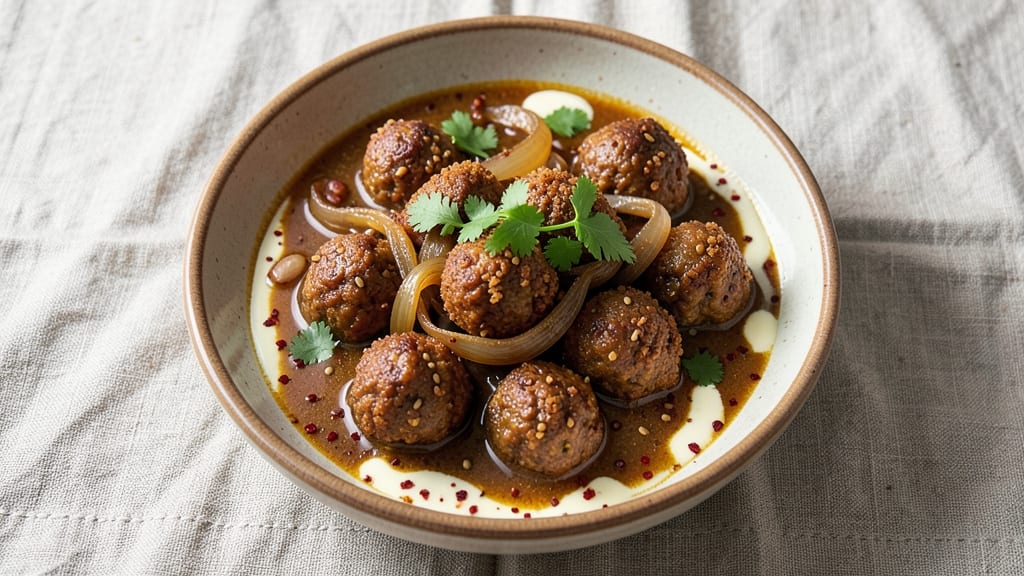
This beef ball curry recipe delivers restaurant-quality comfort in one aromatic pot—spiced meatballs simmered in a velvety coconut-tomato gravy that balances heat, sweetness, and umami perfectly. The secret lies in properly seasoned ground beef that stays tender while absorbing the complex spice blend, then melting into the rich, fragrant sauce. I developed this version after years of testing how to achieve that perfect balance between tender meatballs and deeply flavorful gravy without burning the spices.
The process begins with forming meatballs from ground beef, breadcrumbs, and a precise spice mix that includes cumin, coriander, and garam masala—each playing a crucial role in building flavor.
These are browned just until sealed, then gently simmered in a sauce made with coconut milk, tomatoes, and a touch of tamarind for tang. The long, slow cooking transforms simple ingredients into a dish that's hearty enough for a weeknight dinner but elegant enough for guests.
What you'll end up with is a pot of golden-brown meatballs nestled in a glossy, fragrant sauce that's rich yet not overly heavy. The coconut milk adds creaminess without masking the spices, while the tomatoes provide acidity to cut through the richness.
Each bite delivers tender meatballs bursting with flavor, coated in a sauce that's perfectly balanced—sweet from the coconut, tangy from the tomatoes, and warm from the spices.
Serve with steamed basmati rice to soak up every last drop of that aromatic sauce, or pair with naan bread for a more rustic presentation. The dish reheats beautifully, making it ideal for meal prep, and the flavors actually deepen overnight.
This is the kind of recipe that transforms a simple weeknight into a flavor-filled celebration.
Ingredients for beef ball curry
Restaurant-quality spice blend meets tender meatballs in this aromatic coconut-tomato curry.
| Ingredient | Amount | Notes |
|---|---|---|
| Ground Beef 🥩 | 1 ½ lb | 80/20 fat ratio preferred |
| Yellow Onion 🧅 | 1 whole | Finely chopped, about 1 cup |
| Garlic Cloves 🧄 | 4 cloves | Minced, about 1 tbsp |
| Panko Breadcrumbs 🍞 | ½ cup | For meatball binding |
| Egg 🥚 | 1 whole | Beaten for binding |
| Cumin Seeds 🌿 | 1 tsp | Toasted for deeper flavor |
| Ground Coriander 🌿 | 1 tsp | Freshly ground preferred |
| Garam Masala 🌶️ | 1 ½ tsp | For complex spice blend |
| Ground Turmeric 🧂 | ½ tsp | For color and earthiness |
| Cayenne Pepper 🔥 | ¼ tsp | Adjust for heat preference |
| Coconut Milk 🥥 | 1 can | Full-fat for creaminess |
| Crushed Tomatoes 🍅 | 1 can | 28 oz can, San Marzano preferred |
| Tomato Paste 🍅 | 2 tbsp | For concentrated flavor |
| Tamarind Paste 🍯 | 1 tbsp | For tangy balance |
| Fresh Ginger 🌿 | 1 tbsp | Grated, about 1-inch piece |
| Salt 🧂 | 1 ½ tsp | Diamond Crystal preferred |
| Black Pepper 🌶️ | ½ tsp | Freshly ground preferred |
| Vegetable Oil 🫒 | 1 tbsp | For browning meatballs |
The ground beef is non-negotiable here—80/20 fat ratio keeps meatballs juicy. Costco sells pre-ground chuck at a great price, but any grocery store's 80/20 blend works. For the spices, Penzeys or bulk bins at Indian markets are ideal, but the regular grocery store stuff is fine if it's labeled fresh. Toast the cumin seeds in a dry pan for 30 seconds before grinding—game-changer for depth. The garam masala should be vibrant, not dusty, and Madras brand is my go-to for authenticity.
No tamarind paste? Lemon juice or lime juice works in a pinch (use half the amount). Fresh ginger is best, but paste works at double the quantity. The coconut milk must be full-fat—light versions water down the sauce. For the tomatoes, San Marzano cans have the best flavor, but any crushed tomatoes will do. The meatballs should be about 1.5-inch diameter—use a spoon to portion for consistency. If your panko is stale, toast it in a dry pan for 2 minutes to revive crispiness.
This curry tastes even better the next day as flavors meld. Store in an airtight container in the fridge for 4-5 days or freeze for 3 months. Portion into meal prep containers with rice for easy grab-and-go lunches. The sauce thickens as it cools, so add a splash of water or coconut milk when reheating. For leftovers, cover with plastic wrap pressed directly on the sauce to prevent skin formation.
Why You'll Love This Recipe
- No-Fuss Assembly: The beef balls form in minutes—just mix ground beef, egg, and panko, then roll. No fancy shaping skills needed, and the garlic-onion base goes in while you wait. Honestly, it’s the kind of recipe where you’ll forget you’re cooking.
- Crispy-Creamy Magic: That panko crust gives each bite a satisfying crunch, while the slow-simmered curry sauce makes the beef fall apart. Between us, the first bite is always the best—like a hug in food form.
- Leftovers That Don’t Suck: This curry actually improves the next day. The flavors meld, the beef gets even more tender, and reheating is a breeze. I’ve packed it for lunches, frozen portions for lazy nights, and even used it in tacos—no waste, all win.
- Budget-Friendly Feast: Ground beef and pantry staples stretch to feed four for under $15. The egg and panko add richness without breaking the bank, and you’ll have enough for seconds. (Yes, even on a Tuesday night.)
Step-by-step instructions for beef ball curry
Here's the method for creating tender spiced meatballs in a rich coconut-tomato gravy.
Prepare the Spiced Meatball Mixture
In a medium bowl, combine the 1.5 lb ground beef, 0.5 cup panko breadcrumbs, 1 whole egg, 1 whole yellow onion (finely chopped), 4 cloves garlic cloves (minced), 1 tsp cumin seeds (toasted and ground), 1 tsp ground coriander, 1.5 tsp garam masala, 0.5 tsp ground turmeric, 0.25 tsp cayenne pepper, 1 tbsp fresh ginger (grated), 1.5 tsp salt, and 0.5 tsp black pepper. Using your hands, mix gently until just combined—avoid overworking the meat, which can make the meatballs tough.
Cover the bowl and refrigerate for 20 minutes to allow the flavors to meld and the mixture to firm up slightly. This resting period ensures the meatballs hold their shape better when cooking. While it chills, lightly toast the cumin seeds in a dry skillet over low heat for 1 minute until fragrant, then grind them with a mortar and pestle or spice grinder for deeper flavor.
Form and Brown the Meatballs
Using your hands, roll the chilled mixture into 16 evenly sized meatballs (about 1.5 inches in diameter). Heat 1 tbsp vegetable oil in a large, heavy-bottomed skillet over medium-high heat until shimmering. Working in batches to avoid crowding, add the meatballs in a single layer and cook undisturbed for 3-4 minutes until they develop a deep golden-brown crust on all sides.
This browning step is critical—it builds rich, caramelized flavors that form the base of your curry. If the meatballs release easily from the pan, they're ready. Transfer them to a plate and set aside while you prepare the curry sauce. Don't skip this browning step; it's what makes the final dish taste restaurant-quality.
Build the Curry Base
In the same skillet (no need to clean it—the browned bits add flavor), reduce the heat to medium and add 2 tbsp tomato paste, stirring to coat the bottom of the pan. Cook for 1 minute until the paste darkens slightly. Pour in 1 can crushed tomatoes and 1 tbsp tamarind paste, stirring to combine. Let the mixture simmer for 5 minutes until slightly thickened and the raw taste of the tomatoes disappears.
Add 1 can coconut milk, stirring well to incorporate. The sauce should begin to bubble gently. If it looks too thick, add 2-3 tablespoons of water to reach your desired consistency. This step creates the velvety, aromatic base that will envelop the meatballs in rich, creamy goodness.
Simmer the Curry to Perfection
Return the browned meatballs to the skillet, spooning the sauce over them to coat completely. Reduce the heat to low and cover the skillet. Let the curry simmer gently for 25-30 minutes, stirring occasionally, until the meatballs are tender throughout and the sauce has thickened to a luscious consistency. The meatballs should be cooked to an internal temperature of 165°F—use an instant-read thermometer to check.
Taste the sauce and adjust the seasoning if needed. You might need to add a pinch more salt or a splash of water to reach your preferred balance of flavors. The curry should be fragrant with warm spices, tangy from the tamarind, and rich from the coconut milk.
Finish and Serve
Once the meatballs are fully cooked and the sauce has thickened to your liking, remove the skillet from heat. Let the curry rest for 5 minutes to allow the flavors to meld further. Serve the beef ball curry immediately over steamed basmati rice or with warm naan bread to soak up every last bit of the fragrant sauce.
Each bite should deliver tender, flavorful meatballs bathed in a rich, aromatic sauce that balances sweet, tangy, and spicy notes. The coconut milk adds creamy depth, while the tamarind and tomatoes provide the perfect tangy contrast. Garnish with fresh cilantro if desired, and enjoy this hearty, comforting dish that's perfect for any occasion.
Pro Tips For Making Beef Ball Curry
- CHILL THE BEEF FIRST: If your ground beef is straight from the fridge, give it 10 minutes to sit at room temperature before shaping—this prevents cold spots that make the balls fall apart when frying. I learned this the hard way after watching my first batch of beef balls turn to mush in the pan.
- PRESS, DON’T ROLL: Skip the rolling pin—it compacts the meat too much. Instead, gently press the mixture into balls with dampened hands (just a few drops of water) for better binding. The breadcrumbs will hold better, and the texture stays tender.
- DON’T OVERMIX THE BREADCRUMBS: Stir the panko into the beef mixture just until combined—overmixing turns the breadcrumbs into glue, making the balls dense and gummy. Think "marbled" rather than "homogeneous," and they’ll stay light.
- FRY IN BATCHES: Crowd the pan, and the oil temperature drops, leading to greasy, unevenly cooked beef balls. Fry in small batches (no more than 6 at a time) over medium-high heat—this guarantees a crispy crust without soggy centers. (Yes, even if you’re impatient like me.)
Troubleshooting your beef ball curry
Meatballs Too Dry
If your meatballs end up dry or tough, it’s usually from overworking the mixture or cooking them too long. I’ve found that using 80/20 ground beef with 1.5-inch diameter meatballs helps retain moisture.
Also, avoid pressing them into the pan while browning—this squeezes out juices. For extra tenderness, add 1 tbsp plain yogurt to the meatball mixture before forming. 💫
Sauce Too Thin
A watery sauce often means the coconut milk wasn’t thick enough or the tomatoes weren’t reduced properly. To fix this, simmer the sauce uncovered for 5-10 minutes to evaporate excess liquid. If needed, mix 1 tsp cornstarch with 1 tbsp water, stir into the sauce, and cook until thickened.
For prevention, always use full-fat coconut milk and reduce the tomato mixture longer before adding it.
Spices Overpowering
If the spices dominate instead of blending harmoniously, it’s likely because they weren’t toasted or ground properly. Toast whole spices like cumin seeds in a dry pan for 30 seconds before grinding—this deepens their flavor without harshness.
Also, balance the heat by adding ½ tsp sugar or 1 tbsp lime juice to the sauce. I’ve learned that garam masala should be added gradually, tasting as you go.
Meatballs Falling Apart
Crumbly meatballs usually mean the binding ingredients (egg, breadcrumbs) weren’t mixed well or the meatballs were overcooked. Chill the mixture for 20 minutes before forming to help it hold together. When browning, cook only until golden (3-4 minutes per side), not until fully cooked—finish cooking in the sauce.
For extra strength, add 1 tbsp grated potato to the mixture to absorb excess moisture.
Sauce Too Sweet
If the coconut milk makes the sauce taste overly sweet, balance it with acidity. Add 1 tbsp lime juice or 1 tsp white vinegar to brighten the flavors.
For prevention, use light coconut milk (if preferred) and reduce the sauce longer to concentrate flavors. A pinch of salt also helps balance sweetness by enhancing other flavors.
Burnt Spices
Burnt spices ruin the delicate balance of this curry. Always cook spices on low heat and stir frequently. When adding tomato paste, keep heat at medium and cook for only 1 minute.
For extra insurance, toast spices separately in a dry pan before adding them to the meatball mixture. This method gives you more control over their development. 🔥
Nutrition facts
Frequently asked questions about beef ball curry
Can I use ground turkey instead of beef for this curry?
Yes, you can substitute ground turkey for beef, but there are a few adjustments to make. Use 93% lean ground turkey to maintain moisture, and add 1 extra tablespoon of breadcrumbs to help bind the meatballs since turkey is leaner. You may also want to reduce the cooking time by 2-3 minutes since turkey cooks faster than beef. The flavor profile will be slightly lighter but still delicious!
How do I make this curry spicier?
For extra heat, add ½ teaspoon more cayenne pepper to the meatball mixture and 1-2 teaspoons of red chili flakes to the sauce. You can also stir in 1-2 teaspoons of hot sauce or ½ teaspoon of chili powder when the curry is finished cooking. For a smoky kick, add ½ teaspoon of smoked paprika to the spice blend. Always taste as you go!
Can I make this curry in a slow cooker?
Brown the meatballs in a skillet first, then transfer them to your slow cooker. Add the tomato paste, crushed tomatoes, tamarind, and spices, and cook on low for 4-5 hours or high for 2-3 hours. Stir in the coconut milk during the last 30 minutes of cooking. The slow cooker method actually enhances the flavors, making the sauce even more aromatic and tender.
What are the best sides to serve with beef ball curry?
This rich curry pairs perfectly with steamed basmati rice or jeera rice (cumin-infused rice) to soak up the sauce. For a heartier meal, serve with warm naan or roti, or add a fresh cucumber-raita (yogurt dip) to balance the richness. A simple green salad with lemon dressing also cuts through the creaminess beautifully.
How do I store leftovers?
Store leftovers in an airtight container in the fridge for 4-5 days or freeze for 3 months. The flavors actually improve overnight! When reheating, add a splash of water or coconut milk to prevent the sauce from thickening too much. For best results, reheat on low heat until warmed through, stirring occasionally.