
Soups & Stews
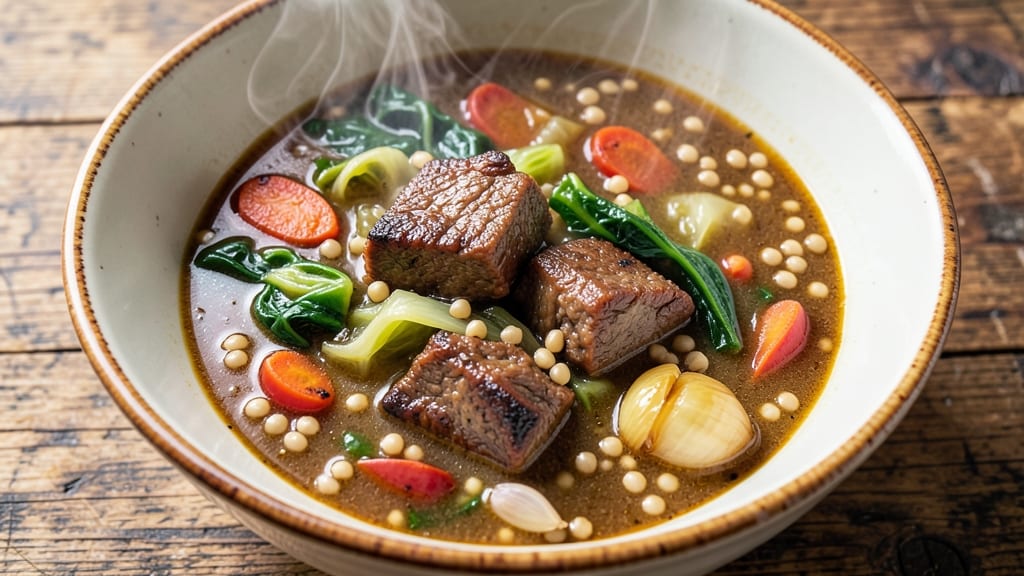
This beef barley cabbage soup recipe delivers the kind of hearty, comforting flavor that transforms a simple meal into a nourishing experience. The rich umami from slow-browned beef meets the earthy sweetness of cabbage and barley, creating a soup that’s as satisfying as it is nutritious.
I’ve perfected this recipe over years of testing—balancing tender beef, chewy barley, and crisp-tender cabbage for every spoonful of perfection.
The secret lies in the layers of flavor: browning the beef deeply to build a rich foundation, then simmering everything together until the vegetables soften and the broth thickens into a velvety consistency.
This isn’t just soup—it’s a one-pot meal that’s packed with protein, fiber, and warmth, perfect for chilly days or when you crave something substantial yet comforting. The barley adds heartiness, while the cabbage keeps it fresh and vibrant.
What you’ll end up with is a soup that’s deeply flavorful, with tender beef chunks, al dente barley, and cabbage that holds its shape just enough to add satisfying texture. The aroma alone—smoky, savory, and slightly sweet—will fill your kitchen and signal that dinner is ready.
It’s the kind of dish that tastes even better the next day, making it ideal for meal prep or feeding a crowd.
Whether you’re cooking for a family gathering or simply treating yourself to a cozy weeknight meal, this soup delivers restaurant-quality results with minimal effort. The best part? It’s adaptable—add carrots for extra sweetness, swap in mushrooms for umami depth, or keep it classic. Here’s how to make it.
Ingredients for beef barley cabbage soup
Six hearty ingredients create a soup so deeply flavorful it feels like a hug in a bowl.
| Ingredient | Amount | Notes |
|---|---|---|
| Beef Chuck Roast 🥩 | 2 lb | Cut into 1-inch cubes |
| Pearl Barley 🌾 | 1 cup | Rinsed before cooking |
| Green Cabbage 🥬 | 1 lb | Shredded, core removed |
| Carrots 🥕 | 3 medium | Peeled and sliced into rounds |
| Yellow Onion 🧅 | 1 whole | Diced, medium size |
| Garlic Cloves 🧄 | 4 cloves | Minced, fresh preferred |
| Beef Broth 💧 | 6 cups | Low-sodium preferred |
| Tomato Paste 🍅 | 2 tbsp | Smooth, not chunky |
| Dried Thyme 🌿 | 1 tsp | Or 1 tbsp fresh |
| Bay Leaves 🍃 | 2 whole | Removed before serving |
| Salt 🧂 | 1 ½ tsp | Kosher or sea salt |
| Black Pepper 🌶️ | ½ tsp | Freshly ground preferred |
| Olive Oil 🫒 | 2 tbsp | For browning beef |
| Apple Cider Vinegar 🍎 | 1 tbsp | For brightness |
The beef is everything here—chuck roast gives you that rich, fall-apart texture after hours of simmering. Costco sells it pre-cubed, which saves time, but if you're buying a whole roast, ask the butcher to cut it into even 1-inch pieces. Look for good marbling, not lean cuts. The barley? Pearl barley holds its shape better than steel-cut, so it’s perfect for soups. Rinse it before cooking to remove excess starch. Cabbage should be crisp and vibrant—green or purple both work, but avoid wilted outer leaves. Carrots can be baby carrots if you're in a rush, but whole carrots stay firmer when sliced into rounds. The onion and garlic are your flavor base—don’t skip browning them until they’re golden.
No beef broth? Vegetable broth plus 1 tbsp soy sauce works in a pinch, but the umami depth suffers. Short on thyme? Dried oregano at half the amount gets you close, but fresh thyme is ideal—it’s one of those herbs where the difference is noticeable. Tomato paste is non-negotiable for that sweet, concentrated flavor, but if you’re avoiding it, 1/4 cup crushed tomatoes will work. The apple cider vinegar might seem odd, but it brightens the whole dish—lemon juice works too. For extra richness, stir in 2 tbsp of Worcestershire sauce (check for vegetarian version if needed). And if you’re prepping ahead, freeze the raw soup in portions—it reheats beautifully.
This soup tastes even better the next day, so make a double batch if you can. Store leftovers in the fridge for up to 5 days, or freeze for 3 months. The barley thickens as it cools, so add a splash of broth when reheating. For meal prep, portion into glass containers—they keep flavors fresher than plastic. If you’re serving a crowd, double the recipe and use a large Dutch oven. The aroma alone will have everyone gathering at the table.
Why You'll Love This Recipe
- One-Pot Magic: I swear by this recipe when I’m too tired to wash pots. Toss everything—chuck roast, barley, cabbage—into one pot, and let it simmer. The beef practically falls apart on its own, while the barley soaks up all the rich broth. No chopping like a fine-dining chef, just rough cuts and a wooden spoon.
- Deep Umami Bomb: Between the slow-cooked chuck roast and the caramelized onions, this soup has layers of flavor that hit different. The barley adds a chewy, hearty bite, while the cabbage keeps it bright. Honestly, it’s the kind of taste that makes you forget you’re eating something simple.
- Leftovers for Days: This recipe actually improves the next day—yes, really. The flavors meld even more, and the barley gets that perfect tender bite. I make a double batch on Sundays and freeze half; it’s my go-to for lazy nights or when company drops by unexpectedly. No sad, soggy leftovers here.
- Budget Stretch: A chuck roast goes a long way, and barley is one of the cheapest whole grains out there. Cabbage and carrots are dirt cheap, too, so this soup feeds a crowd without breaking the bank. I’ll be real: it’s my way to make a fancy-feeling meal without the grocery bill.
Step-by-step instructions for beef barley and cabbage soup
Here's how to build this hearty soup with rich beef flavor and chewy barley.
Brown the Beef for Deep Flavor
Heat the 2 tablespoons olive oil in a large Dutch oven over medium-high heat. Add the 2 lb beef chuck roast cut into 1-inch cubes in a single layer, working in batches if needed. Let the beef brown undisturbed for 3-4 minutes until a deep crust forms.
This browning step is crucial—it develops the Maillard reaction that creates that irresistible beefy aroma. Stir occasionally and cook until the beef is golden brown on all sides. Transfer the browned beef to a plate and set aside. You'll notice the beef releases its juices into the pot, leaving behind a rich brown fond.
Sauté Vegetables and Build the Base
In the same Dutch oven, add the diced yellow onion and cook for 3 minutes until softened. Add the minced garlic cloves and cook for 30 seconds until fragrant. Stir in the peeled and sliced carrots and cook for 4 minutes until they begin to soften.
Here's where the soup starts to come together. The vegetables should release their natural juices and begin to caramelize slightly. Add the 1 cup rinsed pearl barley and stir to coat in the vegetable juices. This helps prevent the barley from sticking to the bottom of the pot during cooking.
Develop the Flavor Foundation
Add the 2 tablespoons tomato paste and stir well to combine. Pour in the 6 cups beef broth and bring to a gentle boil. Stir in the 1 tablespoon apple cider vinegar, 1.5 teaspoons salt, 0.5 teaspoon black pepper, 1 teaspoon dried thyme, and 2 whole bay leaves. Return the beef to the pot.
The vinegar adds a subtle brightness that cuts through the richness of the beef and barley. Bring the soup to a rolling boil, then reduce heat to low and let it simmer. This is where patience pays off—simmering at a steady low heat for 1 hour to 1 hour 15 minutes allows the flavors to meld beautifully.
Add the Cabbage and Finish Cooking
After the initial simmering time, add the 1 lb shredded green cabbage to the pot. Stir gently to distribute the cabbage evenly. The cabbage will cook down significantly, so don't worry about overcrowding the pot.
Continue simmering for another 30 to 45 minutes until the beef is fork-tender and the barley is chewy but fully cooked. You'll know the barley is done when it holds its shape but is tender to the bite. The cabbage should be soft but still retain some texture. Taste and adjust seasoning if needed.
Serve Warm with Fresh Herbs
Remove the 2 whole bay leaves before serving. Ladle the soup into bowls and garnish with fresh parsley if desired. The soup will continue to thicken slightly as it sits, so serve it while still warm for the best texture and flavor.
This soup tastes even better the next day as the flavors deepen. Store any leftovers in the refrigerator for up to 4 days or freeze for 3 months. Each bowl delivers a perfect balance of hearty beef, chewy barley, and tender cabbage with a rich, savory broth.
Pro Tips For Making Beef Barley Cabbage Soup
- SEAR THE CHUCK ROAST: Don’t rush this—crank the heat to medium-high and let that chuck roast develop a deep crust for 5-6 minutes per side. I learned the hard way that skipping this step means flavorless beef, even if it’s tender later. Use a 12-inch skillet or cast iron, and resist the urge to move it around too much.
- SOAK THE BARLEY: Pearl barley swells up like a sponge when raw—soak it in cold water for at least 30 minutes (or overnight) before adding it to the pot. This cuts cooking time by 20 minutes and keeps the texture creamy instead of gritty. (Yes, even if you’re impatient like me.)
- CHOP CABBAGE SMALL: Big chunks of cabbage stay tough no matter how long you simmer. Cut it into ½-inch pieces so it softens evenly alongside the carrots. I used to leave some whole for "rustic" appeal, but it just sat there like a sad, crunchy afterthought.
- SALT THE WATER LATE: Add salt only after the barley and cabbage have cooked for 20 minutes—this prevents the barley from turning mushy. Taste the broth first; if it’s bland, add 1-2 teaspoons of salt per quart, then adjust. (Your future self will notice the difference.)
Essential equipment for perfect results
Dutch Oven Essentials
A 6-quart Dutch oven is my go-to for this soup—it’s the perfect size for browning beef and simmering everything together without overflowing. I love the Le Creuset Signature line for its even heat distribution and durable enamel coating.
If you don’t have one, a heavy-bottomed stockpot with a lid works too, but Dutch ovens retain heat better for long simmering. 🔥
Knife and Cutting Board
Invest in a sharp chef’s knife (I use an 8-inch Wüsthof) for chopping onions, carrots, and cabbage efficiently. A cutting board with a juice groove prevents messes and keeps your counter clean.
For the cabbage, a mandoline speeds up shredding, but a sharp knife works fine if you’re patient. Always keep your knife sharp—dull blades crush ingredients instead of cleanly cutting them.
Measuring Tools
Precision matters in soup-making. Use a stainless steel measuring cup for broth and barley, and a spoon rest to keep your knives safe while you measure. For herbs like thyme, a small measuring spoon set ensures you add the right amount—too much can overpower the dish.
I keep my OXO Good Grips set handy for all my cooking tasks. 💡
Wooden Spoon and Ladle
A wooden spoon is a must for stirring—it won’t scratch your Dutch oven like metal utensils can. I prefer a long-handled spoon for deep pots. For serving, a stainless steel ladle with a heat-resistant handle makes transferring soup to bowls easier.
Avoid plastic utensils—they can melt or warp with prolonged heat exposure.
Immersion Blender (Optional)
If you prefer a smoother texture, an immersion blender (like the Ninja BN601) lets you blend the soup directly in the pot. Pulse for 10-15 seconds to achieve a velvety consistency without losing the hearty texture.
Skip this step if you love chunky soups—it’s entirely optional but handy for busy weeknights. 💫
Storage Containers
For leftovers, use glass containers with airtight lids—they preserve flavor better than plastic. I recommend Pyrex or Le Parfait for their durability and microwave safety. Label containers with dates to track freshness.
Freeze portions in ziplock bags (lay flat to save space) for up to 3 months. Glass containers also work in the freezer if sealed properly. ❄️
Nutrition facts
Frequently asked questions
Why does this recipe use pearl barley instead of steel-cut?
Pearl barley cooks faster (45-60 minutes) and holds its shape better in soups, creating that satisfying chewy texture. Steel-cut barley would turn mushy and require 2+ hours of simmering—perfect for pilafs but not ideal for this hearty soup where you want both texture and quick cooking.
Can I make this soup in an Instant Pot?
Brown the beef first in a skillet, then transfer everything to your Instant Pot. Use the High Pressure setting for 25 minutes instead of simmering. Quick release the pressure, stir in cabbage, and cook on High for 5 more minutes. The texture will be slightly different but still delicious—just add 1/4 cup water if it's too thick.
What if my cabbage turns mushy?
Add the cabbage 30 minutes before serving to keep it crisp-tender. If it's already too soft, stir in 1/4 cup fresh cabbage just before eating. For extra texture, try green cabbage wedges on the side—they stay crunchy even after reheating.
How can I make this soup vegetarian?
Swap beef for mushrooms (16 oz cremini) or lentils (1 cup dried), use vegetable broth, and add 1 tbsp soy sauce for umami. For depth, sauté 1 diced onion + 2 garlic cloves until caramelized before adding liquids. The barley and cabbage will still provide hearty texture and nutrition.
Can I use frozen cabbage instead of fresh?
Yes, but thaw and drain it first. Frozen cabbage will release more water, so reduce the broth by 1/2 cup to prevent a watery soup. For best results, use fresh cabbage—it holds its texture better and has a brighter flavor. If you must use frozen, add it 15 minutes before serving for optimal tenderness.