Soups & Stews
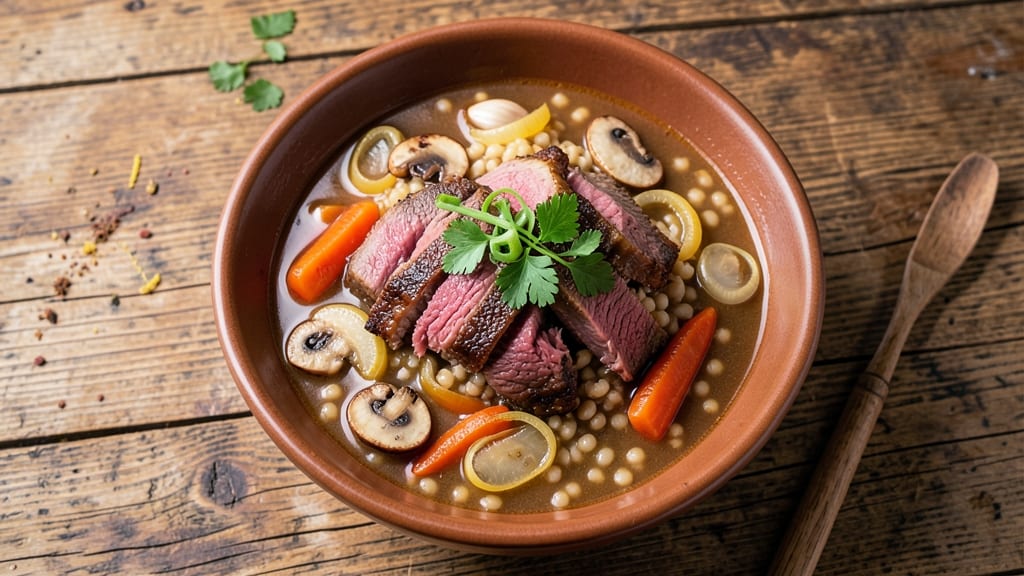
Transforming leftover prime rib into beef barley soup is one of those kitchen magic tricks that turns dinner scraps into a meal worth celebrating. I learned this technique during a particularly busy holiday season when I had more prime rib than I knew what to do with—and it became an instant family favorite. The rich, deep flavor of the prime rib infuses the broth, while pearl barley adds hearty texture and natural sweetness that balances the meal perfectly.
What makes this recipe work so well is the methodical approach to building flavor. First, you'll carve the prime rib into tender chunks, then sauté aromatics like onions and carrots until deeply caramelized—this step alone creates the foundation for a restaurant-quality broth.
The barley cooks slowly, absorbing all those rich flavors while staying firm and satisfying. This isn't just soup; it's a comforting, substantial meal that feels like a hug in a bowl.
The beauty of this dish is its versatility—it works equally well as a weeknight dinner or a Sunday family gathering. The slow simmering process develops complex flavors that only improve over time, making it perfect for meal prep.
Serve it with crusty bread for dipping or a sprinkle of fresh parsley for brightness. Every spoonful delivers that perfect balance of savory meat, hearty barley, and aromatic vegetables.
This recipe proves that leftovers can be even better than the original meal. The prime rib's natural richness transforms into a deeply flavorful broth, while the barley adds satisfying bite and substance.
It's the kind of soup that disappears quickly, leaving everyone asking for seconds. Let's create something truly special from what you already have.
Ingredients for beef barley soup recipe with leftover prime rib
Pantry staples plus that leftover prime rib you're about to transform into something extraordinary.
| Ingredient | Amount | Notes |
|---|---|---|
| Leftover Prime Rib 🥩 | 2 cups | Cubed, roughly 1-inch pieces |
| Yellow Onion 🧅 | 1 whole | Chopped into 1/2-inch dice |
| Carrots 🥕 | 4 medium | Peeled, cut into 1/2-inch rounds |
| Pearl Barley 🌾 | 1 cup | Uncooked, rinsed well |
| Garlic Cloves 🧄 | 4 cloves | Minced, for depth of flavor |
| Beef Broth 💧 | 6 cups | Low-sodium preferred |
| Tomato Paste 🍅 | 2 tbsp | For richness, not sweetness |
| Fresh Thyme 🌿 | 1 tbsp | Leaves only, chopped |
| Fresh Parsley 🌿 | ¼ cup | Chopped, for garnish |
| Olive Oil 🫒 | 2 tbsp | For sautéing aromatics |
| Bay Leaves 🍃 | 2 whole | Remove before serving |
| Salt 🧂 | 1 ½ tsp | Adjust to taste |
| Black Pepper 🌶️ | ½ tsp | Freshly ground |
That leftover prime rib is the star here—look for tender, well-marbled pieces that'll melt into the broth. Costco or Whole Foods often have great cuts if you need to buy fresh, but honestly, whatever you've got works. The pearl barley? Bob's Red Mill or store-brand both do the job—just make sure it's pearl, not quick-cooking. Carrots should be vibrant orange, not woody or shriveled. If they're past their prime, skip them entirely—this soup shines with just onions, garlic, and thyme.
No beef broth? Chicken broth with a splash of soy sauce works in a pinch, though the flavor won't be identical. Fresh thyme is ideal, but dried at one-third the amount gets you close. Tomato paste? Those little squeeze tubes at Trader Joe's are perfect—no waste, and they keep forever. The carrots can be baby carrots if that's what's in the fridge, but regular carrots have better texture. Want more depth? Add a dash of Worcestershire sauce (vegetarian version if needed) for umami punch.
This soup tastes even better the next day—double the batch if you can. Keeps for 5 days in the fridge or 3 months frozen. I always make a big pot and portion it into containers so lunches are sorted for the week. For serving, a sprinkle of fresh parsley brightens everything up. The barley gets softer over time, so reheat with a splash of water or broth if it seems too firm.
Why You'll Love This Recipe
- No Chopping Chaos: I swear by this trick—just roughly dice the onions and carrots, no need for fancy juliennes. The prime rib shreds itself when it hits the simmer, so even if you’re staring at a clock, this soup still wins.
- Rich Twice the Magic: That leftover prime rib? It’s already got the deep, meaty flavor locked in—now you’re just giving it a second life with caramelized garlic and barley’s chewy bite. Honestly, it’s like a hug in a bowl, but with more umami.
- Weeknight to Holiday: Same pot, different occasions. Whip it up for a tired Tuesday or double the batch for Thanksgiving leftovers. The barley soaks up all the good stuff, so it’s just as satisfying cold the next day—yes, even on a Tuesday.
- Zero-Waste Hero: Turns dry prime rib scraps into something luxurious without extra cost. I’ve saved $20+ a month by using what I already have, and the barley stretches it into three hearty meals. Practical? Absolutely. Delicious? Ridiculously.
Step-by-step instructions for beef barley soup with leftover prime rib
Transforming leftover prime rib into a rich, comforting soup is easier than you think—this method turns every bite into a flavor-packed experience.
Sauté the Aromatics and Prime Rib
Heat the 2 tablespoons olive oil in a large Dutch oven over medium heat. Add the 1 whole yellow onion and 4 medium carrots (already chopped), cooking for 5-6 minutes until the onions soften and the carrots begin to caramelize. You'll know it's ready when the onions turn translucent and the carrots release their natural sweetness.
Push the vegetables to one side of the pot and add the 2 cups leftover prime rib (cubed). Let the meat brown for 3-4 minutes on each side—this step builds deep, meaty flavor. If the meat releases easily from the pot, it's ready. Stir in the 4 cloves minced garlic and cook for 30 seconds until fragrant. Here's where the magic happens: the garlic should smell pungent but not burned.
Build the Flavor Base
Reduce the heat to medium-low and stir in the 2 tablespoons tomato paste, letting it cook for 1 minute until it darkens slightly. This step adds richness and balances the broth's acidity. Add the 1 cup pearl barley (rinsed), 1.5 teaspoons salt, and 0.5 teaspoon black pepper, stirring to coat everything evenly. Here's the thing—rinsing the barley removes excess starch, so it cooks up fluffy instead of gummy.
Pour in the 6 cups beef broth and bring the mixture to a gentle boil. Once boiling, add the 1 tablespoon fresh thyme, 2 whole bay leaves, and 1.5 teaspoons salt. The broth should cover the ingredients by about an inch—this ensures the barley absorbs flavor without drying out. Let it simmer for 10 minutes to let the flavors meld before adding the remaining ingredients.
Simmer Until Tender and Flavorful
Reduce the heat to low and let the soup simmer uncovered for 45-50 minutes, stirring occasionally. The barley should be tender but still hold its shape—it should feel soft when pressed between your fingers but not mushy. If the soup reduces too much, add ½ cup water to maintain the right consistency. I check for doneness by tasting a barley grain—it should be fully cooked but still have a slight bite.
After 45 minutes, remove the 2 bay leaves (they’ll turn bitter if left too long) and taste the soup. Adjust seasoning with more salt or pepper if needed—this is where you fine-tune the flavor. The soup should be rich, hearty, and deeply savory, with the prime rib adding a luxurious depth that turns leftovers into something extraordinary.
Finish and Serve
Once the soup is tender and seasoned to perfection, stir in the 0.25 cup fresh parsley just before serving. This adds a bright, fresh contrast to the deep, meaty flavors. Ladle the soup into bowls, garnishing each serving with an extra sprinkle of parsley if you like. The parsley not only looks beautiful but also cuts through the richness with its fresh, herbal notes.
Serve immediately while hot—this soup is best enjoyed fresh from the pot. Pair it with crusty bread to soak up every last drop of that flavorful broth. The combination of tender prime rib, chewy barley, and aromatic vegetables makes this soup a cozy, satisfying meal that feels like a hug in a bowl.
Pro Tips For Making Beef Barley Soup Recipe With Leftover Prime Rib
- CHOP THE ONION THIN: Slice those yellow onions paper-thin—less than 1/8-inch—so they dissolve into the broth instead of sitting as chewy chunks. I used to cut them in half-moons and wondered why they never broke down properly. A sharp knife and steady hand make this easy.
- SIMMER BARLEY UNTIL TENDER: Pearl barley needs 45–60 minutes to soften completely—don’t rush it. Check at 30 minutes, then taste: it should be fork-tender, not mushy. I learned this the hard way when my soup turned to glue.
- USE COLD WATER FOR BARLEY: Start the barley in cold water, not hot broth—it prevents clumping and ensures even cooking. Hot liquid makes it stick together like sad oatmeal. Trust me, this small step changes the texture.
- SHRED MEAT AFTER CHILLING: Let the prime rib cool slightly before shredding—it’s easier to pull apart and looks more restaurant-worthy. Warm meat turns to mush in your hands. A quick 10-minute rest under foil saves frustration.
Wine and beer pairings for this beef barley soup recipe with leftover prime rib
Red Wine Classics
A bold Cabernet Sauvignon from Napa Valley is my go-to for this rich soup—its dark fruit flavors and firm tannins complement the prime rib's depth beautifully. Look for a 2019 or newer vintage with notes of blackberry and cedar.
The acidity helps cut through the soup's richness, while the tannins balance the barley's creaminess. 🍷
For something more approachable, a Malbec from Argentina offers juicy plum and chocolate notes that pair wonderfully with the tomato paste's umami. I love Catena Zapata—it's always reliable and won't break the bank.
If you prefer Old World styles, a Chianti Classico with its bright acidity and cherry flavors works brilliantly too.
Crisp White Options
Don't dismiss whites—this soup actually works beautifully with a Chardonnay that has a touch of oak. A California Chardonnay from Kendall-Jackson or a Burgundy Chardonnay offers buttery notes that enhance the prime rib's richness. The slight acidity keeps the meal feeling fresh.
For something lighter, try a Viognier from the Rhône Valley—its floral and stone fruit notes provide a lovely contrast to the hearty soup. I've found Domaine de la Janasse to be particularly elegant with this dish, especially when served slightly chilled.
Beer Pairings
A dark amber ale with caramel and malt sweetness is perfect for balancing the soup's savory depth. Samuel Adams Noble Experiment or Allagash Dark Ale both work wonders—their toasty notes echo the barley's caramelization.
For something stronger, a Belgian Dubbel like Westmalle Dubbel adds a rich, spiced complexity that complements the thyme and bay leaves beautifully.
If you prefer lagers, a German Märzen with its malty sweetness and subtle spice provides a refreshing contrast. Weihenstephaner Original is my top pick—it's crisp enough to cleanse the palate between bites while still enhancing the soup's flavors. 🍺
Unexpected but Delicious
Here's a fun twist: a Pinot Noir from Oregon—its lighter body and red fruit notes actually let the prime rib shine without overpowering. Domaine Serene is a fantastic choice that won't cost a fortune. The subtle earthiness pairs beautifully with the thyme and bay leaves.
For something completely different, try a rosé with enough body to stand up to the soup. A Provence rosé like Whispering Angel offers citrus and floral notes that surprisingly complement the dish's richness. It's a great choice for warmer evenings when you want something refreshing but still substantial.
Nutrition facts
Frequently asked questions
Can I use regular barley instead of pearl barley?
No, this recipe specifically calls for pearl barley because its firm texture holds up better during simmering. Regular barley (like quick-cooking) turns mushy and absorbs too much liquid, making the soup thin and unappetizing. If you only have quick-cooking barley, reduce the simmer time to 30 minutes and add it in the last 10 minutes of cooking.
What if my leftover prime rib is fatty or has a strong flavor?
Trim any visible fat before cubing, as it can make the soup too greasy. For strong-flavored meat, add 1 extra bay leaf and ½ teaspoon more black pepper to balance the intensity. The long simmer time will mellow the flavors naturally—don't worry, the soup will still taste delicious!
How do I adjust this recipe for fewer servings?
For 4 servings, halve all ingredients except the broth (use 4 cups instead). Keep the same Dutch oven size to ensure proper simmering. The barley-to-broth ratio matters—too little liquid will make it dry. If needed, add ½ cup water during cooking to maintain consistency.
Can I make this soup in an Instant Pot?
Yes! Sauté the aromatics and prime rib in the Instant Pot for 5 minutes on high heat. Add all remaining ingredients (including barley) and cook on high pressure for 15 minutes. Let the pressure release naturally for 10 minutes, then stir and adjust seasoning. The barley will be slightly softer than stovetop, so check for doneness early.
Why does my barley taste bitter?
Overcooking or using old barley causes bitterness. Always rinse barley before cooking to remove starch. Simmer uncovered for 45-50 minutes max—if it's still firm, add ½ cup broth and cook 5 more minutes. Never let it boil vigorously after adding barley, or it'll release bitter compounds. Fresh thyme and parsley help mask any bitterness.