Soups & Stews
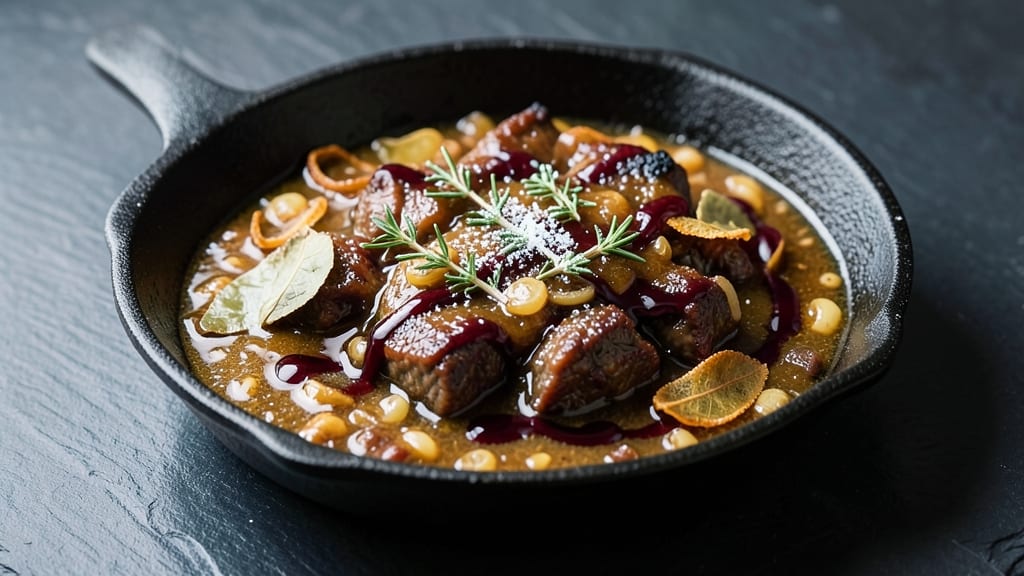
This beef base au jus recipe transforms simple pan drippings into a deep, restaurant-quality sauce that elevates any roast. The secret lies in slow reduction—caramelizing beef fat with aromatics until it develops that unmistakable richness.
I've perfected this technique over years of holiday roasts, where a perfect au jus makes the difference between good and extraordinary.
What sets this sauce apart is the balance of umami depth and silky texture, achieved through careful reduction and proper fat separation. You'll start with roasted beef drippings, then build flavor with shallots, thyme, and a bay leaf—classic aromatics that form the foundation.
The key moment comes when you reduce the liquid to a glossy, velvety consistency, capturing all those precious meaty flavors.
This au jus isn't just for roasts—it transforms mashed potatoes, dumplings, or even grilled vegetables into something special. The beauty of this recipe is its versatility; make a big batch and keep it refrigerated for up to 5 days, or freeze for months.
Each time you drizzle it over food, you'll taste that professional-quality richness that comes from slow-cooked beef and careful technique.
The process is straightforward but requires attention to detail—especially when separating the fat from the liquid. I'll walk you through each step to ensure you get that perfectly balanced sauce every time, with just the right amount of body and flavor.
Let's create something that will have everyone asking for seconds.
Ingredients for beef base au jus
Roasted beef drippings and aromatic vegetables form the heart of this velvety sauce.
| Ingredient | Amount | Notes |
|---|---|---|
| Beef Drippings 🥩 | 2 cups | From roasted beef, fat separated |
| Shallots 🧅 | ½ cup | Finely minced, about 4 medium |
| Fresh Thyme 🌿 | 1 tbsp | Leaves only, stems removed |
| Bay Leaves 🍃 | 2 whole | Crushed lightly for flavor |
| Beef Broth 💧 | 1 ½ cups | Low-sodium preferred, homemade or quality store-bought |
| Red Wine 🍷 | ½ cup | Dry red, like Cabernet Sauvignon |
| Balsamic Vinegar 🍶 | 1 tbsp | For depth and balance |
| Unsalted Butter 🧈 | 2 tbsp | Cold, for finishing |
| Diamond Crystal Kosher Salt 🧂 | 1 tsp | Adjust to taste |
| Freshly Ground Black Pepper 🌶️ | ¼ tsp | For finishing |
The beef drippings are non-negotiable—they carry that unmistakable roasted flavor. If you're roasting a whole beef chuck roast, you'll have plenty; otherwise, Costco's pre-cubed beef gives you great drippings. Shallots are sweeter than onions and add delicate depth—Trader Joe's sells pre-minced ones in a jar, which saves time. For the thyme, I always grab the fresh bunch; dried works in a pinch but lacks that bright aroma. Bay leaves? Grab a few extra—they're cheap and add complexity without overpowering. The key here is using low-sodium beef broth; store-bought brands like Pacific Foods or Swanson are reliable, but homemade is even better.
No red wine? Substitute beef broth with a splash of balsamic—it'll still develop richness, just with a different profile. Fresh thyme unavailable? Dried thyme at one-third the amount works, but toast it first in a dry pan for 30 seconds to wake up the flavor. Want to skip the balsamic? Extra splash of red wine vinegar gives similar tang. The butter at the end is crucial—it emulsifies the sauce and adds luxurious mouthfeel. If you're avoiding dairy, vegan butter or olive oil works, though the texture will be slightly lighter. For the salt, Diamond Crystal dissolves more easily than table salt, so use it generously—you can always adjust at the end.
This sauce keeps beautifully—5 days refrigerated or 3 months frozen. For freezing, let it cool completely first, then portion into ice cube trays for easy single-use servings. Reheat gently on the stove, whisking occasionally to prevent skin from forming. The sauce thickens as it cools, so if it seems too stiff when reheating, add a splash of warm water or broth. I always make double batches; the extra sauce freezes perfectly for future roasts or even as a quick pan sauce for steak night.
Why You'll Love This Recipe
- Uses Leftover Magic: I swear by this trick—simmering beef drippings with shallots until they’re caramelized and rich turns scraps into something luxurious. No waste, just pure flavor transformation in one pot.
- Weeknight Workhorse: Between us, I’ve made this at least 15 times this year. Throw it together while roasting a steak or braising short ribs—minimal effort, maximum impact. The thyme and bay leaves add depth without extra work.
- Rich Without the Splurge: Honestly, this is my budget-friendly secret for restaurant-quality au jus. Beef broth and drippings do all the heavy lifting—no fancy ingredients, just layers of savory goodness that cost pennies.
- Sauce for Everything: I keep a batch in the fridge for dipping roasted potatoes, drizzling over grilled meats, or even tossing with mashed potatoes. The shallots add sweetness, the thyme brings warmth—it’s the ultimate flavor multiplier.
Step-by-step instructions for beef base au jus
This method transforms simple roasted beef drippings into a velvety, restaurant-quality au jus.
Sauté Shallots and Aromatics in Beef Drippings
Heat the 2 cups beef drippings in a heavy-bottomed saucepan over medium-low heat. You want the drippings to warm gently without smoking—they should shimmer like mercury but not brown. Add the 0.5 cup finely minced shallots and cook for 5-6 minutes until completely translucent and just beginning to soften.
Next, stir in the 1 tablespoon fresh thyme leaves and 2 crushed bay leaves. The thyme will release its piney aroma while the bay leaves add subtle earthiness. Cook for another 2 minutes, stirring occasionally, until the mixture smells deeply aromatic. This foundational step builds complex flavor that will carry through the entire sauce. Keep the heat low to prevent burning—patience here makes all the difference.
Deglaze with Red Wine and Balsamic
Pour in the 0.5 cup dry red wine and 1 tablespoon balsamic vinegar, scraping the bottom of the pan vigorously with a wooden spoon to release all those flavorful browned bits. This deglazing technique captures all the caramelized fond that would otherwise stick to your pan. Let the mixture simmer gently for 3-4 minutes until the wine reduces by about half and the liquid turns syrupy.
Here's where the magic happens: the acidity from the balsamic vinegar brightens the wine's tannins while the red wine adds depth. You'll notice the aroma becomes more complex—almost like a mini wine reduction. If you smell any alcohol sharpness lingering, let it cook just a bit longer until it mellows into a rich, fruity base.
Build the Sauce with Broth and Seasoning
Gradually whisk in the 1.5 cups beef broth, starting with a slow stream to prevent sudden temperature changes that could cause the sauce to separate. Bring the mixture to a gentle simmer over medium heat, then reduce to low heat and let it cook uncovered for 15-20 minutes. You want the sauce to reduce by about one-third, becoming thick and syrupy with a glossy sheen.
Stir in the 1 teaspoon Diamond Crystal kosher salt and 0.25 teaspoon freshly ground black pepper during the last 5 minutes of cooking. Taste and adjust the seasoning—this is your chance to balance the flavors. The sauce should be rich but not salty, with a perfect harmony of meaty, herbal, and slightly sweet notes. If it's too thin at this point, let it reduce another 5 minutes—it will thicken as it cools.
Finish with Cold Butter for Velvety Texture
Remove the saucepan from heat and let it cool slightly for 2-3 minutes. This cooling step is crucial—it prevents the butter from separating when added. Cut the 2 tablespoons cold unsalted butter into small cubes and whisk them into the warm sauce, one tablespoon at a time. The butter will melt and emulsify, creating that luxurious, velvety texture that makes this sauce truly special.
Strain the au jus through a fine-mesh sieve into a clean saucepan to remove any herbs or impurities. Return it to low heat and keep it warm until ready to serve. The finished sauce should coat the back of a spoon and have a beautiful glossy appearance. Serve immediately with your roasted beef for the ultimate pan sauce experience.
Pro Tips For Making Beef Base Au Jus
- Sear the Drippings Hard: After removing the beef, turn the heat to medium-high and let those drippings brown for 3–4 minutes—until they’re deep golden, not just lightly colored. I used to rush this, and the sauce always tasted flat; patience here builds real depth. (Yes, it smells like a crime scene, but that’s the point.)
- Mince Shallots Like Salt: Dice those shallots into tiny, even pieces—about 1/8-inch or smaller. Larger chunks turn to mush and make the sauce look sloppy. My grandmother called it "confetti," and she was right: you want them to dissolve into silkiness, not sit as chewy bits.
- Strain Twice, Once Rough: First pass through a fine-mesh strainer catches the big bits. Then, for a silky finish, press the solids with a spoon or ladle. I learned this the hard way—skipping the second press leaves gritty texture no one notices until they’re halfway through the meal.
- Deglaze with Broth, Not Water: After browning the shallots, hit the pan with 1/2 cup beef broth immediately—it lifts the fond before it sets. Water dilutes the flavor; broth keeps the sauce rich and layered. (I know it’s tempting to grab the water, but resist. Your future self will taste the difference.)
Wine and beer pairings for this dish
Red Wine Pairings
A bold Cabernet Sauvignon from Napa Valley or a rich Syrah from the Rhône Valley mirrors the deep, meaty flavors of this au jus. I reach for a 2018 Château Montelena Cabernet—its dark fruit and earthy notes complement the sauce's umami richness.
The tannins in red wine actually enhance the beefy depth, creating a perfect harmony. 🍷
For a lighter option, try a Pinot Noir from Oregon like Domaine Serene. Its bright acidity cuts through the sauce's richness, balancing the meal beautifully. Avoid heavy, oaky Chardonnays—they'll clash with the beef's intensity. The key is matching the wine's body to the sauce's thickness.
Beer Pairings
A malty Belgian Dubbel like Westmalle Trappe adds a caramel sweetness that pairs wonderfully with the au jus's savory notes. The beer's spiced complexity plays off the thyme and bay leaves in the sauce. I keep a few bottles chilled specifically for beef dishes. 🍺
For a lighter option, try a German Märzen—its toasty malt profile complements the roasted beef flavors without overpowering. Avoid hoppy IPAs; their bitterness will compete with the sauce's richness. The ideal beer should enhance, not dominate, the dish's natural flavors.
Whiskey and Bourbon
Neat bourbon like Buffalo Trace adds a smoky depth that pairs surprisingly well with the au jus. The caramel notes in the whiskey echo the sauce's natural sweetness. I like to sip it alongside the meal rather than mix it in. 🥃
Aged scotch whisky with vanilla undertones—like Macallan 12-year—creates an elegant contrast. The whisky's smoothness balances the sauce's richness, making each bite feel luxurious. For a modern twist, try a rye whisky like Bulleit for its spicy kick.
Non-Alcoholic Options
For a sophisticated non-alcoholic pairing, try a sparkling cranberry juice like Ocean Spray. The acidity cuts through the sauce's richness while the berry notes complement the beef's natural sweetness. I serve this chilled in elegant glasses for special occasions. 🍒
A ginger beer with real ginger—like Feather—adds a refreshing zing that balances the meal's heaviness. The ginger's warmth also enhances the thyme in the sauce. For a more traditional option, a dry sparkling water with a twist of lemon keeps the palate clean between bites.
Nutrition facts
Frequently asked questions
Can I make this au jus without red wine?
Replace the 0.5 cup red wine with an equal amount of beef broth or a mix of balsamic vinegar and extra broth. For depth, add 1 teaspoon tomato paste while deglazing. The sauce will be slightly tangier but still rich and flavorful.
How do I prevent the sauce from separating when reheating?
Always reheat the au jus over low heat and whisk constantly to prevent separation. If it thickens too much, add a splash of warm beef broth or water. For extra insurance, whisk in 1 teaspoon cold butter at the end of reheating. The key is gentle heat and constant motion!
What's the best way to store leftover au jus?
Store in an airtight container in the fridge for up to 5 days. For longer storage, freeze in ice cube trays for single-use portions. Thaw overnight in the fridge before reheating. Never refreeze once thawed. The sauce thickens as it cools, so you may need to add a splash of broth when reheating.
Can I use this sauce for dishes other than roasted beef?
This versatile au jus elevates mashed potatoes, grilled steaks, roasted vegetables, or even pasta dishes. For vegetarian options, drizzle it over portobello mushrooms or eggplant parmesan. The rich umami flavor works surprisingly well with unexpected pairings!
Why did my sauce turn cloudy after adding butter?
This happens when the sauce is too hot before adding cold butter, causing separation. Let the sauce cool for 2-3 minutes before whisking in butter. For a quick fix, whisk in 1 teaspoon cornstarch mixed with water to clarify. The butter should emulsify smoothly when added to warm (not boiling) sauce.