
Soups & Stews
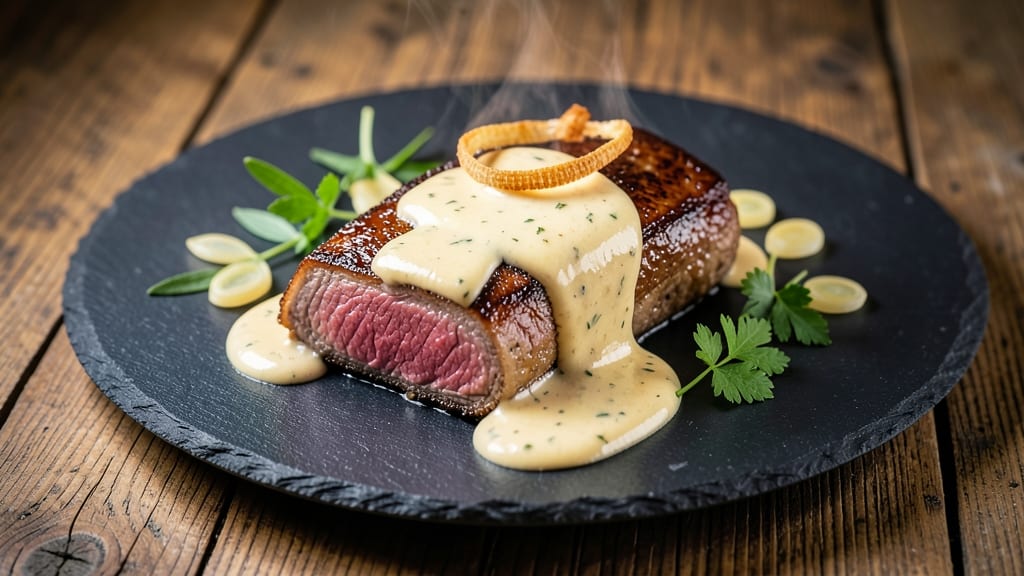
This beef bearnaise recipe transforms simple steak into a gourmet masterpiece with its velvety, herb-infused richness. The secret lies in tempering egg yolks with clarified butter while reducing a tangy vinegar base to perfection. I've perfected this technique after years of trial and error—no more broken emulsions or grainy textures.
What sets this bearnaise apart is the balance of acidity from white wine vinegar and sweetness from shallots, all tied together with fresh tarragon and parsley.
The sauce should be glossy, thick enough to coat the back of a spoon, yet light enough to enhance—not overpower—the natural flavors of beef. Precision is key—whisking constantly and removing from heat at the right moment ensures a silky finish.
The result is a sauce that elevates any grilled or pan-seared steak to restaurant-quality status. Drizzled over perfectly cooked beef, it creates a luxurious sheen and a flavor profile that's both elegant and deeply satisfying. This isn't just a sauce—it's the crowning glory of your meal.
With just 10 minutes of active work and 15 minutes of simmering, you'll have enough bearnaise to impress even the most discerning guests. Let's get started on creating this classic sauce at home.
Ingredients for beef bearnaise
Eleven ingredients. One luxurious sauce. Restaurant-quality bearnaise at home—no shortcuts.
| Ingredient | Amount | Notes |
|---|---|---|
| Clarified Butter 🧈 | 1 cup | Homemade or store-bought, room temperature |
| Large Egg Yolks 🥚 | 4 whole | Fresh, room temperature for best emulsion |
| White Wine Vinegar 🍷 | ¼ cup | Dry variety for proper acidity balance |
| Shallots 🧅 | 2 whole | Finely minced, not chopped |
| Fresh Tarragon 🌿 | ¼ cup | Chopped stems and leaves |
| Fresh Parsley 🌿 | ⅛ cup | Flat-leaf, finely chopped |
| Dijon Mustard 🌶️ | 1 tbsp | High-quality, not powdered |
| Granulated Sugar 🍚 | ½ tsp | Balances vinegar acidity |
| Salt 🧂 | ½ tsp | Diamond Crystal preferred |
| Black Pepper 🌶️ | ¼ tsp | Freshly cracked for best flavor |
| Dry White Wine 🍷 | ¼ cup | Sauvignon Blanc or Chardonnay |
The clarified butter is non-negotiable here—it's what gives bearnaise that signature velvety texture. Ghirardelli or Trader Joe's make great pre-made versions, but homemade (just melted butter with the milk solids skimmed off) is worth the 10 minutes. Fresh egg yolks are a must—room temperature, please. I grab my eggs from Whole Foods or the local farm stand when they're in season. The white wine vinegar should be dry, not balsamic or apple cider—Bartles & Jaymes is a solid budget pick, but anything labeled 'dry' works. Shallots? Freshly minced is key—they add sweetness that jarred minced lacks. Tarragon and parsley need to be fresh too—dried just won't cut it for this sauce.
No clarified butter? Brown butter strained through cheesecloth works in a pinch, though it'll have a slightly different flavor. Out of white wine? Dry sherry or even apple cider vinegar can sub, but taste as you go—you might need extra sugar to balance. Fresh herbs missing? Dried tarragon at one-third amount plus extra parsley can help, but it won't be the same. The wine? Any dry white works—whatever's open in your fridge. And if you're wondering about the sugar—yes, it's necessary to mellow the vinegar's harshness. Don't skip it. The mustard is there to help emulsify, so high-quality Dijon (none of that powdered stuff) is crucial.
This sauce is best made fresh, but it'll keep in the fridge for 4-5 days if stored in an airtight container with a thin layer of oil on top. Freezes beautifully for up to 3 months—just thaw gently in the fridge. I always make extra because it's perfect on eggs Benedict too. The key to reheating? Low heat only—whisk constantly and remove before it thickens too much. It'll come back together beautifully with a splash of warm water if it breaks. Trust me on this.
Why You'll Love This Recipe
- No Egg Scramble Needed: I’ll admit, I burned my first batch of yolks—hard—but once you get the double boiler right, it’s foolproof. No whisking until your arm falls off; just steady heat and patience. That first silky ribbon of sauce? Worth every second.
- Tarragon Magic: Honestly, the tarragon is the star here. It’s that bright, slightly peppery herb that makes this sauce taste like a fancy bistro, not just a weeknight dinner. A handful of fresh leaves transforms simple clarified butter into something ridiculously good.
- Steak Night, Every Night: This sauce turns a basic steak into a showstopper—no matter the cut. Toss it on a quick pan-seared ribeye, drizzle it over grilled burgers, or even slather it on roasted potatoes. My kids still ask for it even when I tell them it’s “fancy food.”
- Leftovers? Even Better: Between us, bearnaise tastes better the next day. The flavors meld, and the sauce thickens just enough to coat everything perfectly. I make a double batch on Sundays and use it for three meals—no waste, no stress. Just pure satisfaction.
Step-by-step instructions for beef bearnaise
This classic sauce delivers steakhouse-level richness with precise technique and fresh herbs.
Prepare the Herb-Infused Vinegar Base
Combine the 0.25 cup white wine vinegar, 0.5 tsp granulated sugar, 0.5 tsp salt, 0.25 tsp black pepper, 2 whole minced shallots, 0.25 cup chopped fresh tarragon, and 0.125 cup chopped fresh parsley in a small saucepan. Bring to a gentle simmer over medium-low heat and cook for 8-10 minutes until the liquid reduces by about half and the shallots are completely tender.
Here's the thing—don't rush this step. The vinegar needs time to mellow and infuse the herbs properly. You'll know it's ready when the mixture smells intensely aromatic and has thickened noticeably. Strain the mixture through a fine-mesh sieve into a clean bowl, pressing gently on the solids to extract all the flavor. Discard the solids—you only want that vibrant, herby liquid.
Create the Emulsified Sauce Base
In a heatproof bowl, whisk together the 4 whole large egg yolks and 1 tbsp Dijon mustard until smooth and slightly thickened. Place this bowl over a pot of barely simmering water (double boiler method), ensuring the bottom of the bowl doesn't touch the water. This gentle heat will warm the yolks without cooking them.
Slowly pour the strained herb-infused vinegar mixture into the egg yolks while whisking constantly. The mixture should begin to thicken immediately as it emulsifies. If it curdles at all, strain it again through a fine-mesh sieve to remove any cooked egg bits. Keep whisking gently over the warm water bath for 3-5 minutes until the sauce reaches 160°F—it should thicken to a glossy, pudding-like consistency.
Incorporate the Clarified Butter
Remove the bowl from the heat and let it cool slightly for 2 minutes. Then, very slowly drizzle in the 1 cup room-temperature clarified butter while whisking vigorously in a figure-eight motion. This gradual incorporation is crucial—adding the butter too quickly will break the emulsion and create a greasy sauce.
Continue whisking until the sauce becomes completely smooth and creamy. If it starts to separate at all, simply whisk in 1 teaspoon of hot water from the double boiler to restore the emulsion. The final sauce should be thick enough to coat the back of a spoon but still flow smoothly. Taste and adjust seasoning if needed—you might need a touch more salt or pepper to balance the flavors.
Finish with White Wine and Rest
Return the sauce to the warm water bath and stir in the 0.25 cup dry white wine (I prefer Sauvignon Blanc for its crisp acidity). Simmer gently for 2-3 minutes until the wine is completely evaporated and the sauce is perfectly smooth. Remove from heat and cover the surface with a thin layer of plastic wrap to prevent a skin from forming.
Let the bearnaise rest at room temperature for 15-20 minutes before serving. This resting period allows the flavors to meld completely and the sauce to reach its ideal consistency. The sauce should be thick, glossy, and rich enough to cling beautifully to steak or fish. If it thickens too much while resting, simply whisk in 1 teaspoon of warm water to loosen it to your desired consistency.
Pro Tips For Making Beef Bearnaise
- Whisk Like Your Life Depends On It: Bearnaise isn’t a smoothie—it’s an emulsion, and you’ll know when you’ve failed if it breaks into greasy curds. Whisk the yolks and vinegar mixture over direct low heat until it thickens enough to coat the back of a spoon, then keep whisking while adding the clarified butter a tablespoon at a time. I used to rush this, and my sauce would split like a bad marriage—now I treat it like a temperamental lover.
- Shallots Only When Cold: Finely minced shallots add depth, but raw ones taste bitter and sharp. Cook them in the vinegar until completely translucent and just starting to soften—about 3-4 minutes on medium-low. Then remove them immediately (yes, even if they’re not browned) because lingering too long turns them into flavorless mush. I learned this after making a bearnaise that tasted like onion breath.
- Clarified Butter or Bust: Whole butter has water, and water = disaster. Use clarified butter (or ghee) to avoid sauce curdling when it hits the heat. If you’re lazy, melt unsalted butter, skim off the foam, then strain it through a fine-mesh sieve into a clean jar. Store the leftover milk solids for toast—just don’t put them back in your bearnaise.
- Tarragon Last, Not First: Fresh tarragon is delicate and burns faster than your patience. Add it after the sauce has thickened but before it hits the table—just a few minutes of gentle simmering is enough. If you toss it in raw, you’ll either choke on the stems or end up with a sauce that tastes like herbal disappointment. I now keep a small bowl of chopped tarragon nearby for this exact moment.
Make-ahead tips for beef bearnaise
Prep Ahead Components
Make the herb-infused vinegar base up to 2 days ahead—it keeps beautifully in an airtight container in the fridge. This is my favorite time-saver because the flavors deepen overnight. Just reheat gently before using in the sauce.
The clarified butter can also be prepped in advance and stored at room temperature for 5 days or in the fridge for 2 weeks. 🧈
Egg Yolk Prep
Separate your egg yolks the night before and store them in a sealed container in the fridge. I use a small glass jar with the lid tightly on. When you're ready to make the sauce, let them sit at room temperature for 30 minutes before using—this ensures a smooth emulsion.
Room-temperature yolks are non-negotiable for a perfect bearnaise. 🥚
Herb Storage
If you're short on time, chop your tarragon and parsley ahead and store them in a small container with a damp paper towel. Keep them refrigerated for up to 3 days.
For the shallots, peel and mince them in advance, then store in a sealed container with a splash of water to prevent browning. This saves you 10 minutes of prep when you're ready to cook. 🌿
Sauce Assembly Shortcut
Here's my pro tip: Make the sauce base (vinegar reduction and egg yolk mixture) ahead, then refrigerate it in a sealed container. When ready to finish, simply reheat the base gently over a double boiler, then add the clarified butter and wine. This cuts your active cooking time by half while still delivering restaurant-quality results. Just
Freezing for Later
Bearnaise freezes surprisingly well for up to 3 months if done properly. Let the sauce cool completely, then transfer it to a freezer-safe container. Leave ½ inch of space at the top to allow for expansion. When ready to use, thaw it in the fridge overnight, then reheat gently over a double boiler, whisking constantly. You may need to thin it with a splash of warm water if it thickens too much during freezing. ❄️
Make-Ahead Serving Prep
For a stress-free dinner party, assemble everything you need the night before: measure out your clarified butter, white wine, and Dijon mustard in separate containers. Preheat your double boiler setup and have your whisk ready.
When guests arrive, you can have this luxurious sauce ready in 15 minutes flat. The key is organization—trust me, it makes all the difference when you're hosting. 💫
Nutrition facts
Frequently asked questions
Why does my bearnaise sauce break or separate?
This happens when the emulsion fails, usually from adding butter too quickly or overheating the sauce. Always whisk vigorously in a figure-eight motion while slowly drizzling in the clarified butter. If it breaks, whisk in 1 teaspoon of hot water to restore the emulsion. Keep heat at medium-low—never let it boil.
Can I make bearnaise without egg yolks?
Traditional bearnaise requires yolks for its signature richness, but you can make a vegan version using 1 cup neutral oil, 2 tbsp lemon juice, 1 tbsp Dijon mustard, and 1 tsp sugar. Whisk vigorously for 5 minutes until emulsified. The texture will be lighter, but the herby flavor remains.
What's the best way to reheat leftover bearnaise?
Reheat gently over a double boiler—never microwave it. Whisk constantly until warmed through, then adjust consistency with 1 tsp warm water if needed. If it thickens too much, thin it gradually. For best results, reheat only what you need and keep the rest refrigerated.
How do I store fresh tarragon for this recipe?
Wrap the stems in a damp paper towel, place in a resealable bag, and refrigerate for up to 1 week. For longer storage, freeze chopped tarragon in ice cube trays with water—thaw as needed. Fresh tarragon is essential for authentic flavor; dried won't work as a substitute.
What's the secret to balancing the acidity in bearnaise?
The sugar and white wine are key! The 0.5 tsp sugar mellows the vinegar's harshness, while the 0.25 cup dry white wine adds brightness. Taste as you go—adjust with more sugar or a splash of wine if needed. The sauce should be tangy but never sour.