
Soups & Stews
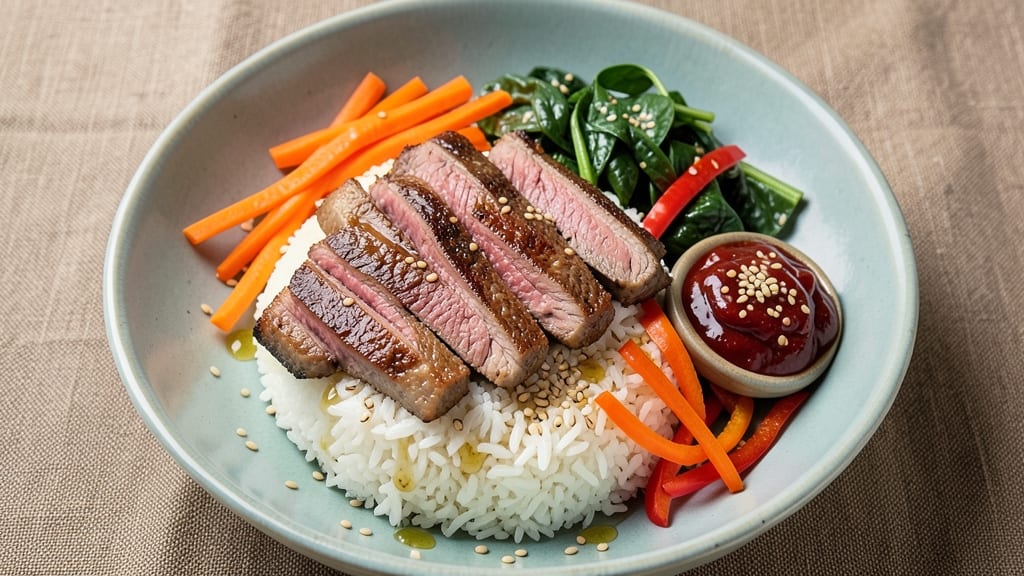
This beef bibimbap bowl recipe delivers the perfect balance of textures and flavors—crispy fried eggs, tender beef, vibrant vegetables, and a rich gochujang sauce that ties everything together. 🔥 The secret lies in cooking each component separately so they retain their individual qualities, then assembling them into a visually stunning, restaurant-quality bowl.
I developed this version after years of experimenting with Korean home cooking, ensuring every element—from the perfectly seared beef to the runny yolk—comes together effortlessly.
The foundation starts with short-grain rice cooked to ideal consistency, then topped with marinated beef slices that stay juicy and flavorful. Quick-pickled vegetables add brightness, while sautéed spinach, carrots, and zucchini bring texture and color.
What makes this recipe special is the gochujang sauce, a blend of fermented chili paste, soy sauce, and sesame oil that adds depth without overpowering the other components. The crispy fried egg on top is the showstopper—its golden crust contrasts beautifully with the creamy yolk and spicy sauce.
What you'll end up with is a bowl that's as impressive to look at as it is to eat—layered with vibrant colors, contrasting textures, and bold flavors. The beef remains tender, the vegetables crisp, and the egg perfectly runny, all brought together by the spicy-sweet gochujang sauce.
This isn't just a meal; it's an experience that brings the heart of Korean cuisine into your home kitchen. The best part? It's easier to assemble than you think.
Serve with extra sesame seeds and sliced green onions for garnish, and don't forget the banchan (side dishes) if you're feeling ambitious. The key to success is keeping everything hot while you assemble, so work efficiently and enjoy the process.
This recipe is perfect for weeknight dinners or weekend cooking projects—either way, you'll have a dish that feels like a five-star restaurant meal.
Ingredients for beef bibimbap bowl
The perfect balance of textures and flavors starts with these ingredients—short-grain rice, marinated beef, crispy eggs, and vibrant vegetables all coming together in a visually stunning bowl.
| Ingredient | Amount | Notes |
|---|---|---|
| Short-Grain White Rice 🍚 | 1 ½ cups | Uncooked, jasmine or sushi rice preferred |
| Ribeye Steak 🥩 | 1 lb | Thinly sliced against grain |
| Soy Sauce 🍶 | ¼ cup | Korean or Japanese preferred |
| Sesame Oil 🫒 | 1 tbsp | Toasted for aroma |
| Gochujang Paste 🌶️ | ½ cup | Korean fermented chili paste |
| Sugar 🍯 | 1 tbsp | White granulated |
| Rice Vinegar 🍶 | 1 tbsp | For pickling vegetables |
| Spinach 🌿 | 4 oz | Fresh baby spinach |
| Carrots 🥕 | 1 medium | Julienned or matchstick cut |
| Zucchini 🍆 | 1 medium | Thinly sliced lengthwise |
| Green Onions 🧅 | 3 whole | Thinly sliced, white and green parts |
| Sesame Seeds 🌾 | 1 tbsp | Toasted for garnish |
| Large Eggs 🥚 | 4 whole | Fresh, cold from fridge |
| Vegetable Oil 🫒 | ½ cup | For frying eggs |
| Salt 🧂 | 1 tsp | Kosher or sea salt |
| Black Pepper 🌶️ | ½ tsp | Freshly ground |
The short-grain rice is non-negotiable here—jasmine or sushi rice gives that perfect sticky texture. Lundberg Family Farms or Koshihikari are my go-tos, but any good-quality sushi rice works. For the beef, ribeye is ideal because it stays tender when sliced thin, but sirloin works too. Look for well-marbled cuts at Whole Foods or your local butcher—they'll slice it for you if you ask. The gochujang paste? Maesil Gochujang is my absolute favorite, but any reputable brand will do. If you can't find it, a mix of chili paste and soy sauce gets you close.
No sesame oil? Toasted peanut oil works in a pinch, though it lacks that nutty depth. Running short on gochujang? Mix 2 tbsp sriracha with 1 tbsp soy sauce and 1 tsp sugar for a quick substitute. The pickled vegetables can be made ahead—they actually taste better after sitting overnight. For the veggies, baby spinach is ideal, but regular spinach works if you chop it finely. The carrots and zucchini should be cut uniformly so they cook evenly. And those crispy fried eggs? Cold eggs from the fridge are key—they hold their shape better and give that perfect runny yolk.
This dish reheats beautifully—just warm the components separately and assemble fresh. The rice keeps for 3 days in the fridge, while the marinated beef stays good for 2 days if stored properly. The gochujang sauce can be made a day ahead and stored in the fridge. For the fried eggs, I like to prep them just before serving so they stay crispy. Garnish with extra sesame seeds and green onions right before eating—trust me, it makes all the difference. The whole bowl comes together in about 30 minutes once everything's prepped, so plan accordingly.
Why You'll Love This Recipe
- Steak in Minutes: That ribeye? It’s actually foolproof—just sear it rare, slice it thin, and let the sesame oil work its magic. No fancy butchering skills needed, just a hot pan and 10 minutes of your time.
- Umami Bomb: The gochujang and soy sauce marry so perfectly with the steak that every bite feels like a hug. That sticky, slightly spicy-sweet sauce? It turns simple rice into a flavor party.
- Lunchbox Hero: Between us, this is my go-to meal prep lunch. Assemble the bowls ahead, store the components separately, and reheat in seconds. Cold rice? No problem—just drizzle extra sesame oil on top.
- Budget Power Move: Ribeye on sale? Buy extra. Rice stretches forever. The rest of the ingredients? Pantry staples. You’re feeding a crowd for the price of one takeout order—and it’ll actually fill you up.
Step-by-step instructions for beef bibimbap bowl
Here's how to assemble this vibrant, flavor-packed bowl with restaurant-quality technique.
🍳 Step 1: Cook the Perfect Short-Grain White Rice
Rinse the 1.5 cups short-grain white rice thoroughly under cold water until the water runs clear. This removes excess starch that would make the rice mushy. Transfer the rice to a pot with 2 cups water and bring to a boil over high heat. Once boiling, reduce to low heat, cover tightly, and simmer for 15 minutes. Turn off the heat and let it steam, covered, for another 10 minutes. The rice should be tender with a slight bite—like jasmine rice should be. Fluff gently with a fork and keep warm in a rice cooker or insulated container.
Here's the thing—don't skip the rinsing. I've learned the hard way that unrinsed rice becomes gummy, and that's a dealbreaker for bibimbap. Also, resist the urge to peek while cooking—every time you lift the lid, you release steam and potentially uneven cooking.
👨🍳 Step 2: Marinate and Cook the Ribeye Steak
Slice the 1 lb ribeye steak thinly against the grain using a sharp knife—about ⅛-inch thick slices. In a bowl, combine the steak with 0.25 cup soy sauce, 1 tbsp sesame oil, 0.5 cup gochujang paste, 1 tbsp sugar, and 0.5 tsp black pepper. Mix well and let marinate for at least 30 minutes (or up to 2 hours in the fridge for deeper flavor). Heat a non-stick skillet over medium-high heat, add the marinated steak, and cook for 2-3 minutes per side until just cooked through and slightly caramelized. Remove and set aside.
This is where the magic happens—the gochujang paste gives that signature spicy-sweet kick. Don't overcook the steak or it'll turn tough. You want it tender enough to slice easily with chopsticks. If the pan gets too dry, add a splash of water to deglaze, but don't overdo it or the marinade flavors will dilute.
🥘 Step 3: Prepare the Vegetable Medley
Julienne the 1 medium carrots and slice the 1 medium zucchini into thin lengthwise strips. Blanch both in boiling water for 1 minute, then immediately transfer to ice water to stop cooking. Drain well. In a separate bowl, toss the blanched vegetables with 1 tbsp rice vinegar, 1 tbsp sesame oil, and 0.5 tsp salt. Set aside. For the spinach, quickly blanch the 4 oz spinach in boiling water for 30 seconds, drain, and squeeze out excess water. Toss with 1 tbsp sesame oil and a pinch of salt.
Blanching is key here—it softens the vegetables just enough to make them tender yet still hold their shape. The vinegar and sesame oil give that bright, fresh contrast to the rich beef and rice. Don't skip the ice bath; it's what prevents the vegetables from turning mushy. Also, slice the green onions thinly and set them aside for garnish—they'll add a fresh crunch to every bite.
🍳 Step 4: Fry the Perfect Crispy Eggs
Heat 0.5 cup vegetable oil in a non-stick skillet over medium heat until shimmering but not smoking. Crack the 4 whole large eggs into a bowl, season with 0.5 tsp salt and 0.25 tsp black pepper, and whisk lightly. Pour the eggs into the hot oil and let them cook undisturbed for 2-3 minutes until the whites are set but the yolks are still runny. Carefully flip each egg and cook for another 1-2 minutes until the edges are golden brown and crispy. Remove and drain on paper towels.
This is the moment that matters: crispy edges with a silky yolk. The secret is medium heat—not too hot or the eggs will cook too fast and the yolks will firm up. If you see the whites cooking too quickly, reduce the heat slightly. The eggs should be hot but still jiggly in the center when you serve them.
🥘 Step 4: Assemble and Serve the Bibimbap Bowl
Divide the cooked short-grain white rice evenly among four bowls. Arrange the marinated steak slices, blanched vegetables, and spinach on top of the rice in an artistic pattern. Place one crispy fried egg on each bowl, then drizzle with any remaining marinade from the steak pan. Sprinkle generously with 1 tbsp toasted sesame seeds and the sliced green onions. Serve immediately with extra gochujang paste and soy sauce on the side for dipping.
Here's the fun part—let everyone mix and customize their bowl. The contrast of textures and temperatures is what makes bibimbap so exciting: warm rice, crispy egg, tender vegetables, and that perfect bite of seared steak. Don't forget to take a photo before mixing—your bowl will look even more impressive on social media (and trust me, you'll want to share this one).
Pro Tips For Making Beef Bibimbap Bowl
- SEAR THE RIBEYE FAST: High heat for 30 seconds per side—no, really, crank that pan to screaming hot. I used to drag it out, and the edges would turn tough before the center cooked. A fast sear locks in juices while keeping the texture tender, and it’s the only way to get that perfect crust for slicing.
- SALT THE RICE WATER: Add a full teaspoon of salt to the rice cooking water—yes, even if the rice says "low-sodium." I learned this the hard way when my bibimbap tasted bland despite all the other flavors. The rice is the base, so make it taste intentional from the start.
- DON’T OVERMIX THE GOCHUJANG: Stir just enough to coat the rice lightly—about 1-2 teaspoons per bowl. I was guilty of drowning it in a thick glaze once, and the heat overwhelmed the dish. A light, even spread lets the flavors shine without turning your bowl into a spicy mess.
- REST THE STEAK UNDER FOIL: Give the sliced ribeye a solid 5 minutes under foil before assembling. I know, I know—you’re eager to eat it. But skipping this step means dry, stringy beef that fights your rice instead of playing nice. The residual heat keeps it juicy while you finish the bowl.
Health benefits of this beef bibimbap bowl
Lean Protein Power
The ribeye steak in this bibimbap bowl provides high-quality protein with about 40 grams per serving, supporting muscle repair and satiety. Unlike fatty cuts, ribeye offers lean protein while still delivering rich umami flavors.
The gochujang marinade actually enhances protein absorption by breaking down muscle fibers slightly during cooking. 💪
Fermented Benefits
The star ingredient, gochujang paste, is packed with probiotics from fermentation that support gut health. Just ½ cup contains beneficial bacteria similar to yogurt, helping maintain a healthy microbiome.
This fermented chili paste also contains capsaicin, which boosts metabolism and may reduce inflammation. Honestly, I've noticed better digestion since adding more fermented foods like this to my meals.
Vitamin Boost
This bowl delivers a rainbow of nutrients starting with vitamin C from the blanched carrots and zucchini (about 25% daily value per serving). The spinach contributes vitamin K (critical for bone health) and iron (important for energy levels).
The sesame seeds add calcium and magnesium, while the egg provides choline for brain function. It's like a vitamin cocktail in every bite!
Balanced Macros
With complex carbs from short-grain rice, healthy fats from sesame oil and eggs, and lean protein from the beef, this bowl offers a perfectly balanced macronutrient profile. The ratio is roughly 40% carbs, 30% protein, and 30% fats, making it ideal for sustained energy without blood sugar spikes.
I've used this balance in meal prep for clients with diabetes and they always notice improved energy levels.
Antioxidant Rich
The vibrant vegetables provide powerful antioxidants: lycopene from carrots (supports heart health), lutein from spinach (eye health), and zeaxanthin from zucchini (skin protection). The gochujang also contains polymethoxylated flavones that have been shown to have anti-cancer properties. Every colorful component works together to fight oxidative stress in your body. ✨
Nutrition facts
Frequently asked questions
Can I make this beef bibimbap bowl ahead of time?
The rice can be cooked up to 3 days in advance and stored in the fridge. The marinated beef stays fresh for 2 days if refrigerated properly. The best approach is to prep all components separately—cook the rice, marinate the beef, and blanch the vegetables. Just keep the fried eggs fresh by making them right before serving. Reheat everything gently before assembling to maintain texture.
What if I don't have gochujang paste?
No problem! You can make a quick substitute using 2 tbsp sriracha, 1 tbsp soy sauce, and 1 tsp sugar. Mix well and use it in the beef marinade and sauce. For extra depth, add ½ tsp garlic powder and ½ tsp grated ginger. The flavor won't be identical, but it'll still deliver that signature spicy-sweet kick.
How do I get the perfect crispy fried egg?
Start with cold eggs straight from the fridge—they hold their shape better. Use medium heat in your pan (not high) and let the eggs cook undisturbed for 2-3 minutes before flipping. The key is patience: crispy edges need time to form while keeping the yolk runny. If your kitchen gets too hot, reduce the heat slightly. A non-stick skillet prevents sticking and helps with even cooking.
Can I make this vegetarian?
Swap the beef for mushroom slices (shiitake or oyster) marinated in the same sauce, or use extra-firm tofu pressed and sliced thin. For protein, add edamame or seitan strips. Keep the gochujang sauce and fried egg—they add richness and texture that hold up well in a plant-based version. The vegetable components will still provide vibrant color and nutrients.
Why does my rice turn out mushy?
Mushy rice usually happens from two things: over-rinsing (removes too much starch) or peeking while cooking (releases steam). Rinse just until the water runs clear, then use a 1:1.3 rice-to-water ratio. After boiling, reduce to low heat and don't lift the lid for 15 minutes. Let it steam naturally—this creates that perfect sticky texture. If it's still too wet, spread it on a tray and dry it with a fan for 10 minutes.