
Soups & Stews
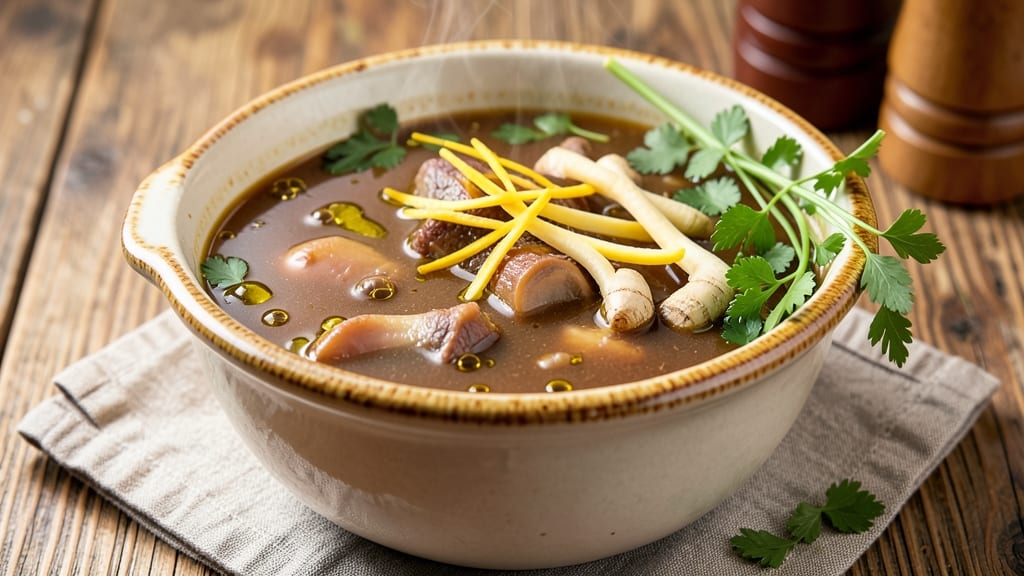
This AIP beef bone broth recipe delivers a nutrient-packed, gut-healing elixir that’s rich in gelatin and collagen—perfect for supporting autoimmune recovery. 💛 The key lies in slow-cooking beef bones (like marrow or knuckle bones) with AIP-compliant herbs like ginger and turmeric, ensuring maximum mineral extraction without any restricted ingredients.
What sets this broth apart is the 8-hour simmer, which transforms tough bones into a velvety, mineral-rich liquid packed with amino acids and gelatin. Unlike store-bought versions, this recipe avoids nightshades, spices, and additives, making it fully compliant with the Autoimmune Protocol while delivering deep, healing benefits.
By the end, you’ll have a golden, aromatic broth that’s versatile enough to use as a base for soups, stews, or even sip straight from a mug. The gelatin content supports gut health, while the collagen promotes joint and skin repair—all without compromising flavor or adherence to AIP guidelines.
Whether you’re using a pressure cooker, Instant Pot, or stovetop, this method ensures maximum nutrient extraction with minimal effort. Ready to unlock the healing power of bone broth? Let’s get started.
Ingredients for aip beef bone broth
Eight AIP-compliant ingredients transform raw bones into a nutrient-dense, gut-soothing elixir.
| Ingredient | Amount | Notes |
|---|---|---|
| Beef Bones (Marrow or Knuckle) 🦴 | 4 lb | Raw, uncooked, AIP-compliant |
| Fresh Ginger Root 🌿 | ½ cup | Peeled, sliced into coins |
| Fresh Turmeric Root 🌿 | ¼ cup | Peeled, sliced into coins |
| Fresh Parsley Stems 🌿 | 1 cup | Tough stems only, chopped |
| Apple Cider Vinegar 🍎 | ¼ cup | Raw, unfiltered preferred |
| Extra-Virgin Olive Oil 🫒 | ¼ cup | Cold-pressed, unrefined |
| Sea Salt 🧂 | 1 tsp | Unrefined, mineral-rich |
| Filtered Water 💧 | 8 cups | Enough to cover bones |
| Fresh Cilantro Stems 🌿 | ½ cup | Tough stems only, chopped |
| Fresh Celery Root 🥬 | 1 whole | Scrubbed, chopped into chunks |
| Fresh Leeks (White Parts Only) 🧅 | 2 whole | Scrubbed, chopped into chunks |
The bones are the foundation—marrow or knuckle bones yield the richest gelatin content. Local butchers or specialty meat markets often carry these cuts, though they’re sometimes labeled as 'beef soup bones' at larger grocery stores. Avoid bones with meat attached, as it can cloud the broth. For optimal results, pat dry the bones before adding them to the pot—this prevents excess water dilution. If you can’t find marrow bones, knuckle bones are the next best option, providing robust collagen extraction during the 8-hour simmer. Fresh ginger and turmeric should be brightly colored and firm—avoid any with mold or soft spots, as these indicate spoilage.
No fresh ginger or turmeric? Dried versions work at half the amount, but fresh is preferred for its vibrant flavor and higher nutrient retention. The apple cider vinegar is non-negotiable—it helps leach minerals from the bones, enhancing the broth’s mineral profile. For the herbs, parsley and cilantro stems (not leaves) are ideal—they’re tougher and add depth without overpowering. Substituting? Dried thyme or oregano at one-third the amount can work, but fresh is always superior. The celery root and leeks add natural sweetness and body—no need to peel the leeks if they’re organic, just scrub and chop the white parts. For a deeper flavor, consider adding a small piece of kombu seaweed (AIP-compliant), though it’s optional.
This broth develops best when simmered uncovered—the skin that forms on top is natural and can be skimmed off before serving. Store in glass jars in the refrigerator for up to 5 days or freeze in ice cube trays for single-serving portions that last 3 months. The gelatin content thickens when chilled, so reheat gently on low heat or at room temperature. For maximum nutrient retention, avoid boiling—keep the temperature at a gentle simmer. The broth is most potent after 24 hours, as the collagen continues to extract over time. Use within 7 days for best flavor and nutrient integrity, or freeze immediately for long-term storage.
Why You'll Love This Recipe
- No-Chop Necessary: I swear by this—just toss in whole ginger and turmeric roots, unpeeled. The broth extracts all the good stuff without me having to scrub tiny peels or mince anything. Between us, that’s 10 minutes I’d rather spend sipping the finished product.
- Golden-Glow Goodness: That turmeric and ginger combo? It’s not just pretty—it’s functional. The broth turns a rich amber, packed with anti-inflammatory magic, and tastes like a warm hug for your taste buds. (Yes, even on a Tuesday night.)
- Weeknight Magic: I keep a jar of this in the fridge to toss into grain bowls, soups, or even as a base for AIP-friendly sauces. No last-minute shopping, no complicated prep—just pull, pour, and elevate whatever you’re making.
- Budget Bone Hero: Marrow bones and knuckles stretch this recipe into weeks of nourishing meals. The vinegar pulls out collagen like nobody’s business, and I end up with enough to freeze for future slow-cooker days. My wallet—and my freezer—thank me.
Step-by-step instructions for AIP beef bone broth
Transform raw bones into a nutrient-dense, gut-healing elixir using this precise 8-hour method.
🔥 Step 1: Preheat and Prepare the Bones
Preheat your oven to 450°F and line a large roasting pan with parchment paper. Arrange the 4 lb beef bones (marrow or knuckle) in a single layer, ensuring they don't overlap. This step is critical for developing deep flavor through the Maillard reaction.
Roast the bones for 30 minutes, flipping halfway through, until they develop a deep golden brown color. You'll notice the bones release their natural oils and begin to crisp slightly. Remove them from the oven and let them cool for 10 minutes before transferring to a large stockpot.
🍳 Step 2: Sauté Aromatics and Deglaze
In the same roasting pan (no need to clean it), add 0.25 cup extra-virgin olive oil over medium-high heat. Add the chopped 2 whole fresh leeks (white parts only) and cook for 5 minutes until softened and lightly caramelized. Add the chopped 1 whole fresh celery root and cook for another 3 minutes.
Pour in the 0.25 cup apple cider vinegar and scrape up all the browned bits from the bottom of the pan. This deglazing step captures concentrated flavors that would otherwise be lost. Transfer the sautéed vegetables to the stockpot with the roasted bones.
🍳 Step 3: Add Herbs and Seasonings
Add the sliced 0.5 cup fresh ginger root and 0.25 cup fresh turmeric root to the stockpot. These roots will infuse the broth with their potent anti-inflammatory properties. Add the chopped 1 cup fresh parsley stems and 0.5 cup fresh cilantro stems, which contribute bright, herbal notes.
Pour in the 8 cups filtered water until the bones are completely submerged. Add the 1 tsp sea salt and stir gently to combine. The water should cover the bones by at least 1 inch to ensure proper extraction of nutrients and collagen.
🔥 Step 4: Simmer for Maximum Extraction
Place the stockpot over low heat and bring the broth to a gentle simmer. Once it reaches a rolling boil, reduce the heat to maintain a barely perceptible bubble at the surface. This low-and-slow approach is essential for extracting gelatin and nutrients without scorching the broth.
Cover the pot with a lid and transfer it to the oven. Set the oven to 275°F and let the broth cook for 6-7 hours. The broth should remain at a gentle simmer throughout this time. Skim off any foam or impurities that rise to the surface with a ladle during the first hour of cooking.
⏰ Step 5: Strain and Finish
After 6-7 hours, remove the broth from the oven and let it cool for 10 minutes. Line a fine-mesh strainer with cheesecloth or a coffee filter to create a makeshift strainer bag. Carefully ladle the broth through the strainer, reserving the liquid while discarding the solids.
Return the strained broth to the stockpot and skim off any remaining fat that has risen to the surface. Taste and adjust seasoning if needed, though the broth should already be well-seasoned from the roasted bones and added salt. Store the finished broth in airtight containers in the refrigerator for up to 5 days or freeze for longer storage.
Pro Tips For Making Aip Beef Bone Broth
- BLISTER BONES FIRST: Roast your marrow or knuckle bones at 450°F for 20-30 minutes until the edges blacken—this unlocks deep flavor faster than raw bones ever will. I used to skip this step and ended up with broth that tasted like it needed more time (and it did, but not enough).
- PEEL TURMERIC LIKE GINGER: Use a spoon to scrape off the fibrous outer skin of fresh turmeric root just like you would ginger—don’t waste time scrubbing it under water. The root’s natural oils are potent enough; you don’t need to strip them away.
- VINEGAR EARLY, NOT LATE: Add the apple cider vinegar at the start of simmering, not when the broth is nearly done—it needs time to break down the bones’ minerals. I learned this after a batch tasted flat because I tossed it in last-minute.
- STRAIN TWICE FOR CLARITY: After simmering, strain through a fine-mesh sieve first, then a cheesecloth-lined colander for a silky result. The first pass catches big bits; the second removes the cloudiness that makes broth look unappealing. (Yes, it’s worth the extra 5 minutes.)
Perfect pairings for this aip beef bone broth
Gut-Healing Soups
Use this broth as the base for AIP-compliant soups like celery root and carrot soup or zucchini and leek soup. The gelatin-rich broth thickens naturally when chilled, creating a velvety texture.
I simmer 2 cups broth with 2 chopped zucchini, 1 leek (white parts), and 1 cup chopped celery root for 20 minutes on low heat—no cream or dairy needed. 🥣
Protein-Packed Stews
Transform this broth into healing stews by adding AIP-compliant proteins like shredded chicken, ground beef, or white fish.
For a beef and vegetable stew, brown 1 lb ground beef, then add 4 cups broth, 2 chopped carrots, 1 chopped onion (white parts only), and 1 cup chopped green beans. Simmer for 45 minutes until tender.
The broth’s collagen supports gut repair while the protein sustains energy. 🍲
Risotto-Style Grain Bowls
Swap traditional broth for this gelatin-rich version in AIP-friendly grain bowls. Cook 1 cup white rice (or cauliflower rice) in 3 cups broth, stirring constantly for 20 minutes until creamy.
Top with sautéed mushrooms, shredded chicken, and avocado slices. The broth’s depth of flavor makes it taste restaurant-quality without any restricted ingredients. 🍚
Sipping Straight
For a warm, soothing drink, sip the broth straight from a mug—like a nutrient-packed tea. I often add a pinch of sea salt and a squeeze of fresh lemon juice (if tolerated on AIP) for brightness.
The gelatin content helps seal the gut lining, while the minerals support immune function. Perfect for morning or evening as a healing ritual. ☕
Sauce Base Magic
Reduce 2 cups broth by half in a saucepan for a rich, collagen-packed sauce to drizzle over roasted vegetables, grilled meats, or AIP-compliant flatbreads. Add 1 minced garlic clove (if tolerated) and 1 tbsp olive oil for extra depth.
This sauce elevates simple dishes into gut-healing meals without breaking the bank. 🥘
Freezer-Friendly Portions
Freeze the broth in ice cube trays for easy, single-serving additions to future meals. Each cube is perfect for reheating soups, deglazing pans, or adding depth to sauces.
Label with the date—these cubes last up to 3 months in the freezer while retaining their gelatin and mineral benefits. 🧊
Nutrition facts
Frequently asked questions
Can I use chicken bones instead of beef for this AIP broth?
While chicken bones work for broth, they won't yield the same gelatin-rich quality as beef bones. Beef bones (especially marrow or knuckle) contain more collagen and minerals, which are key for gut healing on AIP. If you must use chicken, opt for chicken feet or necks for better gelatin extraction, but expect a lighter texture and flavor.
How do I know if my broth has enough gelatin?
Gelatin-rich broth should thicken slightly when chilled and have a jelly-like consistency when refrigerated. If your broth stays liquid even when cold, it lacks sufficient gelatin. For better results, use marrow or knuckle bones and simmer for the full 8 hours. Avoid stirring the broth while cooking—this breaks down the collagen.
What if I don’t have an oven for the roasting step?
No oven? No problem! Sear the bones in a large pot over medium-high heat for 10-15 minutes until deeply browned. This mimics the roasting process and still develops rich flavors. Just ensure the bones are dry before searing to prevent steaming instead of browning. The remaining steps (simmering, straining) stay the same.
Can I make this broth in an Instant Pot?
Yes! Use the high-pressure setting for 2 hours after roasting the bones. After pressure cooking, let the broth naturally release for 15 minutes, then strain. The Instant Pot speeds up the process but may yield slightly less gelatin. For maximum benefits, extend to 3 hours on high pressure if possible.
Why does my broth smell strong or have foam?
Strong smells and foam are normal during the first 30-60 minutes of cooking as impurities rise to the surface. Skim off the foam with a ladle and reduce heat if the broth boils vigorously. The smell should mellow as cooking progresses. If the odor remains unpleasant, check for undercooked bones or old ingredients—fresh, high-quality bones are key.