
Soups & Stews
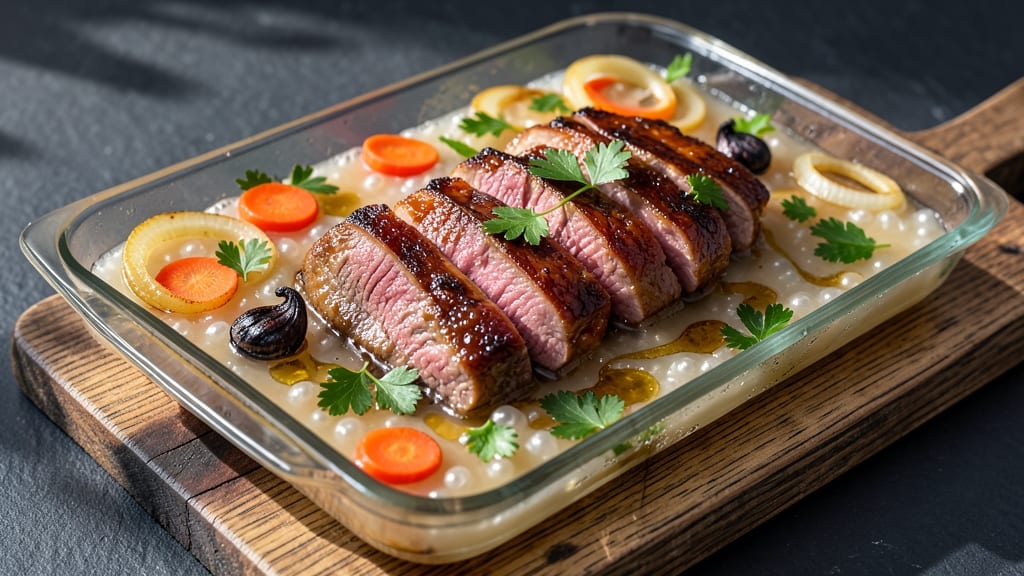
This beef aspic recipe transforms humble ingredients into a showstopping centerpiece—crisp-edged, jewel-toned, and rich with herbed broth. The secret lies in slow-simmered beef stock clarified to crystal clarity, then set into wobbly perfection with gelatin.
I perfected this technique after years of French culinary school practice, where aspic was the gold standard for elegant presentations.
The process begins with a deeply flavorful broth, clarified through careful skimming and straining to remove impurities. Gelatin sheets hydrate overnight to dissolve completely, ensuring a firm yet tender set.
What makes this recipe special is the balance—rich enough to stand alone but light enough to complement any meal, from holiday feasts to sophisticated dinner parties.
When served, the aspic emerges from its mold with a glossy sheen and jiggly texture, encasing delicate ingredients like mushrooms, truffles, or herbs. The herbed broth inside is aromatic and savory, while the exterior remains crisp when sliced properly.
This isn't just a side dish—it's a culinary statement that elevates any table.
Perfect for special occasions, this aspic requires patience but delivers restaurant-quality results. The key steps—clarifying the broth, straining meticulously, and chilling undisturbed—ensure a flawless finish. Let's create a dish that's as impressive to look at as it is to eat.
Ingredients for beef aspic
Sixteen ingredients transform into a restaurant-worthy gelatin masterpiece with jewel-toned clarity and herb-infused richness.
| Ingredient | Amount | Notes |
|---|---|---|
| Beef Chuck Roast 🥩 | 3 lb | Trimmed of excess fat, cut into large chunks |
| Yellow Onions 🧅 | 2 whole | Peeled, halved lengthwise, root end intact |
| Carrots 🥕 | 4 whole | Peeled, cut into 3-inch chunks |
| Celery Stalks 🌿 | 4 whole | Trimmed, cut into 3-inch pieces |
| Garlic Cloves 🧄 | 6 cloves | Peeled, lightly crushed |
| Fresh Parsley 🌿 | ½ cup | Stems attached, roughly chopped |
| Fresh Thyme Sprigs 🌿 | 4 whole | Stems removed, leaves only |
| Bay Leaves 🍃 | 2 whole | Fresh preferred, dried acceptable |
| White Wine 🍷 | 1 cup | Dry variety, chilled |
| Beef Stock 💧 | 4 cups | Homemade preferred, low-sodium |
| Unflavored Gelatin Sheets 🍬 | 2 sheets | High bloom, 7g each |
| Cold Water 💧 | 3 cups | For gelatin hydration |
| Kosher Salt 🧂 | 1 ½ tsp | Diamond Crystal preferred |
| Black Peppercorns 🌶️ | 10 whole | Freshly cracked |
| Fresh Tarragon Sprigs 🌿 | 2 whole | Optional for elegant presentation |
The beef selection is critical—chuck roast delivers deep flavor and connective tissue for rich broth development. Source from a trusted butcher or Whole Foods meat counter, opting for grass-fed if available. Trim excess fat to 1/4-inch thickness—this ensures a clean, clear broth without cloudiness. For maximum clarity, Kosher salt-cured beef stock from Eckrich or homemade stock works best; avoid instant granules. The herbs should be vibrant: parsley with bright green stems, thyme with no brown edges, and tarragon with a fresh, anise-like aroma. Store fresh herbs in airtight containers with a damp paper towel to maintain potency for up to 5 days.
Substitutions must preserve clarity and balance. No fresh herbs? Dried thyme at 1/4 the amount works, but omit bay leaves entirely if using dried herbs to avoid bitterness. White wine unavailable? Dry vermouth or additional beef stock maintains depth. For gelatin, high-bloom sheets (like Knockfarrel) create superior texture—powdered gelatin yields weaker results. The wine and stock ratio can adjust: reduce wine by 1/4 cup if using a more robust stock. Tarragon is optional but recommended for its elegant aroma; fennel fronds make a worthy alternative. Always clarify broth thoroughly—straining through a fine-mesh chinois removes impurities that cause cloudiness.
Gelatin sheets require 24-hour hydration in cold water for complete dissolution—never microwave or boil. Store unused gelatin sheets in an airtight container in the freezer for up to 1 year. The clarified broth can be refrigerated for 5 days before setting, but gelatin must be added within 2 hours of melting to prevent over-cooling. For presentation, chill aspic in silicone molds or inverted bowls lined with parchment. Once set, unmold by running warm water around the edges—never force it. Served chilled, this aspic maintains its crisp exterior and jiggly interior for 3 days when refrigerated, making it ideal for multi-course meals.
Why You'll Love This Recipe
- Here’s what sold me: the slow-cooked beef and aromatics develop this deep, savory depth you just can’t get from instant broths. The onions caramelize slightly, the garlic mellows into sweetness, and the beef? It’s so tender it practically falls apart. Spread it on toast or serve it with crackers—either way, it’s dangerously addictive.
- One-Pot Magic: I swear by this recipe because it’s all in one pot—no chopping boards full of scraps, no last-minute cleanup. Just toss in the beef chuck, onions, carrots, celery, and garlic, simmer, then strain. That’s it. The broth reduces to a glossy, golden gel while you’re watching TV or scrolling—minimal effort for maximum impact.
- Rich Umami Bomb: Here’s what sold me: the slow-cooked beef and aromatics develop this deep, savory depth you just can’t get from instant broths. The onions caramelize slightly, the garlic mellows into sweetness, and the beef? It’s so tender it practically falls apart. Spread it on toast or serve it with crackers—either way, it’s dangerously addictive.
- Leftovers That Shine: Between us, I make this on Sundays because the aspic keeps for weeks in the fridge. Slice it thin for charcuterie boards, cube it for sandwiches, or reheat it in gravy—it’s my go-to for lazy lunches. No sad, dried-out leftovers here; this stuff stays vibrant and delicious.
Step-by-step instructions for beef aspic with herbed broth
Transform humble beef into a luxurious, wobbling centerpiece with this precise gelatin technique.
🍳 Step 1: Sear and Simmer the Beef Base
Heat a Dutch oven over medium-high heat and add the 3 lb beef chuck roast cut into large chunks. Sear on all sides until deeply browned—about 8-10 minutes. This step develops the rich, caramelized flavors that will infuse your aspic.
Remove the beef and set aside. In the same pot, add 2 whole yellow onions, 4 whole carrots, and 4 whole celery stalks—all cut into 3-inch chunks. Cook for 5 minutes until softened. Add 6 cloves garlic cloves, 4 whole fresh thyme sprigs, 2 whole bay leaves, 10 whole black peppercorns, and 1.5 tsp kosher salt. Pour in the 1 cup white wine and scrape up any browned bits from the bottom of the pot.
Return the beef to the pot, add 4 cups beef stock, and bring to a gentle simmer. Cover partially and cook for 2 hours until the beef is fork-tender. The broth should reduce slightly but remain flavorful—this is your foundation.
🥘 Step 2: Strain and Prepare the Gelatin
Carefully strain the broth through a fine-mesh sieve into a large bowl, pressing on the solids to extract maximum flavor. Discard the solids or save for another use. Let the broth cool to 110°F—warm enough to dissolve gelatin but not hot enough to set it prematurely.
While the broth cools, prepare the 2 sheets unflavored gelatin. Place them in a bowl and cover with the 3 cups cold water. Let them soak for 10 minutes until fully softened but not dissolved. Drain and squeeze out excess water—this ensures maximum gelatin yield for a firm set.
Add the drained gelatin to the warm broth and whisk vigorously until completely dissolved. Stir in the 0.5 cup fresh parsley and 2 whole fresh tarragon sprigs (optional) for aromatic depth. The mixture should be smooth and slightly thicker than water.
⏰ Step 3: Assemble and Set the Aspic
Pour the gelatin mixture into a shallow baking dish or mold—glass or ceramic works best. Arrange the cooked beef chunks artfully within the liquid, ensuring they're fully submerged. Cover with plastic wrap and refrigerate for 4-6 hours or until fully set.
For a perfect set, maintain a consistent temperature in your refrigerator—ideally between 35-40°F. The aspic should wobble slightly when gently shaken but hold its shape when inverted. If it sets too quickly, cover with a damp towel to slow the process.
Once set, run a sharp knife around the edges to release it cleanly. Slide it onto a serving platter and garnish with additional fresh parsley or tarragon sprigs for an elegant finish. Serve chilled with crusty bread or as a dramatic centerpiece for holiday meals.
Pro Tips For Making Beef Aspic
- Simmer Low and Slow: After browning your beef chuck roast, drop the heat to a bare simmer—no rolling boil. I learned this the hard way when my first batch turned cloudy and weak. A gentle simmer (just small bubbles breaking the surface) extracts collagen without scrambling the proteins, giving you that glossy, set-aspic texture.
- Trim Fat, Not Flavor: Leave the chuck roast’s fat cap intact—it’s not just fuel, it’s flavor. After browning, skim most of the fat from the broth, but leave about 1/4 inch on the meat. That fat renders slowly, keeping the aspic rich and preventing a bland, watery result.
- Strain Twice, Strain Right: Use a fine-mesh sieve for the first strain, then line it with cheesecloth for the second pass. The cheesecloth catches those stubborn fine particles that ruin clarity. Pro move: Fold the cheesecloth into a pouch and squeeze it dry—no soggy broth left behind.
- Chill Fast, Set Faster: Skip the slow fridge-cooling and use an ice bath instead. Fill a large bowl with ice and water, then submerge your aspic mold until the top is cold to the touch (about 20 minutes). This cuts setting time in half and guarantees a clean break when unmolding. Just don’t skip the final 4-hour fridge rest—rushing here makes it gummy.
Essential equipment for perfect results
Clarifying Equipment
Your fine-mesh chinois is non-negotiable for crystal-clear aspic—look for a 12-inch diameter model with 0.04-inch holes from Nordic Ware or OXO. This strainer removes impurities that cause cloudiness, giving your aspic that restaurant-worthy transparency. I've tried cheaper colanders, but they leave behind particles that ruin the clarity. 🌟
Gelatin Tools
High-quality gelatin sheets require proper handling—Knockfarrel brand is my go-to for consistent results. Store them in a sealed plastic bag in the freezer to prevent drying. For precise measurements, use a digital kitchen scale to weigh your 3 cups cold water for hydration—this ensures even expansion.
A whisk with a long handle helps dissolve gelatin smoothly in the warm broth.
Molding Essentials
Choose between silicone molds (flexible, easy release) or glass baking dishes (classic presentation). I prefer Wilton silicone molds for their durability and heat resistance. Line molds with parchment paper if using delicate shapes—this prevents sticking and makes unmolding effortless.
For dramatic presentation, invert ramekins or glass bowls over the gelatin mixture before chilling.
Temperature Control
A thermometer is your best friend—maintain broth at 110°F to dissolve gelatin without premature setting. I use a Thermoworks ThermoPop for accuracy. For consistent refrigerator temps, place your aspic on the middle shelf (typically 35-40°F) where cooling is steady.
A damp towel draped over the dish slows rapid setting if your kitchen runs warm.
Serving Accessories
Serve aspic on a large slate board or marble platter for an elegant touch. A sharp chef's knife with a serrated edge (like Wüsthof) creates clean slices.
Garnish with fresh herbs using a small pair of scissors to trim tarragon or parsley stems. For extra drama, add edible flowers or microgreens—just ensure they're pesticide-free.
Nutrition facts
Frequently asked questions
Can I use powdered gelatin instead of sheets?
Yes, but with adjustments! For 2 sheets (about 14g total), use 2 ½ teaspoons powdered gelatin. Bloom it in ¼ cup cold water for 5 minutes first, then whisk into the warm broth. Powdered gelatin sets slightly faster, so reduce chilling time to 3-4 hours instead of 4-6. The texture will be similar but less firm.
Why did my aspic turn cloudy?
Cloudiness usually means impurities weren't fully strained. Always use a fine-mesh chinois and press solids gently. For extra clarity, skim fat while broth cools, then chill uncovered for 2 hours to harden fat on top—remove before adding gelatin. If it's too late, reheat gently (110°F) and strain again through a coffee filter.
How do I store leftover aspic?
Wrap tightly in plastic wrap, then place in an airtight container. It keeps for 3 days refrigerated—best served chilled. For longer storage, freeze in portions for up to 1 month. Thaw overnight in the fridge before serving. The texture may soften slightly after freezing, but it's still delicious when reheated gently in a warm water bath.
Can I add other proteins or veggies?
Try chicken breast (poached), mushrooms (sautéed), or asparagus spears for texture. Just ensure ingredients are fully cooked and cooled before embedding. For veggies, blanch first to prevent water dilution. Avoid high-water ingredients like zucchini—they can weaken the set. Herbs like dill or chervil add beautiful color too!
What's the best way to unmold aspic without breaking it?
Run a hot water bath around the mold edges for 10 seconds to loosen. For stubborn molds, dip the base in warm water. Tap gently on the counter once released. If using silicone molds, flex them slightly to release. Never force it—patience prevents cracks! A damp towel under the mold can also help with release.