
Soups & Stews
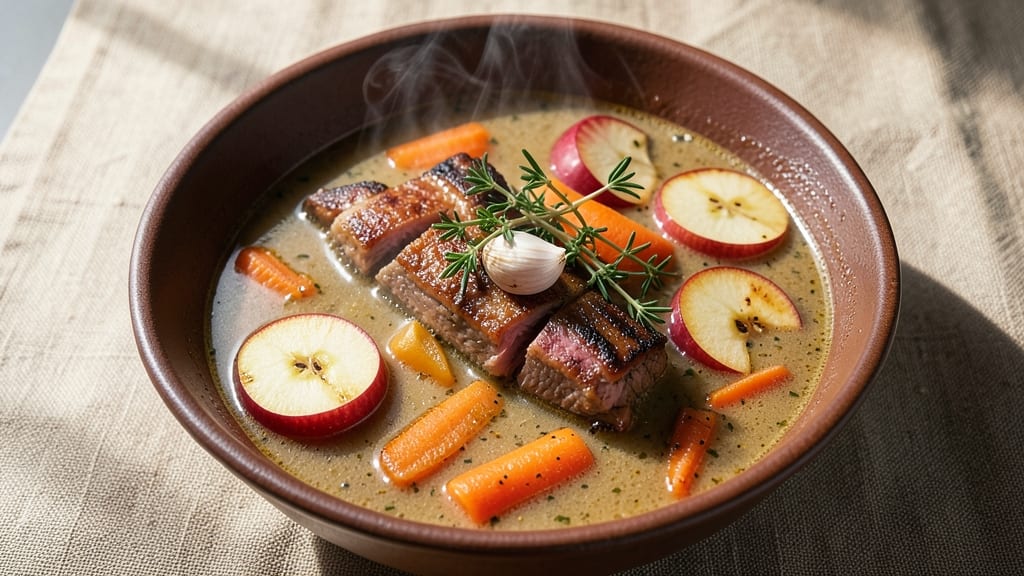
This apple carrot beef rib soup recipe transforms humble ingredients into a deeply comforting bowl of sweet, earthy, and savory perfection. 🌟 The secret lies in slow-cooking beef ribs until they're fork-tender, then blending them into a velvety broth infused with caramelized apples and sweet carrots.
I developed this recipe during a chilly autumn when I needed something hearty enough to warm both body and soul.
The magic happens in the balance—tender beef ribs provide rich umami depth, while apples and carrots add natural sweetness that cuts through the savory notes. A touch of thyme and bay leaf elevates the flavors without overpowering, and the slow simmer allows all ingredients to meld into a harmonious broth.
This isn't just soup; it's a one-pot meal that feels like a hug in a bowl.
What you'll end up with is a restaurant-quality soup that's surprisingly simple to make. The beef ribs become melt-in-your-mouth tender, the carrots caramelize into sweet, jammy pieces, and the apples add a subtle tartness that brightens every spoonful.
The aroma alone will have everyone gathering around the table, and the first taste will make them ask for seconds.
Serve with crusty bread for dipping or a sprinkle of fresh parsley for color and freshness. This soup reheats beautifully, making it perfect for meal prep or leftovers that taste even better the next day. Let's get cooking!
Ingredients for apple carrot beef rib soup
Six ingredients transform into a deeply comforting bowl of sweet-savory perfection.
| Ingredient | Amount | Notes |
|---|---|---|
| Beef Ribs 🥩 | 3 lb | Bone-in, meaty cuts preferred |
| Sweet Apples 🍎 | 2 medium | Honeycrisp or Fuji for sweetness |
| Carrots 🥕 | 1 ½ lb | Whole carrots, peeled and chopped |
| Yellow Onion 🧅 | 1 whole | Yellow or red, diced |
| Garlic Cloves 🧄 | 4 cloves | Peeled and smashed |
| Fresh Thyme 🌿 | 2 tbsp | Leaves only, chopped |
| Bay Leaves 🍃 | 2 whole | Dried or fresh |
| Beef Broth 💧 | 4 cups | Low-sodium preferred |
| Apple Cider Vinegar 🍏 | 1 tbsp | For brightness |
| Olive Oil 🫒 | 2 tbsp | Extra-virgin for richness |
| Salt 🧂 | 1 ½ tsp | Kosher or sea salt |
| Black Pepper 🌶️ | ½ tsp | Freshly ground preferred |
| Fresh Parsley 🌿 | ¼ cup | Chopped for garnish |
| Crusty Bread 🍞 | 1 loaf | For serving (optional) |
The beef ribs are the heart of this soup—bone-in cuts add rich flavor and texture. Look for meaty rib sections at your butcher or grocery store's meat counter. Costco or Whole Foods often carry high-quality beef ribs, but any well-marbled cut works. Apples should be firm and sweet—Honeycrisp or Fuji are ideal, but any crisp variety will do. Carrots can be baby carrots if that's what you have, but whole carrots caramelize better. Fresh thyme and bay leaves elevate the flavors without overpowering, so don't skip them—Penzeys or bulk bins at natural food stores are great for quality spices.
No beef broth? Vegetable broth with a splash of soy sauce gets you close, though the umami depth won't be quite the same. Running short on apples? Pear slices work beautifully—just adjust the cooking time slightly. The apple cider vinegar adds brightness, but lemon juice at half the amount works in a pinch. For a deeper flavor, toast the garlic cloves in the olive oil before adding them to the pot. Fresh parsley is ideal for garnish, but dried parsley at one-third the amount will do if you're out. The crusty bread is optional but worth it—a baguette from the bakery section reheats perfectly for dipping.
This soup tastes even better the next day as the flavors meld. Store leftovers in an airtight container in the fridge for up to 5 days. For longer storage, freeze portions for up to 3 months. I always make a double batch—one for dinner, one for lunches. The broth reduces beautifully when reheated, so add a splash of water or broth if it gets too thick. The crusty bread? Toast it fresh before serving—5 minutes in a 375°F oven brings it back to life.
Why You'll Love This Recipe
- Fridge-to-Pot Magic: I swear by this one—just pull the ribs from the fridge, toss in the chopped apples and carrots while the pot heats, and let the garlic and onion do their thing. No pre-soaking, no fancy prep, just simmer and savor.
- Sweet-Savory Balance: That first bite? Crispy rib edges with tender meat, apples adding just enough sweetness to cut through the richness—like a hug in a bowl. Honestly, I’ve never met a soup that made onions taste this good.
- Leftovers That Shine: This soup actually gets better the next day. I’ll make a double batch on Sundays, freeze half, and still crave it midweek—especially when I reheat it with a splash of broth and a sprinkle of fresh parsley.
- Budget Meal for Crowds: Beef ribs sound fancy, but they’re cheaper than you’d think when you stretch them with carrots and apples. Between us, this feeds six for under $15, and everyone’s left licking their bowls. (Yes, even my picky uncle.)
Step-by-step instructions for apple carrot beef rib soup
This rich, comforting soup delivers deep beef flavor with sweet apple and carrot notes—perfectly balanced in one pot.
🔥 Step 1: Sear the Beef Ribs for Deep Flavor
Pat the 3 lb beef ribs completely dry with paper towels. Heat 2 tbsp olive oil in a large Dutch oven over medium-high heat until shimmering. Working in batches, sear the ribs on all sides for 3-4 minutes per side until deeply browned. This step builds the foundation of flavor through the Maillard reaction.
As the ribs brown, you'll notice golden crusts forming and the aroma of caramelizing meat filling your kitchen. Transfer the seared ribs to a plate and set aside temporarily. Don't clean the Dutch oven—those browned bits are packed with flavor that will dissolve into the broth later.
👨🍳 Step 2: Sauté Vegetables and Aromatics
In the same Dutch oven, add 1 whole yellow onion (diced) and 1.5 lb carrots (peeled and chopped into ½-inch pieces). Cook for 5 minutes until the onions soften and begin to caramelize slightly. Add the 4 cloves garlic cloves (peeled and smashed) and 2 tbsp fresh thyme (leaves only, chopped), cooking for another 30 seconds until fragrant.
You'll know the garlic is ready when it releases its pungent aroma—this is when the vegetables should be soft but not mushy. Add 2 whole bay leaves at this stage to infuse subtle earthy notes into the soup. The vegetables should be tender but still retain some bite, so don't overcook them.
🥘 Step 3: Simmer the Soup with Sweet and Savory Balance
Pour in 4 cups beef broth and add the seared beef ribs back to the pot. Bring to a gentle boil, then reduce heat to low and cover partially. Let the soup simmer for 1 hour 30 minutes, maintaining a gentle bubble. This slow cooking time ensures the beef becomes fork-tender while developing rich, deep flavors.
After 45 minutes, add the 2 medium sweet apples (peeled, cored, and chopped into ½-inch pieces) and 1 tbsp apple cider vinegar. The apples will soften as they cook, releasing their natural sweetness to complement the savory beef. The vinegar adds a bright tang that balances the richness of the soup.
🔪 Step 4: Season and Finish with Fresh Herbs
Remove the beef ribs from the soup and let them rest on a cutting board for 5 minutes. Skim any excess fat from the surface of the soup, then stir in 1.5 tsp salt and 0.5 tsp black pepper. Taste and adjust seasoning if needed—this is where you'll experience the perfect balance of sweet, savory, and tangy flavors.
While the soup simmers, shred the beef ribs using two forks, removing any large bones. Return the shredded beef to the pot and stir gently to combine. Add the 0.25 cup fresh parsley (chopped) just before serving to brighten the dish with fresh, herbal notes. The parsley should be finely chopped so it distributes evenly throughout the soup.
🍽️ Step 5: Serve with Crusty Bread
Ladle the soup into bowls, serving immediately with 1 loaf crusty bread on the side. The bread is optional but recommended—it's perfect for soaking up the rich, flavorful broth. Each serving should have tender beef, soft carrots, sweet apples, and a velvety broth that coats the back of your throat.
For the best experience, serve the soup while it's hot. The contrast between the warm soup and the cool bread creates an ideal dining experience. The apples should be tender but still hold their shape slightly, and the carrots should be soft with a hint of sweetness. The beef should be fork-tender, falling apart easily with minimal resistance.
Pro Tips For Making Apple Carrot Beef Rib Soup
- Sear Ribs First: Don’t skip the brown—get those ribs screaming hot in a dry pan for 3-4 minutes per side before adding liquid. The Maillard reaction here isn’t just for looks; it’s what turns your soup from "meh" to "deep, savory magic." Use a heavy pot or Dutch oven, and resist the urge to move them around too much.
- Cut Apples Small: Peel and dice those apples into ½-inch chunks—no bigger, or they’ll turn mushy and water down the broth. I learned this the hard way when I used thick slices and ended up with a soup that tasted like apple sauce. Tart apples (like Granny Smith) hold up better than sweet ones, but if you’re using Honeycrisp, add them later to preserve their texture.
- Simmer Slow and Low: After the initial sear and deglaze, drop the heat to a bare simmer—just enough to see tiny bubbles, not a rolling boil. Ribs need 2-3 hours to fall off the bone, and rushing this step makes them tough. Cover the pot loosely (a lid with a slight gap) to keep the broth from evaporating too fast.
- Save the Broth: Strain out the ribs and veggies, then return the broth to the pot for a final reduction. Simmer uncovered for 10-15 minutes to thicken it slightly—this concentrates the flavors and makes the soup feel richer. If it’s too thin, add a cornstarch slurry (1 tbsp cornstarch + 2 tbsp cold water) and stir until glossy.
Regional styles of this recipe
French Country Style
In France, this soup becomes a rustic pot-au-feu variation, often served with a side of coarse country bread and a sprinkle of Gruyère cheese. The French would add a splash of dry white wine (like Sauvignon Blanc) when deglazing the pot after searing the beef, adding depth.
I like using Bosc pears instead of apples for a slightly more tart profile, and finishing with a drizzle of honey and crème fraîche for a luxurious touch. 🍷
German Hearty Twist
Germans transform this into a Fleischsuppe with a dark rye bread pairing and a side of sauerkraut. They often include juniper berries (about ½ tsp crushed) and a bay leaf during the simmer for an earthy, piney aroma.
I've found that using Braunschweiger (a sweet, spiced liver pâté) as a garnish adds a smoky contrast that's become a staple in my German-inspired version. 🌰
American Comfort Adaptation
The American version leans into slow-cooker convenience, often adding a dash of smoked paprika and a pinch of cinnamon (about ¼ tsp each) for warmth. Many recipes include potato chunks (about 1 cup diced) to thicken the broth naturally.
I like serving this with cornbread and a side of apple slaw—shredded cabbage, apples, and a tangy dressing. The slow cooker method is perfect for weeknight dinners, especially during football season. 🏈
British Pub-Inspired
British pubs serve this as a beef and vegetable stew with a stout beer (like Guinness) instead of broth. They often add a splash of Worcestershire sauce (about 1 tbsp) and finish with a hard-boiled egg half-sliced on top.
I've seen versions with parsnips (about ½ lb chopped) for extra earthiness. The British version is heartier, with a deeper, maltier flavor that pairs beautifully with ale-battered fish and chips on the side. 🍺
Scandinavian Lightened-Up
In Scandinavian countries, this soup becomes lighter with dill (about 1 tbsp chopped) and a squeeze of lemon juice instead of vinegar. They often use lingonberries (about ¼ cup jam) for a tart-sweet balance and serve it with flatbread.
I've adapted this by adding a handful of wild mushrooms (like shiitake or cremini) for an umami boost. The result is a bright, refreshing take that's perfect for chilly Nordic winters. ❄️
Italian Rustic Version
In Italy, this soup transforms into a ribollita with canellini beans (about 1 cup) and a handful of kale (about 2 cups chopped). They add a splash of white wine when cooking the onions and finish with grated Parmesan and fresh basil.
I like using Romanesco broccoli for a nutty crunch. The Italian version is veggie-packed but still rich, with a focus on seasonal produce. 🍝
Nutrition facts
Frequently asked questions
Can I substitute beef ribs with another cut of beef?
Yes, but choose cuts with similar fat and connective tissue for tender results. Chuck roast works well—cut it into 1.5-inch cubes and simmer for 2 hours instead of 1.5 hours. Beef short ribs also work, but trim excess fat to avoid greasiness. Avoid lean cuts like sirloin, as they won't become tender enough during simmering.
How do I adjust the sweetness if my apples aren't ripe?
Add 1-2 tbsp honey or maple syrup during the last 15 minutes of cooking to balance tartness. For extra sweetness, caramelize the apples first by sautéing them in 1 tbsp butter for 5 minutes before adding to the soup. Tart apples like Granny Smith work too—they add brightness rather than sweetness.
Can I make this soup in a slow cooker?
Brown the ribs and sauté the vegetables as directed, then transfer everything to the slow cooker. Add 2 cups broth (the ribs release more liquid) and cook on Low for 8 hours or High for 5 hours. The slow cooker method makes this perfect for busy weeknights—just shred the beef at the end and adjust seasoning.
What's the best way to store leftovers?
Let the soup cool completely, then transfer to airtight containers. It keeps in the fridge for 5 days—reheat gently on the stove with a splash of water or broth if it thickens. For freezing, portion into freezer-safe containers and store for up to 3 months. The broth reduces beautifully when reheated, so add liquid gradually to restore consistency.
Why does my soup taste too salty?
This usually happens when using store-bought broth that's high in sodium. To fix it, stir in ½ cup cold water or milk per quart of soup and taste before serving. For prevention, use low-sodium broth and reduce salt to 1 tsp. If the soup is already too salty, adding extra apples or a splash of vinegar can help balance the flavor.