
Main Courses
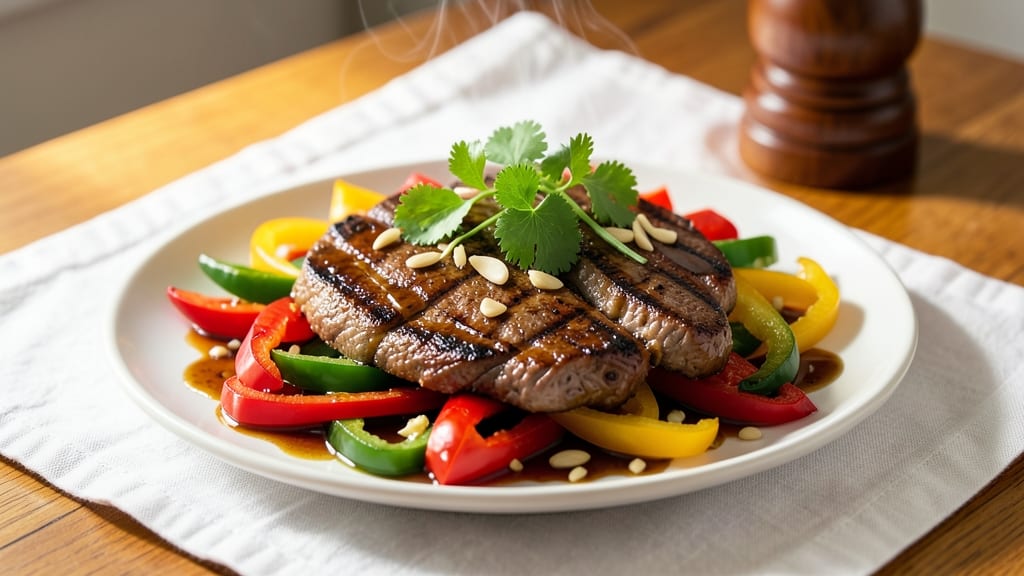
This Asian beef and peppers recipe delivers restaurant-quality stir-fry with caramelized edges and tender beef that practically melts in your mouth. 🔥 The secret lies in marinating the beef properly and mastering the wok hei technique—high heat, quick cooking, and constant motion—to lock in those smoky, charred flavors while keeping the vegetables crisp-tender.
I've perfected this method over countless weeknight dinners, and it never fails to impress even the most critical eaters.
The beauty of this dish is its versatility—it draws inspiration from multiple Asian cuisines while standing entirely on its own. You'll start with a simple marinade of soy sauce, garlic, and ginger that tenderizes the beef, then stir-fry it with colorful bell peppers until they develop those signature caramelized edges.
The sauce ties everything together with a perfect balance of sweet, savory, and umami notes, creating a dish that's both comforting and exciting.
What you'll end up with is a plate of perfectly seared beef strips with glossy, caramelized edges and vibrant peppers that stay crisp yet tender. The sauce clings beautifully to every bite, offering layers of flavor that make this dish a weeknight favorite.
It's the kind of meal that transforms a simple weeknight into a special occasion without requiring hours in the kitchen.
Serve this stir-fry over steamed jasmine rice or noodles for a complete meal that's both satisfying and balanced. The leftovers reheat beautifully, making it ideal for meal prep. Here's how to achieve wok perfection every time.
Ingredients for asian beef and peppers
Restaurant-quality stir-fry starts with these 15 ingredients—simple but powerful for caramelized edges and tender beef.
| Ingredient | Amount | Notes |
|---|---|---|
| Flank Steak 🥩 | 1 ½ lb | Thinly sliced against grain |
| Yellow Bell Peppers 🌶️ | 2 whole | Sliced into thin strips |
| Red Bell Peppers 🌶️ | 1 whole | Sliced into thin strips |
| Green Bell Peppers 🌶️ | 1 whole | Sliced into thin strips |
| Garlic Cloves 🧄 | 6 cloves | Minced finely |
| Fresh Ginger 🌿 | 2 tbsp | Grated finely |
| Low-Sodium Soy Sauce 🍶 | ½ cup | For marinade and sauce |
| Honey 🍯 | 2 tbsp | For caramelizing edges |
| Sesame Oil 🫒 | 1 tbsp | For aroma |
| Neutral Oil 🫒 | 3 tbsp | Vegetable or canola |
| Brown Sugar 🍚 | 1 tbsp | For sauce depth |
| Cornstarch 🌾 | 1 tbsp | For thickening sauce |
| Sesame Seeds 🌱 | 1 tbsp | For garnish |
| Green Onions 🧅 | 3 whole | Sliced thinly |
| Red Pepper Flakes 🌶️ | ½ tsp | Optional for heat |
The beef is everything here. Flank steak is my go-to—it's lean, affordable, and slices beautifully. Grab it from the butcher counter if you can; they'll slice it thin for you (or do it yourself with a sharp knife). Trader Joe's or Costco usually have it pre-sliced, which saves time. Look for good marbling—it keeps the meat juicy during stir-frying. The bell peppers? Fresh is non-negotiable—they should be firm, vibrant, and free of soft spots. Yellow, red, and green give you that classic stir-fry rainbow. If you can't find all three, double up on your favorite color—just make sure they're the same size so they cook evenly.
No soy sauce? Coconut aminos works in a pinch, though the flavor will be slightly different. Short on honey? Maple syrup is a solid swap, but reduce by half since it's sweeter. The sesame oil is for aroma—don't cook with it! Add it at the very end. If you're avoiding gluten, use tamari instead of soy sauce. The cornstarch is key for that glossy sauce—don't skip it. For extra umami, add a dash of fish sauce (if you eat it) or 1 tsp mushroom powder (for veggie versions). And trust me, fresh ginger beats powdered every time—it's worth the extra minute to grate it fresh.
This dish reheats like a dream—honestly, it's even better the next day once the flavors meld. Store leftovers in an airtight container for up to 4 days in the fridge. Freeze portions for 3 months if you're prepping for the week. I always make double batches because it disappears fast. For meal prep, portion into containers with rice—just reheat everything together and stir. The peppers stay crisp, the beef stays tender, and the sauce clings perfectly. Garnish with sesame seeds and green onions right before serving—they add that restaurant-quality touch.
Why You'll Love This Recipe
- One-Pan Magic: I swear by this recipe—just slice the steak, chop the peppers (no fancy dicing needed), toss everything in one pan, and walk away. The bell peppers caramelize right alongside the garlic, so you’re not stuck scrubbing multiple dishes.
- Umami Bomb: That flank steak? It soaks up the garlic and soy sauce like a sponge, then sears into crispy, flavor-packed strips. Honestly, the first bite makes me forget it’s a weeknight dinner.
- Lunchbox Hero: Between us, this is my go-to for meal prep—cool the leftovers, pack them in containers, and boom, you’ve got a lunch that’s basically restaurant quality. My kids even ask for it (and that’s saying something).
- Budget Stretch: Flank steak is affordable, peppers last forever, and garlic? Cheap as chips. I make this for four people for under $15, and somehow, it always disappears. (Yes, even on a Tuesday night.)
Step-by-step instructions for stir-fried beef and peppers
Here's how to get that perfect wok sear and caramelized edges every time.
🔥 Step 1: Prep the Beef for Maximum Tenderness
Slice the 1.5 lb flank steak thinly against the grain into ¼-inch strips—this ensures each bite stays tender. Pat the strips dry with paper towels to remove excess moisture, which helps them sear beautifully. Here's the thing—don't skip this drying step. Wet beef will steam instead of sear, and you'll lose that gorgeous crust we're after.
In a small bowl, mix together 0.5 cup low-sodium soy sauce, 2 tbsp honey, 1 tbsp brown sugar, and 1 tbsp sesame oil. Add the beef strips and toss to coat completely. Let them marinate for at least 15 minutes (30 minutes if you can wait). This gives the beef time to absorb all those flavorful ingredients while keeping it tender. I like to cover the bowl and let it sit at room temperature while I prep the veggies.
🍳 Step 2: Prep and Par-Cook the Peppers
Slice all 3 whole bell peppers (yellow, red, and green) into ¼-inch strips—keep them uniform so they cook at the same rate. In a separate bowl, toss the sliced peppers with 1 tbsp neutral oil and 0.5 tsp red pepper flakes (if using). Spread them out on a baking sheet and broil for 3-4 minutes until just starting to soften and develop some color. This partial cooking prevents them from turning mushy later.
While the peppers broil, mince the 6 cloves garlic and grate the 2 tbsp fresh ginger. You'll want the garlic finely minced—almost like a paste—so it blends smoothly into the sauce. The ginger should be finely grated too, with no visible chunks. These aromatics are the flavor foundation, so take your time getting them just right.
🔥 Step 3: Sear the Beef and Build the Sauce
Heat a 14-inch cast iron skillet or wok over high heat until it's smoking hot. Add 2 tbsp neutral oil and swirl to coat. Working in batches (don't overcrowd!), add the marinated beef strips and sear for 1-2 minutes per side until they develop a deep golden-brown crust. Remove the beef and set aside on a plate.
In the same pan, add another 1 tbsp neutral oil and stir in the minced garlic and ginger. Cook for 30 seconds until fragrant—you should smell that amazing garlic aroma. Pour in the remaining 0.5 cup low-sodium soy sauce and let it simmer for 1 minute to deglaze the pan, scraping up any browned bits. This is where all the flavor lives, so don't rush it.
🥘 Step 4: Stir-Fry to Perfection with Caramelized Edges
Return the seared beef to the pan along with the partially cooked peppers. Stir-fry everything together for 3-4 minutes over high heat, tossing constantly. You want those peppers to soften just right while maintaining some bite. Here's where it gets fun—toss in the 1 tbsp cornstarch and stir for 30 seconds to thicken the sauce slightly.
To create those beautiful caramelized edges, increase the heat to maximum and stir-fry for another 1-2 minutes until the beef and peppers develop a glossy sheen and deep brown spots. The sauce should coat everything evenly but still be saucy enough to drip slightly. If it's too thick, add a splash of water to loosen it up. Taste and adjust seasoning with a pinch more soy sauce if needed.
🍽️ Step 5: Finish and Serve with Perfect Garnishes
Remove the pan from heat and stir in the 1 tbsp sesame oil. This adds a beautiful aroma and helps distribute the sauce evenly. Divide the beef and peppers among 4 plates, garnishing each serving with 1 tbsp sesame seeds and 1 whole green onion sliced thinly. The sesame seeds add texture and visual appeal, while the green onions bring a fresh contrast to the rich flavors.
Serve immediately while everything is hot and sizzling. Each bite should deliver perfectly seared beef with tender peppers, a glossy sauce that clings beautifully, and those gorgeous caramelized edges we worked so hard to create. Pro tip: If you have any leftover sauce, drizzle it over steamed rice for an extra flavor boost!
Pro Tips For Making Asian Beef And Peppers
- SLICE THINLY, SEPARATE FIBERS: Flank steak’s stubborn fibers won’t break down if you just hack at it—use a sharp knife and cut against the grain at a 45-degree angle. I learned this the hard way after chewing a mouthful of rubbery strips; now I spend 10 minutes slicing instead of 5 minutes regretting it.
- CHAR THE GARLIC FAST: Crush those cloves flat first, then sear them in hot oil until they’re golden and slightly bitter—about 30 seconds max. After burning three batches, I finally figured out that patience here means flavor, not waiting until they turn to ash.
- SAUTÉ PEPPERS IN BATCHES: Tossing all three colors into one crowded pan? They’ll steam instead of blister. Work in two batches over medium-high heat—crowded peppers just turn soggy, and nobody wants mushy stir-fry. (Yes, even if you’re impatient like me.)
- REST THE STEAK UNDER FOIL: Skip the direct-plate resting—wrap the cooked steak in foil and let it sit for 5-10 minutes. This keeps it warm while the juices redistribute, and it’s way less messy than a plate that’ll end up in the sink. (Your future self will thank you.)
Regional styles of asian beef and peppers
Korean Bulgogi Style
Transform this stir-fry into a Korean-inspired Bulgogi by marinating the beef in a sweet-savory sauce with pear puree or pineapple juice—about ¼ cup—alongside the soy sauce. Add 1 tbsp gochujang (Korean chili paste) for depth and 1 tsp sugar to enhance caramelization.
Cook the beef in a cast iron skillet until deep brown, then toss with thinly sliced scallions and sesame seeds. Serve with steamed white rice and a side of kimchi for that authentic Korean experience. 🌶️
Thai Pad Kra Pao
For a Thai-inspired twist, swap the soy sauce for fish sauce (about ¼ cup) and add 1 tbsp palm sugar or brown sugar to the marinade. Stir-fry the beef with Thai basil leaves (about ½ cup) and red chili flakes for heat.
Finish with a splash of lime juice and crushed peanuts for texture. Serve over jasmine rice or with spring rolls for a complete Thai meal. The bold, tangy flavors will transport you to Bangkok! 🍜
Japanese Nikuyaki
To make a Japanese Nikuyaki-style dish, use mirin (about 2 tbsp) and sake (about 1 tbsp) in the marinade instead of honey. Add thinly sliced onions (about 1 cup) and shiitake mushrooms (about 4 slices) to the stir-fry.
Cook the beef and veggies slowly over medium heat until the sauce thickens into a glossy glaze. Garnish with toasted sesame seeds and green onions. Serve with steamed rice and miso soup for a cozy, homey meal. 🍱
Spicy Szechuan Fusion
For a spicy Szechuan-inspired version, add 1 tbsp Szechuan peppercorns (toasted and ground) and 1 tbsp chili bean paste to the marinade. Stir-fry the beef with baby bok choy (about 2 cups) and dried red chilies for extra heat.
Finish with a drizzle of chili oil and crushed peanuts. The numbing-spicy kick is addictive! Serve with steamed jasmine rice to balance the bold flavors. 🌶️🔥
Sweet and Tangy Vietnamese
Give it a Vietnamese flair by adding 1 tbsp fish sauce, 1 tbsp hoisin sauce, and 1 tsp sugar to the marinade. Stir-fry the beef with Thai basil and bean sprouts (about 1 cup) for freshness.
Finish with a squeeze of lime and a sprinkle of crushed peanuts. Serve with rice noodles or steamed rice for a lighter, fresher take. The tangy-sweet balance is pure comfort food. 🍋
Nutrition facts
Frequently asked questions
Can I use a different cut of beef instead of flank steak?
Sirloin or ribeye work beautifully—they're more forgiving if you don't slice perfectly against the grain. For extra tenderness, try chuck roast (slow-cooked) or skirt steak (more flavorful). Just remember: thinner cuts like flank or sirloin need quick, high-heat cooking, while thicker cuts may require longer marinating (2-3 hours) or pre-cooking.
How do I prevent the peppers from getting mushy?
Prevent soggy peppers by par-cooking them first—broil for 3-4 minutes before stir-frying, or blanch in boiling water for 1 minute. Also, keep the heat high and stir constantly to avoid overcrowding. For extra crunch, add peppers at the very end of cooking and toss them in just for 30 seconds.
What's the best way to make this dish gluten-free?
Swap regular soy sauce for tamari (gluten-free soy sauce) or coconut aminos. Use gluten-free cornstarch (or arrowroot powder) to thicken the sauce. For extra umami, add 1 tsp mushroom powder or 1 tbsp nutritional yeast to the marinade. All other ingredients are naturally gluten-free!
Can I make this ahead of time for meal prep?
Yes! Store components separately: refrigerate cooked beef and peppers in an airtight container for 4 days, and keep the sauce in a separate jar. Reheat everything together in a skillet with 1 tsp oil over medium-high heat for 3-4 minutes. For best texture, add fresh sesame seeds and green onions right before serving.
What if I don't have a wok?
No problem! Use a large cast iron skillet or deep oven-safe skillet—they work just as well. For extra wok hei (smoky flavor), try this trick: After searing the beef, place the hot pan in a 450°F oven for 2-3 minutes to caramelize edges. A heavy-bottomed pan prevents burning, so keep the heat high and stir constantly.