
Side Dishes
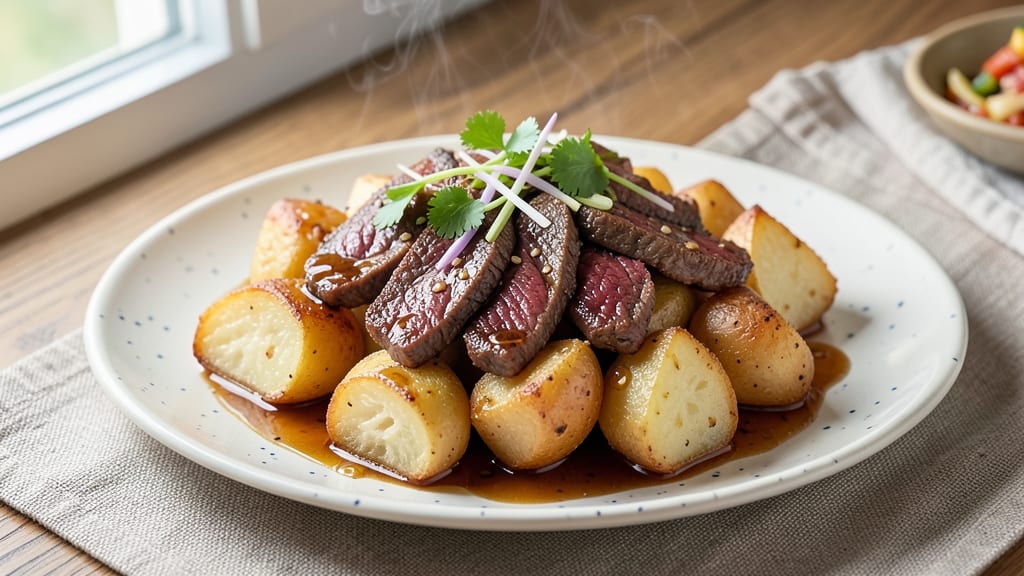
This Asian beef and potatoes recipe transforms simple ingredients into a harmonious blend of wok-seared beef and tender potatoes, inspired by Korean and Japanese techniques. The secret lies in high-heat searing for caramelized edges on the beef, while potatoes absorb rich umami flavors from the same pan.
I developed this dish after craving a hearty yet balanced meal that delivers restaurant-quality depth at home.
The dish begins with thinly sliced beef that cooks quickly over high heat, creating a crispy exterior while keeping the inside juicy. Meanwhile, potatoes roast until silky on the inside with a crispy exterior—achieved by par-cooking them first.
A simple sauce ties everything together, balancing sweet, savory, and slightly spicy notes that define Asian-inspired flavors.
By the end, you’ll have a texturally perfect dish where every bite offers contrast: tender beef with a caramelized crust, potatoes that melt in your mouth, and a sauce that coats each component.
The aroma alone will have everyone at the table anticipating the first bite, making this a standout for weeknight dinners or special occasions.
This recipe works equally well as a main dish or alongside steamed rice. The method is straightforward, but the result feels elevated—ideal for those who want bold flavors without complicated techniques. Let’s get started on creating this restaurant-worthy meal at home.
Ingredients for asian beef and potatoes
Restaurant-quality Asian flavors start with these 14 ingredients—simple yet transformative.
| Ingredient | Amount | Notes |
|---|---|---|
| Flank Steak 🥩 | 1 ¼ lb | Thinly sliced against grain |
| Russet Potatoes 🥔 | 2 lbs | Cut into 1-inch chunks |
| Vegetable Oil 🫒 | ½ cup | High smoke point preferred |
| Sesame Oil 🫒 | 1 tbsp | For finishing |
| Soy Sauce 🥫 | ½ cup | Low-sodium preferred |
| Rice Vinegar 🍶 | ¼ cup | White or seasoned |
| Brown Sugar 🍯 | 2 tbsp | Packed tightly |
| Garlic Cloves 🧄 | 6 cloves | Minced finely |
| Fresh Ginger 🌿 | 2 tbsp | Finely grated |
| Red Pepper Flakes 🌶️ | 1 tsp | Adjust for heat preference |
| Green Onions 🧅 | 4 whole | Sliced thinly for garnish |
| Sesame Seeds 🌾 | 1 tbsp | Toasted lightly |
| Salt 🧂 | 1 ½ tsp | Diamond Crystal preferred |
| Black Pepper 🌶️ | ½ tsp | Freshly ground |
The flank steak is non-negotiable for this dish—its lean texture and grain direction matter. Look for marbled cuts at Whole Foods or your local butcher shop; avoid pre-sliced packages that lose moisture. For potatoes, Russets work best—they crisp beautifully while staying fluffy inside. If you can't find them, Yukon Golds are a close second. The ginger should be fresh and fibrous—none of that jarred stuff. Penzeys or the produce section at Trader Joe's always have good quality. Pre-mince the garlic and ginger to save time during cooking; just keep them refrigerated until ready to use.
No sesame oil? Toasted peanut oil works in a pinch, though the flavor will differ slightly. Short on brown sugar? Honey or maple syrup at half the amount does the trick, though the caramelization won't be identical. The soy sauce can be swapped for coconut aminos if you're avoiding sodium, but the umami depth won't be the same. For heat, gochujang paste adds complexity—use 1 tbsp instead of the red pepper flakes. The green onions can be subbed with scallions or chives, though green onions have that signature sharpness. If you're prepping ahead, slice the potatoes and store them in cold water in the fridge for up to 24 hours before cooking.
This dish reheats beautifully—just warm it through in a skillet with a splash of water or broth. The flavors actually deepen overnight, making it perfect for meal prep. Store leftovers in an airtight container for up to 4 days in the fridge, or freeze for 3 months. For serving, I like to arrange the beef and potatoes on a platter, drizzle with extra sauce, and scatter the toasted sesame seeds over everything. The contrast of textures—crispy potatoes, tender beef, and silky sauce—is what makes this dish so satisfying. Garnish with fresh herbs if you have them, but the sesame seeds and green onions are your essential finishing touches.
Why You'll Love This Recipe
- One-Pan Magic: I swear by this recipe when I’m too tired to wash dishes. The potatoes and steak cook together—no flipping pans, no stress—just crispy edges on the potatoes and tender beef that practically falls apart. Honestly, it’s the kind of meal where I can still have time for a glass of wine while dinner happens.
- Umami Bomb: That combo of soy sauce and sesame oil? It’s like a flavor explosion in my mouth. The steak gets this glossy, caramelized crust, and the potatoes soak up just enough savory goodness to make every bite addictive. Between us, I’ve been known to eat leftovers straight from the fridge because it’s that good.
- Lunchbox Hero: This dish is my secret weapon for meal prep. Slice the cooled beef and potatoes into neat portions, toss them in a container, and boom—you’ve got a lunch that tastes like you actually cooked. My kids (who usually complain about leftovers) beg for this in their lunches. Not the prettiest, but the taste makes up for it.
- Budget Stretch: Flank steak is affordable, potatoes are cheap, and a little sesame oil goes a long way. I can feed four people for under $15, and there’s always enough for seconds. Plus, the leftovers reheat like a dream—no dry, sad meat here. It’s my go-to when I need to make my grocery money stretch further.
Step-by-step instructions for wok-searred beef and potatoes
This method delivers perfectly seared beef with tender potatoes—crispy edges and silky centers every time.
Prepare the Potatoes for Maximum Crunch
Cut the 2 lbs russet potatoes into 1-inch chunks, ensuring even size for consistent cooking. Soak them in cold water for 10 minutes to remove excess starch—this prevents them from turning gluey during cooking. Drain thoroughly and pat completely dry with paper towels.
In a large bowl, toss the potatoes with 0.5 cup vegetable oil, 1.5 tsp salt, 0.5 tsp black pepper, and 1 tsp red pepper flakes. The oil creates a barrier that locks in moisture while the spices penetrate the surface. Let them sit for 10 minutes to absorb the seasoning completely.
Sear the Flank Steak for Perfect Texture
Slice the 1.25 lb flank steak thinly against the grain into ¼-inch strips. This ensures each bite is tender and easy to chew. In a separate bowl, combine 0.5 cup soy sauce, 0.25 cup rice vinegar, 2 tbsp brown sugar, 6 cloves minced garlic, and 2 tbsp grated ginger. Mix well and let marinate for 15 minutes.
Heat 1 tbsp vegetable oil in a wok or large skillet over high heat until shimmering. Add the steak strips in a single layer and sear for 1-2 minutes until the edges are golden brown and slightly charred. Remove and set aside, reserving the rendered juices in the pan.
Cook the Potatoes to Crispy Perfection
Return the wok to high heat and add the seasoned potatoes in a single layer. Cook undisturbed for 3-4 minutes until the undersides develop golden brown spots. Stir gently and continue cooking for another 5-6 minutes, tossing occasionally, until the potatoes are tender when pierced with a knife.
Add the marinated steak back to the wok along with the reserved juices. Toss everything together for 2-3 minutes until the steak is heated through and the potatoes absorb the flavorful sauce. The potatoes should be fork-tender with crispy edges.
Finish with Aromatics and Garnish
Reduce heat to medium and stir in 1 tbsp sesame oil and 1 tbsp toasted sesame seeds. The sesame oil adds depth of flavor while the seeds provide a nutty crunch. Cook for an additional 1 minute, allowing the aromas to meld together.
Garnish with 4 whole green onions sliced thinly and serve immediately. The dish should have a balance of textures—crispy potatoes, tender beef, and a glossy sauce that ties everything together. Each bite should deliver a perfect harmony of savory, sweet, and slightly spicy flavors.
Pro Tips For Making Asian Beef And Potatoes
- CUT THE STEAK AGAINST THE GRAIN: Flank steak’s fibers run long—slicing perpendicular makes each bite tender. Skip the pre-slicing temptation; let it rest after cooking, then slice thinly against the grain. (Yes, it’ll look like you butchered it, but that’s how you win.)
- PARBOIL POTATOES IN COLD WATER: Russets soak up heat like sponges—start them in cold, salted water to avoid gummy centers. Bring to a boil after they’re submerged, then simmer until they pierce with a fork. (I used to rush this and ended up with gluey potatoes. Don’t be me.)
- SEAR THE STEAK IN BATCHES: A crowded pan steams the meat instead of searing. Work in two batches over medium-high heat—just enough oil to coat the pan. The crust forms faster, and the soy sauce caramelizes properly. (Your first batch will look sad until you get the rhythm.)
- SAUCE THE POTATOES TOO: Toss the cooked potatoes in a mix of soy sauce, sesame oil, and a pinch of sugar while they’re hot. The starches absorb the flavor, turning them from bland sides to star players. (I learned this after serving plain potatoes and hearing crickets.)
Troubleshooting this recipe
Potatoes Turning Mushy
If your potatoes lose their texture and become watery, it’s likely from overcrowding the pan or not drying them properly. Always cook potatoes in a single layer over high heat—never stir them until they’ve developed a crust.
I’ve found that patting them extra dry with paper towels before seasoning makes a huge difference. For extra insurance, par-cook them in boiling water for 5 minutes first, then finish in the wok. 🥔
Beef Staying Tough
Tough beef usually means the slices weren’t cut thin enough or weren’t cooked at the right temperature. Always slice flank steak against the grain into ¼-inch strips—no thicker! Use a sharp knife and keep your wok at high heat (it should be smoky hot).
If the beef still feels chewy, try marinating it for 30 minutes instead of 15, or add 1 tsp cornstarch to the marinade to help tenderize. 🥩
Sauce Too Thin
A watery sauce happens when too much liquid builds up from the potatoes or beef juices. To fix this, reduce the sauce after cooking by simmering it uncovered for 2-3 minutes over medium heat.
For extra thickness, stir in 1 tsp cornstarch mixed with 1 tbsp water and cook until it gels. If you’re ahead of time, let the dish rest for 5 minutes before serving—the flavors meld and the sauce naturally thickens. 🍲
Uneven Cooking
If some potatoes or beef are undercooked while others burn, your heat isn’t evenly distributed. Use a wok or large skillet with high sides to prevent overcrowding. Cook in small batches if needed—don’t overload the pan.
For beef, work in ½ lb portions at a time, searing until browned before adding more. A wok with a flat bottom (like a carbon steel wok) helps distribute heat better than a nonstick pan. 🔥
Lacking Flavor
Flat flavors usually mean the marinade didn’t infuse enough or the aromatics weren’t fresh. Always use fresh ginger and garlic—jarred versions lack the punch. Let the beef marinate for the full 15 minutes (or longer if possible) and don’t skip the reserved juices when tossing everything together.
For an extra boost, add 1 tsp fish sauce to the marinade or finish with a splash of rice vinegar before serving. 💡
Sticking to the Pan
Sticking happens when the pan isn’t hot enough or the oil isn’t used properly. Heat your wok until it’s smoking hot before adding oil—just a few drops should sizzle wildly. Use high-smoke-point oil like avocado or vegetable oil, and avoid overcrowding.
If sticking still occurs, add a splash of water or broth to deglaze the pan, then scrape up the browned bits to use in the sauce. A well-seasoned wok helps too! 🧂
Nutrition facts
Frequently asked questions
Can I use a different cut of beef instead of flank steak?
For this recipe, look for tender cuts like sirloin or ribeye—slice them ¼-inch thick against the grain for best results. If using chuck roast, it's best braised first for 2 hours before adding to the potatoes. Avoid lean cuts like top round, as they can dry out quickly.
How do I make this dish spicier?
For extra heat, add 1 tbsp gochujang paste or ½ tsp cayenne pepper to the marinade. You can also stir in 1 tsp sriracha or ½ tsp chili crisp during the final 1 minute of cooking. For a smoky kick, finish with ½ tsp smoked paprika before serving.
Can I prepare this recipe ahead of time?
Yes! Cook the beef and potatoes separately, then store them in an airtight container in the fridge for up to 3 days. Reheat everything together in a skillet with a splash of water or broth for 5-7 minutes over medium heat. The flavors actually deepen when reheated. For freezing, cook completely and freeze for up to 3 months—thaw overnight in the fridge before reheating.
What's the best way to serve this dish?
This recipe pairs perfectly with steamed jasmine rice or coconut rice to soak up the flavorful sauce. For extra presentation, arrange the beef and potatoes on a platter, drizzle with extra sauce, and garnish with toasted sesame seeds and thinly sliced green onions. Serve with a side of miso soup or quick-pickled vegetables for a complete meal.
Can I make this dish vegetarian?
For a plant-based version, swap the beef for extra-firm tofu or mushrooms like shiitake or king oyster. Press and slice the tofu into strips, then marinate in the same sauce for 20 minutes before cooking. For mushrooms, use 8 oz sliced and cook for 3-4 minutes until golden. The potatoes will still be the star of the dish!