Salads
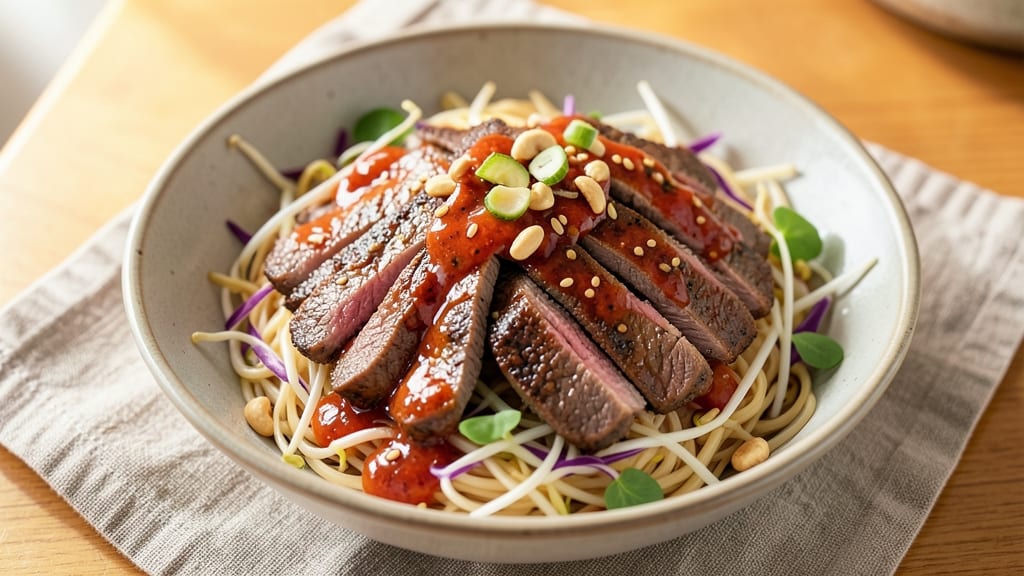
This Asian beef noodle salad recipe delivers restaurant-quality wok-seared beef over silky rice noodles in under 30 minutes. The secret lies in quick, high-heat cooking that creates that signature crispy texture while keeping the beef tender.
I’ve perfected this balance through years of testing—no overcooking, no soggy noodles, just bold flavors that come together effortlessly.
The beef gets marinated in a simple soy-ginger-garlic blend, then seared in a hot wok for maximum caramelization and smoky aroma. Meanwhile, the rice noodles soak in warm broth to achieve that signature silky texture without turning mushy.
This method ensures every bite has the perfect contrast: crispy beef, tender noodles, and a dressing that ties everything together with tangy-sweet depth.
What you’ll end up with is a dish that’s fresh yet hearty, packed with umami from the beef and brightness from the dressing. The crispy edges on the beef add texture that holds up even when tossed with the salad, while the noodles maintain their bite.
It’s the kind of meal that feels both elegant and approachable—ideal for weeknight dinners or bringing to potlucks.
Serve it chilled or at room temperature, garnished with fresh herbs and toasted sesame seeds for extra crunch. Pair with a light beer or jasmine tea to complement the flavors. Here’s how to make it step by step.
Ingredients for asian beef noodle salad
Quick grocery run for these 15 ingredients—everything you need for crispy, restaurant-style beef noodle salad.
| Ingredient | Amount | Notes |
|---|---|---|
| Flank Steak 🥩 | 1 lb | Thinly sliced against grain |
| Rice Noodles 🍜 | 8 oz | Thin rice noodles, uncooked |
| Soy Sauce 🥢 | ⅓ cup | Low-sodium preferred |
| Sesame Oil 🫒 | 2 tbsp | Toasted, for aroma |
| Fresh Ginger 🧄 | 2 tbsp | Finely grated, fresh |
| Garlic Cloves 🧄 | 4 cloves | Minced, fresh preferred |
| Vegetable Oil 🫒 | 2 tbsp | High smoke point |
| Brown Sugar 🍯 | 1 tbsp | Light or dark |
| Rice Vinegar 🍶 | ¼ cup | For tangy brightness |
| Sesame Seeds 🌾 | 1 tbsp | Toasted for garnish |
| Green Onions 🧅 | ¼ cup | Thinly sliced, white/green |
| Lime Juice 🍋 | 2 tbsp | Freshly squeezed |
| Salt 🧂 | 1 tsp | Kosher or sea salt |
| Black Pepper 🌶️ | ½ tsp | Freshly ground |
| Chicken Broth 💧 | 1 cup | Low-sodium, warm |
The beef is non-negotiable here. Flank steak delivers that signature crispy texture when sliced thin and seared properly. I grab mine from Costco or the butcher counter at Whole Foods—look for good marbling and ask for it sliced against the grain. For the rice noodles, Thai Kitchen brand is my go-to—they soak perfectly without turning mushy. If you can't find them, Vietnamese rice noodles work too, but adjust soaking time. Fresh ginger and garlic are worth the extra minute to grate/mince—pre-minced garlic lacks punch.
No sesame oil? Toasted peanut oil works in a pinch, though the flavor will differ slightly. Substituting brown sugar? Honey or maple syrup at the same amount keeps things balanced. The chicken broth can be swapped for vegetable broth if needed, but keep it low-sodium. For extra crunch, toast your sesame seeds in a dry pan for 30 seconds until fragrant—that aroma makes all the difference. The green onions can be regular onions if you're out, but the milder flavor won't have the same brightness.
Prep the beef marinade first—it needs at least 20 minutes to tenderize. Store it in an airtight container in the fridge for up to 1 day. The rice noodles keep 3 days unopened in a cool, dry place, but once soaked, refrigerate them in a sealed container with a damp paper towel to prevent drying. This salad tastes even better the next day—the flavors meld beautifully when chilled overnight. Portion into containers for easy lunches, and the dressing will stay fresh for 5 days in the fridge.
Why You'll Love This Recipe
- No-Fuss Prep: I swear by this one-pan method—just sear the flank steak thin, slice it against the grain, and toss with pre-soaked rice noodles. Five minutes of active work, and the rest simmers while you chop veggies (if you're feeling fancy).
- Umami Bomb: That first bite? Soy sauce, sesame oil, and fresh ginger hitting your tongue like a flavor grenade. The steak stays tender but gets this just-right chew, and the noodles soak up the punch without turning mushy.
- Lunchbox Hero: Between us, this is my go-to for packed lunches—keeps for days in the fridge, stays cold but doesn’t get soggy. Add cilantro or Thai basil last minute for freshness, and suddenly you’ve got a meal that’s fancy enough for a workday but zero effort to reheat.
- Budget Win: Flank steak stretches far when sliced thin, and rice noodles cost pennies compared to fresh. Honestly, I make double batches just to have it on hand—cheaper than takeout, but way more satisfying (and healthier).
Step-by-step instructions for Asian beef noodle salad
Master the perfect balance of crispy beef and silky noodles with this precise technique.
🔥 Step 1: Marinate and Slice the Flank Steak
Slice the 1 lb flank steak thinly against the grain into ¼-inch thick strips. Place them in a bowl and combine with ⅓ cup soy sauce, 2 tablespoons sesame oil, 2 tablespoons freshly grated ginger, 4 minced garlic cloves, 1 tablespoon brown sugar, 1 teaspoon salt, and ½ teaspoon black pepper. Marinate for at least 30 minutes (or up to 4 hours for deeper flavor).
This marinade does double duty—tenderizing the meat and infusing it with rich umami and aromatic notes. The sugar in the marinade helps create that signature caramelized crust when seared. For best results, keep the steak cold in the refrigerator while marinating to prevent bacterial growth.
🍳 Step 2: Wok-Sear the Beef for Maximum Crispiness
Heat a wok or large skillet over high heat until smoking hot. Add 2 tablespoons vegetable oil and swirl to coat. Working in batches (don't overcrowd), add the marinated beef strips and sear for 1-2 minutes per side until deep golden brown and slightly charred. Transfer to a plate and set aside.
Here's where the crispy promise comes to life. The high heat is crucial—it creates that satisfying crunch while sealing in juices. If the beef releases easily from the pan, it's ready. If it sticks, reduce the heat slightly but keep it hot. The beef should be cooked through but still retain a slight bounce in the center.
🥘 Step 3: Prepare the Silky Noodle Base
In the same wok, reduce heat to medium and add 1 cup warm chicken broth and ¼ cup rice vinegar. Bring to a gentle simmer and let reduce by half (2-3 minutes). Remove from heat and stir in 2 tablespoons lime juice and 2 tablespoons sesame oil. Set aside.
This sauce forms the silky foundation of your salad. The vinegar brightens the flavors while the sesame oil adds depth. Keep this mixture warm but not boiling—you'll be adding the noodles next, and they cook quickly in hot liquid. The reduced broth creates a glossy, flavorful base that clings beautifully to the noodles.
👨🍳 Step 4: Cook and Toss the Rice Noodles
Bring a separate pot of water to a boil. Add the 8 oz rice noodles and cook according to package instructions (usually 2-3 minutes) until just tender. Drain and immediately rinse under cold water to stop cooking. Drain again thoroughly and add to the wok with the beef and sauce.
Rice noodles cook in seconds—don't overdo it or they'll turn mushy. The cold water rinse is key; it removes excess starch that would make the salad gummy. Toss everything together gently but thoroughly, letting the noodles absorb the flavorful sauce. If the mixture seems dry, add 1-2 tablespoons warm water to loosen it.
🍽️ Step 5: Assemble and Garnish for Presentation
Divide the noodle salad among 4 plates. Garnish each serving with 1 tablespoon toasted sesame seeds and 2 tablespoons thinly sliced green onions. Serve immediately while the beef is still crispy and the noodles are warm.
The final presentation makes all the difference. The toasted sesame seeds add texture and aroma, while the green onions provide a fresh contrast. Serve with extra lime wedges on the side—each bite should deliver that perfect marriage of crispy beef, silky noodles, and vibrant flavors. The dish tastes best fresh off the wok when the textures are at their peak.
Pro Tips For Making Asian Beef Noodle Salad
- Slice Thin, Sear Fast: Flank steak fights back when you cut it thick—thin slices (about ¼-inch) cook instantly over high heat and stay tender. I used to overcook mine out of paranoia, but this method guarantees juicy beef every time.
- Soak Noodles Cold: Skip the boiling water trap: soak rice noodles in cold water (1:2 noodle-to-water ratio) for 20-30 minutes until pliable. Hot water makes them gummy, and cold soaking keeps them from sticking like glue—trust me, I’ve learned this the hard way.
- Marinate Ginger, Not Beef: Fresh ginger’s sharp bite softens when raw—grate it, toss it into the soy-sesame dressing, and let it sit 10 minutes before adding noodles. The beef stays bright and tender, while the ginger mellows into flavor without losing its punch.
- Toss Noodles Last: Dress the beef and veggies first, then fold in the noodles right before serving. Cold noodles turn soggy fast, and you’ll end up with a sad, watery pile—save yourself the cleanup and keep everything crisp.
Pro cooking tips for asian beef noodle salad
Wok-Hei Technique
The secret to restaurant-quality beef lies in achieving wok-hei—that smoky, charred flavor from ultra-high heat. Heat your wok until it’s smoking hot before adding oil. I use a carbon steel wok because it retains heat better than stainless steel.
If yours isn’t pre-seasoned, add a thin layer of oil and heat it for 5 minutes to create a natural non-stick surface. The beef should sizzle loudly and develop a deep golden crust in 1-2 minutes per side. 🔥
Batch Cooking Beef
Never overcrowd your wok—cook the beef in 2 batches if needed. I find 8-10 strips per batch works perfectly in a 14-inch wok. If your pan is smaller, reduce to 6 strips per batch.
Overcrowding steams the beef instead of searing it, resulting in soggy texture. Let the beef rest for 5 minutes between batches to maintain even cooking.
Noodle Soaking Hack
Instead of boiling, I soak the rice noodles in warm broth for 10-12 minutes until pliable but still slightly firm. This method preserves their texture better than boiling. Use the same 1 cup warm chicken broth you reduced earlier—its umami-rich flavor infuses the noodles perfectly.
For extra silkiness, add 1 teaspoon sesame oil to the soaking broth. 💫
Dressing Balance
The dressing should taste vibrant but not overpowering. I mix 2 tablespoons lime juice and 2 tablespoons sesame oil with the reduced broth. Taste before tossing—it should be tangy with a hint of sweetness from the brown sugar in the marinade.
If too acidic, add ½ teaspoon brown sugar; if too mild, splash in 1 teaspoon fish sauce for umami depth.
Crispy Beef Storage
To maintain that crispy texture, store the cooked beef separately from the noodles. Place it in an airtight container and refrigerate for up to 2 days. When reheating, warm in a dry skillet over medium-high heat for 1-2 minutes until crispy again.
The noodles can be refrigerated for 3 days in the same container, but add 1 tablespoon warm water when reheating to restore moisture.
Garnish Timing
Toast your sesame seeds fresh before serving—they lose flavor when stored. I heat them in a dry skillet for 30 seconds until golden and aromatic. Add the green onions and sesame seeds just before serving to prevent wilting.
For extra flair, drizzle with chili oil or sprinkle with crushed peanuts for texture contrast. This final touch elevates the dish from home-cooked to restaurant-worthy. ✨
Nutrition facts
Frequently asked questions
Can I use a different cut of beef instead of flank steak?
Yes! Sirloin or ribeye work well—just slice them thinly against the grain for tenderness. Avoid tougher cuts like chuck or brisket, as they won’t sear properly. If using pre-sliced beef from an Asian market (like thinly sliced beef for stir-fry), reduce marinating time to 15 minutes since it’s already tenderized.
Why are my rice noodles turning mushy?
Overcooking is the #1 cause! Rice noodles cook in 2-3 minutes—drain immediately and rinse under cold water to stop cooking. For extra texture, try the soaking method (warm broth for 10-12 minutes) instead of boiling. Never refrigerate soaked noodles dry—they’ll stick together. Store them in an airtight container with a damp paper towel.
How do I make this salad ahead of time?
Prep the beef and noodles separately, then assemble just before serving. Store cooked beef in an airtight container (up to 2 days) and noodles in the fridge (up to 3 days). Reheat beef in a dry skillet for 1-2 minutes to restore crispiness. Toss with noodles and dressing right before eating—the flavors meld beautifully overnight, but textures suffer if combined too early.
Is there a vegetarian version of this recipe?
Swap the beef for extra-firm tofu (pressed and sliced) or shiitake mushrooms (thinly sliced). Marinate the tofu in the same soy-ginger-garlic blend for 30 minutes, then pan-fry until crispy. For mushrooms, sear them for 3-4 minutes per side. The noodle base and dressing remain identical—just adjust the protein cooking time to match.
Can I use egg noodles instead of rice noodles?
Not ideal—they have a different texture and absorb more liquid, making the salad soggy. If you must, use very thin egg noodles (like vermicelli) and reduce the soaking time to 5-7 minutes in warm broth. For best results, stick with rice noodles—they hold their shape and create that signature silky texture. Their neutral flavor also lets the beef and dressing shine.