
Main Courses
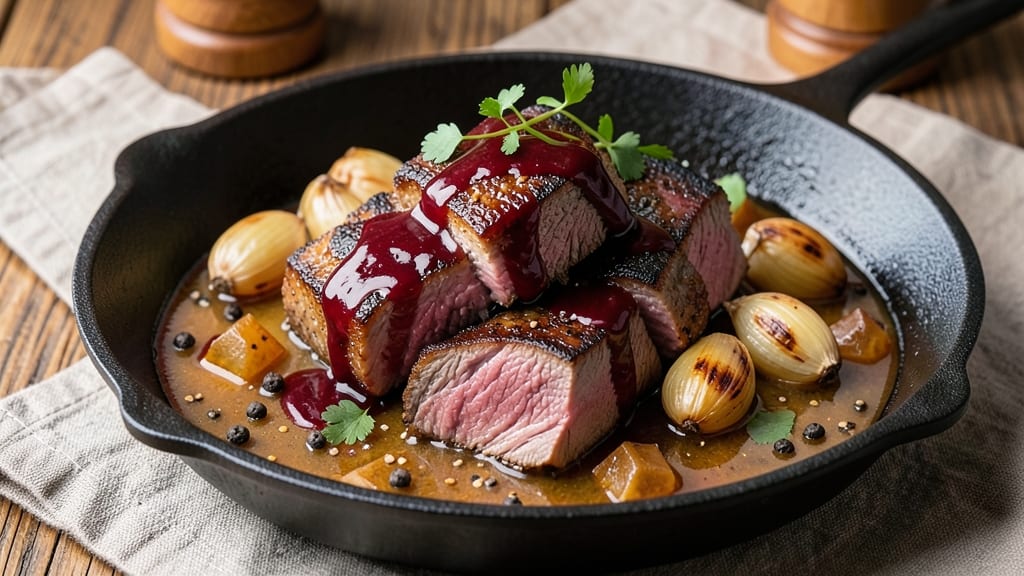
This au jus recipe with beef bouillon cubes transforms simple beef into a restaurant-worthy meal with rich, velvety gravy in just 15 minutes. The secret lies in searing the meat first—creating a flavorful crust that dissolves into the pan, forming the base for a deep, savory sauce.
I’ve perfected this technique for tender roasts, steaks, or even pan-seared beef strips, ensuring every bite is drenched in that irresistible, aromatic liquid gold.
What sets this method apart is the two-step reduction process: first deglazing the pan with red wine or beef broth to capture all those caramelized flavors, then finishing with beef bouillon cubes for an instant umami boost.
No complicated reductions or long simmering—just precise timing and high heat to create a sauce that’s silky-smooth yet packed with meaty depth. The bouillon cubes act as a shortcut without sacrificing authenticity, delivering that classic au jus richness in minutes.
The result is a plated dish that feels luxurious yet effortless—juicy beef resting on a bed of roasted potatoes or crusty bread, generously drizzled with that glossy, amber-colored gravy. The sauce clings to every bite, enhancing the natural flavors of the meat while adding a layer of sophistication.
This is the kind of meal that makes weeknight dinners feel like a special occasion, all while keeping prep under 20 minutes total.
Pair it with classic sides like garlic mashed potatoes, buttery green beans, or a simple arugula salad to round out the plate. The au jus elevates even the simplest proteins, turning a basic roast into a showstopper. Ready to master this foolproof technique? Let’s get started.
Ingredients for au jus recipe with beef bouillon cubes
Precision-crafted ingredients for restaurant-quality au jus with beef bouillon cubes in record time.
| Ingredient | Amount | Notes |
|---|---|---|
| Beef Chuck Roast 🥩 | 1 ½ lb | Cut into 1-inch cubes for even cooking |
| Unsalted Butter 🧈 | 2 tbsp | High-quality for rich flavor development |
| Dry Red Wine 🍷 | ½ cup | Bold Cabernet Sauvignon preferred |
| Beef Bouillon Cubes 🧂 | 2 cubes | Knorr or Maggi brand recommended |
| Beef Broth 💧 | 1 cup | Low-sodium preferred for balance |
| All-Purpose Flour 🌾 | 1 tbsp | Diamond Crystal preferred for light texture |
| Fresh Rosemary 🌿 | ¼ cup | Finely chopped for aromatic depth |
| Fresh Thyme 🌿 | ¼ cup | Leaves only, finely chopped |
| Garlic Cloves 🧄 | 4 cloves | Minced for concentrated flavor |
| Yellow Onion 🧅 | 1 whole | Diced into 1/4-inch pieces |
| Kosher Salt 🧂 | 1 ½ tsp | Adjust to taste during reduction |
| Black Peppercorns 🌶️ | ½ tsp | Freshly cracked for robust flavor |
| Cold Water 💧 | ½ cup | For thinning final sauce if needed |
The beef selection is critical here—chuck roast delivers the perfect balance of tenderness and fat for rich flavor development. Costco or Whole Foods typically carry high-quality cuts with good marbling, which is essential for that velvety sauce. If you're using pre-cut beef, ensure the pieces are uniform (1-inch cubes) for even cooking. Fresh herbs like rosemary and thyme should be vibrant green with no wilting—Trader Joe's often carries excellent quality at reasonable prices. The bouillon cubes are the secret weapon; Knorr or Maggi brands dissolve cleanly without graininess, providing that authentic umami punch.
No red wine on hand? Substitute with an equal amount of beef broth, though the sauce will lack depth. For a non-alcoholic version, use grape juice or apple cider vinegar at half the amount. The flour acts as a natural thickener—if you prefer gluten-free, cornstarch at half the amount works equally well. Fresh herbs can be swapped for dried at one-third the quantity, but the flavor profile will differ slightly. The garlic and onion form the aromatic base, so don't skip them—frozen chopped onions are a convenient shortcut if fresh isn't available. For extra richness, consider adding 1 tbsp of beef fat from the searing process back into the sauce.
This sauce reaches peak flavor when served immediately, but it reheats beautifully—simply warm gently on the stove with a splash of beef broth. Store leftovers in an airtight container in the fridge for up to 5 days, though the texture may thicken slightly upon reheating. For longer storage, freeze in ice cube trays—perfect for quick future use. The bouillon cubes can be stored in a cool, dry place for up to 12 months, while fresh herbs should be wrapped in damp paper towels and refrigerated for 5-7 days. Always taste and adjust seasoning before serving—this sauce should be rich but not overpowering.
Why You'll Love This Recipe
- One-Pot Magic: I swear by this—just sear the chuck roast, dump in the wine and bouillon, then let it simmer. No extra pans, no fuss, and the rich, caramelized fond sticks to the bottom, turning into the most unexpected flavor bomb when you deglaze it.
- Wine-Infused Depth: That splash of dry red wine? It’s not just for show—it cuts through the richness of the beef while adding layers of earthy, fruity complexity. Pair it with a bouillon cube, and suddenly you’ve got a sauce that tastes like it simmered all day (even if it didn’t).
- Leftovers That Shine: Between us, this recipe begs for seconds. The au jus thickens beautifully when reheated, making it perfect for sandwiches the next day or even freezing for a quick weeknight dinner. Honestly, I’ve had it cold on a roll, and it’s still ridiculous.
- Budget-Friendly Feast: A chuck roast stretches far—this recipe feeds four for under $20, and the bouillon cubes keep it cost-effective without sacrificing flavor. Plus, the wine adds a little splurge-worthy touch without breaking the bank. (Yes, even on a Tuesday night.)
Step-by-step instructions for rich beef au jus with bouillon
This method transforms simple ingredients into a velvety, deeply flavorful au jus that complements roasted beef perfectly.
Sear the Beef Chuck Roast for Maximum Flavor
Heat a heavy Dutch oven over medium-high heat until hot. Add the 1.5 lb beef chuck roast, cut into 1-inch cubes, in a single layer without overcrowding. Let the beef sear undisturbed for 3-4 minutes per side until developing a deep golden-brown crust. This caramelization forms the flavor foundation of your au jus.
As the beef browns, resist the urge to move it prematurely. The crust should release only when ready—this indicates proper searing. Work in batches if needed to avoid steaming. Transfer the seared beef to a plate and set aside, leaving all the browned bits in the pot. These precious fond particles contain concentrated meaty flavors that will dissolve into your sauce.
Build the Aromatic Base with Onions and Herbs
In the same Dutch oven, add 2 tbsp unsalted butter and allow it to melt completely over medium heat. Add the 1 whole yellow onion, diced into ¼-inch pieces, and cook for 5-6 minutes until softened and translucent. Stir occasionally to prevent burning.
Add the 4 cloves minced garlic, ¼ cup finely chopped fresh rosemary, and ¼ cup finely chopped fresh thyme. Cook for another 1-2 minutes until the garlic becomes fragrant and the herbs release their aromatic oils. This herbaceous base forms the aromatic backbone of your au jus, providing depth and complexity that bouillon cubes alone cannot achieve.
Deglaze and Develop the Sauce
Pour in the ½ cup dry red wine immediately after removing the pot from heat. Scrape vigorously with a wooden spoon to deglaze, lifting all those browned bits from the bottom. Return to medium heat and simmer for 3-4 minutes until the wine reduces by half and its alcohol content burns off, leaving behind concentrated flavor.
Sprinkle the 1 tbsp all-purpose flour over the mixture and stir vigorously for 1 minute to create a roux. This step thickens the sauce naturally without gumming it up. Add the 2 beef bouillon cubes and 1 cup beef broth, stirring until the bouillon dissolves completely. The sauce should now be smooth with a velvety consistency.
Simmer and Reduce for Concentrated Flavor
Return the seared beef to the pot and bring everything to a gentle simmer over low heat. Cover partially and cook for 15-20 minutes, stirring occasionally, until the beef is fork-tender and the sauce reduces slightly. The ideal consistency should coat the back of a spoon but remain pourable.
Season to taste with 1.5 tsp kosher salt and ½ tsp freshly cracked black peppercorns. For a richer flavor, you can add up to ½ cup cold water if the sauce becomes too thick. The final au jus should be glossy with a deep reddish-brown color, reflecting its concentrated beefy essence.
Strain and Serve with Confidence
Using a fine-mesh strainer, carefully strain the au jus into a clean saucepan, pressing gently on the solids to extract maximum flavor without making the sauce gritty. This step ensures a silky texture that will beautifully complement your roasted beef.
Return the strained au jus to medium-low heat and simmer for an additional 2-3 minutes to eliminate any raw flour taste if present. Serve immediately alongside your roasted beef, drizzling generously over each portion. The au jus should coat the meat perfectly, enhancing its natural flavors with every bite.
Pro Tips For Making Au Jus Recipe With Beef Bouillon Cubes
- SEAR THE ROAST FIRST: Walk away for 10 minutes after browning the chuck roast—this lets the crust set properly before adding liquid. I used to rush this, and the au jus would turn greasy instead of rich and glossy.
- USE HALF THE BOUILLON: Toss only one cube into the pan with the wine and roast—save the second for the broth. The first cube dissolves into the pan drippings, making the au jus deeper and more concentrated.
- DEGLAZE IN STAGES: After adding wine, let it bubble for 30 seconds before scraping. Then add broth gradually—this prevents a sudden flood that dilutes the flavor. Sounds fussy, but it makes a real difference.
- SALT THE BROTH LAST: Hold off on the bouillon cube’s salt until the end—your roast already has salt from the sear and butter. Taste the finished au jus and adjust; otherwise, you’ll end up with a salty surprise.
Storing and reheating this recipe
Refrigerator Storage
Store your au jus in an airtight glass container (like Pyrex) for up to 5 days in the fridge. The sauce will thicken slightly—simply reheat with 2 tbsp beef broth while warming to restore its silky texture.
I always let it cool completely before storing to prevent condensation, which can dilute the flavors. 💧
Freezer Preservation
For longer storage, freeze the au jus in ice cube trays—perfect for quick future use. Once frozen, transfer the cubes to a ziplock freezer bag with all air removed. These portions thaw in 5 minutes on the counter or overnight in the fridge, ready to drizzle over reheated beef.
Label with the date—it keeps for 3 months without losing quality. ❄️
Reheating Techniques
For stove-top reheating, warm the au jus over low heat with a splash of beef broth to prevent sticking. Bring to a gentle simmer for 3-4 minutes, then taste and adjust seasoning—it often needs a pinch of salt or black pepper after reheating.
Never boil, or the sauce may separate. 🔥
Microwave Shortcut
For quick meals, microwave the au jus in 2-minute intervals on 50% power, stirring between each interval. Add 1 tbsp cold water if it thickens too much. This method works best for individual servings—just heat until steaming hot, then drizzle immediately over your beef. 💡
Reviving Thickened Sauce
If your au jus thickens too much during storage, thin it with 1 tbsp beef broth or cold water while reheating. For extra richness, stir in 1 tsp unsalted butter at the end. The bouillon cubes help maintain flavor even after reheating, so don’t worry about losing depth. 🌟
Serving Freshly Reheated
Serve reheated au jus immediately alongside your beef—its glossy finish and concentrated flavors shine best when fresh. For a restaurant touch, strain again through a fine-mesh sieve to remove any impurities that may have formed during storage.
The result? A sauce that tastes just like it was made minutes ago. ✨
Nutrition facts
Frequently asked questions
Can I make this au jus without red wine?
Substitute the ½ cup dry red wine with ½ cup beef broth or ¼ cup apple cider vinegar + ¼ cup beef broth for acidity. The bouillon cubes will still deliver rich umami, though wine adds depth. For a non-alcoholic version, use ½ cup grape juice—just reduce it longer to concentrate the flavor.
What's the best way to use leftover au jus?
Leftover au jus makes an excellent base for beef dishes! Use it to pan-sear steaks, braise short ribs, or deglaze roasted beef. For extra richness, reduce it by half on the stove to create a thicker gravy. Store in ice cube trays for easy portioning—thaw and drizzle over reheated meat.
Why did my au jus turn out too thin?
This usually happens from over-dilution or insufficient reduction. If using bouillon cubes, let the sauce simmer uncovered for 5-7 minutes longer to evaporate excess liquid. For instant thickening, mix 1 tbsp cornstarch with 2 tbsp cold water, stir into the hot sauce, and simmer 1 minute. Never boil—just maintain a gentle simmer to avoid breaking the sauce.
Can I make this with chicken or pork instead of beef?
While this recipe is designed for beef, you can adapt it! For chicken, use chicken bouillon cubes and white wine instead of red. For pork, swap beef bouillon for pork bouillon and add ½ tsp smoked paprika to the herbs. The searing technique remains the same—just adjust the cooking time to 10-12 minutes for chicken and 15-18 minutes for pork.
How do I make this au jus in a slow cooker?
Sear the beef first as directed, then transfer everything (including browned bits) to a 4-qt slow cooker. Add all ingredients except the bouillon cubes, cook on LOW for 6 hours or HIGH for 3 hours. Stir in bouillon cubes during the last 30 minutes, then strain. The result will be richer but slightly less glossy than stovetop. Perfect for hands-off cooking!