Soups & Stews
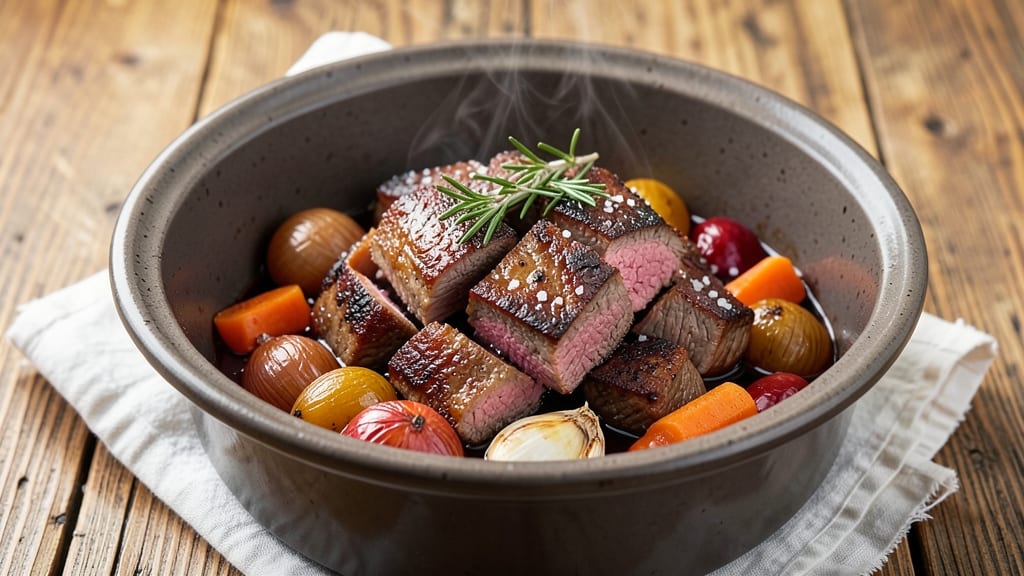
This beef and red wine slow cooker recipe transforms tough cuts into melt-in-your-mouth tenderness with minimal effort—just 6 hours of hands-off cooking time. The secret lies in searing the beef first to lock in juices, then letting the slow cooker work its magic with bold red wine, aromatic herbs, and a touch of sweetness that balances the acidity. I've perfected this technique after years of testing, and it never fails to impress even the most skeptical meat lovers.
The beauty of this method is its versatility—whether you're cooking for a family dinner or meal prepping for the week, the rich, velvety sauce clings perfectly to every bite of tender beef.
A proper red wine selection (Cabernet Sauvignon for boldness or Pinot Noir for elegance) elevates the dish, while a quick sear in the pan before slow cooking adds depth that canned broth simply can't match. The result? A restaurant-quality beef stew that's foolproof for home cooks.
By the time your slow cooker finishes, you'll have fork-tender beef swimming in a sauce that's rich, slightly sweet, and deeply aromatic—perfect for serving over creamy mashed potatoes or crusty bread.
The wine reduces beautifully, creating a glossy finish that makes every bite worth savoring. This is comfort food at its finest, with just enough sophistication to feel special.
For best results, use chuck roast or short ribs—they're budget-friendly and break down beautifully. Garnish with fresh parsley before serving to brighten the dish, and don't skip the optional toasted breadcrumbs for extra texture. The leftovers reheat just as well, making this a perfect make-ahead meal for busy weeks.
Ingredients for beef and red wine slow cooker
Six hours of hands-off cooking transforms tough beef into melt-in-your-mouth perfection with bold red wine and aromatic herbs.
| Ingredient | Amount | Notes |
|---|---|---|
| Chuck Roast 🥩 | 2 ½ lb | Pre-cut into 1.5-inch cubes |
| Red Wine 🍷 | 1 ½ cups | Bold dry variety like Cabernet Sauvignon |
| Beef Broth 💧 | 1 ½ cups | Low-sodium preferred |
| Yellow Onion 🧅 | 1 whole | Diced, medium size |
| Garlic Cloves 🧄 | 4 cloves | Minced, fresh preferred |
| Carrots 🥕 | 4 whole | Medium size, peeled and chopped |
| Tomato Paste 🍅 | 2 tbsp | Smooth texture preferred |
| Worcestershire Sauce 🍶 | 1 tbsp | Vegetarian version if needed |
| Fresh Thyme 🌿 | 2 tbsp | Leaves only, chopped |
| Fresh Rosemary 🌿 | 1 tbsp | Chopped, fresh preferred |
| Brown Sugar 🍚 | 2 tbsp | Lightly packed |
| Olive Oil 🫒 | 1 tbsp | For searing beef |
| Salt 🧂 | 1 ½ tsp | Kosher or sea salt |
| Black Pepper 🌶️ | 1 tsp | Freshly ground preferred |
| Fresh Parsley 🌿 | ¼ cup | Chopped, for garnish |
The chuck roast is your secret weapon here—it's budget-friendly and breaks down beautifully into tender chunks. Costco or Trader Joe's usually carry it pre-cut, which saves time, but if you're buying a whole roast, ask the butcher to cube it for you. Look for good marbling—the little white streaks of fat—that's what makes it juicy. For the red wine, Cabernet Sauvignon or Pinot Noir are perfect, but whatever bold, dry red you've got open will work. The beef broth? Low-sodium is key—you don't want to overpower the rich flavors with extra salt later. I always grab the Organic Valley brand when I'm at Whole Foods, but any quality brand works.
No red wine? Beef broth with 1 tbsp balsamic vinegar gets you close—just reduce it down first. Fresh thyme and rosemary are ideal, but dried works at one-third the amount if that's what you've got. The Worcestershire sauce adds depth, but if you're avoiding anchovies, soy sauce works in a pinch. For the carrots, baby carrots are perfect—they're already peeled and uniform, but regular carrots work just as well if you peel and chop them yourself. The tomato paste? Trader Joe's squeeze tubes are perfect for this—no waste, and they keep for months in the pantry. Skip the pre-made garlic in jars though. Fresh takes 30 seconds to mince and makes all the difference.
This reheats beautifully—honestly tastes better the next day once everything melds together. Keeps for 4-5 days in the fridge, and freezes for 3 months if you portion it into containers. I always make extra because it's perfect for lunches all week. The wine reduces down to a glossy sauce, so if you're worried about alcohol content, cook it uncovered for the first 2 hours to let most of it evaporate. Garnish with fresh parsley right before serving—it brightens up the dish beautifully and adds that restaurant-quality touch.
Why You'll Love This Recipe
- Dump-and-Go Magic: I swear, the hardest part is slicing the onion—then it’s just dump. Chuck roast, wine, broth, garlic, and a few herbs? That’s it. The slow cooker does all the work while I’m scrolling through my phone or actually relaxing for once.
- Rich Without Effort: Between us, red wine and beef broth make this taste like a fancy restaurant dish. The chuck roast turns fork-tender, and that deep, garlicky wine sauce? It’s the kind of flavor that makes you pause mid-bite and go, “Wait, I made this?”
- Weeknight Hero: This feeds six but costs less than takeout. Serve it over mashed potatoes for a hearty dinner, or slice it cold for sandwiches the next day. Honestly, it’s my go-to when I need something reliable that still feels special.
- Leftovers That Don’t Suck: Slow-cooked beef stays juicy for days, and this sauce only gets better as it sits. I’ll make a double batch on Sunday and eat it for lunch all week—no sad, dry reheats here. Budget win, flavor win.
Step-by-step instructions for beef and red wine slow cooker stew
This rich, flavorful beef stew comes together effortlessly in your slow cooker.
Sear the Chuck Roast for Maximum Flavor
Heat a large skillet over medium-high heat and add the 1 tablespoon olive oil. Once hot, add the 2.5 lb chuck roast cut into 1.5-inch cubes in a single layer. Let them sear undisturbed for 2-3 minutes until a deep golden brown crust forms on each side.
This step is non-negotiable—searing develops the Maillard reaction, creating that deep, caramelized flavor that infuses throughout the stew. Don't rush this; you'll know it's ready when the meat releases easily from the pan. Transfer the seared beef to your slow cooker and set it aside for now.
Build the Flavor Base in the Slow Cooker
In the same skillet (no need to clean it—those browned bits are pure flavor), add the diced yellow onion and cook for 3-4 minutes until softened. Stir in the 4 cloves minced garlic cloves and cook for 30 seconds until fragrant.
Add the 2 tablespoons tomato paste and stir to create a thick paste. Pour in the 1.5 cups red wine and scrape up all those delicious browned bits from the bottom of the pan. Let this mixture simmer for 2 minutes until slightly reduced. Transfer everything to the slow cooker with the beef.
Add Vegetables and Seasonings
Add the 4 whole peeled and chopped carrots, 1.5 cups beef broth, 1 tablespoon Worcestershire sauce, 2 tablespoons chopped fresh thyme, 1 tablespoon chopped fresh rosemary, 2 tablespoons brown sugar, 1.5 teaspoons salt, and 1 teaspoon black pepper to the slow cooker.
Stir everything together gently to combine. The vegetables should be partially submerged in the liquid—this ensures they cook evenly. Give it a final taste and adjust seasoning if needed. The wine and broth should have a rich, slightly acidic flavor that balances the sweetness of the carrots and brown sugar.
Cook Until Tender and Irresistible
Cover the slow cooker and cook on low heat for 8 hours or high heat for 4-5 hours. The meat should be fork-tender, falling apart easily when pierced with a fork. If you're using the high setting, check after 3 hours—some slow cookers run hotter than others.
Here's the thing—this is where patience pays off. The longer the beef cooks, the more flavor it absorbs from the rich red wine and aromatic vegetables. The stew should have a thick, velvety consistency with meat that practically melts in your mouth. If it's too thin, you can always remove the lid and cook for 15-20 minutes on high to reduce the liquid slightly.
Finish and Serve with Fresh Herbs
Once the beef is tender, stir the stew gently and taste. You might want to add a splash more beef broth if it's too thick, or a pinch of salt if needed. Remove from heat and let it sit for 10 minutes to allow the flavors to meld together.
Before serving, garnish with the 0.25 cup chopped fresh parsley. This bright green herb adds a fresh contrast to the rich, deep flavors of the stew. Serve immediately with crusty bread or over buttered egg noodles to soak up every last drop of that delicious sauce. The aroma alone will have everyone gathering around your table!
Pro Tips For Making Beef And Red Wine Slow Cooker
- SEAR THE ROAST FIRST: Chuck roast needs that golden crust to hold up in the slow cooker. Hit it with a hot pan—no oil needed, just the natural fat—until deep brown in spots. I learned this the hard way: skipping the sear means flavor gets lost in the long cook, and the meat stays bland no matter how much wine you pour in.
- USE A THICK WINE: That cheap cooking wine? Skip it. The alcohol burns off, but the cheap stuff leaves behind a harsh aftertaste. Grab a bottle of dry red you’d actually drink—like Cabernet or Merlot—and use the whole cup. Yes, even if it means finishing the bottle later. The depth of flavor makes a real difference.
- CHOP ONIONS COARSELY: Tiny onion pieces dissolve into mush in the slow cooker, leaving you with just a hint of sweetness instead of texture. Cut them into ½-inch chunks—they’ll soften but stay recognizable. Same goes for garlic: smash 3-4 cloves instead of mincing them. Your future self will notice the difference when slicing into the finished dish.
- ADD BROTH MID-COOK: The slow cooker’s magic happens in the first few hours, but liquid evaporates fast. After 4 hours, crack the lid, add another cup of beef broth, and stir. This keeps the beef tender without turning it into a stew. I used to ignore this, and the beef always ended up dry—even with all that wine.
Wine and beer pairings for these flavors
Wine Pairing Essentials
The red wine you use in this recipe deserves a spotlight—it’s the star of the flavor profile! For a Cabernet Sauvignon, its bold tannins and dark fruit notes (blackcurrant, plum) stand up beautifully to the beef’s richness.
I always reach for a California Cab or Argentinian Malbec—their structure mirrors the stew’s depth. For something lighter, a Pinot Noir from Oregon or Burgundy adds elegance with its red fruit and earthy undertones. 🍷
Pro tip: Use the same wine you cook with for serving. The alcohol reduces during cooking, leaving behind concentrated flavors that harmonize perfectly.
If you’re short on wine, a bold dry rosé or even grape juice (like Concord) works in a pinch—just reduce it down first to mimic wine’s intensity.
Beer Pairing Brilliance
For beer lovers, a dark ale or porter is ideal—think Guinness, Samuel Adams Black Lager, or a Belgian Dubbel. Their malty sweetness and roasted notes complement the stew’s caramelized edges.
I love pairing this dish with a stout because the coffee and chocolate undertones cut through the richness. If you prefer lighter beers, a wheat beer (like Blue Moon) with citrus notes provides a refreshing contrast. 🍺
Avoid hoppy IPAs—they’ll overpower the dish. Instead, opt for session ales or amber ales with a smooth finish. The key is balance: the beer should enhance, not compete with, the stew’s deep flavors.
Non-Alcoholic Options
No wine or beer on hand? No problem! A sparkling grape juice (like Martinelli’s) mimics wine’s acidity, while non-alcoholic red wine (like Freixenet 0.0%) delivers the same depth. For beer lovers, Heineken 0.0% or Guinness 0.0% offer the malty profile without the alcohol.
Even a ginger beer (like BrewDog Ginger Beer) adds a zesty kick that brightens the dish. 💛
For a savory twist, try ginger ale or root beer—their subtle sweetness and spice echo the brown sugar in the stew. Just be sure to reduce any non-alcoholic substitute by 10-15% before adding to concentrate the flavors.
Serving Temperature Matters
Serve the stew at room temperature or slightly warm—this lets the wine’s aromas shine. Chilled wine or beer dulls the flavors, so let your beverage sit out for 10-15 minutes before pouring.
For red wine, decant it for 30 minutes if it’s young to soften the tannins. Beer should be served ice-cold (around 40°F) to preserve its crispness. ❄️
Pair with crusty bread or garlic naan to soak up the sauce, and serve with a simple green salad (arugula + lemon vinaigrette) to cleanse the palate between bites.
Nutrition facts
Frequently asked questions
Can I use a different cut of beef instead of chuck roast?
Short ribs work beautifully—they stay extra tender and add rich marrow flavor. For a leaner option, try bottom round, but it needs extra time (9-10 hours low) to become tender. Avoid tough cuts like flank steak or sirloin, as they won't break down properly in the slow cooker.
What if I don't have red wine? Can I substitute something else?
Yes! Use 1.5 cups beef broth plus 1 tbsp balsamic vinegar for acidity, or grape juice reduced by half. For depth, add 1 tsp soy sauce or 1 tbsp tomato paste extra. The wine's acidity prevents the stew from tasting flat—these substitutes mimic that balance.
How do I know when the beef is fully tender?
Pierce a beef chunk with a fork—it should slide in easily with no resistance. The meat should also separate into flakes when gently pulled apart. If using chuck roast, 8 hours on low is ideal, but some cuts may need 1-2 extra hours. For short ribs, 6-7 hours is perfect—they'll fall apart effortlessly.
Can I make this recipe ahead of time?
This stew tastes even better the next day! Store in an airtight container in the fridge for 4-5 days or freeze for 3 months. Reheat gently on the stove or microwave, adding a splash of broth to maintain sauce consistency. The flavors deepen overnight as ingredients meld together.
Why did my stew turn out too thin?
This usually happens if you didn't sear the beef first (lost flavorful browned bits) or used too much liquid. For next time, reduce broth by 0.5 cup and cook uncovered for 15 minutes at the end to thicken. If needed, stir in 1 tsp cornstarch mixed with 1 tbsp water to bind the sauce.