
Sauces & Condiments
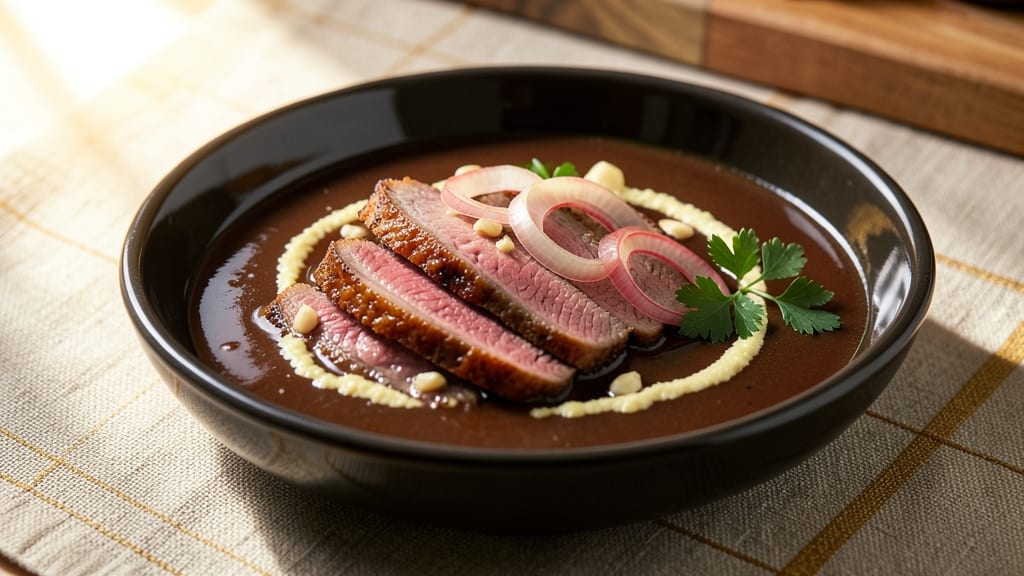
This au jus recipe with beef consommé transforms simple pan drippings into a restaurant-worthy sauce in just 10 minutes—no fancy techniques required. The secret lies in using high-quality beef consommé as the foundation, which deepens flavor while keeping the sauce silky and rich.
What sets this apart is the balance of acidity and sweetness, ensuring every bite is savory without being overpowering.
Start with a simple roux—just butter and flour—to thicken the sauce smoothly, then deglaze the pan with consommé, wine, and aromatics like shallots and garlic. The key is patience during reduction; letting the sauce simmer gently prevents bitterness while concentrating the flavors into a glossy, velvety finish.
This isn’t just a sauce—it’s the star of your plate.
The result is a deep, caramelized au jus that clings to roasted beef or steak, amplifying every bite with its umami richness. Unlike store-bought versions, this sauce develops layers of complexity from scratch, with a perfect harmony of savory, slightly tangy, and subtly sweet notes.
It’s the kind of sauce that turns a simple protein into a showstopper.
Use this versatile sauce for everything from weeknight dinners to holiday feasts, or drizzle it over mashed potatoes for extra decadence. The beauty of this recipe is its adaptability—scale it up for a crowd or halve it for leftovers. Ready to elevate your cooking? Let’s make this sauce.
Ingredients for au jus recipe with beef consomme
High-quality ingredients transform simple pan drippings into a velvety, restaurant-worthy au jus sauce.
| Ingredient | Amount | Notes |
|---|---|---|
| Unsalted Butter 🧈 | ½ cup | Cold, cubed for roux formation |
| All-Purpose Flour 🌾 | ½ cup | Diamond Crystal preferred |
| Beef Consommé 🍲 | 2 cups | High-quality, homemade or store-bought |
| Dry Red Wine 🍷 | ½ cup | Bold Cabernet Sauvignon recommended |
| Shallots 🧅 | 3 whole | Finely minced, 2 tbsp total |
| Garlic Cloves 🧄 | 4 cloves | Minced, 1 tbsp total |
| Beef Pan Drippings 🥩 | ½ cup | From roasted beef, strained |
| Balsamic Vinegar 🍶 | 1 tbsp | For acidity balance |
| Granulated Sugar 🍚 | 1 tsp | For subtle sweetness |
| Salt 🧂 | ½ tsp | Kosher, to taste |
| Fresh Thyme Leaves 🌿 | 1 tsp | Or 0.25 tsp dried thyme |
| Fresh Parsley 🌿 | 2 tbsp | Chopped, for garnish |
The beef consommé is non-negotiable here—homemade or premium store-bought brands like Swanson or Knorr make all the difference. For the wine, bold reds like Cabernet Sauvignon or Merlot add depth without overpowering. Shallots and garlic should be finely minced (almost paste-like) to dissolve smoothly into the sauce. I always grab organic shallots from the produce section—they're sweeter and more flavorful than conventional. The butter must be cold and cubed when making the roux, or it'll cook unevenly. For the flour, Diamond Crystal measures differently than other brands (spoon it into the cup rather than scooping), so adjust if using another type.
No beef consommé? Substitute with high-quality beef stock reduced by half, though the texture won't be identical. Running short on wine? Dry vermouth or even beef broth with a splash of balsamic works in a pinch. Fresh thyme unavailable? Dried thyme at one-quarter the amount suffices, but fresh has superior aroma. The sugar and vinegar might seem like small amounts, but they're crucial for that perfect balance of sweet and tangy that elevates the sauce. For the pan drippings, if you've got none, rendered beef fat works beautifully. Just ensure it's strained to remove any sediment. The parsley is purely decorative, but I always include it—a sprinkle of fresh parsley makes the sauce look as good as it tastes.
This sauce peaks after 3-4 days in the fridge, when the flavors fully meld. Store it in an airtight container with a thin layer of oil on top to preserve freshness. For longer storage, freeze in ice cube trays—thaw and reheat gently for perfect consistency. The sauce reheats beautifully, so double the batch if you plan to use it over multiple meals. When reheating, add a splash of water or consommé to prevent thickening. Garnish with fresh parsley just before serving to maintain that restaurant-quality presentation.
Why You'll Love This Recipe
- Pantry Magic Ready: This uses what you already have—no special shopping needed. The beef consommé does the heavy lifting, while the flour and butter create that silky, velvety sauce in minutes. Honestly, I’ve made this three times with whatever red wine was open, and it never let me down.
- Wine-Infused Depth: That splash of dry red wine? It’s not just for show—it brightens the shallots and beef consommé, giving it a rich, savory-sweet balance. Between us, the first sip of that sauce makes me forget I’m not at a fancy dinner.
- Leftovers That Shine: This sauce doubles as a dipping sauce for roasted potatoes or a glaze for steak the next night. I’ll be real: my freezer is packed with it, and it reheats like a dream—no lumps, no fuss.
- Weeknight Hero: Five ingredients, one pot, 20 minutes. The roux handles itself while you chop shallots, and the consommé cuts through any cooking mistakes. Not the prettiest, but the taste makes up for it—and my kids fight over seconds.
Step-by-step instructions for au jus recipe with beef consommé
Master this classic technique for a velvety, deeply flavorful pan sauce that elevates any beef dish.
Create a Classic Roux for Sauce Foundation
In a heavy-bottomed saucepan, melt the 0.5 cup unsalted butter over medium-low heat. Once fully melted, immediately whisk in the 0.5 cup all-purpose flour to form a smooth paste. This is your roux—the backbone of your au jus. Cook it for 2-3 minutes, stirring constantly with a wooden spoon or whisk, until it turns a rich, nutty golden brown color.
Watch the color carefully—it should resemble toasted breadcrumbs rather than raw flour. If it darkens too quickly, reduce the heat slightly. The roux should coat the back of a spoon without leaving a gritty texture. This step develops the sauce's depth and thickening power, so don't rush it.
Sauté Aromatics Until Deeply Fragrant
Add the finely minced 3 whole shallots and minced 4 cloves garlic to the roux. Cook for 3-4 minutes over medium heat, stirring frequently, until the shallots become translucent and the garlic releases its aromatic oils. You'll smell that sweet, oniony depth—this is when your sauce starts building character.
Don't let the aromatics burn; they should be soft but not browned. If they darken too quickly, reduce the heat to medium-low. The goal is to develop their flavors without creating bitterness. Here's where the magic happens—the foundation of your au jus is taking shape.
Deglaze with Wine and Reduce
Pour in the 0.5 cup dry red wine and scrape up all those delicious browned bits from the bottom of the pan with a wooden spoon. This deglazing step captures all the flavor locked in the roux. Let the wine simmer for 3-4 minutes until it reduces by about half and the alcohol cooks off, leaving behind concentrated wine flavor.
You'll notice the mixture thicken slightly as the alcohol evaporates. This is crucial—it mellows the acidity and deepens the sauce's complexity. If the mixture starts to stick, add 1-2 tablespoons of beef consommé to keep it moving. The wine should reduce until it coats the back of a spoon but isn't syrupy.
Build the Sauce with Consommé and Seasonings
Gradually whisk in the 2 cups beef consommé, starting with about ½ cup at a time. This slow incorporation prevents lumps and allows the roux to fully emulsify. Bring the mixture to a gentle simmer over medium heat, then add the 0.5 cup beef pan drippings, 1 tablespoon balsamic vinegar, 1 teaspoon granulated sugar, 0.5 teaspoon salt, and 1 teaspoon fresh thyme leaves. Stir well to combine.
Simmer the sauce for 5-7 minutes until it thickens to your desired consistency—it should coat the back of a spoon but still be pourable. Taste and adjust seasoning: add more salt if needed, or a splash more beef consommé if it's too thick. The sugar balances the acidity from the balsamic, while the thyme adds an earthy depth that complements the beef flavors.
Finish and Garnish for Restaurant-Quality Presentation
Remove the sauce from heat and let it rest for 2-3 minutes to allow the flavors to meld. Stir in the 2 tablespoons fresh parsley, which adds a bright, fresh contrast to the rich, savory sauce. The parsley should be finely chopped—just enough to brighten the dish without overpowering it.
For serving, strain the sauce through a fine-mesh sieve if you prefer a completely smooth texture, or leave it slightly textured for added depth. Ladle the warm au jus over sliced beef or use it as a dipping sauce. The finished sauce should be glossy, with a balance of richness from the beef and acidity from the wine and balsamic. Serve immediately while still warm to appreciate its full complexity.
Pro Tips For Making Au Jus Recipe With Beef Consomme
- STIR CONSTANTLY AT FIRST: The roux for this au jus is finicky—after adding the flour to butter, cook it for 2-3 minutes at medium-high heat while stirring like your life depends on it. I used to walk away for "just a second," and that’s when it’d either burn or turn gray and bland. Keep your spoon moving until it’s a rich, nutty brown before adding the consommé.
- MINCE SHALLOTS FINE: Don’t chop them into big chunks—this isn’t a stew. Use a sharp knife or food processor to mince them into tiny pieces, almost like confetti. They’ll dissolve into the sauce, adding depth without texture, and you’ll taste them in every sip. (Yes, it’s extra work, but your au jus will actually taste like shallots, not just "something onion-y.")
- DEGLAZE WITH WINE FIRST: Pour in the red wine before adding the consommé—let it bubble and reduce by half, scraping up every last bit of browned bits from the pan. That’s where the flavor lives. Then add the consommé. Skipping this step means a weaker sauce, no matter how good your consommé is.
- SALT THE CONSOMME: Beef consommé is usually unsalted (or lightly salted), and if you’re using unsalted butter, your au jus will taste flat. Taste the consommé before adding it to the roux and adjust the salt—even if it means adding a pinch later. You can always dilute with water, but you can’t unsalt a bland sauce.
Flavor customization for these flavors
Classic vs. Modern
Start with the traditional French-style au jus—rich, wine-forward, and deeply savory—using dry red wine and beef consommé as the base. For a modern twist, swap the wine for dry vermouth (like Martini) or even beef broth with 1 tbsp soy sauce for umami depth.
I’ve found that adding 1 tsp fish sauce to the consommé elevates the sauce’s complexity without overpowering it. 🍷
Sweet & Tangy Variations
Balance the richness with fruit-based acidity—try 1 tbsp orange juice or 1 tsp honey instead of balsamic vinegar. For a smoky touch, add ½ tsp smoked paprika or a splash of chipotle-infused tequila (just 1 tsp).
The key is to adjust sweetness and acidity in small increments—start with ½ tsp sugar and ½ tbsp vinegar, then taste as you go.
Herb & Spice Infusions
Swap thyme for rosemary or tarragon for a more aromatic profile. For heat, add ½ tsp cayenne or 1 tsp hot honey at the end. If you love earthy flavors, infuse the consommé with 2 sprigs fresh rosemary while simmering.
Remove the sprigs before straining—this adds a subtle piney note that pairs beautifully with beef. 🌿
Thickening Techniques
For a glossier finish, replace the roux with a cornstarch slurry (mix 1 tbsp cornstarch with 2 tbsp cold water). Whisk it into the simmering sauce and cook for 1-2 minutes until thickened.
Alternatively, use 1 tbsp Dijon mustard in the roux for a tangy kick. Avoid over-thickening—your au jus should coat the back of a spoon but remain pourable.
Regional Twists
For a Texas-style twist, add 1 tbsp Worcestershire sauce and a pinch of ground black pepper for a bold, peppery depth. In Italian kitchens, this sauce might include 1 tsp tomato paste for a subtle sweetness.
For a French bistro touch, finish with a drizzle of cognac (flambé it for drama!) and a pinch of freshly cracked black pepper. Each variation keeps the core technique intact while adding cultural flair.
Vegetarian Adaptations
Skip the beef consommé and use mushroom consommé (simmer 8 oz sliced mushrooms in 2 cups vegetable broth with 1 tsp soy sauce). Deglaze with dry white wine instead of red, and add 1 tsp miso paste for umami.
Garnish with chopped parsley and a sprinkle of furikake for a Japanese-inspired finish. The texture will be lighter, but the flavor remains rich and satisfying. 🌱
Nutrition facts
Frequently asked questions about beef consommé-based au jus
Can I make au jus without beef consommé?
Yes, but the texture and depth will differ. Use high-quality beef stock reduced by half (simmer 4 cups stock until 2 cups remain) or a mix of beef stock and pan drippings. For extra richness, add 1 tbsp tomato paste or 1 tsp soy sauce to mimic the umami depth of consommé. The sauce will be lighter but still delicious!
Why did my au jus turn out too thin?
This usually happens from one of three issues: undercooked roux (needs to be golden brown), insufficient reduction time (simmer longer), or adding too much liquid at once. Fix it by whisking in 1 tbsp cornstarch mixed with 2 tbsp cold water and simmering for 1-2 minutes. For future batches, reduce the consommé by 10-15 minutes before adding to the roux.
How do I store leftover au jus?
Store in an airtight container in the fridge for up to 3-4 days, or freeze in ice cube trays for up to 3 months. To reheat, warm gently on the stove with a splash of water or consommé—never boil, or it may separate. The flavor actually improves overnight as the ingredients meld!
Can I use this sauce for other proteins besides beef?
This au jus pairs beautifully with lamb, venison, or even pork. For poultry, swap the beef consommé for chicken consommé and use white wine instead of red. The key is matching the protein's richness—stick with red wine for game meats and white wine for lighter proteins. The technique remains the same!
What's the best wine to use if I don't have Cabernet Sauvignon?
Any bold, dry red wine works—try Merlot, Malbec, or even Pinot Noir. Avoid sweet wines like Zinfandel or Port. For non-alcoholic versions, use dry vermouth or grape juice reduced by half. The wine's job is to add depth, so ½ cup is plenty—don't overdo it!