
Sauces & Condiments
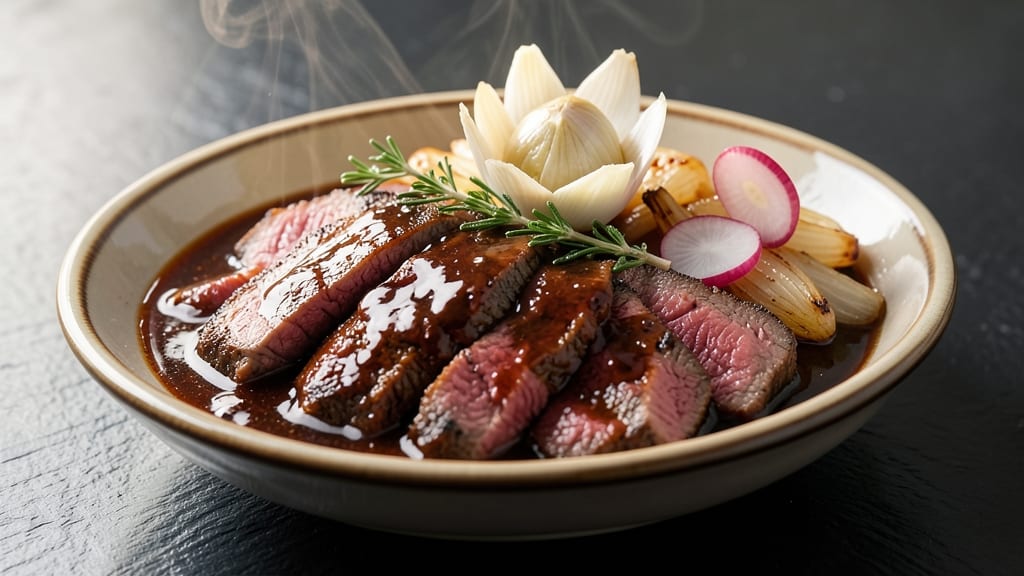
This beef au jus sauce recipe transforms simple braising liquids into a deep, velvety sauce that elevates every steak dinner.
The secret lies in reducing rich beef broth with red wine and aromatic vegetables until it reaches that perfect glossy, concentrated consistency—where every spoonful carries layers of umami and savory depth.
I developed this version after years of testing, ensuring it delivers restaurant-quality results without requiring specialized techniques or expensive ingredients.
The process is straightforward but precise: simmering the broth with wine and aromatics until it reduces by half, then straining for a silky texture.
A touch of cornstarch creates just enough body to coat the back of a spoon, while a balance of salt, sugar, and pepper rounds out the flavors.
What sets this apart is how it transforms ordinary roasted beef or steak into a showstopping centerpiece—the kind of sauce that makes diners ask for seconds.
Once made, this au jus keeps beautifully in the fridge for up to 5 days or in the freezer for months, making it perfect for meal prep. It pairs effortlessly with tender roasted beef, crispy potatoes, or even as a dipping sauce for crusty bread.
The key is patience—the longer it simmers, the more intense and flavorful it becomes, rewarding your effort with every bite.
For best results, use high-quality beef broth and dry red wine, as these form the foundation of the sauce. If you're short on time, you can reduce the simmering time slightly, though the deeper flavor comes from letting it work its magic.
This isn’t just a sauce; it’s the finishing touch that turns a good meal into an unforgettable one.
Ingredients for beef au jus sauce
Twelve ingredients, one sauce that turns ordinary beef into a restaurant-worthy masterpiece.
| Ingredient | Amount | Notes |
|---|---|---|
| Beef Broth 🍲 | 4 cups | High-quality, homemade preferred |
| Dry Red Wine 🍷 | 1 cup | Bold like Cabernet Sauvignon |
| Yellow Onion 🧅 | 1 whole | Diced, medium size preferred |
| Carrots 🥕 | 2 whole | Peeled, chopped into chunks |
| Garlic Cloves 🧄 | 4 cloves | Peeled, smashed slightly |
| Fresh Thyme 🌿 | 2 sprigs | Or 1 tsp dried thyme |
| Fresh Parsley 🌿 | ¼ cup | Chopped, for finishing |
| Cornstarch 🌾 | 1 tbsp | For thickening slurry |
| Cold Water 💧 | 1 tbsp | For cornstarch slurry |
| Salt 🧂 | 1 ½ tsp | Kosher or sea salt |
| Granulated Sugar 🍚 | 1 tsp | Balances acidity |
| Black Peppercorns 🌶️ | ½ tsp | Freshly cracked preferred |
| Olive Oil 🫒 | 1 tbsp | For sautéing aromatics |
The beef broth is non-negotiable—homemade is ideal, but a quality store-bought like Kitchen Basics or Pacific Foods works in a pinch. Look for deep color and rich aroma (the good stuff smells like beef, not just salt). Red wine? Cabernet Sauvignon or Merlot from a decent bottle—none of that cheap cooking wine. The aromatics (onion, carrots, garlic, thyme) should be fresh, not wilted. Trader Joe's or Whole Foods have great pre-chopped veggie mixes if you're short on time, but nothing beats freshly diced. Fresh thyme and parsley add layers of flavor that dried just can't match—worth the extra minute to snip stems.
No red wine? Beef broth with a splash of balsamic vinegar gets you close. Dried thyme works at one-third the amount of fresh, but the flavor won't be quite as bright. The cornstarch slurry is key—mix it with cold water first to avoid clumping. Arrowroot powder can replace cornstarch if you're avoiding gluten. For extra depth, add a 1 tsp soy sauce or Worcestershire (check for anchovies if vegan). The carrots can be baby carrots if that's what's in the fridge—just chop them smaller so they cook faster. If your broth is saltier than average, cut the added salt to 1 tsp.
This sauce tastes even better the next day as flavors meld. Store in an airtight container in the fridge for up to 5 days or freeze for 3 months. I like to portion it into ice cube trays—perfect for defrosting just what you need. The cornstarch slurry thickens as it cools, so reheat gently on low heat, stirring constantly. If it gets too thick, thin with a splash of beef broth. Never boil—just warm through. The sauce pairs perfectly with roasted beef, but don't be shy about using it on mashed potatoes or even as a dipping sauce for crusty bread.
Why You'll Love This Recipe
- Pantry-Friendly Base: I swear by this sauce because it uses what’s already in my fridge—no fancy ingredients, just beef broth, red wine, and a handful of veggies. The wine adds depth without needing a special bottle; a cheap one works just as well.
- Deep Umami Magic: That slow simmer of onions and carrots until they’re caramelized? It’s the secret—turns a simple broth into something rich and complex. The garlic cloves at the end? Pure flavor payoff.
- Leftovers That Shine: This sauce actually improves the next day. I make a big batch for Sunday dinner, then use it for sandwiches, pasta, or even a quick stir-fry all week. No waste, just flavor.
- Weeknight Hero: No last-minute shopping, no complicated steps—just chop, simmer, and taste. I’ve made it after work while scrolling through emails, and it’s always ready when the family walks in. (Yes, even on a Tuesday night.)
Step-by-step instructions for beef au jus sauce
Transform humble braising liquids into a velvety, flavor-packed sauce that elevates any beef dish.
🍳 Step 1: Sauté Aromatics Until Fragrant
Heat the 1 tablespoon olive oil in a large saucepan over medium heat. Add the diced yellow onion and chopped carrots, cooking for 5-6 minutes until softened and just beginning to caramelize. You'll know they're ready when the onions turn translucent and the carrots yield slightly under pressure.
Add the 4 smashed garlic cloves and 2 sprigs fresh thyme, stirring for 30 seconds until the garlic releases its aroma. This aromatic base forms the flavor foundation—don't rush it. If the onions start to brown too quickly, reduce heat slightly to medium-low and continue cooking until everything is tender and fragrant.
🍳 Step 2: Deglaze with Wine and Add Broth
Pour in the 1 cup dry red wine, scraping up any browned bits from the bottom of the pan with a wooden spoon. Let it simmer for 3-4 minutes until reduced by half and the alcohol aroma has cooked off. This step is crucial—it concentrates the wine's flavor and removes any harshness.
Add the 4 cups beef broth, 1.5 teaspoons salt, 1 teaspoon granulated sugar, and 0.5 teaspoon black peppercorns. Bring to a gentle boil, then reduce heat to low and let it simmer uncovered for 20-25 minutes. You want the liquid to reduce slightly but not boil vigorously—this builds depth of flavor. Stir occasionally to prevent sticking.
🥘 Step 3: Thicken the Sauce with Cornstarch Slurry
In a small bowl, whisk together the 1 tablespoon cornstarch and 1 tablespoon cold water until smooth. This slurry is your thickening secret—it creates that perfect au jus consistency without making the sauce gluey. Return the saucepan to medium heat and stir in the slurry, whisking constantly for 1-2 minutes until the sauce thickens noticeably.
Simmer for another 2 minutes until the sauce coats the back of a spoon. If it thickens too quickly, add 1-2 tablespoons hot water to reach your desired consistency. The sauce should be glossy and coat the back of a spoon but still be pourable—not syrupy. Remove from heat and let it sit for 5 minutes to settle.
🍽️ Step 4: Finish and Serve
Strain the sauce through a fine-mesh sieve into a clean saucepan, pressing on the solids with a wooden spoon to extract maximum flavor. Discard the solids or save for stocks. Stir in the 0.25 cup chopped fresh parsley and taste. Adjust seasoning with more salt or sugar if needed—the wine might need balancing with a pinch more sugar, while the broth might need more salt.
Serve the au jus immediately over sliced beef or use it to deglaze your roasting pan for a restaurant-quality presentation. The sauce should be rich, slightly tangy from the wine, and perfectly balanced in sweetness and saltiness. For best results, use it within 2-3 days or refrigerate and reheat gently before serving.
Pro Tips For Making Beef Au Jus Sauce
- Sweat the Onions Low: Don’t rush the onions—cook them on medium-low with a splash of water until they’re translucent and caramelized, not browned. I used to blast the heat and end up with bitter, burnt bits that ruined the whole sauce. This step builds flavor, not just color.
- Deglaze with Wine Immediately: As soon as you remove the beef, pour in the red wine and scrape the browned bits off the pan with a wooden spoon. Those bits pack deep umami, and letting them sit turns them into a gluey mess. Do it fast—don’t walk away.
- Simmer, Don’t Boil: Reduce the sauce to a gentle simmer, not a rolling boil, or you’ll cook off the wine’s alcohol too quickly and end up with a flat, one-dimensional flavor. Think "tiny bubbles, occasional swirls"—not "geyser mode."
- Strain for Clarity: After simmering, strain the sauce through a fine-mesh sieve to remove any shredded carrots or onion bits. It’s not just about looks—those tiny pieces can make the sauce grainy and dull the wine’s brightness. (Yes, even if you’re lazy, do this.)
Troubleshooting your beef au jus sauce
Sauce Too Thin?
If your au jus ends up too thin after simmering, don’t panic—this is easily fixed. The cornstarch slurry is your best friend here. Whisk together 1 tablespoon cornstarch with 1 tablespoon cold water, then stir it into the warm sauce while whisking constantly.
Simmer for 1-2 minutes until it thickens to your desired consistency. For an extra boost, reduce the sauce uncovered over medium heat for 5-10 minutes, stirring occasionally. This evaporates excess liquid while concentrating the flavors. 💡
Sauce Too Thick?
A sauce that’s too thick can happen if you over-reduce or add too much cornstarch. Thin it out gradually by stirring in 1 tablespoon hot beef broth at a time until it reaches a smooth, pourable consistency. Avoid cold liquid—it can cause the sauce to separate.
If the sauce is still too thick after thinning, return it to low heat and simmer gently for 2-3 minutes to let the starch break down naturally. The goal is a glossy, velvety texture that coats the back of a spoon but isn’t gluey. ✨
Bitterness from Wine?
If your au jus tastes too bitter, it’s likely from over-reducing the wine or using a high-tannin variety like Cabernet Sauvignon.
Balance the bitterness by adding a pinch of granulated sugar (start with ½ teaspoon) or a splash of apple cider vinegar (just ½ teaspoon) to brighten the flavors.
For extra depth, stir in 1 teaspoon soy sauce or Worcestershire sauce—these add umami and help round out the taste. Always taste as you go and adjust gradually. 🍷
Grainy or Cloudy?
A grainy or cloudy au jus usually means the sauce didn’t strain properly or the cornstarch wasn’t fully dissolved. For a silky texture, strain the sauce through a fine-mesh sieve or cheesecloth into a clean saucepan, pressing gently on the solids with a wooden spoon.
If the sauce still looks cloudy, whisk in 1 teaspoon cold water and simmer for 1-2 minutes to clarify it. For future batches, ensure your cornstarch slurry is smooth before adding it to the sauce. 🥄
Flat or Bland?
A bland au jus often happens when low-quality broth or wine is used, or if the sauce isn’t reduced enough. Boost the flavor by adding 1 teaspoon balsamic vinegar or 1 teaspoon Dijon mustard for depth.
For extra richness, stir in 1 tablespoon unsalted butter at the end (off the heat) to add a velvety finish. If the sauce lacks brightness, a pinch of freshly cracked black pepper or a sprinkle of smoked paprika can elevate it.
Always use high-quality ingredients—this sauce is only as good as its foundation. 💪
Sauce Separates When Reheating?
If your au jus separates when reheated, it’s likely because the cornstarch didn’t fully incorporate or the sauce cooled too quickly. To fix it, whisk in 1 tablespoon cold water and return the sauce to low heat, stirring constantly until it smooths out.
For prevention, store the sauce in an airtight container and reheat it gently over low heat, stirring frequently. Never microwave it—this can cause separation. If all else fails, thin the sauce slightly with hot beef broth and whisk vigorously to re-emulsify. 🔥
Nutrition facts
Frequently asked questions
Can I substitute red wine in this au jus recipe?
Yes, but choose wisely! For a similar flavor profile, use 1 cup beef broth + 1 tablespoon balsamic vinegar or 1 cup apple juice. Avoid sweet wines—they'll make your sauce taste off. If using dry white wine, add ½ teaspoon extra sugar to balance the acidity.
How do I use leftover roasting pan drippings for au jus?
Simply strain the drippings through a fine-mesh sieve into your saucepan. Add 1 cup beef broth to thin it out, then follow the recipe starting with Step 2. The drippings already contain all the meaty flavor—just need the wine and aromatics to elevate it. This cuts prep time by half!
Can I make this sauce in a slow cooker?
Sauté the aromatics as directed, then transfer everything to your slow cooker. Cook on low for 4-5 hours instead of simmering. Before thickening, strain through cheesecloth for the smoothest texture. The slow cooker method develops deeper flavor but requires more time.
Why does my au jus taste salty even after tasting?
Store-bought broths often contain hidden salt. Use low-sodium broth and reduce added salt to 1 teaspoon. If your sauce still tastes too salty, balance it with 1 teaspoon sugar or 1 tablespoon heavy cream (add at the end). Taste frequently while cooking to adjust gradually.
What's the best way to reheat au jus?
Gently reheat over low heat on the stovetop, stirring constantly. Never microwave—it causes separation. If too thick after reheating, thin with 1 tablespoon hot beef broth. For extra richness, whisk in 1 teaspoon butter at the end. Always reheat to 165°F for safety.