
Sauces & Condiments
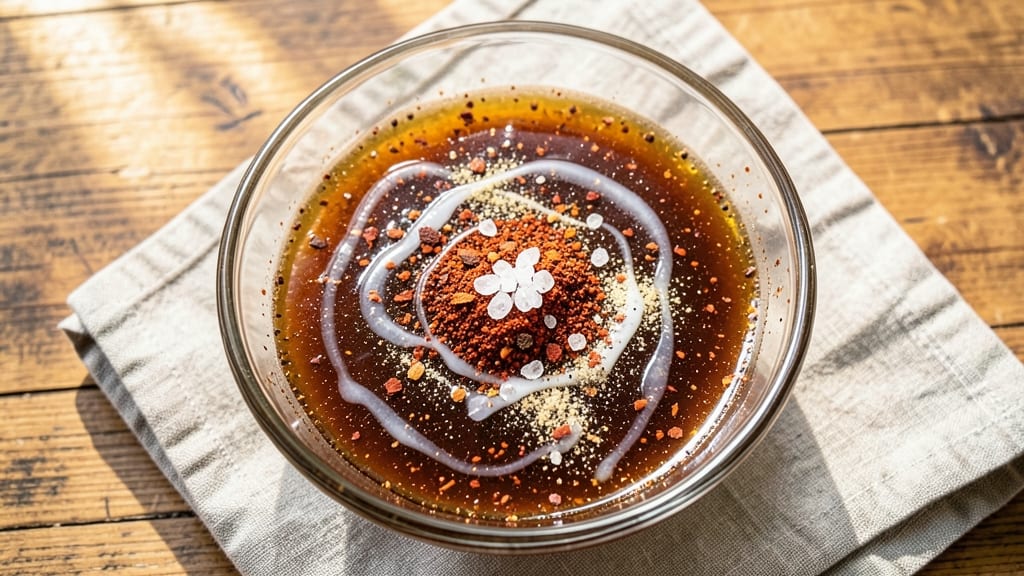
This basic beef jerky marinade recipe transforms tough cuts into flavor-packed, long-lasting strips with just five key ingredients. The perfect balance of salt, sugar, and spices creates a bold, savory profile while preserving texture—no curing mistakes here.
Professional jerky makers swear by this marinade’s simplicity and effectiveness, delivering restaurant-quality results at home.
What sets this marinade apart is its dual-purpose formula: the salt and sugar work together to draw out moisture (critical for curing) while the spices—smoked paprika, garlic powder, and black pepper—infuse deep, meaty flavor.
The vinegar acts as a natural preservative, ensuring your jerky stays fresh for weeks in the fridge or months in the freezer. No fancy equipment needed, just a bowl and whisk.
The marinade’s magic lies in its 30-minute soak time, where the beef absorbs enough flavor to develop that signature chewy crunch and rich taste. Whether you’re using lean beef, venison, or even turkey, this marinade adapts perfectly.
The result? Jerky with a bold, spiced crust and tender interior that melts in your mouth—ideal for snacks, camping trips, or gifting.
For best results, apply this marinade generously and let the meat rest uncovered in the fridge. The flavors intensify over time, making it worth the wait. Once dried, your jerky will have that professional-grade snap and complex spice profile that keeps people coming back for more.
Ingredients for basic beef jerky marinade
Five bold ingredients that transform tough beef into restaurant-quality jerky with a perfect chewy crunch.
| Ingredient | Amount | Notes |
|---|---|---|
| Kosher Salt 🧂 | ½ cup | Non-iodized, fine grain preferred |
| Granulated Sugar 🍚 | ½ cup | White or brown sugar works |
| Smoked Paprika 🌶️ | 2 tbsp | High-quality, not pre-mixed |
| Garlic Powder 🧄 | 1 tbsp | Freshly ground preferred |
| Black Pepper 🌶️ | 1 ½ tbsp | Freshly cracked for intensity |
| White Vinegar 🍶 | ¼ cup | Distilled or apple cider vinegar |
| Ground Black Peppercorns 🌶️ | 1 tsp | Optional for extra depth |
| Onion Powder 🧅 | 1 tsp | For subtle sweetness |
The salt and sugar are non-negotiable—they work together to draw out moisture while preserving texture. Diamond Crystal kosher salt dissolves best, but any non-iodized fine grain works. Sugar? White or brown, but organic cane sugar from Whole Foods adds subtle caramel notes. The smoked paprika is where the magic happens—Penzeys brand has the deepest, smokiest flavor, but the bulk bins at natural grocery stores work too. Look for vibrant color and no clumping. The vinegar acts as a natural preservative, so distilled vinegar from Trader Joe's is my go-to—cheap, effective, and lasts forever.
No smoked paprika? Regular paprika plus a pinch of liquid smoke gets you close. Short on vinegar? Lemon juice at half the amount works in a pinch. Want more heat? Add cayenne pepper at a quarter teaspoon. The garlic powder can be swapped for fresh minced garlic at double the amount, but it burns faster during drying. For a sweeter profile, honey or maple syrup can replace sugar—just reduce other liquids slightly. The onion powder is optional but adds subtle depth that jerky lovers notice. If you skip it, boost the garlic powder to compensate.
This marinade keeps indefinitely in an airtight container in a cool, dark place. Glass jars with tight-sealing lids are ideal—no need to refrigerate. Once mixed, it’s ready to use immediately, but flavors meld even better after 24 hours. For best results, apply generously to beef slices and let them soak uncovered in the fridge for 30 minutes to overnight. The longer they sit, the more intense the flavor. Store unused portions for up to 6 months—it’s that stable.
Why You'll Love This Recipe
- Five-Ingredient Magic: I swear by this combo—just salt, sugar, smoked paprika, garlic powder, and pepper. It’s the kind of marinade where you won’t overthink it, and the results? Chef’s kiss. No fancy ratios, no stress.
- Smoky Sweet Crunch: That smoked paprika gives it a deep, woodsy kick, while the sugar caramelizes into a sticky, addictive crust. Honestly, it’s the kind of flavor that makes jerky taste like a gourmet snack, not just a protein bar.
- Zero-Waste Pantry Use: Between us, this marinade uses stuff you already have. My pantry’s always got salt, sugar, and spices, so I’m never scrambling for ingredients. Plus, the leftovers? Perfect for reviving dry jerky or even tossing on roasted veggies.
- Hike-Ready in Minutes: I make a big batch on Sundays—it’s my go-to for backpacking, tailgates, or just keeping in the fridge for when I forget lunch. No refrigeration needed once it’s dried, and it stays solid for weeks. (Yes, even on a Tuesday night.)
Step-by-step instructions for crafting the perfect beef jerky marinade
Here's how to blend these bold spices into a marinade that delivers intense flavor and perfect texture.
Combine Dry Ingredients for Even Distribution
In a medium bowl, whisk together the 0.5 cup kosher salt and 0.5 cup granulated sugar until completely dissolved and smooth. This step is crucial because the salt needs to fully integrate with the sugar to create a balanced flavor foundation. The sugar will help tenderize the meat while the salt enhances preservation and flavor.
Next, add the 2 tablespoons smoked paprika, 1 tablespoon garlic powder, 1.5 tablespoons black pepper, 1 teaspoon ground black peppercorns, and 1 teaspoon onion powder. Stir vigorously with a fork or whisk for about 30 seconds until all ingredients are thoroughly mixed and no dry spots remain. The smoked paprika will bring deep, smoky notes while the garlic and onion powders add savory depth.
Gradually Incorporate the Vinegar for Proper Consistency
With the dry ingredients fully combined, slowly pour in the 0.25 cup white vinegar while continuing to whisk. The vinegar acts as both a tenderizer and a preservative, helping to break down muscle fibers in the meat. You'll want the mixture to reach a thick paste consistency—similar to wet sand—that clings well to the beef slices.
If the mixture appears too dry, add 1-2 teaspoons of water at a time until it reaches the ideal consistency. Too much liquid will dilute the flavor, while too little will make the marinade difficult to apply evenly. The final texture should be thick enough to coat the meat completely without dripping off.
Test and Adjust the Flavor Balance
Taste a small amount of the marinade directly from the bowl—this is the only way to ensure proper seasoning before applying it to the meat. At this stage, you're looking for a harmonious blend of sweet, smoky, and spicy notes with a subtle tang from the vinegar. If the flavor seems too mild, add a pinch more of the black pepper or smoked paprika.
For a sweeter profile, you can add an extra 1 tablespoon of granulated sugar, while those preferring more heat might incorporate an additional ½ teaspoon of black peppercorns. Remember, the marinade should be bold—this is what transforms ordinary beef into extraordinary jerky. Once satisfied with the flavor, your marinade is ready for immediate use.
Apply and Rest the Marinade for Maximum Effect
Generously coat each slice of beef with the marinade, ensuring complete coverage on all sides. Place the marinated beef in a resealable plastic bag or airtight container, and refrigerate for at least 4 hours, but ideally overnight. This resting period allows the marinade to penetrate deeply into the meat fibers, ensuring maximum flavor infusion and proper texture development.
During this time, the vinegar will begin breaking down proteins, while the salt and sugar will work together to create that perfect chewy yet tender bite. For best results, marinate for up to 24 hours—this extended time yields the most flavorful and tender jerky. After marinating, pat the beef dry before dehydrating to ensure optimal texture and even cooking.
Pro Tips For Making Basic Beef Jerky Marinade
- Whisk the Sugar First: Mix the granulated sugar with the kosher salt in a bowl before adding liquids—this prevents clumping and ensures even distribution. I used to dump everything in the marinade bag at once, and half the time, the sugar would stick in lumps like stubborn glue.
- Use Coarse Salt: Swap fine kosher salt for coarse if you have it—it clings better to the meat and dissolves faster in the marinade. Fine salt just slides off the lean cuts, leaving you with uneven seasoning.
- Marinate Cold, Not Warm: Let the meat sit in the fridge for at least 12 hours after applying the marinade, not at room temp. I learned this the hard way—warm meat absorbs too much liquid at once, making it soggy instead of tender.
- Toast the Spices: Lightly toast the smoked paprika and garlic powder in a dry pan for 30 seconds before mixing—it deepens their flavor without burning. Sounds weird, but it works: the jerky tastes richer, not just "spicy."
Storing and reheating this recipe
Fridge Storage Tips
Once your beef jerky is fully dehydrated and cooled, store it in an airtight container with a silicone-lined lid to prevent moisture buildup. I use glass jars with vacuum seals from Oriental Trading—they keep jerky fresh for up to 2 weeks in the fridge.
Place the container on a shelf away from strong odors, as jerky absorbs smells like a sponge. For extra protection, add a small packet of silica gel to absorb any residual moisture. 🧂
Freezer Preservation
To extend shelf life to 6 months, freeze your jerky in quart-sized freezer bags with all air removed using a straw method (squeeze out air before sealing). Label each bag with the date and flavor profile.
When ready to eat, thaw overnight in the fridge—never microwave as it can make jerky rubbery. For portion control, divide into single-serving bags before freezing. I like to freeze jerky in 1-ounce portions for easy snacking. ❄️
Reheating Methods
Jerky is best enjoyed cold, but if you prefer it warm, low-heat methods preserve texture. Place strips in a dry skillet over low heat for 10-15 seconds per side—just enough to soften slightly.
For microwave reheating, wrap jerky in a damp paper towel and heat for 5-8 seconds on 50% power. Avoid high heat, as it dries out the meat further. Pro tip: Spritz with 1 tsp water before reheating to restore moisture. 🔥
Reviving Dried Jerky
If your jerky loses its snap or becomes brittle, rehydrate it by placing strips in a resealable bag with 1 tbsp beef broth per 4 oz of jerky. Seal and let sit at room temperature for 30 minutes, then press out excess liquid.
The jerky will regain flexibility without becoming soggy. This trick works especially well for week-old jerky that’s lost its ideal texture. Store revived jerky in the fridge for 3-4 days.
Portion Control
Divide jerky into single-serving portions before storing to avoid opening large containers repeatedly. Use small glass jars or divided food containers for easy grab-and-go access. I keep a small jar in my car for emergencies and another in my desk drawer.
For camping trips, vacuum-seal individual strips in ziplock bags—they stay fresh for weeks without refrigeration. 🏕️
Shelf Life Tracking
Track your jerky’s freshness by labeling containers with the dehydration date. Most homemade jerky stays safe to eat for 1 month at room temperature, 2 weeks in the fridge, or 6 months in the freezer.
When in doubt, check for sliminess or off smells—these are red flags. For long-term storage, freezing is your best friend, as it halts bacterial growth while maintaining texture. I mark my freezer bags with sharpie dates for easy tracking. 📅
Nutrition facts
Frequently asked questions
Can I use this marinade on other meats besides beef?
This marinade works perfectly on venison, turkey, or even chicken breast. The salt-sugar-vinegar combo tenderizes lean proteins while the spices add bold flavor. For poultry, reduce marinating time to 1-2 hours to avoid over-tenderizing. Just adjust drying times accordingly—turkey and chicken dry faster than beef.
How long should I marinate the beef before dehydrating?
The minimum is 30 minutes, but for maximum flavor, marinate overnight (12-24 hours). The longer the beef soaks, the deeper the spice penetration and the more intense the final taste. For busy schedules, 4 hours still yields excellent results—just don't skip the marinade entirely.
Can I make this marinade without vinegar?
You can substitute lemon juice at half the amount (about 2 tablespoons), but vinegar is preferred for preservation. Without acid, the jerky may spoil faster. For a vinegar-free option, try beef broth (reduce to 1 tablespoon) or apple cider vinegar for milder tang. The marinade will still work but may not last as long.
Why does my jerky turn out too salty?
Over-salting usually happens when using iodized salt (which has metallic aftertaste) or not rinsing the beef after marinating. The recipe assumes non-iodized kosher salt. To fix it, soak finished jerky in cold water for 10 minutes, then pat dry before storing. For future batches, taste the marinade before applying—it should be bold but not overwhelming.
Can I add liquid smoke to this marinade?
Yes! Add ½ teaspoon liquid smoke to intensify the smoky flavor. For best results, mix it with the vinegar before combining with dry ingredients. Start with a small amount—liquid smoke is potent. If using, reduce the smoked paprika to 1 tablespoon to balance flavors. This works especially well for campfire-style jerky.