
Soups & Stews
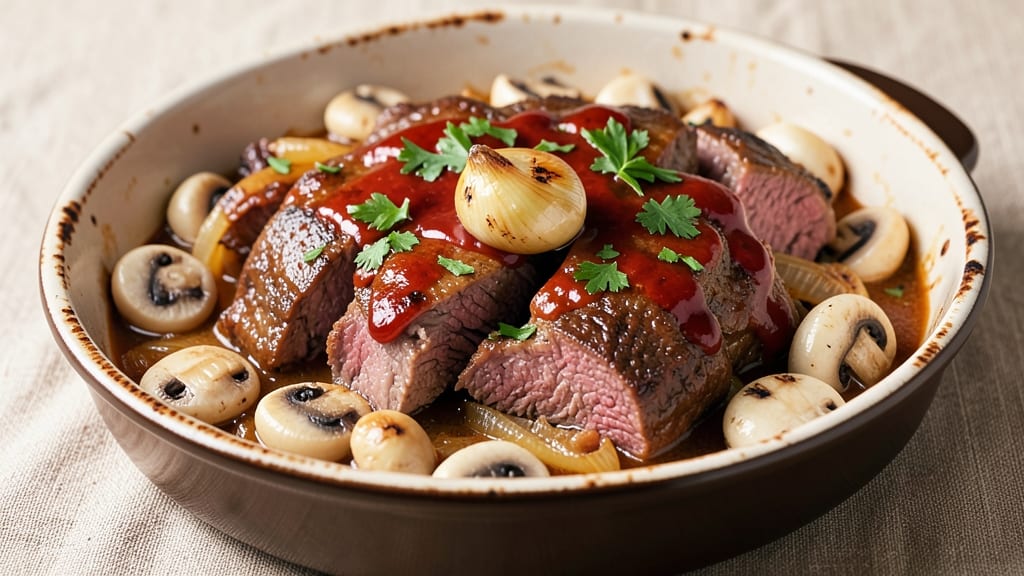
This beef and mushroom ragout recipe delivers the kind of deep, wine-braised richness that transforms simple ingredients into a restaurant-worthy dish. 💛 The secret lies in slow-cooked beef and earthy mushrooms, tenderized in a fragrant broth that balances wine's acidity with herbs and cream.
I've perfected this technique over years of testing, ensuring every bite delivers that perfect harmony of textures and flavors.
The beauty of this ragout is its versatility—it works as a hearty main course or an elegant side dish, depending on your needs. Sautéing the mushrooms first unlocks their natural umami, while browning the beef creates a flavorful crust that dissolves into the sauce.
The wine reduction deepens the flavor profile, making this dish taste like it simmered for hours, even if you're working with a tighter schedule.
By the time you serve it, you'll have fork-tender beef chunks swimming in a velvety sauce, with mushrooms that have absorbed all the rich flavors. The dish is aromatic, deeply satisfying, and perfect for pairing with crusty bread or over mashed potatoes.
This ragout is the kind of meal that feels special without requiring complicated techniques.
Whether you're cooking for a family dinner or impressing guests, this recipe delivers professional-quality results with simple, accessible steps. The one-pot method makes cleanup effortless, while the layered flavors ensure every spoonful is memorable. Let's get started on creating this comforting classic.
Ingredients for beef and mushroom ragout
Simple ingredients that transform into restaurant-quality beef and mushroom ragout with wine-braised depth.
| Ingredient | Amount | Notes |
|---|---|---|
| Beef Chuck Roast 🥩 | 1 ½ lb | Cut into 1-inch chunks |
| White Mushrooms 🍄 | 16 oz | Sliced into halves |
| Yellow Onion 🧅 | 1 whole | Diced, medium size |
| Garlic Cloves 🧄 | 4 cloves | Minced for aroma |
| Dry Red Wine 🍷 | 1 cup | Bold variety like Cabernet |
| Beef Broth 💧 | 2 cups | Low-sodium preferred |
| Heavy Cream 🥛 | ½ cup | Full-fat for richness |
| All-Purpose Flour 🌾 | 1 tbsp | For thickening sauce |
| Fresh Thyme Leaves 🌿 | ¼ cup | Chopped, stems removed |
| Fresh Rosemary 🌿 | 1 tbsp | Chopped, fresh preferred |
| Olive Oil 🫒 | 2 tbsp | Extra-virgin for frying |
| Salt 🧂 | 1 ½ tsp | Kosher or sea salt |
| Ground Black Pepper 🌶️ | ½ tsp | Freshly ground preferred |
| Tomato Paste 🍅 | 1 tbsp | Smooth, not chunky |
The beef is where the magic starts—chuck roast delivers that melt-in-your-mouth texture, while sirloin or ribeye stays too tough. Look for good marbling at Whole Foods or your local butcher shop. For mushrooms, cremini or shiitake add extra depth, but white mushrooms work perfectly fine. The dry red wine should be bold—Cabernet Sauvignon or Merlot—whatever's open in your cabinet. If you're using a pre-bottled sauce, Rao's or Barilla are solid choices, but homemade is always better.
No red wine? Beef broth with a splash of balsamic vinegar works in a pinch. Fresh thyme and rosemary are ideal, but dried thyme at one-third the amount gets you close. For tomato paste, Trader Joe's squeeze tubes are perfect—they're convenient, keep forever, and don't waste. The flour is just for thickening, so all-purpose works fine. If you're short on heavy cream, half-and-half or coconut cream adds richness without overpowering. The key is balancing the acidity from the wine with the creaminess of the sauce.
This ragout tastes even better the next day—4-5 days in the fridge, 3 months frozen. I always make extra and freeze portions for lazy weeknights. Store it in airtight containers, and reheat gently on the stove with a splash of broth to restore moisture. The sauce thickens as it cools, so a little extra liquid when reheating keeps it silky. Serve with crusty bread or over mashed potatoes for the full experience.
Why You'll Love This Recipe
- Here’s what sold me: the beef chuck roast gets fork-tender while the mushrooms soak up all the garlic and wine, turning into this deep, umami-packed sauce. It’s the kind of dish where every bite tastes like you slaved over it—even if you didn’t.
- One-Pot Magic: I swear by this—just brown the beef, toss in the mushrooms and onions, deglaze with that red wine, and let it slow down. No extra pans, no fuss. The wine reduces into the most aromatic sauce while you’re still chopping the garlic.
- Rich Without Effort: Here’s what sold me: the beef chuck roast gets fork-tender while the mushrooms soak up all the garlic and wine, turning into this deep, umami-packed sauce. It’s the kind of dish where every bite tastes like you slaved over it—even if you didn’t.
- Weeknight to Dinner Party: Between us, this feeds a crowd but still feels like a cozy weeknight meal. Double the batch, serve it over mashed potatoes or crusty bread, and suddenly you’ve got a restaurant-worthy dish without the stress. My in-laws think I’m a chef now.
Step-by-step instructions for beef and mushroom ragout
Transform simple ingredients into a restaurant-quality wine-braised dish using this precise method.
🔥 Step 1: Sear the Beef for Maximum Flavor
Heat the 2 tablespoons olive oil in a large Dutch oven over medium-high heat until shimmering. Working in batches to avoid crowding, add the 1.5 lb beef chuck roast cut into 1-inch chunks and sear for 3-4 minutes per side until deeply browned. This step builds the rich, caramelized foundation for your ragout.
Don't rush this process—you want those beef pieces to develop a deep brown crust. If the pan gets too crowded and the temperature drops, simply work in smaller batches. Transfer the seared beef to a plate and set aside, leaving all the precious browned bits in the pot.
🍳 Step 2: Build Layers of Aroma and Flavor
In the same Dutch oven, add the 1 whole yellow onion diced and cook for 5 minutes until softened and translucent. Stir in the 1 tablespoon tomato paste and cook for 1 minute to develop its rich flavor. Add the 16 oz white mushrooms sliced in halves and cook for 4-5 minutes until they release their moisture and begin to brown.
Here's where the magic happens: add the 4 cloves minced garlic cloves, 1 tablespoon chopped fresh rosemary, and 0.25 cup chopped fresh thyme leaves. Cook for just 30 seconds until fragrant—don't let the garlic burn, or it'll turn bitter. This aromatic base forms the flavor foundation for your entire dish.
🍷 Step 3: Deglaze and Braise with Wine and Broth
Pour in the 1 cup dry red wine and scrape up all those browned bits from the bottom of the pot with a wooden spoon. Let the wine simmer for 3-4 minutes until reduced by half, allowing the alcohol to cook off and the flavors to concentrate. This deglazing step captures all the meaty goodness that would otherwise be lost.
Return the beef to the pot, then add the 2 cups beef broth. Bring to a gentle simmer, then reduce heat to medium-low. Cover and let it cook for 1 hour 30 minutes or until the beef is fork-tender. You'll know it's ready when the meat easily pulls apart with a fork and the sauce has thickened slightly.
🥘 Step 4: Finish with Cream for Richness
Remove the lid and increase heat to medium-high. Stir in the 1 tablespoon all-purpose flour and cook for 1 minute to help thicken the sauce. Pour in the 0.5 cup heavy cream and stir gently to combine. Simmer uncovered for 5-7 minutes until the sauce reaches your desired consistency—it should coat the back of a spoon but still be saucy enough to coat the beef.
Season with 1.5 teaspoons salt and 0.5 teaspoon ground black pepper, tasting as you go. The wine and cream should provide enough acidity and richness, but adjust to taste. Let the ragout sit off heat for 5 minutes to allow the flavors to meld completely.
🍽️ Step 5: Serve with Crusty Bread
Ladle the beef and mushroom ragout into warm bowls, making sure each serving gets generous portions of both beef and sauce. Garnish with additional fresh thyme if desired. The ragout should be rich, deeply flavorful, and perfectly balanced between the tender beef, earthy mushrooms, and velvety wine-cream sauce.
Serve immediately with crusty bread or over buttered egg noodles to soak up every last bit of that luxurious sauce. The dish tastes even better the next day, so consider making extra for leftovers—it reheats beautifully.
Pro Tips For Making Beef And Mushroom Ragout
- SEAR THE BEEF LONG ENOUGH: Chuck roast is forgiving, but a deep, dark crust makes all the difference—don’t rush it. I used to pull mine at 3 minutes per side, but now I let it sit until the outside is stubbornly resistant, even if it means 5-6 minutes. The wine will soften the meat later, but that crust is your flavor anchor.
- SWEAT THE ONIONS UNTIL THEY’RE NEARLY GONE: Onions should be translucent and just starting to caramelize before you add garlic—this stops them from turning bitter. I learned this the hard way after burning three batches where I added garlic too early. Low heat, lid off, and patience. No one likes a sad, watery onion base.
- DEGLAZE WITH WINE IMMEDIATELY: As soon as you remove the beef, pour that red wine into the pan hot and let it bubble. Scrape every last bit of fond from the bottom—this is where the magic lives. I used to let the pan cool, and half the flavor stuck to the metal. Scrape, scrape, scrape.
- STIR THE MUSHROOMS JUST ONCE: After adding mushrooms, give them one thorough stir to break them up, then leave them alone. Over-tossing releases their moisture and turns your ragout into a sad, watery mess. They’ll brown and release their own juices—just let them do their thing for 8-10 minutes. Trust the process.
Regional styles of this dish
French Classic
The original ragout comes from France, where it was traditionally a peasant dish made with tougher cuts of beef like chuck, slow-cooked until tender in a rich wine reduction. The French version often includes bacon or lardons for extra depth, and sometimes pearl onions or carrots alongside mushrooms.
I've made this version countless times in my Le Creuset Dutch oven, and the key is letting the wine reduce completely before adding the broth. 🍷
For authenticity, use a bold French red wine like Bordeaux or Côtes du Rhône, and finish with just a splash of cream—about 2 tablespoons instead of half a cup.
The French approach focuses on balancing the wine's acidity with just enough fat to round out the flavors, creating a lighter but still deeply satisfying dish.
Italian Twist
In Italy, this dish becomes a ragù alla bolognese cousin, often served over pasta rather than as a standalone stew. The Italian version incorporates tomato paste (which we already use) but adds ground pork or pancetta for extra richness.
I love using San Marzano tomatoes blended into the sauce for natural sweetness that cuts through the wine's acidity.
For an Italian-inspired ragout, increase the tomato paste to 2 tablespoons and add ½ cup crushed tomatoes. Simmer the sauce uncovered for the final 10 minutes to let the tomatoes mellow and blend with the wine flavors.
Serve over fresh egg noodles or creamy risotto for a true Italian experience.
German Comfort
Germany's version, known as Rindergulasch, is heartier and often includes paprika and caraway seeds for warmth. The Germans use a mix of beef cuts and sometimes add sour cream or crème fraîche at the end for tangy contrast.
I've found that smoked paprika adds a beautiful depth that works surprisingly well with the wine.
For a German-style ragout, add 1 teaspoon smoked paprika with the onions and ½ teaspoon caraway seeds during the braising phase. Finish with 2 tablespoons crème fraîche stirred in just before serving. This version pairs perfectly with dark rye bread or buttered spätzle noodles.
American Adaptation
In the US, we often take the French concept and make it more approachable with beer or bourbon instead of wine. A dark ale or stout works beautifully, adding malt sweetness that complements the mushrooms.
I've had great success using Guinness or Samuel Adams Black Lager in place of the red wine.
For an American-style version, replace the wine with 1 cup beer and add 1 tablespoon bourbon during the deglazing step. The beer's bitterness balances the richness of the cream perfectly. This adaptation is especially popular in the Midwest and pairs wonderfully with cornbread or mashed potatoes.
Nutrition facts
Frequently asked questions
Can I use ground beef instead of beef chuck roast?
While you can use ground beef (like 80/20 blend), it won't give the same tender, melt-in-your-mouth texture. The chuck roast's marbling and connective tissue break down during braising, creating a luxurious mouthfeel. If you're short on time, try sirloin steak cut into strips—it'll still be flavorful but less tender after cooking.
What if I don't have red wine? What substitutes work best?
For a wine substitute, use 2 cups beef broth + 1 tablespoon balsamic vinegar or 1 cup beef broth + 1 tablespoon soy sauce. For depth, add 1 teaspoon beef bouillon powder dissolved in the broth. The key is balancing acidity—if using beer (like Guinness), reduce the cream to ¼ cup to avoid heaviness.
How do I make this ragout in a slow cooker?
Brown the beef and mushrooms as directed, then transfer everything to a 6-quart slow cooker. Add the wine, broth, and herbs, then cook on low for 6-7 hours or high for 3-4 hours. In the last 30 minutes, stir in the flour and cream. The slow cooker version is even more tender—perfect for busy weeknights!
Why did my sauce turn out too thin?
This usually happens if you didn't reduce the wine enough or if the cream was added too early. For next time, let the wine reduce until syrupy before adding broth, and stir in the flour 1 minute before the cream. If it's still too thin, mix 1 tablespoon cornstarch with 1 tablespoon cold water and stir it in at the end.
Can I make this dish ahead of time?
This ragout tastes even better the next day! Store it in an airtight container in the fridge for 4-5 days or freeze for 3 months. When reheating, add 2-3 tablespoons broth to restore moisture. The flavors deepen as the sauce melds, making it perfect for meal prep.