
Soups & Stews
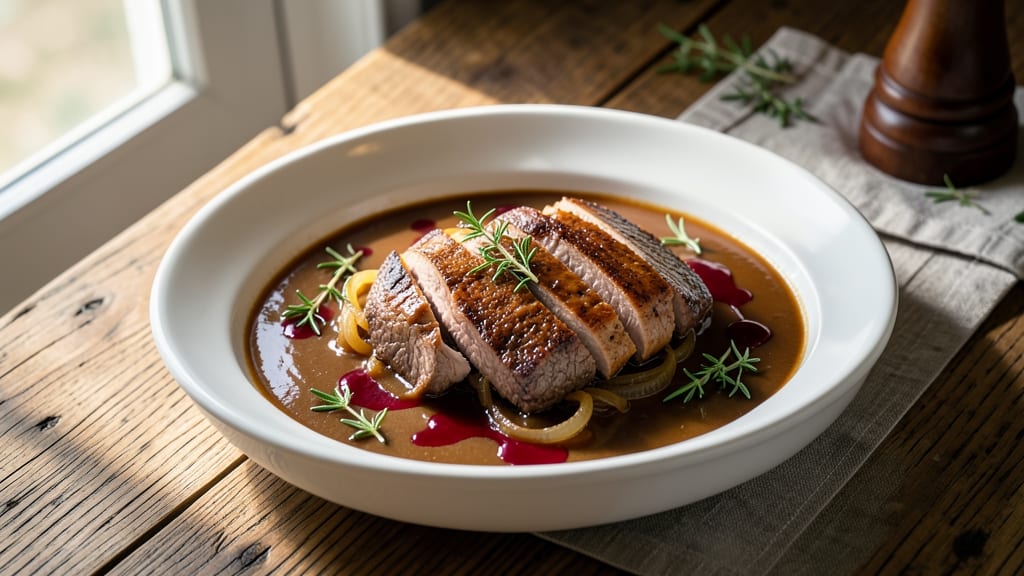
This beef and onion gravy recipe transforms simple ingredients into a deeply flavorful, velvety sauce that elevates any meal. The secret lies in pan-roasting onions and beef drippings to develop a rich, caramelized base before building a smooth roux.
What sets this apart is the balance of savory beef stock and aromatic herbs, creating a sauce that's both comforting and sophisticated.
Perfect for drizzling over roasted meats, mashed potatoes, or biscuits, this gravy delivers restaurant-quality richness with minimal effort. The key steps—deglazing the pan, simmering the roux, and straining for silky texture—ensure a flawless finish every time.
Whether you're serving a holiday feast or a weeknight dinner, this gravy adds depth and warmth to any dish.
With just a few pantry staples—beef stock, onions, butter, and flour—you'll create a sauce that's infinitely better than store-bought. The slow simmer allows flavors to meld, while the final straining guarantees a smooth, luxurious consistency. This is the kind of gravy that makes ordinary meals feel like a celebration.
Once mastered, you'll find endless uses for this versatile sauce, from pairing with roasted vegetables to enhancing casseroles. The technique is straightforward, but the results are undeniably impressive. Let’s get started on creating a gravy that will become a staple in your kitchen.
Ingredients for beef and onion gravy
Pan-roasted onions and rich beef drippings form the foundation for this deeply flavorful gravy.
| Ingredient | Amount | Notes |
|---|---|---|
| Yellow Onions 🧅 | 2 large | Sliced into 1/2-inch pieces |
| Unsalted Butter 🧈 | 4 tbsp | Cold, cubed for even melting |
| All-Purpose Flour 🌾 | ½ cup | Sifted for smooth roux |
| Beef Stock 🥫 | 2 cups | High-quality, low-sodium preferred |
| Dry Red Wine 🍷 | ½ cup | Cabernet Sauvignon recommended |
| Fresh Thyme Leaves 🌿 | 1 tbsp | Or 1 tsp dried thyme |
| Fresh Parsley Leaves 🌿 | 1 tbsp | Chopped for garnish |
| Salt 🧂 | 1 ½ tsp | Diamond Crystal preferred |
| Black Pepper 🌶️ | ½ tsp | Freshly cracked preferred |
| Beef Drippings 🥩 | 2 tbsp | From roasted beef |
The onions are non-negotiable for depth—yellow onions caramelize best for that sweet, complex base. Whole Foods or Trader Joe's carry the largest, firmest ones, but any store's yellow onion works if it's crisp and free of sprouts. For the beef drippings, save any pan juices from roasting beef—2 tablespoons adds unmatched richness. If you're short, substitute with an extra tablespoon of butter. The thyme should be fresh stems removed—dried works at one-third the amount, but fresh releases more aroma during simmering.
No red wine? Substitute with extra beef stock—just add 2 tablespoons more. The flour must be sifted for a smooth roux; King Arthur or Gold Medal brands whisk away clumps effortlessly. For a gluten-free version, swap the flour for 1/4 cup cornstarch mixed with 1/4 cup water. The parsley is purely decorative but brightens the color—skip if you're serving to parsley-haters. If your gravy thickens too much, whisk in 1 tablespoon of warm water to adjust consistency. Always taste before serving; adjust salt and pepper to preference.
This gravy peaks after 3 days of refrigeration as flavors meld. Store in an airtight container with parchment between layers to prevent skin formation. Freezes beautifully for up to 3 months—portion into ice cube trays for single-use servings. For restaurant-quality results, strain through a fine-mesh sieve before serving. The caramelized onions can be prepped ahead and refrigerated for 2 days before cooking, saving you time on busy days.
Why You'll Love This Recipe
- No Chopping Nightmare: I swear by this recipe on days when I’ve got zero energy—just slice those onions thick, let them caramelize in butter, and walk away. The flour-to-stock ratio is forgiving, so even if you rush, it’ll still taste rich and velvety.
- Wine’s Secret Weapon: That splash of dry red wine? It’s not just flavor—it’s the magic that deepens everything. The alcohol cooks off, leaving behind layers of umami that turn simple beef stock into something restaurant-worthy. (Yes, even the cheap stuff works.)
- Leftovers That Shine: This gravy thickens beautifully when reheated—perfect for drizzling over mashed potatoes the next day or turning into a quick skillet dinner. I keep a jar in the fridge for emergencies, and it never disappoints.
- Budget Meal Upgrade: You’re basically making gold from pantry staples. Butter and onions caramelize into sweetness, flour creates body, and wine adds depth without breaking the bank. It’s the kind of dish that makes frugal cooking feel indulgent.
Step-by-step instructions for beef and onion gravy
Mastering this technique transforms simple beef drippings into a velvety, deeply flavorful sauce.
Develop the Onion Base
Heat a heavy-bottomed skillet over medium heat and add the 2 large sliced yellow onions. Cook them undisturbed for 8-10 minutes until they begin to caramelize at the edges and develop a deep golden color. This slow cooking process creates complex sugars that form the flavor foundation.
Stir occasionally to prevent burning, but resist the urge to move them too frequently. You're aiming for a rich, jammy texture—not crispy bits. When the onions are soft and beginning to brown, add the 2 tablespoons beef drippings to the pan and scrape up any browned bits from the bottom. These fond bits are packed with flavor that will dissolve into your gravy.
Build the Roux
Lower the heat to medium-low and add the 4 tablespoons cold cubed unsalted butter. Allow it to melt completely, stirring occasionally, until it forms a smooth, creamy mixture with the onions. This butter infusion adds richness and helps prevent a raw flour taste in your gravy.
Gradually whisk in the ½ cup sifted all-purpose flour over 1-2 minutes, stirring constantly to prevent lumps from forming. Cook the roux for 3-4 minutes until it turns a light golden color and smells nutty. This cooking step removes the raw flour taste and creates the thickening power for your gravy. Watch carefully—it can burn quickly if you're not attentive.
Deglaze with Wine
Pour in the ½ cup dry red wine and scrape the bottom of the pan vigorously with a wooden spoon to release all the flavorful browned bits. This deglazing step is crucial for maximum flavor extraction. Let the wine simmer for 2-3 minutes until it reduces by about half and the alcohol aroma dissipates.
The wine should be nearly evaporated, leaving behind concentrated flavors that will carry through your gravy. If you notice any sediment at the bottom, this is normal and adds depth to your sauce. The pan should now contain a thick, glossy mixture that coats the back of a spoon.
Finish with Stock and Seasonings
Gradually whisk in the 2 cups beef stock over 1-2 minutes, stirring constantly to prevent lumps. Bring the mixture to a gentle simmer and cook for 8-10 minutes until it thickens slightly. The gravy should coat the back of a spoon but still be pourable—not gluey.
Stir in the 1 tablespoon fresh thyme leaves, 1.5 teaspoons salt, and ½ teaspoon black pepper. Taste and adjust the seasoning—you may need more salt depending on your beef stock. The gravy should be rich and flavorful, with the depth of caramelized onions and wine complementing the beefy notes.
Final Touches and Service
Remove the pan from heat and stir in the 1 tablespoon chopped fresh parsley leaves. Let the gravy rest for 5 minutes to allow the flavors to meld completely. If it thickens too much while resting, whisk in 1-2 tablespoons hot water to reach your desired consistency.
Serve immediately over roasted beef or mashed potatoes. The gravy should be velvety with visible onion strands suspended throughout, offering both texture and flavor in every bite. For best results, use within 2-3 hours as the gravy continues to thicken as it cools.
Pro Tips For Making Beef And Onion Gravy
- Sweat, Don’t Burn the Onions: I used to rush this step and end up with bitter, charred onions—no one wants that. Cook them on medium-low heat for 15-20 minutes until deeply caramelized, stirring occasionally. The longer they cook, the richer the flavor, but resist the urge to walk away.
- Whisk Like You Mean It: When you add the flour to the butter, whisk it aggressively for at least 2 minutes. This isn’t just about preventing lumps—it’s about creating a proper roux that won’t clump when the wine hits. If you skip this, you’ll end up with a gluey mess instead of a velvety gravy.
- Deglaze Immediately: As soon as you add the red wine, scrape every last bit of browned bits from the pan with a wooden spoon. Those bits are flavor gold, and letting them sit will turn your gravy into something bland. Scrape, then let it simmer—don’t rush the process.
- Strain for Smoothness: After simmering, strain the gravy through a fine-mesh sieve. Yes, it’s an extra step, but it removes any onion bits that could make your gravy look unappetizing. If you’re lazy, at least press the onions with a spoon to extract all their liquid—your gravy will thank you.
Dietary considerations for this recipe
Gluten-Free Option
Swap the ½ cup all-purpose flour for a ¼ cup cornstarch mixed with ¼ cup water to create a gluten-free roux. Whisk this slurry into your pan after adding the wine and stock, then simmer until thickened. This substitution works beautifully and maintains the same velvety texture. 🌱
Dairy-Free Adaptation
Replace the 4 tablespoons unsalted butter with an equal amount of vegetable oil or olive oil for a dairy-free version. The oil adds richness without dairy, and the flavor remains deep and satisfying. Just ensure your beef stock is dairy-free to maintain consistency.
Low-Sodium Version
Use a low-sodium beef stock and reduce the added salt to ½ teaspoon. Enhance flavor with extra fresh thyme and a splash of red wine vinegar (1 teaspoon) to brighten the sauce. This keeps the gravy rich while controlling sodium intake.
Vegetarian Substitutes
For a vegetarian twist, replace the beef drippings and stock with mushroom broth and 2 tablespoons olive oil. Add 2 tablespoons soy sauce to mimic the umami depth of beef. The caramelized onions and wine still shine, creating a hearty, flavorful sauce.
Allergen-Friendly Tips
Check your beef stock for hidden allergens like soy or wheat additives. For nut-free kitchens, ensure no cross-contamination occurs when handling ingredients. Always verify labels on King Arthur flour or cornstarch for allergen warnings.
Nutrition facts
Frequently asked questions
Can I make this gravy without red wine?
Replace the ½ cup red wine with ½ cup beef stock or even a mix of ¼ cup beef stock + ¼ cup apple cider vinegar for brightness. The wine adds depth, but these substitutes work beautifully. For extra richness, add 1 teaspoon Worcestershire sauce to mimic wine's complexity.
Why did my gravy turn out too thick?
Gravy thickens as it cools, so remove it from heat while still slightly thin. If it's too thick immediately, whisk in 1-2 tablespoons hot water to adjust. For future batches, simmer the stock for 5-7 minutes instead of 8-10 minutes to prevent over-thickening. Always taste as you go!
How do I make this gravy ahead of time?
This gravy reheats beautifully! Store in an airtight container for up to 3 days in the fridge. To reheat, warm over low heat while stirring constantly—never microwave directly, as it can separate. For longer storage, freeze in ice cube trays for 3-month portions. Thaw overnight in the fridge before reheating.
What’s the best way to use leftover gravy?
Leftover gravy is perfect for mashed potatoes, roasted vegetables, or even as a dipping sauce for crusty bread. Freeze extras in 1-tablespoon portions for quick additions to soups or casseroles. The flavor actually improves after 24 hours as ingredients meld!
Can I use onion powder instead of fresh onions?
While you can substitute 1 tablespoon onion powder for the fresh onions, you’ll miss the caramelized depth. For best results, use ½ cup diced dehydrated onions (rehydrated in ¼ cup water) or 1 small jar of caramelized onions. Fresh onions create the richest flavor through their natural sugars and texture.