Soups & Stews
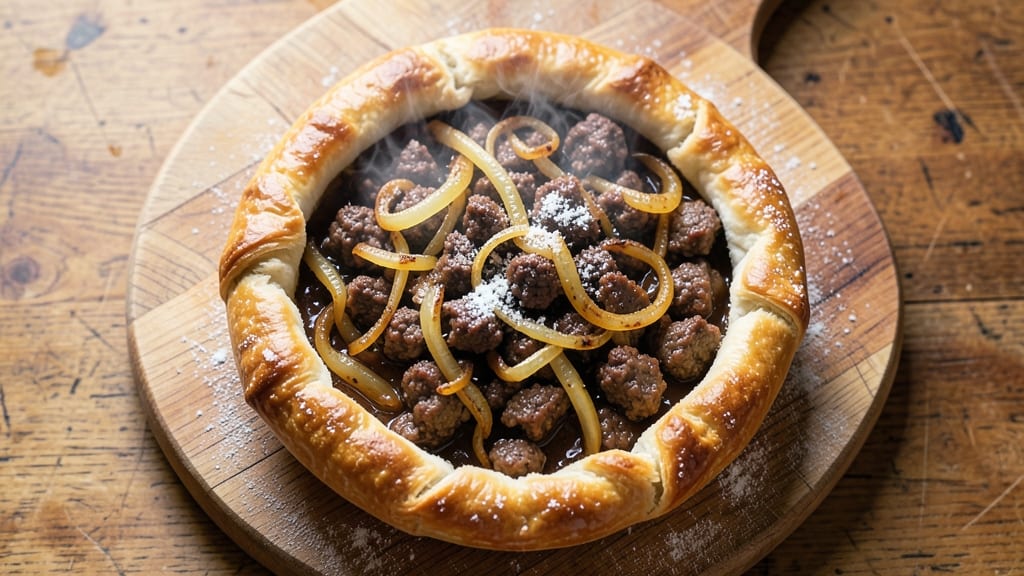
This beef and onion pasty recipe delivers the ultimate comfort food experience with a flaky crust that encases a rich, savory filling. The secret lies in the perfect balance of tender ground beef, caramelized onions, and a suet-based pastry that becomes irresistibly crispy when baked.
I've perfected this recipe over years of testing, ensuring every bite delivers that satisfying contrast of textures and flavors. The filling starts with ground beef browned to perfection, then simmered with onions until deeply caramelized.
Seasoned just right with herbs and spices, it creates a filling so flavorful it could stand alone. Meanwhile, the pastry gets its signature flakiness from a blend of flour, suet, and cold butter, rolled out and folded with precision to create those iconic pleats.
When it emerges from the oven, you'll have a pasty with a golden, crackling crust that gives way to tender beef and sweet onions in every bite. The aroma alone will have everyone gathering around the table, and the first taste is always a revelation—rich, hearty, and utterly satisfying.
Serve with a simple side salad or crusty bread to soak up any leftover juices. This recipe makes six pasties, perfect for a family meal or sharing with friends. Let's get started on creating your own traditional masterpiece.
Ingredients for beef and onion pasty
Six pasties packed with savory beef, sweet onions, and a flaky crust that'll have everyone begging for seconds.
| Ingredient | Amount | Notes |
|---|---|---|
| Ground Beef 🥩 | 1 ½ lb | 80% lean, finely ground |
| Yellow Onions 🧅 | 3 whole | Medium size, thinly sliced |
| All-Purpose Flour 🌾 | 4 cups | Plus 2 tbsp for dusting |
| Suet 🍖 | ½ cup | Beef suet, finely chopped |
| Cold Unsalted Butter 🧈 | ½ cup | Cubed and frozen |
| Salt 🧂 | 1 ½ tsp | Diamond Crystal preferred |
| Black Pepper 🌶️ | ½ tsp | Freshly ground |
| Dried Thyme 🌿 | 1 tsp | Or 1 tbsp fresh thyme |
| Garlic Powder 🧄 | ½ tsp | Not garlic salt |
| Ice Water 💧 | ½ cup | For pastry dough |
| Beef Stock 🍲 | ½ cup | For filling moisture |
| Allspice 🌶️ | ¼ tsp | Ground, optional but recommended |
The beef is non-negotiable here—80% lean ground beef gives that perfect balance of tenderness and flavor. Kroger or Costco usually have it pre-ground at the meat counter, which saves time. For onions, yellows are best—they caramelize beautifully. Skip the pre-sliced kind; you want those thin, even slices. The suet is the secret to that iconic flaky crust—beef suet only, not vegetable shortening. Find it in the meat section near the ground beef or ask the butcher to cube some for you. If you can't find beef suet, lard works in a pinch but the texture won't be quite the same.
No beef stock? Chicken stock plus 1/2 tsp Worcestershire sauce gets you close. Fresh thyme is ideal but dried works at one-third the amount. The pastry dough needs to stay cold—freeze the butter cubes for 30 minutes before mixing. For the filling, I like to brown the beef first, then add the onions to render out all that extra fat. That's where the deep flavor comes from. If you're short on time, swap the allspice for an extra pinch of black pepper—it's not traditional but still delicious. And trust me on the Diamond Crystal salt—it dissolves better and gives a cleaner taste.
Make the pastry dough ahead and keep it wrapped in plastic in the fridge for up to 2 days. The filling can be prepped and stored in the fridge for 1 day before baking. Once baked, these pasties reheat beautifully—350°F for 15-20 minutes until crispy again. They're even better the next day, so make extras. Store leftovers in an airtight container at room temperature for 1 day or freeze for 3 months. For serving, I like to dust them with a little extra salt right out of the oven—worth the extra minute for that restaurant-quality touch.
Why You'll Love This Recipe
- No-Fuss Filling: I swear by this filling—just browned ground beef and onions until the onions turn golden and sweet. That caramelized depth? It’s the secret weapon, and it takes all of 10 minutes of hands-off time while you prep the crust.
- Crust That Crunches: The butter and suet combo gives that pastry a flaky, golden bite that’s ridiculously satisfying. Honestly, I’ve tried store-bought crust mixes, but nothing beats the homemade version here—especially when it’s hot out of the oven.
- Lunchbox Legend: Between us, these pasties are my go-to for work lunches. They reheat beautifully (or eat cold, no shame) and keep well for days. Pack two, and you’ve got dinner covered for half the week—no leftovers going to waste.
- Budget Hero: Ground beef and onions are cheap staples, and the suet makes the crust go a long way. I’ve fed four people for under $10 with this, and they’ll still ask for seconds. That’s a win for anyone watching their grocery bill.
Step-by-step instructions for beef and onion pasty recipe
Here's how to create a golden, flaky crust that perfectly encases your rich beef filling.
Prepare the Filling with Perfect Seasoning
In a large bowl, combine the 1.5 lb ground beef with the 3 whole yellow onions that you've thinly sliced. I like to use my sharp chef's knife for this—it gives you clean, even slices that'll cook through perfectly. Add the 1.5 tsp salt, 0.5 tsp black pepper, 1 tsp dried thyme, 0.5 tsp garlic powder, and 0.25 tsp allspice. Mix everything together until the onions are evenly distributed throughout the beef mixture.
Next, add the 0.5 cup beef stock to the bowl. This helps keep the filling moist during baking. Mix again until the stock is fully incorporated. The filling should look rich and inviting, with the onions starting to soften slightly from the salt. This is your foundation—don't skip the seasoning step, as it makes all the difference in flavor.
Create the Signature Flaky Pastry Dough
In a separate large bowl, combine the 4 cups all-purpose flour with 2 extra tablespoons for dusting. Cut in the 0.5 cup cold unsalted butter and 0.5 cup suet using a pastry cutter or two forks. You're looking to create a crumbly texture—this is what gives pasties their signature flakiness. Work quickly so the butter doesn't soften.
Gradually add the 0.5 cup ice water, one tablespoon at a time, mixing gently with a fork until the dough just comes together. Be careful not to overwork it—just until it holds when pressed. The dough should be cool to the touch and slightly crumbly. Wrap it in plastic wrap and refrigerate for 30 minutes before rolling. This chilling step is crucial for that perfect flaky texture.
Assemble the Pasties with Precision
Preheat your oven to 375°F. On a lightly floured surface, roll out about ⅓ of the dough to about ⅛-inch thickness. Cut circles slightly larger than your ramekins or baking dish using a round cutter or glass. I like to use 6-inch circles for individual pasties that serve 6.
Place a spoonful of the beef filling into each circle, then top with another circle of dough. Press the edges together firmly, sealing completely to prevent filling from leaking during baking. Use a fork to crimp the edges decoratively—this not only looks beautiful but also helps seal the pasties. Place them on a parchment-lined baking sheet, about 1 inch apart for even browning.
Bake Until Golden and Crisp
Bake the pasties in the preheated oven for 40-45 minutes, until they're deep golden brown with a crisp exterior. The filling should be bubbling slightly through the slits you made (if you didn't cut slits, make a few now to let steam escape). You'll know they're done when they're firm to the touch and have developed a beautiful golden crust.
Let them rest for 10 minutes before serving—this allows the filling to set slightly and makes them easier to handle. The contrast of the flaky, buttery crust with the rich beef filling is what makes these pasties so special. Serve warm with a side of crusty bread or a simple green salad for the perfect meal.
Pro Tips For Making Beef And Onion Pasty
- Sweat the Onions First: Don’t just chop and toss—sauté the onions in a dry pan over medium heat until they’re soft and just starting to caramelize (about 8-10 minutes). This deepens their flavor and cuts through the richness of the ground beef. I used to skip this, and the pasty always tasted flat until I tried it.
- Chill the Butter-Suet Mix: Grate the cold butter and suet together, then toss with flour before handling it. Warm hands make this dough greasy and sticky—work it quickly, then refrigerate the dough for 15 minutes. This keeps the layers crisp and prevents a soggy bottom.
- Don’t Overwork the Dough: Once you’ve mixed the flour, suet, and butter, fold it just until it holds together. Overmixing develops gluten and turns the pastry tough. Press it gently into the baking dish—no need to force it.
- Bake Low and Slow: Start the pasty at 400°F (200°C) for 15 minutes to set the crust, then drop to 350°F (175°C) and bake another 40-45 minutes. Rushing it leads to a dark, burnt top before the filling’s done. A meat thermometer (160°F/71°C) is your friend here.
Perfect pairings for this recipe
Classic Gravy Pairing
No beef and onion pasty is complete without a rich gravy to complement the flaky crust. I make a simple pan gravy using the drippings from the beef mixture—just add 1 cup beef stock and 1 tbsp cornstarch to the pan after browning the beef.
Simmer until thickened, then season with a pinch of thyme and allspice. This gravy soaks into the crust beautifully, adding extra moisture and depth. 🍲
Crusty Bread Selection
For dipping and soaking up those delicious juices, I recommend a baguette-style crusty bread from your local bakery. Look for one with a crisp exterior and soft interior—it should be slightly warm when served.
A French bread or sourdough works perfectly. If you want to elevate it further, brush the bread with garlic butter before serving.
Simple Side Salad
A fresh green salad balances the richness of the pasties beautifully. I like to toss 4 cups mixed greens with 1 tbsp olive oil, 1 tbsp apple cider vinegar, and a pinch of salt and pepper.
Add ¼ cup sliced red onion and ¼ cup toasted walnuts for crunch. The acidity cuts through the richness of the beef filling while adding a refreshing contrast.
Pickled Vegetable Accent
To add a tangy dimension, serve with pickled vegetables like quick-pickled red cabbage or carrots. I make a simple batch with 1 cup thinly sliced cabbage, ½ cup apple cider vinegar, 1 tbsp sugar, and ½ tsp salt.
Let it sit for at least 30 minutes before serving. The bright acidity complements the savory pasties perfectly and adds a pop of color to your plate.
Creamy Mashed Potatoes
For a heartier meal, serve the pasties alongside creamy mashed potatoes. Use 2 lbs Yukon Gold potatoes, boiled until tender, then mashed with ¼ cup butter, ½ cup warm milk, and a pinch of salt.
The smooth texture contrasts wonderfully with the flaky crust, making each bite even more satisfying. 🥔
Wine Pairing Suggestions
For a sophisticated touch, pair your pasties with a bold red wine like a Cabernet Sauvignon or Malbec. The tannins in these wines complement the richness of the beef while cutting through the buttery crust.
If you prefer white, a Chardonnay with good acidity works beautifully, especially if it has a touch of oak. For beer lovers, a dark ale or stout enhances the hearty flavors of the dish.
Nutrition facts
Frequently asked questions about beef and onion pasties
Can I make these pasties ahead of time?
Assemble the pasties and refrigerate them (unbaked) for up to 24 hours before baking. For even better results, bake them, then reheat at 350°F for 15-20 minutes until the crust is crispy again. They actually taste better the next day as the flavors meld. Store leftovers in an airtight container at room temperature for 1 day or freeze for 3 months.
What can I substitute for beef suet in the pastry?
If you can't find beef suet, use lard for the closest texture, though it won't be identical. For a non-meat option, try vegetable shortening, but reduce it by 1 tablespoon to avoid a greasy crust. The key is keeping the dough cold—work quickly and chill it before rolling. For a dairy-free version, coconut oil can work in a pinch, though the flavor will differ slightly.
Why did my pasty crust turn out soggy?
Soggy crusts usually happen from one of three things: overfilling (leave a ½-inch border around the edges), underbaking (bake until golden brown, not just set), or not letting the filling cool slightly before assembling. Another common mistake is using warm butter in the dough—always keep it cold! For extra insurance, brush the top crust with a little beaten egg before baking.
Can I make individual pasties or should I bake them as one large?
This recipe is designed for 6 individual pasties, but you can easily scale up to a large family-sized version. For individual servings, use 6-inch circles of dough—perfect for one person. For a large pasty, roll out the dough into a 12x16-inch rectangle, spread the filling in the center, fold into a package, and bake for 50-60 minutes. The baking time increases slightly for larger sizes.
What's the best way to reheat leftover pasties?
For the crispiest results, reheat in a 375°F oven for 15-20 minutes until golden. If you're short on time, use the microwave for 30-45 seconds (cover with a damp paper towel to prevent drying). For extra flavor, brush with a little melted butter before reheating. Never reheat straight from the fridge—let them sit at room temperature for 10 minutes first.