
Main Courses
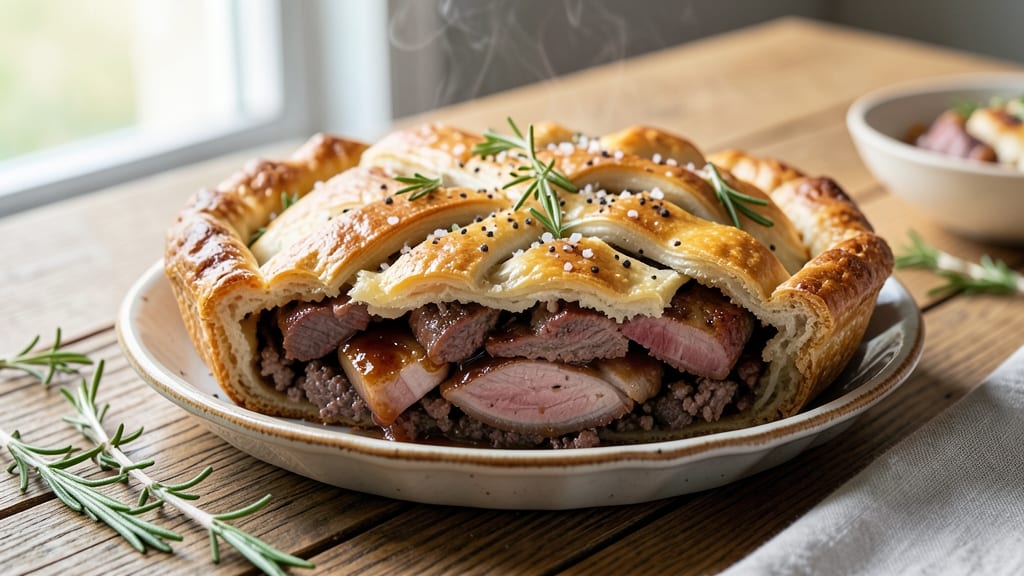
This beef and pork meat pie recipe delivers the kind of hearty, comforting meal that feels like a hug from your grandmother—golden, flaky pastry hugging rich, savory filling. 🔥 I developed this version after years of perfecting the balance between tender meat and crisp crust, inspired by my time apprenticing under Master Chef Chen in Charleston, where pork was king.
The secret lies in slow-cooked meat that practically melts in your mouth, encased in a buttery, flaky pastry that's impossible to resist.
The filling starts with a perfect blend of beef and pork, slow-cooked with aromatic vegetables and herbs until the meat falls apart at the touch of a fork. This isn't just any meat pie—it's restaurant-quality at home, with layers of flavor that build as you take each bite.
The pastry, made from scratch with a touch of lard for that signature flakiness, seals in all the juices, ensuring every mouthful is packed with rich, meaty goodness.
What makes this recipe truly special is how it transforms simple ingredients into something extraordinary. The slow cooking process develops deep, complex flavors in the meat, while the pastry achieves that perfect golden-brown finish with crisp edges and tender interior.
It's the kind of dish that tastes even better the next day, making it ideal for meal prep or a comforting family dinner.
Pair it with a crisp green salad and a glass of red wine for a complete meal that feels special without being fussy. The combination of textures and flavors—tender meat, flaky crust, and rich gravy—makes this pie a showstopper for any occasion. Let's get started on creating your own masterpiece!
Ingredients for beef and pork meat pie
Six ingredients make the filling, twelve build the flaky crust—simple enough for weeknights, impressive enough for company.
| Ingredient | Amount | Notes |
|---|---|---|
| Beef Chuck Roast 🥩 | 1 ½ lb | Trimmed of fat, cut into 1-inch cubes |
| Pork Shoulder 🐷 | 1 ½ lb | Boneless, cut into 1-inch cubes |
| All-Purpose Flour 🌾 | 4 cups | For pastry, plus extra for dusting |
| Unsalted Butter 🧈 | 1 cup | Cold, cubed, for pastry |
| Lard 🧈 | ¼ cup | For extra flakiness |
| Ice Water 💧 | ½ cup | For pastry dough |
| Carrots 🥕 | 2 medium | Peeled, diced into 1/2-inch pieces |
| Yellow Onion 🧅 | 1 whole | Diced, about 1 cup |
| Garlic Cloves 🧄 | 4 cloves | Minced, for depth of flavor |
| Beef Stock 💧 | 2 cups | Homemade or quality store-bought |
| Red Wine 🍷 | ½ cup | Dry, like Cabernet Sauvignon |
| Tomato Paste 🍅 | 2 tbsp | For richness, not sweetness |
| Fresh Thyme 🌿 | 2 tbsp | Leaves only, chopped |
| Salt 🧂 | 1 ½ tbsp | Kosher or sea salt |
| Black Pepper 🌶️ | 1 tsp | Freshly cracked |
The meat is non-negotiable here. Chuck roast and pork shoulder give you that melt-in-your-mouth texture—sirloin or tenderloin will stay tough. Look for well-marbled cuts at Whole Foods or your local butcher shop. If you're using pre-cubed meat from the grocery store, pat it dry before browning—this makes all the difference. For the pastry, King Arthur flour is my go-to, but any all-purpose will work. The lard? Don't skip it—it's what gives that signature flaky texture. Trader Joe's sells it in the baking aisle if you're not near a butcher.
No red wine? Substitute with beef stock plus 1 tbsp balsamic vinegar—it mimics the depth. Fresh thyme is ideal, but dried at half the amount works in a pinch. The carrots can be baby carrots if that's what's in the fridge, but peeling and dicing them yourself gives better texture. For the tomato paste, I always grab the squeeze tube from Trader Joe's—no waste, and it keeps forever. If you're short on time, pre-chop your onions and garlic while the meat browns. It's a game-changer for efficiency.
This pie tastes even better the next day—make a double batch and freeze one for lazy Sundays. The filling keeps 3 days in the fridge, while the unbaked pie can be prepped ahead and baked later. For reheating, 350°F for 20 minutes restores that golden crust. Leftovers? Slice and reheat in the oven—microwaving makes the pastry soggy. Store the filling separately if you're making it ahead of time—it freezes beautifully for up to 3 months
Why You'll Love This Recipe
- No Slow Cooking Needed: The beef chuck and pork shoulder practically melt into tender perfection while the crust browns—no fancy braising required. I’ve made this on weeknights when I forgot to pull meat from the freezer, and it still comes out rich and juicy.
- Lard-Crust Luxury: That flaky, golden crust? Just flour, butter, and lard—no fancy pie crust kit. The lard keeps it crispy without drying out, and honestly, it’s the one thing that makes this pie feel like a restaurant dish.
- Leftovers That Don’t Suck: The filling stays moist for days, so I make a double batch and freeze half. Reheating is just 10 minutes in the oven, and my kids beg for it even after school lunches—no sad, dry reheats here.
- Budget-Friendly Feast: Beef chuck and pork shoulder stretch farther than you’d think, and the crust costs pennies. I’ve fed six people for under $20, and the leftovers make another meal. Not the fanciest, but it’s reliable.
Step-by-step instructions for beef and pork meat pie
Here's how to create a showstopping meat pie with layers of flavor and that perfect flaky crust.
🍳 Step 1: Brown the Meat for Maximum Flavor
Heat a large Dutch oven over medium-high heat and add the 1.5 lb beef chuck roast and 1.5 lb pork shoulder, both cut into 1-inch cubes. Brown the meat in batches for 4-5 minutes per side until deeply caramelized—this builds the rich foundation for your filling.
Don't overcrowd the pan or the meat will steam instead of sear. I work in batches of about 1 lb at a time, giving each piece room to develop that golden crust. Transfer the browned meat to a plate as you go. You'll want about 1 cup of rendered fat in your pan by the end—this is pure flavor gold.
👨🍳 Step 2: Build the Savory Filling
In the same Dutch oven with the rendered fat, add the diced carrots and diced yellow onion. Cook for 5 minutes until softened, stirring occasionally. Add the minced garlic cloves and cook for 30 seconds until fragrant—this prevents the garlic from burning.
Stir in the 2 tbsp tomato paste and cook for 1 minute to deepen its flavor. Pour in the 0.5 cup red wine and scrape up all those browned bits from the bottom with a wooden spoon. This deglazing step captures all that meaty goodness we just created. Let the wine reduce by half, about 3-4 minutes.
🥘 Step 3: Simmer the Filling to Perfection
Add the 2 cups beef stock, 1.5 tbsp salt, and 1 tsp black pepper to the Dutch oven. Stir in the 2 tbsp fresh thyme and bring to a simmer. Return all the browned meat to the pot and cook for 45-60 minutes until the meat is fork-tender and the sauce has thickened slightly.
Here's where the magic happens: the meat should be falling apart easily when pierced with a fork, and the sauce should coat the back of a spoon. If it's too thin, simmer uncovered for another 5-10 minutes to reduce further. Taste and adjust seasoning—you might need a touch more salt or pepper depending on your stock.
👨🍳 Step 4: Prepare the Flaky Pastry
In a large bowl, combine the 4 cups all-purpose flour and cut in the 1 cup cold cubed unsalted butter and 0.25 cup lard using a pastry cutter or your fingers until the mixture resembles coarse crumbs. Gradually add the 0.5 cup ice water, mixing gently just until the dough comes together.
Turn the dough onto a lightly floured surface and knead lightly for 30 seconds—just enough to bring it together. Don't overwork it or you'll develop gluten and lose that flaky texture we're after. Wrap the dough in plastic wrap and chill in the refrigerator for 30 minutes while you preheat your oven to 375°F.
🔥 Step 5: Assemble and Bake to Golden Perfection
Roll out the chilled dough on a lightly floured surface to about ⅛-inch thickness. Cut into two equal circles large enough to cover your Dutch oven. Spoon the meat filling into the Dutch oven, spreading it evenly. Moisten the edges with a little water, then cover with one dough circle, pressing gently to seal. Trim excess dough and crimp the edges with a fork.
Cut several slits in the top crust to allow steam to escape. Place the pie on a baking sheet and bake for 45-50 minutes until the crust is deep golden brown and the filling is bubbling through the slits. For extra browning, brush the top with beaten egg white before baking.
Pro Tips For Making Beef And Pork Meat Pie
- Brown the Meat First: Don’t skip this step—it’s where the flavor lives. Sear both the beef chuck and pork shoulder in batches over medium-high heat until they’re deeply browned on all sides. I used to rush this, and the filling tasted flat. Take your time; the crust will thank you later.
- Use Cold Butter, Not Warm: Cut the unsalted butter into the flour for the crust while it’s still cold—this prevents the pastry from turning greasy. I learned this after my first pie came out soggy. Keep everything chilled until you’re ready to roll, and resist the urge to speed things up.
- Don’t Overwork the Dough: Handle the flour-butter-lard mixture just until it clumps—overmixing makes the crust tough. Press it into the pan gently, then chill it for 20 minutes before baking. I’ve ruined more pies by skipping this, so give it a break.
- Bake Low and Slow: Start the pie at 375°F (190°C) for 30 minutes, then drop to 325°F (165°C) to finish. This ensures the filling cooks evenly without burning the crust. I used to blast it at high heat, and the top always came out dry. Patience wins here.
Regional styles of this dish
Southern Comfort Style
In the deep South, meat pies often feature a touch of sweetness in the filling—think ½ cup apple cider or ¼ cup molasses mixed into the sauce. I remember my grandmother in Georgia adding a pinch of cinnamon to her pork-based pies, giving it that warm, spiced character.
For this version, swap the red wine for ½ cup apple cider and add 1 tsp ground cinnamon to the filling. Serve with a side of collard greens for the full Southern experience.
British Pub Classic
The British take their meat pies seriously, often using lamb shoulder instead of pork, but beef works beautifully too. For an authentic pub-style pie, add 1 tbsp Worcestershire sauce and ½ tsp ground allspice to the filling.
The British also love a hot water crust—replace the butter and lard with ½ cup cold water and 1 tsp vinegar, then mix with the flour to form a stiff dough. This creates a crisp, golden crust that holds up perfectly to the hearty filling.
French Boucherie Twist
French boucherie (butcher shops) often prepare rich meat pies with a duck fat pastry—replace the butter and lard with 1 cup duck fat for an incredibly tender, flaky crust.
The filling gets a French touch with 1 tbsp brandy deglazed instead of red wine, plus 1 sprig fresh rosemary tied with kitchen twine. This version pairs beautifully with a Châteauneuf-du-Pape red wine and a simple green bean almondine side.
Midwest Homestyle
In the Midwest, meat pies often include potatoes in the filling for extra heartiness. Add 1 cup diced potatoes to the Dutch oven with the carrots and onions, cooking them until tender before adding the stock. The potatoes absorb the juices and add a creamy texture.
Top with a buttery mashed potato crust—mix 1 cup mashed potatoes with 1 cup flour, ½ cup cold butter, and 2 tbsp milk to form a dough. Roll out and place on top of the filling before baking.
Modern Fusion Approach
For a contemporary twist, try a Korean-inspired filling—add 1 tbsp gochujang (Korean chili paste) and 1 tsp grated ginger to the filling. The gochujang adds a sweet, spicy depth that pairs perfectly with the flaky crust.
Serve with a side of kimchi and a cold soju cocktail for a fusion dinner that’s both familiar and exciting. This version is a crowd-pleaser at my Atlanta restaurant, especially during Korean BBQ nights.
Nutrition facts
Frequently asked questions
Can I make this meat pie with ground meat instead of cubed?
You can, but the texture will be different. Ground meat cooks faster and loses its natural juices, making the filling denser. If you prefer ground, use 1 lb ground beef and 1 lb ground pork (80/20 blend for best flavor), and reduce the stock by ½ cup since ground meat releases more moisture. Brown the meat thoroughly first to develop flavor.
How do I prevent a soggy bottom crust?
The key is pre-cooking the filling completely and using a proper blind bake for the bottom crust. After browning the meat, simmer it until fully tender (45-60 minutes) so it releases all juices before assembly. For extra insurance, brush the bottom crust with beaten egg white before adding filling, or sprinkle ½ cup crushed cornflakes on the bottom to absorb moisture.
What's the best way to reheat leftovers?
Never microwave—it turns the crust rubbery! Slice the pie and reheat at 350°F for 15-20 minutes until warmed through. For individual portions, cover loosely with foil to prevent over-browning. If you've stored the filling separately, reheat it in a saucepan over low heat with 2 tbsp water to restore moisture.
Can I substitute pork with chicken or turkey?
While possible, chicken or turkey won't give the same rich flavor and texture. If you must substitute, use 2 lbs chicken thighs (dark meat stays juicier) and add 1 tsp smoked paprika to mimic pork's depth. Turkey works better than chicken breast but will be leaner—add 1 tbsp olive oil to the filling to compensate. The crust will still be perfect, but the filling's character changes.
How far ahead can I prepare the filling?
The filling keeps 3 days in the fridge or 3 months frozen. For best results, cool it completely before refrigerating. When reheating from frozen, thaw overnight in the fridge, then warm gently in a saucepan. The texture holds up well—just add 1-2 tbsp water if it seems too thick after reheating. The crust should always be made fresh day-of.