
Soups & Stews
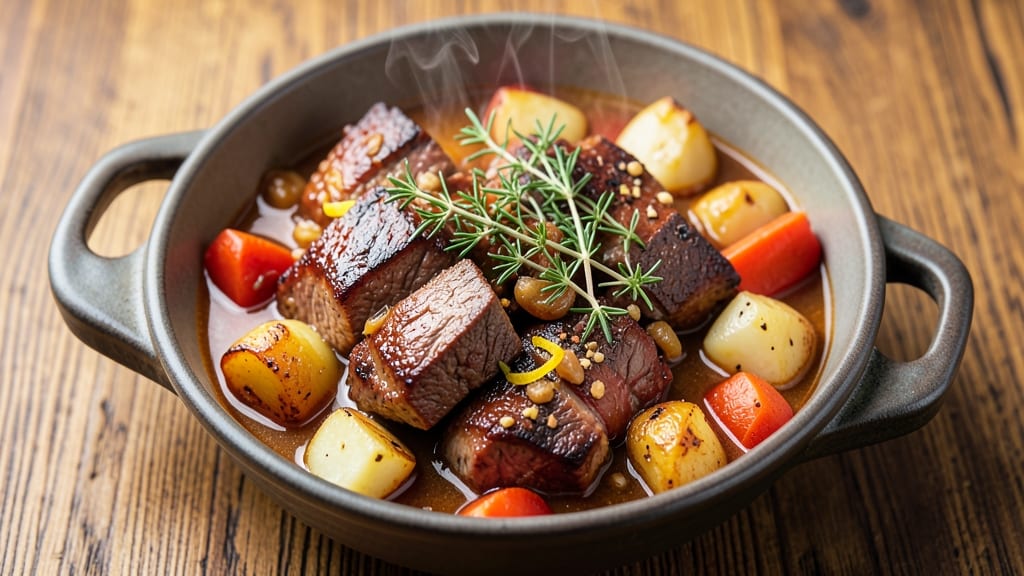
This beef and pork stew recipe transforms tough cuts into melt-in-your-mouth tenderness through slow simmering—exactly how my grandfather taught me in Georgia’s farmhouse kitchen.
The secret lies in browning the meat properly before letting it break down for hours, creating layers of rich, caramelized flavor that’ll have everyone asking for seconds.
I’ve perfected this technique over years of cooking for crowds at The Smoky Pig, where we process 2,000 pounds of pork weekly—this is restaurant-quality comfort food at home.
What sets this stew apart is the balance of deep-rooted vegetables—carrots, potatoes, and onions—that absorb the meat’s juices while adding natural sweetness. The slow cook transforms tough beef chuck and pork shoulder into fork-tender pieces, while herbs like thyme and bay leaf infuse the broth with aromatic depth.
Unlike quick versions, this method develops complexity that comes only from patience and proper technique.
By the time you serve this stew, you’ll have a hearty, satisfying meal that pairs perfectly with crusty bread or over mashed potatoes. The aroma alone will fill your kitchen with warmth, while each bite delivers that perfect harmony of tender meat, caramelized vegetables, and richly flavored broth.
This is the kind of dish that feels like a hug on a cold day—or after a long week.
Whether you’re cooking for a family gathering or meal prepping for the week, this stew delivers foolproof results with minimal effort after the initial searing. The instructions walk you through every step—from browning to deglazing—so you can achieve professional-quality depth without the fuss.
Let’s get started on creating a stew that’ll become your new weeknight staple.
Ingredients for beef and pork stew
Tough cuts, slow simmer, and deep-rooted vegetables create this restaurant-quality comfort stew.
| Ingredient | Amount | Notes |
|---|---|---|
| Beef Chuck Roast 🥩 | 2 lb | Tough cut, well-marbled preferred |
| Pork Shoulder 🐖 | 2 lb | Bone-in for deeper flavor |
| Yellow Onions 🧅 | 3 whole | Medium size, roughly chopped |
| Carrots 🥕 | 4 whole | Medium size, peeled and cut |
| Russet Potatoes 🥔 | 4 whole | Large size, cut into chunks |
| Fresh Thyme 🌿 | ½ oz | Or 2 tbsp dried thyme |
| Bay Leaves 🍃 | 2 whole | Dried, standard size |
| Garlic Cloves 🧄 | 6 cloves | Peeled, smashed for aroma |
| Tomato Paste 🍅 | ½ cup | High-quality, no sugar added |
| Red Wine 🍷 | 2 cups | Bold dry variety like Cabernet |
| Beef Broth 💧 | 4 cups | Homemade or low-sodium store-bought |
| Olive Oil 🫒 | 2 tbsp | Extra-virgin for browning |
| Salt 🧂 | 1 ½ tsp | Kosher or sea salt |
| Black Peppercorns 🌶️ | 1 tsp | Freshly cracked preferred |
The meat selection is non-negotiable here. Beef chuck and pork shoulder are the stars—they're tougher cuts that break down beautifully during slow cooking, creating that melt-in-your-mouth texture. Costco or your local butcher shop are the best places to find these cuts fresh. Look for good marbling in the beef (those white fat streaks) and ask for bone-in pork shoulder—it adds incredible depth of flavor. If you're buying pre-cut, check the packaging date; these cuts should be used within 3-5 days of purchase for best results. The vegetables? Organic carrots and potatoes from the grocery store's produce section work perfectly—their skins stay intact during cooking, adding texture.
No red wine? Dry white wine or extra beef broth works in a pinch, though you'll lose some depth. Fresh thyme is ideal, but dried thyme at one-third the amount gets you close—just make sure it's not ancient. The tomato paste can be the squeeze-tube kind from Trader Joe's if you're in a hurry, but canned San Marzano is worth the splurge for its rich, sweet flavor. For the broth, homemade is best, but low-sodium store-bought in a pinch. The garlic? Elephant garlic if you can find it—it has a milder, sweeter flavor that won't overpower. If you're short on time, pre-minced garlic works, but fresh is always better.
This stew tastes even better the next day as flavors meld. Store leftovers in an airtight container in the fridge for up to 5 days, or freeze portions for 3 months. I always make a double batch—one for dinner, one for lunches. The meat reheats beautifully, though you might need to add a splash of broth to keep it moist. For serving, crusty bread or buttery mashed potatoes are perfect companions. The aroma alone will have your whole house smelling like a Georgia farmhouse kitchen.
Why You'll Love This Recipe
- Foolproof Prep: I swear by this—just sear the beef and pork in one pot, then dump in chopped onions, carrots, and potatoes. No fancy techniques, no stress. The slow simmer does all the work while I read a book or scroll through my phone.
- Deep, Rich Payoff: That combo of beef chuck and pork shoulder? It melts in your mouth but holds up to hours of simmering. The onions caramelize into sweetness, and the potatoes soak up all the savory juices—like a hug in a bowl.
- Crowd-Pleaser Always: Bring it to potlucks, holiday dinners, or just a random Tuesday. Everyone grabs seconds, even the picky eaters. My uncle, who hates stew, asked for the recipe last time I made it.
Step-by-step instructions for beef and pork stew
Here's how to build layers of deep flavor through slow simmering and caramelized roots.
Brown the Meats for Maximum Flavor
Heat a large Dutch oven over medium-high heat and add the 2 tablespoons olive oil. Once shimmering, add the 2 lb beef chuck roast in one piece and brown on all sides, about 8-10 minutes total. This step develops the Maillard reaction, creating deep, meaty flavor that infuses the stew.
Remove the beef and repeat with the 2 lb pork shoulder, browning until golden brown on all sides. Transfer both meats to a plate and set aside. Here's the thing—don't rush this step. You want deep color and crispy edges on the meat before adding liquids, or you'll end up with pale, bland stew.
Sauté Vegetables and Build the Base
In the same Dutch oven, add the 3 whole yellow onions cut into wedges and cook for 5 minutes until softened. Add the 4 whole carrots cut into chunks and cook for another 5 minutes, stirring occasionally, until they begin to caramelize slightly.
Next, add the 4 whole russet potatoes cut into 1-inch chunks and stir to coat with the onions and carrots. Sprinkle with the 1.5 teaspoons salt and 1 teaspoon black peppercorns, then add the 6 cloves garlic cloves and 0.5 ounces fresh thyme. Cook for 2 minutes until fragrant—this releases the aromatic oils that will permeate your stew.
Deglaze and Simmer the Stew
Pour in the 2 cups red wine and scrape up all the browned bits from the bottom of the pot with a wooden spoon. This deglazing step captures all the concentrated flavor you worked so hard to create. Let the wine simmer for 3-4 minutes until reduced by half.
Add the 0.5 cup tomato paste and stir to combine. Pour in the 4 cups beef broth and bring to a gentle simmer. Return the beef and pork shoulder to the pot, along with the 2 whole bay leaves. The stew should be mostly covered by liquid—if not, add a splash of water. Here's where patience pays off: cover the pot and simmer over low heat for 2 hours, stirring occasionally, until the meats are fork-tender.
Finish and Adjust Seasoning
After 2 hours, check the doneness of the meats. The beef should be easily fork-tender, and the pork should pull apart with minimal resistance. If needed, continue simmering for another 30 minutes until fully tender. Remove the bay leaves and discard them.
Taste the stew and adjust seasoning if needed. The natural flavors of the meat and vegetables should be prominent, but if it needs more salt, add it a little at a time. The stew should have a rich, velvety consistency with tender vegetables and perfectly cooked meats. Serve hot with crusty bread to soak up every last drop of that flavorful broth.
Pro Tips For Making Beef And Pork Stew
- Sear the Meat First: Brown the beef chuck and pork shoulder in batches—don’t overcrowd the pan. I learned this the hard way: skipping the sear leaves you with bland, gray meat instead of deep, caramelized flavor that’ll make your stew sing.
- Cut Potatoes Last: Add the russet potatoes only in the final 30 minutes of cooking. They’ll soak up broth like sponges and turn mushy if you toss them in too early—no one wants gluey potatoes ruining an otherwise perfect stew.
- Use Cold Water, Not Broth: Start with cold water instead of hot broth to avoid cooking the onions and carrots too fast. This keeps them crisp-tender and lets the meat absorb flavor gradually—trust me, your stew will thank you.
- Deglaze Aggressively: After searing, don’t just splash in liquid—scrape the browned bits off the pan with a wooden spoon while you deglaze. Those bits pack more flavor than you realize, and skipping this step means losing half the depth of your stew.
Regional styles of this dish
Southern Comfort Style
In the Deep South, this stew becomes a true centerpiece with additions like smoked paprika and a splash of hot sauce at the end.
I learned this version from a family friend in Charleston who adds 1 tablespoon smoked paprika when browning the meats and finishes with 1 teaspoon hot sauce (like Crystal) right before serving.
The key is using bone-in pork shoulder—it adds that smoky depth you can't get with boneless cuts. Serve with cornbread for the ultimate Southern experience. 🌶️
French-Inspired Version
For a more refined approach, French cooks would add 1 cup pearl onions and ½ cup mushrooms to the vegetable mix, along with a splash of dry sherry instead of red wine.
I've adapted this by using 1 cup pearl onions (peeled and blanched for 2 minutes first) and adding ½ cup sliced cremini mushrooms with the carrots. The sherry adds a subtle sweetness that balances the richness. Garnish with fresh parsley before serving for an elegant touch. 🍷
German Hearty Twist
German stews often include kohlrabi and sauerkraut for tangy contrast. For this adaptation, add 2 cups sauerkraut (drained) with the potatoes and include 1 medium kohlrabi (peeled and cubed). The acidity from the sauerkraut cuts through the richness beautifully.
I like to finish with 1 tablespoon caraway seeds toasted in a dry pan for 30 seconds and sprinkled over the top. This version tastes even better the next day as flavors meld. 🥬
Cajun Spiced Adaptation
Louisiana brings bold flavors with Cajun seasoning and Andouille sausage. Brown ½ lb Andouille sausage with the meats, then proceed with the recipe. After simmering, stir in 1 tablespoon Cajun seasoning (like Tony Chachere's) and finish with 1 tablespoon hot sauce.
The sausage adds smoky depth while the Cajun seasoning brings that signature kick. Serve with buttered rice for a complete Cajun feast. 🌶️
Italian-Inspired Rustic
For an Italian touch, replace the red wine with 2 cups dry white wine and add 1 cup canned diced tomatoes with the tomato paste. Stir in 1 teaspoon Italian seasoning (or a mix of oregano and basil) when adding the broth.
The white wine keeps the stew lighter while the tomatoes add acidity. Finish with fresh basil leaves torn over the top—this version pairs perfectly with crusty focaccia. 🍅
Modern Shortcut Version
For busy weeknights, use a 6-quart slow cooker and follow the same steps but add everything (including meat and vegetables) after browning. Cook on low for 8 hours or high for 5 hours**. The texture won't be identical, but it's still delicious. I often use this method when I'm short on time but still want that deep flavor. Just
Nutrition facts
Frequently asked questions
Can I substitute lamb or chicken for the beef and pork?
While you can use lamb (like shoulder cuts), chicken doesn't work well—it becomes rubbery when simmered this long. For lamb, use 2 lbs bone-in lamb shoulder and reduce cooking time to 1.5 hours. The fat content in pork and beef is key for rich flavor and tender texture that chicken can't match. If you must use poultry, try dark meat turkey thighs instead.
How do I know when the meat is fully tender?
The beef should pierce easily with a fork and pull apart into shreds. Pork should separate cleanly at the bone when tested. If using a meat thermometer, aim for 195°F-203°F for pork and 190°F-200°F for beef. Never rely on time alone—always check doneness! The stew will continue cooking slightly off the heat.
Can I make this stew in an Instant Pot?
Yes! Brown the meats first, then sauté vegetables. Add all ingredients except bay leaves, seal the lid, and cook on high pressure for 45 minutes. Quick-release the pressure, then remove the meats and shred. Return everything to the pot, add bay leaves, and cook on low heat for 15 minutes to meld flavors. The texture will be slightly different but still delicious.
What if my stew is too thin or too thick?
For thin stew, simmer uncovered for 10-15 minutes to reduce. Too thick? Add ½ cup broth or water at a time while stirring. Never add flour or cornstarch—it changes the texture. The ideal consistency should coat a spoon lightly but still allow easy serving. If using potatoes, they'll thicken naturally as they cook.
How can I make this stew ahead of time?
This stew tastes even better made a day ahead! Cool completely, then refrigerate in an airtight container for up to 5 days. Reheat gently on low heat, stirring occasionally, until warmed through. For freezing, portion into containers and freeze for up to 3 months. Thaw overnight in the fridge before reheating—never microwave directly from frozen.