
Soups & Stews
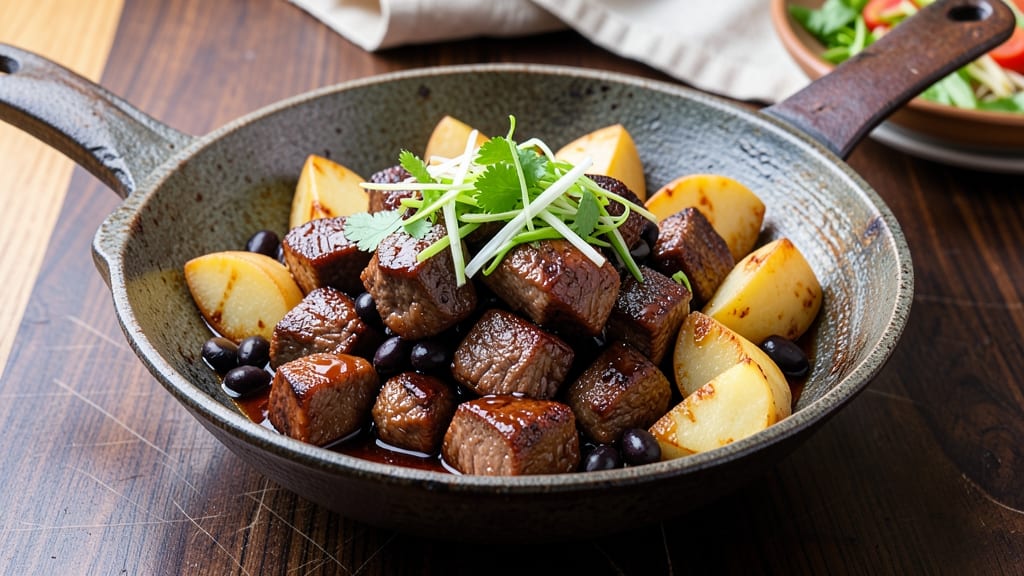
This beef and potato Chinese recipe delivers the perfect balance of wok-seared umami crunch and silky, savory gravy—a homestyle dish inspired by Northern Chinese stews.
The secret lies in tenderizing beef with a simple soy-ginger marinade before stir-frying, while potatoes achieve a crispy exterior and creamy interior through a two-stage cooking process. Every bite combines the satisfying texture of caramelized edges with melt-in-your-mouth beef and potatoes.
The foundation of this dish is its authentic flavor profile, built on a rich sauce of fermented black beans, Shaoxing wine, and a touch of chili oil for depth.
Unlike many fusion recipes, this version stays true to traditional techniques while offering a modern twist with a crispy potato topping. The result is a hearty, one-pan meal that pairs beautifully with steamed jasmine rice or fluffy mantou buns.
What makes this recipe stand out is its versatility—it works equally well as a weeknight dinner or a special occasion dish. The beef becomes fork-tender while retaining its natural flavor, and the potatoes develop a satisfying crunch without sacrificing their creamy centers.
Garnished with fresh scallions and a drizzle of sesame oil, it transforms into a visually appealing dish that tastes even better the next day.
Perfect for feeding a family or impressing guests, this recipe combines simple ingredients with professional techniques to create a restaurant-quality meal at home. Whether you're a beginner or an experienced cook, the step-by-step instructions ensure you'll achieve the same results every time. Let's get started!
Ingredients for beef and potato chinese
Authentic Northern Chinese flavors meet hearty comfort food—simple yet sophisticated ingredients for a restaurant-quality dish.
| Ingredient | Amount | Notes |
|---|---|---|
| Beef Chuck Roast 🥩 | 1 ½ lb | Cut into 1.5-inch cubes |
| Russet Potatoes 🥔 | 2 lb | Cut into 1.5-inch chunks |
| Fermented Black Beans 🫘 | ¼ cup | Rinsed and drained |
| Shaoxing Wine 🍷 | ¼ cup | Substitute with dry sherry |
| Soy Sauce 🍶 | ⅓ cup | Use light soy sauce |
| Ginger Root 🌿 | 2 tbsp | Fresh, grated |
| Garlic Cloves 🧄 | 6 cloves | Minced |
| Chili Oil 🌶️ | 1 tbsp | For finishing |
| Sesame Oil 🫒 | 1 tbsp | Toasted sesame oil |
| Green Onions 🧅 | ¼ cup | Sliced for garnish |
| Vegetable Oil 🫒 | ½ cup | High smoke point |
| Water 💧 | 2 cups | For simmering |
| Salt 🧂 | 1 ½ tsp | Diamond Crystal preferred |
| White Pepper 🌶️ | ½ tsp | Freshly ground |
| Cornstarch 🌾 | 1 tbsp | For thickening |
The beef chuck roast is non-negotiable here—its fat content renders beautifully during cooking, creating that silky gravy the dish is known for. Look for well-marbled cuts at your local butcher or specialty Asian market like H Mart or 99 Ranch Market, where they often carry pre-cut chuck in vacuum-sealed packages. If using a whole roast, cube it yourself for even cooking. The Russet potatoes should be firm with no soft spots; organic varieties from the produce section at Whole Foods or Trader Joe's hold up best during the two-stage cooking process. For the fermented black beans, check the Asian aisle—brands like Lee Kum Kee or La Choy are reliable, but rinse them well to remove excess salt.
No Shaoxing wine? Dry sherry works perfectly as a substitute—just ensure it's unfortified and smooth rather than medicinal. Fresh ginger and garlic are ideal, but if you're short on time, jarred minced garlic (like Gourmet Garden) and pre-grated ginger (sold in tubes) will save prep time without sacrificing flavor. The chili oil adds depth; if you can't find it, toasted sesame oil with a pinch of cayenne pepper mimics the effect. For the soy sauce, Japanese light soy (like Kikkoman) has a cleaner flavor than Chinese dark soy, which can overpower the dish. The cornstarch is crucial for thickening—Bob's Red Mill is a trusted brand, but any food-grade cornstarch will work.
Store the raw beef and potatoes separately in airtight containers in the fridge for up to 3 days before cooking. The fermented black beans and soy sauce keep for 6-12 months unopened in a cool, dark pantry, while Shaoxing wine and sesame oil last 1-2 years once opened if refrigerated. Leftover cooked beef and potatoes reheat beautifully—simmer in a splash of water or broth for 2-3 minutes to restore moisture. This dish tastes even better the next day as the flavors meld, so consider doubling the recipe for meal prep or family gatherings. Garnish with fresh scallions and a drizzle of chili oil just before serving to keep the presentation vibrant.
Why You'll Love This Recipe
- I’ll be real: chuck roast is cheap, and it turns into something luxurious here. That Shaoxing wine and soy sauce combo makes it taste like a restaurant dish, but the grocery bill won’t make you cry. Not the prettiest, but the taste makes up for it every time.
- One-Pot Magic: I swear by this—just toss everything into a Dutch oven with the beef and potatoes, let it simmer, and walk away. No chopping boards to wash, no extra pans to scrub. That Shaoxing wine does most of the work while you sip tea and pretend you’re in a Shanghai kitchen.
- Fermented Black Bean Secret: Here’s what sold me—the fermented black beans. They’re salty, funky, and pack a punch without extra effort. A spoonful of those beans while the beef tenderizes? That’s the moment the dish goes from good to I’ll make this again.
- Lunchbox Hero: Between us, this is my go-to for meal prep. The beef stays juicy for days, and the potatoes hold their shape perfectly. Pack it in containers for work—cold or reheated, it’s still hearty enough to fill you up. (Yes, even on a Tuesday night.)
Step-by-step instructions for wok-seared beef and potatoes
Master this Chinese-inspired technique for tender beef, crispy potatoes, and a velvety umami sauce.
Prepare the Beef and Potatoes for Maximum Flavor
Begin by cutting the 1.5 lb Beef Chuck Roast into 1.5-inch cubes—this ensures even cooking and proper wok searing. Pat each piece dry with paper towels, then season generously with 1.5 tsp Salt and 0.5 tsp White Pepper. Let the beef sit at room temperature for 20 minutes while you prepare the potatoes.
Cut the 2 lb Russet Potatoes into 1.5-inch chunks—uniform size is key for consistent doneness. Rinse them under cold water to remove surface starch, then drain and pat dry. Toss the potato chunks with 0.5 cup Vegetable Oil and 0.5 tsp Salt in a large bowl until evenly coated. This oil coating creates a crispy exterior during the wok searing.
Wok-Sear Beef and Potatoes for Crispy Texture
Heat a 14-inch wok or cast-iron skillet over high heat until a drop of water sizzles violently. Add the seasoned beef cubes in batches, stirring constantly for 2-3 minutes until they develop a deep golden-brown crust. Remove the beef and set aside—it will continue cooking in the sauce later.
In the same wok, add the oiled potato chunks in batches without overcrowding. Stir-fry for 4-5 minutes until they develop crispy edges and golden spots. The potatoes should be tender when pierced with a fork but still firm to the touch. Remove them and set aside with the beef.
Build the Umami-Packed Sauce Base
Reduce the heat to medium-high and add 2 tbsp grated Ginger Root and 6 cloves minced Garlic Cloves to the wok. Stir-fry for 30 seconds until fragrant—this releases their essential oils and forms the aromatic foundation of your dish. Add the 0.25 cup Fermented Black Beans and cook for another 1 minute to enhance their savory depth.
Pour in the 0.25 cup Shaoxing Wine and 0.33 cup Soy Sauce, scraping up any browned bits from the bottom of the wok. These bits, called fond, contain concentrated flavor that dissolves into the sauce. Let the mixture simmer for 2 minutes until the wine reduces by half and the sauce begins to thicken slightly.
Combine and Simmer to Perfection
Return the beef and potatoes to the wok, adding 2 cups Water to deglaze any remaining fond. Bring to a gentle simmer, then reduce heat to low. Cover and let it cook for 15-20 minutes, stirring occasionally, until the beef reaches an internal temperature of 160°F and the potatoes are fork-tender.
In a small bowl, whisk together 1 tbsp Cornstarch with 2 tablespoons of the cooking liquid. Stir this slurry into the wok and cook for 2-3 minutes until the sauce thickens to a glossy, velvety consistency. Taste and adjust seasoning with additional Soy Sauce or Salt if needed.
Finish with Aromatics and Garnish
Remove the wok from heat and stir in 1 tbsp Sesame Oil and 1 tbsp Chili Oil for a fragrant finish. The sesame oil adds nutty depth while the chili oil introduces subtle heat. Garnish with 0.25 cup sliced Green Onions for freshness and color.
Serve immediately over steamed rice, ensuring each bite delivers the perfect balance of crispy potatoes, tender beef, and rich umami sauce. The dish should be aromatic with a complex flavor profile—savory from the soy and black beans, slightly sweet from the caramelized potatoes, and with a lingering warmth from the chili oil.
Pro Tips For Making Beef And Potato Chinese
- SEAR THE BEEF FIRST: I learned this the hard way—skipping the sear means bland beef that just soaks up sauce. Cut the chuck roast into 1.5-inch chunks, pat them bone-dry, then hit a screaming-hot wok or skillet with 1 tablespoon oil per side until deep brown (about 3 minutes). The crust locks in flavor and prevents the meat from turning to mush later.
- PARBOIL POTATOES UNTIL FIRM: Russets break apart when tossed raw, and nobody wants mushy potatoes in this dish. Boil them whole in salted water for 8–10 minutes—until a knife slides in easily but still meets resistance. Drain and let them cool slightly before cutting into 1-inch chunks; this ensures they crisp up in the stir-fry without falling apart.
- SOAK BLACK BEANS 10 MINUTES: Fermented black beans pack a salty punch, and skipping the soak means a gloppy, uneven sauce. Rinse them quickly under cold water, then soak in warm water for 10 minutes to mellow their intensity. Squeeze out excess moisture before adding—this keeps your sauce silky, not slimy.
- ADD SHAOXING WINE LAST: I was skeptical until I tried it: Shaoxing wine’s alcohol burns off fast, but adding it too early turns your dish into a sad, watery stew. Wait until the beef is halfway cooked and potatoes are sizzling, then deglaze with 1–2 tablespoons of wine. Let it reduce by half before adding soy sauce—this concentrates the flavor without overpowering.
Regional styles of beef and potato chinese
Northern Chinese Stew
This dish draws heavy inspiration from Northern Chinese home cooking, particularly the hearty stews served in Beijing and Hebei provinces. The technique mirrors traditional Huó Guō (fire pot) dishes, where ingredients are seared and simmered together for maximum flavor.
The Shaoxing wine and fermented black beans are staples in Northern Chinese cuisine, adding deep umami and a slightly funky complexity. I often think of this as a modern take on a classic homestyle stew—comforting yet refined. 🥔🔥
Sichuan Fusion Twist
For a Sichuan-inspired variation, swap the chili oil for Sichuan peppercorn-infused oil (toast 1 tsp Sichuan peppercorns in 1 tbsp neutral oil until fragrant, then strain). Add 1 tbsp doubanjiang (chili bean paste) to the sauce for a numbing-spicy kick.
Garnish with thinly sliced red chili peppers and cilantro instead of green onions. This version keeps the Northern Chinese essence but adds Sichuan’s signature málà (numbing-spicy) heat. 🌶️
Cantonese Stir-Fry Style
Transform this into a Cantonese-style stir-fry by reducing the potatoes to small cubes and cooking them separately in a wok with high heat until crispy. Set aside, then stir-fry the beef with 1 tbsp oyster sauce and 1 tsp dark soy sauce for color.
Toss everything together with 1 tsp sesame seeds and 1 tbsp chopped cilantro for a lighter, quicker dish. Serve over steamed rice or egg noodles for a restaurant-quality takeout vibe. ✨
Hong Kong-Style Braised Potatoes
In Hong Kong, this dish might be braised longer for a richer sauce. After the initial sear, add 1 cup chicken broth instead of water, then simmer uncovered for 30 minutes to reduce the sauce into a glossy, caramelized glaze.
Finish with 1 tsp rock sugar to balance the saltiness and add a touch of sweetness. This method creates a sticky, saucy texture that’s perfect for dipping mantou buns or steamed buns. 🍚
Modern Fusion Adaptation
For a fusion twist, add 1 diced apple (like Fuji or Honeycrisp) to the wok during the sauce-building step. The natural sweetness complements the umami and adds a bright, crisp contrast.
Top with crumbled blue cheese and toasted walnuts for a Western-Chinese mashup that’s unexpected but delicious. This works surprisingly well with a dry Riesling or crisp Sauvignon Blanc. 🍏🍷
Nutrition facts
Frequently asked questions
Can I substitute chuck roast with a different cut of beef?
Yes, but choose a cut with similar fat content for tender results. Brisket or short ribs work well—just marinate them longer (2-4 hours) to break down fibers. Avoid lean cuts like sirloin, as they won't develop the same rich, silky texture in the sauce.
Why do the potatoes turn out mushy instead of crispy?
Overcrowding the wok or using wet potatoes causes mushiness. Always pat potatoes completely dry and coat them thoroughly with oil before searing. Cook in batches over high heat for 4-5 minutes until golden—never stir too soon!
Is Shaoxing wine essential, or can I use something else?
While Shaoxing wine adds authentic depth, dry sherry or even white wine vinegar (1 tbsp) work in a pinch. For a non-alcoholic option, use apple cider vinegar—just reduce the soy sauce slightly to balance flavors. The key is acidity to tenderize the beef.
How do I make this dish spicier?
Add 1 tsp chili flakes or 1 tbsp gochujang (Korean chili paste) to the sauce base. For heat with complexity, swap the chili oil for Sichuan peppercorn oil—it delivers a numbing-spicy kick (málà) that pairs perfectly with the umami. Adjust to taste!
Can I prepare this dish ahead of time?
The flavors improve overnight. Cook the dish as directed, then refrigerate in an airtight container for up to 3 days. Reheat gently with 1-2 tbsp water to restore moisture—never microwave dry. The sauce will thicken further, intensifying the umami. Perfect for meal prep!