Main Courses
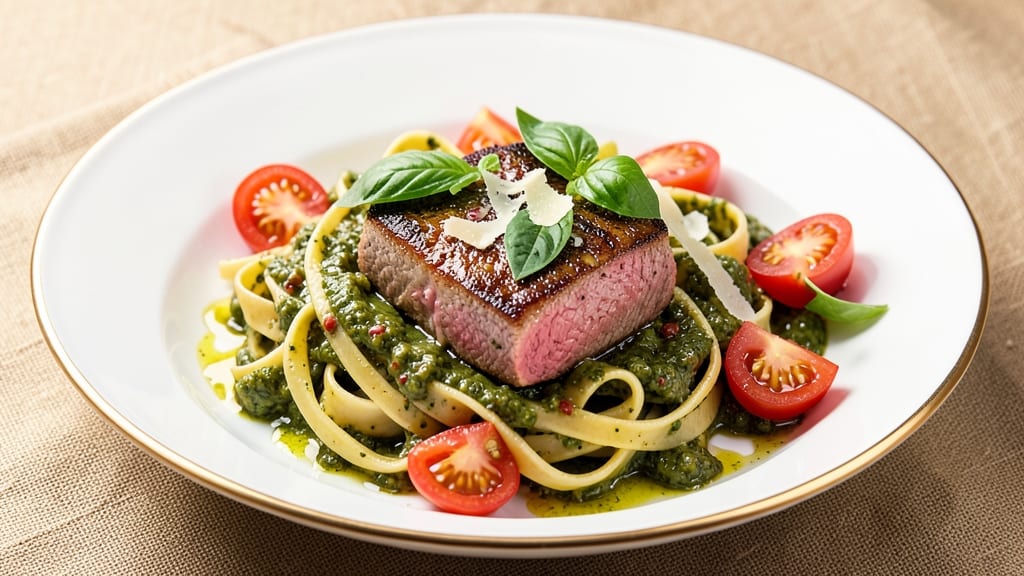
This beef basil pesto pasta recipe delivers restaurant-quality Italian flavors in your home kitchen with tender beef and a rich tomato-basil sauce. The secret lies in perfectly searing the beef and balancing fresh basil with sweet tomatoes for a sauce that's both vibrant and deeply savory.
Every bite combines succulent beef with al dente pasta and that signature pesto brightness that makes this dish unforgettable.
What sets this recipe apart is the technique of cooking the beef separately before combining it with the pasta and sauce. This ensures the meat stays tender and juicy while absorbing the flavors of the tomato-basil pesto.
The sauce itself is a perfect marriage of fresh basil, ripe tomatoes, and quality olive oil, creating a velvety texture that coats each strand of pasta beautifully.
The result is a complete meal that's elegant yet approachable—ideal for weeknight dinners or special occasions. The beef maintains its perfect doneness while the pasta achieves that satisfying al dente texture, all unified by a sauce that's rich yet fresh.
This isn't just pasta; it's a harmonious balance of textures and flavors that will have everyone asking for seconds.
Ready in about 30 minutes, this recipe requires just a few essential ingredients but delivers restaurant-quality results. The key is timing—the beef must cook just until tender, the pasta al dente, and the sauce reduced to the perfect consistency.
When everything comes together, you'll have a dish that's as impressive as it is delicious.
Ingredients for beef basil pesto pasta
Tender beef, vibrant basil, and rich tomato sauce—this is your Italian dinner shortcut.
| Ingredient | Amount | Notes |
|---|---|---|
| Beef Tenderloin 🥩 | 1 ¼ lb | Center-cut for tenderness |
| Extra-Virgin Olive Oil 🫒 | ½ cup | High quality, fruity |
| Fresh Basil Leaves 🌿 | 2 cups | Packed, stems removed |
| Ripe Tomatoes 🍅 | 2 large | Roma or vine tomatoes |
| Garlic Cloves 🧄 | 4 cloves | Peeled, roughly chopped |
| Parmesan Cheese 🧀 | ¾ cup | Freshly grated from block |
| Fettuccine Pasta 🍝 | 12 oz | Dried, al dente preferred |
| Pine Nuts 🥜 | ¼ cup | Toasted for richness |
| Dried Oregano 🍃 | 1 tsp | Italian variety preferred |
| Salt 🧂 | 1 ½ tsp | Kosher or sea salt |
| Black Pepper 🌶️ | ½ tsp | Freshly ground preferred |
| Lemon Juice 🍋 | 1 tbsp | Freshly squeezed |
| Red Wine Vinegar 🍷 | 1 tbsp | Dry variety preferred |
| Butter 🧈 | 2 tbsp | Unsalted for flavor control |
The beef is non-negotiable here—tenderloin is your best bet for that melt-in-your-mouth texture. Costco or Whole Foods carry great center-cut pieces, but any quality butcher will have it. Look for bright red color and good marbling. If you're using sirloin, slice it thinly against the grain. For the tomatoes, Roma or vine tomatoes are ideal—they're meatier and sweeter. If you can't find fresh basil, dried works at one-third the amount, but honestly, farmers market basil makes all the difference. Toast your pine nuts in a dry pan for 2-3 minutes—they'll develop that nutty aroma that takes the sauce to the next level.
No fresh basil? Dried oregano at half the amount gets you close, though nothing beats the real thing. Running low on pine nuts? Walnuts or cashews work in a pinch—just toast them first. No red wine vinegar? Balsamic vinegar is a great swap, though it'll add a slightly sweeter note. The Parmesan must be freshly grated—pre-grated gets clumpy and loses flavor fast. Trader Joe's sells great blocks for this. For the pasta, fettuccine is traditional, but linguine or spaghetti work too. Just make sure it's dried—fresh pasta cooks too fast and gets mushy. The key to al dente perfection is tasting it a minute before the package says.
This sauce reheats beautifully—actually tastes better the next day as flavors meld. Store leftovers in an airtight container for up to 4 days in the fridge. For longer storage, freeze the sauce portion separately—it'll keep for 3 months. I like to portion the pasta and sauce in separate containers so I can reheat just what I need. The beef? Best eaten fresh, but you can reheat gently in a pan with a splash of broth if needed. Always save some basil stems—they make the best infused water. Just muddle a few with lemon and water, and you've got a refreshing drink to go with your meal.
Why You'll Love This Recipe
- No-Fuss Weeknight Win: I swear by this when I’m too tired to think. Slice the beef thin—no fancy searing needed—and toss it with the pesto while the pasta boils. The basil and tomatoes practically cook themselves in the olive oil, so you’re basically stirring while you wait.
- Rich, Herby Magic: That first bite? The beef’s tender bite against the bright, garlicky pesto with juicy tomatoes—it’s like summer in a bowl. Honestly, the basil alone makes it feel fancy, but the beef ties it all together so it’s never one-note.
- Lunch or Dinner Hero: Make a big batch on Sunday, and you’ve got effortless leftovers for lunch. Pack it cold for work or reheat it—both ways are solid. My kids even ask for it when I bring it to potlucks, which, between us, is the highest praise.
- Budget-Friendly Luxe: Tenderloin feels special, but you only need a small cut for this. The rest of the ingredients? Basil, tomatoes, garlic—stuff you already have or can grab cheap. It’s the kind of dish that makes you feel like you’re treating yourself without breaking the bank.
Step-by-step instructions for beef basil pesto pasta
Here's how to create a restaurant-worthy dish with tender beef and vibrant tomato-basil pesto.
Prepare the Beef Tenderloin
Pat the 1.25 lb beef tenderloin completely dry with paper towels—this ensures a perfect sear. Season both sides generously with 1.5 tsp salt and 0.5 tsp black pepper, pressing the seasoning into the meat so it adheres.
Heat 0.25 cup extra-virgin olive oil in a large skillet over medium-high heat until shimmering. Add the beef and cook for 4-5 minutes per side until it reaches 135°F internally (medium-rare). Remove from heat and let rest for 10 minutes before slicing into ¼-inch thick strips. This resting period keeps the beef juicy and tender—don't skip it!
Create the Tomato-Basil Pesto
While the beef rests, pulse 2 cups fresh basil leaves, 2 large ripe tomatoes, 4 cloves garlic, 0.25 cup pine nuts, 1 tsp dried oregano, 1 tbsp lemon juice, and 1 tbsp red wine vinegar in a food processor until finely chopped but still textured. With the processor running, slowly drizzle in the remaining 0.25 cup extra-virgin olive oil until smooth.
Transfer the pesto to a bowl and stir in 0.75 cup freshly grated parmesan cheese. Taste and adjust seasoning with additional salt if needed. This vibrant pesto should be bright, herby, and slightly tangy—it's the heart of this dish!
Cook the Fettuccine
Bring a large pot of salted water to a rolling boil. Add 12 oz fettuccine pasta and cook until 1 minute before al dente (about 11 minutes). Reserve ½ cup pasta water before draining—this starchy liquid helps emulsify the pesto sauce.
Drain the pasta and immediately toss with 2 tbsp butter to prevent sticking. The butter adds richness and helps coat the strands evenly. Keep the pasta warm while you finish the sauce.
Combine Everything for Perfect Harmony
In a large skillet, combine the sliced beef tenderloin with the cooked fettuccine. Pour the tomato-basil pesto over the top and toss gently to coat. If the sauce seems too thick, add pasta water 1 tablespoon at a time until it reaches your desired consistency—it should cling beautifully to the pasta and beef.
Simmer for 2-3 minutes on medium-low heat, allowing the flavors to meld together. The beef should be warmed through while maintaining its tenderness. Garnish with additional fresh basil leaves and a final sprinkle of parmesan cheese before serving immediately.
Pro Tips For Making Beef Basil Pesto Pasta
- SEAR THE BEEF FIRST: Thinly slice your beef tenderloin against the grain, then hit it with a quick sear in a screaming-hot pan with 1 tablespoon of olive oil before adding anything else. That 30-second crust makes all the difference—especially when you’re drowning it in pesto later. (Yes, even if you’re impatient like me, resist the urge to rush this.)
- STRIP BASIL STEMS: I used to toss whole basil stems into the pesto and wonder why it tasted dull. Now I strip the leaves off the stems with my fingers—no knife needed—and pack them tightly into the food processor. More surface area means brighter flavor, and you’ll use less oil to get the same creamy texture.
- TOAST THE GARLIC: Instead of just mincing raw garlic, lightly toast 2 whole cloves in olive oil over medium-low heat until they’re golden and fragrant—about 3-4 minutes. Smash them into the pesto with the basil; the nuttiness cuts through the richness of the beef and balances the acidity of the tomatoes.
- SALVAGE OVERCOOKED TOMATOES: If your tomatoes turn to mush while searing the beef, don’t toss them. Drain most of the liquid, then blend the pulp into the pesto with a splash of pasta water. The acidity and texture still work—it just needs a little help. (Your future self will thank you for not scrapping the whole dish.)
Wine and beer pairings for beef basil pesto pasta
Italian White Wines
For this dish, I reach for crisp Italian whites that complement the basil and tomato brightness. A glass of Vermentino from Sardinia—with its citrus and mineral notes—cuts through the richness beautifully. The acidity refreshes your palate between each flavorful bite. 🍷
Light Red Options
If you prefer red, go for a Chianti Classico or Sangiovese with moderate tannins. These wines mirror the dish's tomato base while adding earthy undertones that enhance the beef's depth. Avoid heavy Cabernets—they'll overpower the delicate basil flavors.
Beer Pairings
A Peroni or Birra Moretti Italian lager provides the perfect lightness to balance the dish's richness. The crisp, clean finish cleanses your palate between bites. For craft beer lovers, a Belgian witbier offers citrusy notes that harmonize with the lemon in the pesto.
Non-Alcoholic Choices
Sparkling San Pellegrino Aranciata with its blood orange flavor adds a refreshing contrast. For something herbal, try Fever-Tree Italian Blood Orange Soda—the citrus brightness mirrors the basil's freshness while keeping the meal light and vibrant.
Wine Service Tips
Serve white wines slightly chilled at 50-55°F to preserve their crispness. For reds, decant for 15-20 minutes to soften tannins. I always pour a small taste first—the beef's richness might need a slightly sweeter wine than you'd expect!
Nutrition facts
Frequently asked questions
Can I substitute chicken or shrimp for the beef?
For chicken, use 1 lb boneless thighs (darker meat stays juicier) and cook them until 165°F internally. For shrimp, peel and devein 1 lb large shrimp and cook for 2-3 minutes per side until pink. Both work beautifully—they'll absorb the tomato-basil pesto differently but still create a delicious dish. The cooking times will be shorter than beef.
How do I fix if the pesto sauce is too thick?
This happens when tomatoes release too much liquid during processing. Add pasta water 1 tablespoon at a time while stirring until you reach a smooth, clinging consistency. The sauce should coat the back of a spoon but still be vibrant, not watery. If it's still too thick after adding ¼ cup pasta water, blend in an extra ½ cup fresh basil leaves to lighten it naturally.
Can I make this ahead of time?
Yes! Prepare the pesto sauce and store it in an airtight container in the fridge for up to 3 days—it actually tastes better as flavors meld. Cook the pasta fresh and reheat it in the sauce for 2-3 minutes on low heat. For the beef, slice it after cooking but before resting, then store it separately. Reheat gently in a pan with a splash of broth or water to prevent drying out.
What's the best pasta shape for this dish?
While fettuccine is traditional, linguine or pappardelle work equally well—they all have flat surfaces that hold the sauce beautifully. For extra texture, try rigatoni or penne, but toss them gently to avoid breaking. Avoid tiny shapes like orzo—they'll get lost in the sauce. The key is a shape with ridges or flat surfaces to catch and hold the pesto.
Why does my beef turn out dry?
This usually happens from overcooking or not resting the meat properly. Use a meat thermometer to check for 135°F (medium-rare) and let it rest for the full 10 minutes after cooking—this allows juices to redistribute. Also, pat the beef completely dry before seasoning and searing, and don't overcrowd the pan. For extra moisture, add a splash of broth when reheating leftovers.