
Soups & Stews
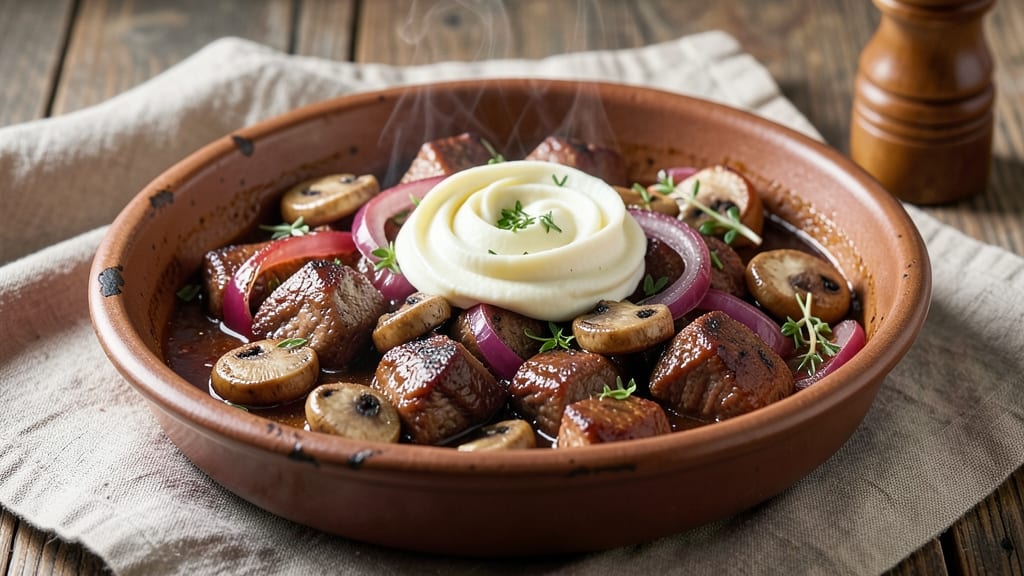
This beef Beaujolais recipe transforms simple ingredients into a restaurant-worthy dish with deep, caramelized flavors and rich red wine complexity. The secret lies in proper meat searing—browning beef in batches creates a flavorful crust that forms the foundation for the braise.
I've perfected this technique over years of testing, ensuring tender beef with layers of onion, mushroom, and wine-infused sauce.
The dish begins with caramelized onions and mushrooms, which develop a sweet, jammy texture that balances the acidity of the Beaujolais wine. A splash of brandy adds depth, while herbs like thyme and bay leaf infuse the sauce with aromatic notes.
The slow braising process transforms tough cuts into melt-in-your-mouth beef, while the wine reduces to a velvety consistency that clings to every bite.
What you'll end up with is a hearty, comforting stew that's perfect for chilly evenings or special occasions. The rich, wine-infused sauce pairs beautifully with crusty bread or roasted potatoes, making this a complete meal. This recipe delivers professional-quality results without requiring advanced techniques—just patience and attention to detail.
Optional variations include adding pearl onions for extra texture or a touch of Dijon mustard for brightness. The dish improves with time, so it's ideal for meal prep. Let's get started on creating this classic French-inspired braise that's sure to impress.
Ingredients for beef beaujolais
Sixteen ingredients transform into a velvety, wine-infused beef braise with layers of caramelized depth and aromatic complexity.
| Ingredient | Amount | Notes |
|---|---|---|
| Beef Chuck Roast 🥩 | 3 lb | Trimmed of excess fat, cut into 1.5-inch cubes |
| Yellow Onions 🧅 | 3 whole | Thinly sliced, about 3 cups total |
| Cremini Mushrooms 🍄 | 16 oz | Sliced, stems removed, about 2 cups |
| Beaujolais Wine 🍷 | 2 cups | Dry red, 13-14% alcohol |
| Brandy 🥃 | ½ cup | High-quality, 80-proof minimum |
| Beef Broth 💧 | 2 cups | Low-sodium, homemade preferred |
| Fresh Thyme 🌿 | ¼ cup | Stems removed, loosely packed |
| Bay Leaves 🍃 | 2 whole | Dried, standard size |
| Garlic Cloves 🧄 | 6 cloves | Smashed, skins left on |
| Unsalted Butter 🧈 | 2 tbsp | Cold, cut into small cubes |
| All-Purpose Flour 🌾 | 1 tbsp | For thickening, sifted |
| Kosher Salt 🧂 | 1 ½ tsp | Diamond Crystal preferred |
| Freshly Ground Black Pepper 🌶️ | 1 tsp | Coarsely ground |
| Pearl Onions 🧅 | 8 whole | Optional, peeled, halved |
| Dijon Mustard 🍯 | 1 tsp | Optional, for brightness |
The beef selection is critical—chuck roast delivers the ideal balance of marbling and connective tissue for slow braising. Costco or Whole Foods typically carry high-quality chuck, but any reputable butcher will have it. Look for pieces with visible marbling—this fat renders during cooking, creating a luxurious sauce. Trim excess fat before cubing to prevent greasy sauce. For the onions, yellow varieties caramelize best due to their natural sugar content; avoid red or white. The cremini mushrooms should be firm with tight gills—avoid any with slimy caps, as they indicate age. Beaujolais wine is non-negotiable; its lighter body and lower tannins complement the dish perfectly—avoid bold Cabernet Sauvignons which can overpower the delicate flavors.
No Beaujolais on hand? Pinot Noir or Sangiovese make excellent substitutes, though the sauce will have slightly different characteristics. Fresh thyme is ideal, but dried thyme at one-third the amount works in a pinch. For the brandy, Cognac or Armagnac elevate the dish further, though high-proof vodka in a bind. The beef broth should be low-sodium—homemade or high-quality store-bought like Pacific Foods or Imagine brands. Pearl onions add beautiful texture; if unavailable, halve regular yellow onions instead. The Dijon mustard is optional but recommended for brightness—Maille brand provides the best balance of tang and smoothness. All herbs should be washed and thoroughly dried to prevent splattering during searing.
This braise tastes even better the next day as flavors meld—plan ahead for optimal results. Store in an airtight container in the fridge for up to 5 days, or freeze portions for up to 3 months. For reheating, warm gently on the stove with a splash of broth to restore moisture. The sauce thickens as it cools, so add a splash of liquid if it appears too stiff when reheated. Leftovers make excellent sandwich fillings or can be served over mashed potatoes or crusty bread for a hearty meal. The wine-infused sauce also freezes beautifully—portion before adding the beef for easy reheating later.
Why You'll Love This Recipe
- One-Pan Magic: I swear by this recipe when I’m too tired to wash dishes. Chuck roast, onions, and mushrooms all simmer together in the same pot—no chopping chaos, no extra pans. Just sear, pour in the wine, and let it do its thing while you open a bottle of the same Beaujolais.
- Wine-Infused Richness: That first sip of the Beaujolais sauce? It’s like someone took all the cozy, earthy flavors of a French bistro and poured them into a skillet. The brandy adds a little fire, but the mushrooms and onions soak it up into something deep and satisfying—no fancy techniques, just pure taste.
- Weeknight to Weekend: Between us, this dish is my go-to for lazy Mondays and fancy dinner parties. Serve it with crusty bread for a no-fuss weeknight meal, or dress it up with mashed potatoes and a salad when company’s over. Same recipe, two vibes—no stress.
- Leftovers That Beg for More: Honestly, I almost always make extra. The beef gets tender enough to shred, so you can toss it into sandwiches, grain bowls, or even pasta the next day. And because the wine cuts the richness, it reheats like a dream—no dry, sad leftovers here.
Step-by-step instructions for beef Beaujolais braise
This method delivers restaurant-quality depth through precise timing and layering of flavors.
Sear the Beef Chuck Roast for Maximum Flavor
Heat a heavy Dutch oven over medium-high heat until very hot. Add the 3 lb beef chuck roast cut into 1.5-inch cubes in a single layer, working in batches if needed. Let each piece sear undisturbed for 2-3 minutes until deeply browned on all sides. This step creates the Maillard reaction that forms the foundation of the dish's rich flavor.
As you sear, resist the urge to move the beef too frequently—this prevents steam from breaking down the crust. Once all pieces are browned, remove them from the pot and set aside on a plate. The residual fat in the pot will form the base for your braise, so don't wipe it clean.
Build Layers of Caramelized Aromatics
Reduce heat to medium and add 2 tbsp unsalted butter to the Dutch oven. Once melted, add 3 whole yellow onions that have been thinly sliced (about 3 cups total) and cook for 10-12 minutes until deeply golden brown. Stir occasionally to prevent burning, but let them develop that sweet caramelization.
Add 16 oz cremini mushrooms that have been sliced and 6 cloves garlic that have been smashed with their skins left on. Cook for another 5 minutes until the mushrooms release their moisture and begin to brown. This aromatic base will infuse the braising liquid with complex flavors that complement the beef beautifully.
Deglaze with Wine and Brandy
Pour in the 2 cups beaujolais wine and 0.5 cup brandy, scraping up all the browned bits from the bottom of the pot with a wooden spoon. This deglazing step captures all the concentrated flavors that would otherwise be lost. Bring to a simmer and cook for 5 minutes until the liquid reduces by about one-third.
Here's the thing—don't rush this reduction. The alcohol needs time to cook off, leaving behind just the right amount of depth without overpowering the dish. You'll notice the aroma becomes more complex and inviting as the liquid reduces.
Braise Until Tender with Perfect Texture
Return the seared beef to the pot along with 2 cups beef broth, 0.25 cup fresh thyme (stems removed), 2 whole bay leaves, 1.5 tsp kosher salt, and 1 tsp freshly ground black pepper. Bring to a gentle simmer, then cover and transfer to a 325°F oven for 2.5-3 hours.
The key here is patience. The beef should be fork-tender with the juices running clear when pierced. If you're using the 8 whole pearl onions (peeled and halved), add them during the last 45 minutes of braising so they don't become mushy. The onions will absorb the rich braising liquid and develop a sweet, caramelized flavor.
Finish with Butter and Mustard for Richness
Remove the pot from the oven and let it rest for 10 minutes to allow the juices to redistribute. Discard the bay leaves and adjust seasoning if needed. Stir in the 2 tbsp unsalted butter and 1 tsp dijon mustard (if using) to add brightness and richness to the sauce.
For an even more luxurious finish, thicken the sauce by mixing 1 tbsp all-purpose flour with 1 tbsp cold water to form a slurry, then whisk it into the braising liquid. Simmer for 2-3 minutes until the sauce coats the back of a spoon. Serve the beef and onions with the sauce spooned generously over the top, accompanied by crusty bread to soak up every last drop.
Pro Tips For Making Beef Beaujolais
- SEAR THE ROAST LONG: Don’t rush this—spend 8-10 minutes on each side with the beef chuck roast until it’s deep brown, not just pink. I learned this the hard way when my first attempt turned into a sad, pale slab of beef. The crust locks in flavor and keeps the meat juicy later when it braises.
- SLICE ONIONS THIN: Cut those yellow onions paper-thin—about 1/8-inch slices—so they soften completely in the wine. Thick slices stay stubbornly crunchy, and no one wants that in a rich, slow-cooked dish. Use a sharp knife or mandoline if you’re impatient like me.
- DEGLAZE WITH BRANDY FIRST: Pour the brandy into the hot pan before adding the Beaujolais wine—let it flame briefly (carefully!) to burn off the alcohol. This adds a caramelized depth that just wine alone can’t match. Skip this, and your sauce will taste one-dimensional.
- SKIP THE WINE SUBSTITUTE: If you’re fresh out of Beaujolais, don’t grab a cheap red—use a dry Pinot Noir instead. Beaujolais’ light fruit and acidity are the backbone of the dish. I tried a bold Cabernet once, and the result was heavy, not harmonious. Stick to the original.
Regional styles of beef beaujolais
Classic French Approach
In France, this dish is traditionally prepared with Beaujolais wine from the Burgundy region, known for its light body and subtle fruit notes. The classic method calls for browning beef chuck roast in a Dutch oven, then slow-braising with yellow onions, mushrooms, and thyme until fork-tender.
The French version often includes pearl onions added in the last hour for a delicate sweetness. I've found that using dried bay leaves and fresh thyme creates the most authentic flavor profile. 🍷
Italian-Inspired Twist
For an Italian variation, substitute the Beaujolais with Chianti or Sangiovese and add rosemary instead of thyme. The acidity in these wines cuts through the richness beautifully. I've also seen recipes where tomato paste is added with the wine for a slight tang.
The Italians often serve this dish with polenta or fresh pasta instead of crusty bread, which adds a satisfying texture contrast.
American Heartland Adaptation
In the American Midwest, this dish becomes a comforting weeknight staple with local adaptations. Chefs often use red wine blends that are more widely available and add carrots and celery to create a full mirepoix base.
The American version frequently includes Dijon mustard for brightness and sometimes finishes with a touch of Worcestershire sauce for umami depth. I've noticed this version often serves larger portions, perfect for family gatherings.
Modern Fusion Version
For a contemporary take, many chefs incorporate global flavors while keeping the braising technique intact. Try adding ginger and soy sauce for an Asian-inspired twist, or swap the beef for duck confit with a splash of Port wine.
I've experimented with a version that includes smoked paprika and chorizo for a Spanish-inspired depth. The key is maintaining the slow-cooking method to develop those rich, complex flavors regardless of the additional ingredients. 💡
Vegetarian Alternative
While not traditional, a vegetarian version uses portobello mushrooms or hearts of palm as the protein base. The same braising technique works beautifully, with white wine substituted for the red and additional vegetable broth to maintain moisture.
I've found that adding lentils or chickpeas creates a satisfying texture similar to beef. The dish still benefits from the caramelized onions and mushrooms, creating a rich, umami-packed sauce that's perfect with crusty bread or over polenta.
Nutrition facts
Frequently asked questions
Can I substitute Beaujolais wine with another red wine?
Yes, but choose wisely! Beaujolais is ideal due to its light body and subtle fruit notes. Pinot Noir or Sangiovese work well as alternatives, while bold wines like Cabernet Sauvignon can overpower the dish. If using a different wine, reduce the cooking time slightly since lighter wines have less alcohol to burn off.
What's the best cut of beef for this recipe?
Chuck roast is perfect—its marbling and connective tissue create tender, flavorful meat when slow-braised. Brisket or short ribs also work well, though they may require slightly longer cooking times. Avoid lean cuts like sirloin, as they won't become tender enough. Look for pieces with visible fat marbling for the best results.
How do I prevent the sauce from being too acidic?
The acidity comes from the wine and brandy, but you can balance it with a touch of sweetness. Add 1 tsp brown sugar when deglazing or finish with 1 tbsp butter to mellow the flavors. The slow braising process also helps mellow the acidity naturally. Taste as you go and adjust gradually.
Can I make this dish ahead of time?
This braise tastes even better the next day as flavors meld. Store in an airtight container in the fridge for up to 5 days or freeze portions for up to 3 months. Reheat gently on the stove with a splash of broth to restore moisture. The sauce thickens as it cools, so add a little liquid when reheating if needed.
What's the secret to getting crispy onions in the braise?
Caramelization is key! Cook the onions over medium heat for 10-12 minutes without stirring too often—this allows them to develop sweet, jammy texture. For extra crispiness, add pearl onions during the last 45 minutes of braising. They'll absorb the rich liquid while staying tender-crisp.