
Sauces & Condiments
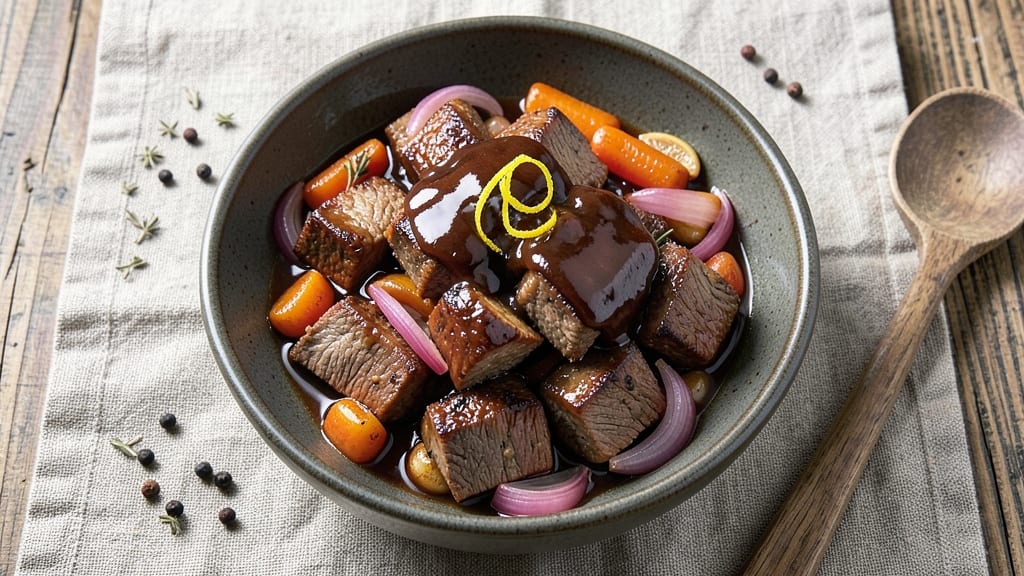
A1 steak sauce transforms ordinary beef stew into a rich, umami-packed masterpiece that rivals your favorite restaurant dish. The key lies in its ability to balance deep, caramelized beef with a touch of sweetness that enhances rather than overpowers.
This isn't just another stew—it's a slow-cooked revelation where every bite delivers tender, melt-in-your-mouth beef and a sauce so flavorful it disappears with each spoonful.
What sets this recipe apart is the technique: browning the beef in batches creates a flavorful crust that dissolves into the sauce, while the A1 steak sauce adds that signature tangy-sweet depth.
The result is a stew that's hearty enough for a cold night but refined enough for company. No shortcuts here—just layers of flavor built through patience and precision.
By the time you serve this stew, you'll have perfectly tender beef chunks swimming in a glossy sauce that clings to every bite. The A1 steak sauce ties everything together, adding just the right amount of richness without overpowering the natural beef flavor.
Serve it with crusty bread to soak up every last drop, and you'll understand why this becomes your new go-to recipe.
This isn't just a stew—it's a complete meal that transforms simple ingredients into something extraordinary. The slow simmer develops deep, complex flavors, while the A1 steak sauce adds that signature tang that makes it unforgettable. Ready to elevate your weeknight dinners?
Ingredients for a1 steak sauce beef stew
Six ingredients transform simple beef into restaurant-quality stew with that signature A1 tang.
| Ingredient | Amount | Notes |
|---|---|---|
| Chuck Roast 🥩 | 3 lb | Cut into 1.5-inch cubes |
| Yellow Onions 🧅 | 2 whole | Chopped into 1/2-inch pieces |
| Carrots 🥕 | 4 whole | Medium size, peeled and chopped |
| Garlic Cloves 🧄 | 6 cloves | Minced for depth of flavor |
| A1 Steak Sauce 🍖 | ½ cup | Original A1 sauce preferred |
| Beef Broth 💧 | 4 cups | Low-sodium preferred |
| Tomato Paste 🍅 | 2 tbsp | Squeeze tube or canned |
| Red Wine 🍷 | 1 cup | Bold dry red like Cabernet |
| Olive Oil 🫒 | 2 tbsp | Extra-virgin for browning |
| All-Purpose Flour 🌾 | 2 tbsp | For thickening sauce |
| Fresh Thyme 🌿 | 1 tbsp | Leaves only, chopped fine |
| Bay Leaves 🍃 | 2 whole | Remove before serving |
| Salt 🧂 | 1 ½ tsp | Kosher or sea salt |
| Black Pepper 🌶️ | 1 tsp | Freshly ground preferred |
| Worcestershire Sauce 🥫 | 1 tbsp | Vegetarian version if needed |
The chuck roast is non-negotiable here—it's the only cut with enough fat and connective tissue to become melt-in-your-mouth tender. Costco sells it pre-cut in 3-lb chunks, but if you're buying whole, ask your butcher to trim off any large fat caps. For the A1 sauce, stick with the original bottle—the imitation versions just won't cut it. The beef broth? Low-sodium is key—you're adding plenty of salt already. I always grab mine from Trader Joe's because their organic version has the deepest flavor. The carrots and onions should be roughly the same size so they cook evenly—no need to peel the carrots if you're using the smaller organic ones from the store.
No red wine? Substitute with extra beef broth plus 1 tbsp balsamic vinegar—it'll give you that same tangy depth. Running low on Worcestershire? Soy sauce at half the amount works in a pinch, though it won't be identical. Fresh thyme is ideal, but dried thyme at one-third the amount gets you close. The tomato paste can be from a squeeze tube if that's what you've got—just measure carefully. For the flour, all-purpose works fine, but if you're feeling fancy, a little cornstarch mixed in will give you a glossier sauce. The Worcestershire sauce? Lea & Perrins is the gold standard—don't even think about the vegetarian version unless you're avoiding anchovies.
This stew only gets better with time, so make it when you can spare an hour or two—6-8 hours is ideal for maximum tenderness. Store leftovers in the fridge for up to 5 days, or freeze portions for 3 months. I always double the recipe because it reheats beautifully and makes amazing sandwiches the next day. The sauce thickens as it cools, so add a splash of beef broth when reheating if it's too thick. And for heaven's sake, don't skip the browning step—that's where all the flavor happens.
Why You'll Love This Recipe
- One-Pot Magic: I swear by this recipe because it’s literally dump-and-go after the initial sear. Chuck roast gets tender on its own, while the onions and carrots soften into that perfect melt-in-your-mouth texture—no fancy techniques, just patience and A1’s rich kick tying everything together.
- Umami Bomb: That A1 steak sauce isn’t just a garnish—it’s the soul of this stew. The deep, savory notes cut through the richness of the beef, and the garlic? Oh, it’s roasted until it’s sweet and caramelized, making every bite taste like a hug from your favorite diner cook.
- Leftovers That Win: Between us, this stew only gets better the next day. The flavors meld into something deeper, and reheating it is so easy—just a splash of water, a quick stir, and boom, dinner’s ready. I make it on Sundays just so I can enjoy it all week without stress.
- Budget Hero: Chuck roast is cheap, carrots and onions last forever, and a bottle of A1 stretches across multiple batches. Honestly, I’ve fed six people for under $15 with this—plus, the leftovers stretch into lunches or even breakfast hash. Frugal? Yes. Delicious? Absolutely.
Step-by-step instructions for A1 steak sauce beef stew
Here's how to create a rich, umami-packed stew with perfectly caramelized beef bites.
Sear the Chuck Roast for Maximum Flavor
Heat the 2 tablespoons olive oil in a large Dutch oven over medium-high heat until shimmering. Pat the 3 lb chuck roast dry with paper towels—this ensures a good sear. Working in batches, add the beef cubes and sear for 3-4 minutes per side until deeply browned. You're building flavor here, so don't rush.
Once all beef is browned, remove it from the pot and set aside. The browned bits (fond) will form the base of our sauce, so we'll scrape them up later. If the oil starts smoking, reduce heat slightly—you want a deep caramelization, not burnt bits.
Build the Flavor Base with Aromatics
In the same Dutch oven, add ½-inch chopped yellow onions and cook for 5-6 minutes until softened and golden. Add the peeled and chopped carrots and cook another 4-5 minutes until they begin to soften. This step develops their natural sweetness.
Stir in the minced garlic cloves and cook for 30 seconds until fragrant—don't let it burn. Sprinkle with 2 tablespoons all-purpose flour and stir vigorously for 1 minute to remove the raw taste. This creates a roux that will thicken our stew.
Deglaze and Develop the Sauce
Pour in the 1 cup red wine and scrape up all the browned bits from the bottom of the pot. Let it simmer for 3-4 minutes until reduced by half. Add the 2 tablespoons tomato paste, 1 tablespoon Worcestershire sauce, 1.5 teaspoons salt, and 1 teaspoon black pepper, stirring well.
Now add the 4 cups beef broth and bring to a gentle simmer. Return the beef to the pot along with the 2 whole bay leaves and 1 tablespoon fresh thyme. Partially cover and let it simmer for 1 hour, stirring occasionally to prevent sticking.
Finish with A1 Steak Sauce for Umami Depth
After the initial hour, stir in the ½ cup A1 steak sauce. This is where the magic happens—the sauce's deep umami flavor will penetrate the beef and create that signature rich taste. Simmer uncovered for another 1-1.5 hours until the beef is fork-tender and the sauce has thickened to your desired consistency.
Check for doneness by piercing a beef cube—it should easily slide off your fork. If the sauce is too thin, simmer uncovered for another 10-15 minutes to reduce it. Remove and discard the bay leaves before serving.
Rest and Serve for Perfect Texture
Let the stew rest for 10-15 minutes before serving. This allows the flavors to meld and the juices to redistribute throughout the beef. Serve hot with crusty bread or over mashed potatoes to soak up every last bit of that rich, umami-packed sauce.
The result should be tender beef cubes in a glossy, flavorful sauce with perfect balance between the A1 steak sauce's umami, the wine's acidity, and the caramelized depth from the searing. Each bite should be packed with texture and flavor.
Pro Tips For Making A1 Steak Sauce Beef Stew
- SEAR THE ROAST FIRST: Chuck roast needs a deep brown crust to lock in flavor—don’t skip this step. Hit the meat with high heat in a heavy pot for 3-4 minutes per side until it’s golden, then pull it out. I learned this the hard way: skipping the sear just leaves you with bland, gray meat swimming in sauce.
- CHOP ONIONS THINLY: Yellow onions should be sliced into ¼-inch pieces so they soften quickly but stay recognizable. Thick chunks turn mushy and disappear into the sauce, leaving you with a stew that tastes like it’s missing something. (Yes, even if you’re impatient like me.)
- ADD A1 SAUCE LATE: Stir in the A1 steak sauce only in the last 10 minutes of cooking—this keeps its tangy, rich flavor bright instead of letting it turn bitter. I was skeptical until I tried it: the sauce’s sweetness shines when it’s not simmering for hours.
- USE COLD WATER FOR BRAISING: Start with cold liquid (water or broth) instead of hot to prevent the onions and carrots from cooking too fast and turning to mush. Cold water also helps the meat cook evenly without overcooking the veggies—this is the thing that matters most for texture.
Regional styles of this recipe
Southern Comfort Style
In the American South, this stew gets a smoky twist by adding 1 tbsp smoked paprika and ½ cup chicken broth instead of red wine. Cook the onions and carrots with 2 slices of bacon (crisped) for extra depth, then remove the bacon before adding the beef.
The A1 sauce still stars here, but the smoky notes make it feel like a true Southern classic. Serve with cornbread for the full experience. 🔥
British Pub-Inspired
Across the pond, this stew becomes a pub favorite by swapping the red wine for 1 cup stout beer (like Guinness) and adding 1 tbsp Dijon mustard to the sauce.
The A1 sauce works perfectly here too, but the beer adds a malty richness that British diners love. Garnish with fresh parsley and serve with crusty sourdough bread. 🍺
French-Inspired Bouillon
For a French touch, use white wine instead of red and add 1 sprig rosemary along with the thyme. The A1 sauce still shines, but the wine's acidity cuts through the richness beautifully.
Finish with a sprinkle of fresh parsley and serve with buttery egg noodles. The French call this a bœuf bourguignon with a tangy twist. 🥖
Cajun Bayou Twist
In Louisiana, this stew gets a Cajun kick by adding 1 tsp cayenne pepper and 1 tsp filé powder (made from ground sassafras) at the end. The A1 sauce's umami pairs perfectly with the spicy heat. Serve over dirty rice for a true Bayou-inspired meal. 🌶️
Italian-Inspired Spezzatino
For an Italian version, replace the red wine with ½ cup dry white wine and add 1 tsp dried oregano and 1 crushed sun-dried tomato to the sauce. The A1 sauce adds a unique depth that Italian cooks would love. Serve with polenta or crusty Italian bread. 🍝
Modern Fusion Approach
For a contemporary twist, add 1 tbsp soy sauce and 1 tsp sesame oil when finishing with the A1 sauce. Garnish with sliced green onions and sesame seeds for a fusion of American and Asian flavors.
This version works beautifully with jasmine rice or steamed bok choy on the side. ✨
Nutrition facts
Frequently asked questions
Can I substitute A1 Steak Sauce with another sauce?
While A1 Steak Sauce gives that signature tangy-sweet depth, you can use ½ cup soy sauce + 1 tbsp brown sugar as a substitute. For a more traditional option, try ½ cup beef consommé + 1 tbsp Worcestershire sauce. Just remember, the sauce's umami balance is key—so adjust other seasonings (like salt) if needed. The sauce should complement, not overpower, the beef's natural flavor.
How do I make this stew ahead of time?
This stew actually tastes better the next day! Cook it as directed, then refrigerate for up to 5 days. The flavors meld beautifully overnight. For freezing, portion into airtight containers and freeze for up to 3 months. Thaw in the fridge overnight, then reheat gently on the stove with a splash of beef broth to restore the sauce's consistency. Never microwave directly from frozen.
Why did my stew turn out too thin?
Thin stew usually means one of two things: either the beef wasn't cooked long enough to release its natural juices, or the sauce wasn't reduced properly. For future batches, simmer uncovered for 10-15 extra minutes to thicken the sauce. You can also create a quick slurry by mixing 1 tbsp cornstarch with 2 tbsp cold water, then whisking it into the stew at the end and simmering for 2-3 minutes.
Can I use a slow cooker for this recipe?
Brown the beef first in a skillet, then transfer everything to your slow cooker. Cook on low for 7-8 hours or high for 4-5 hours. Add the A1 sauce during the last 30 minutes of cooking to prevent it from curdling. The slow cooker method is perfect for hands-off preparation, though the stove-top version gives you more control over the sauce's thickness.
What's the best way to reheat leftovers?
Reheat gently on the stove over medium-low heat until warmed through. If the sauce seems too thick, add 1-2 tablespoons beef broth to loosen it. Avoid microwaving as it can make the sauce watery and the beef tough. For extra richness, stir in a splash of A1 sauce when reheating. The gentle heat helps restore the stew's perfect texture and flavor balance.