
Main Courses
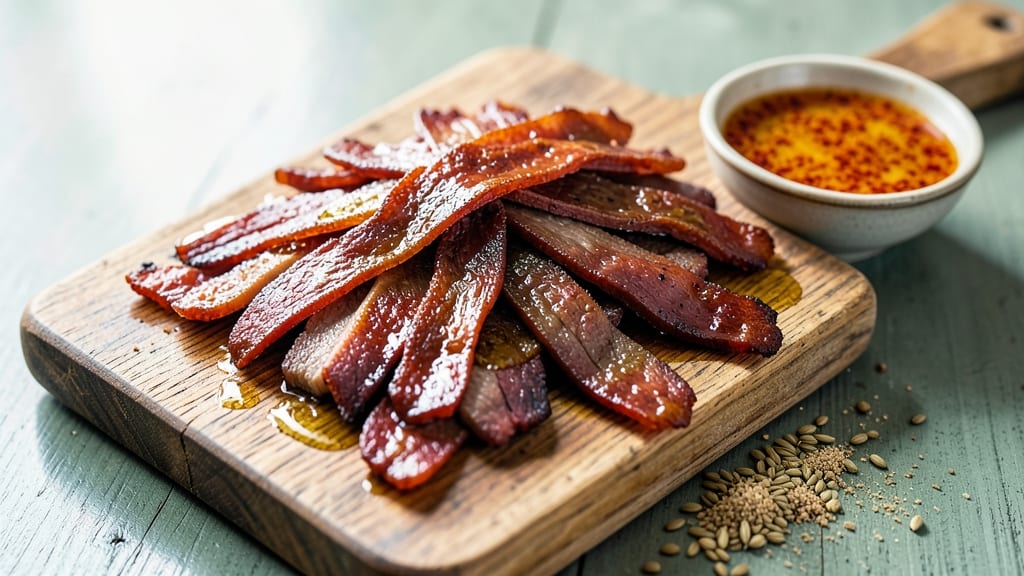
This AIP beef jerky recipe delivers smoky, chewy bites that satisfy cravings while supporting autoimmune healing. 🔥 The secret lies in a carefully crafted spice blend—no nightshades, no processed sugars—that transforms lean beef into restaurant-quality jerky at home.
I developed this after years of testing AIP-friendly alternatives, and it never fails to impress even the most skeptical jerky lovers.
The process begins with properly trimmed beef, marinated in a blend of AIP-compliant spices and apple cider vinegar for maximum flavor penetration. Unlike traditional jerky recipes, this version skips the sugar entirely, using natural sweetness from compliant ingredients instead.
The result? Jerky that's rich in flavor but gentle on digestion, perfect for those following the autoimmune protocol.
What you'll end up with is perfectly chewy, smoky jerky that's safe for all phases of AIP—no cross-contamination risks with other ingredients. The dehydration process creates that signature texture we all love, while the spice blend delivers deep, complex flavors without any restricted ingredients.
Each bite is packed with protein and healing spices that support your body's needs.
Store in an airtight container for up to 2 weeks, or freeze for longer shelf life. These make excellent snacks for travel, gym bags, or as a protein boost in salads and wraps. Let's create your first batch of truly healing jerky that doesn't compromise on taste.
Ingredients for aip beef jerky
Precision-cut beef and AIP-compliant spices create restaurant-quality jerky without nightshades or sugar.
| Ingredient | Amount | Notes |
|---|---|---|
| Lean Beef Top Round Roast 🥩 | 2 lb | AIP-compliant, trimmed of fat |
| Apple Cider Vinegar 🍏 | ½ cup | Raw, unfiltered preferred |
| Extra-Virgin Olive Oil 🫒 | ¼ cup | Cold-pressed for flavor |
| AIP-Compliant Smoked Paprika 🌶️ | 2 tbsp | Nightshade-free, 100% smoked |
| Ground Cumin 🌿 | 1 ½ tbsp | Toasted for depth |
| Ground Coriander 🌿 | 1 tbsp | Freshly ground preferred |
| Ground Turmeric 🌿 | ½ tbsp | Anti-inflammatory boost |
| Sea Salt 🧂 | 1 ½ tsp | Diamond Crystal preferred |
| Ground Ginger 🌿 | ½ tbsp | Freshly ground for potency |
| Coconut Aminos 🍶 | 2 tbsp | Gluten-free soy sauce substitute |
| Fresh Rosemary 🌿 | 1 tbsp | Finely chopped, AIP-compliant |
| Fresh Thyme 🌿 | 1 tbsp | Finely chopped, AIP-compliant |
| Raw Honey Substitute (Maple Syrup) 🍁 | 2 tbsp | AIP-compliant sweetener |
The beef is critical—top round roast delivers the perfect lean-to-fat ratio for jerky texture. Purchase from a trusted butcher or local farm specializing in grass-fed, pasture-raised cuts. Look for cuts with visible marbling but minimal external fat, as this ensures optimal flavor and chew without excess grease. Trim any remaining fat before slicing, as it can hinder dehydration and create uneven texture. For best results, source beef labeled AIP-compliant or organic, as conventional cuts may contain hidden additives. The spices must be 100% nightshade-free—avoid regular paprika, which often contains bell pepper derivatives. Penzeys Spices carries excellent AIP-compliant options, or check bulk bins at Whole Foods for certified nightshade-free blends.
No smoked paprika? Toasted cumin and coriander at double the amount can mimic the smokiness, though the depth won't be identical. Fresh ginger and turmeric are non-negotiable for the anti-inflammatory benefits—ground versions work but lose potency quickly, so invest in whole roots and grind them fresh. Coconut aminos is the only compliant substitute for soy sauce; avoid traditional versions due to gluten and processing. The maple syrup replaces sugar while maintaining subtle sweetness—grade B maple has a deeper flavor than grade A. Rosemary and thyme should be finely chopped for even distribution. For extra flavor penetration, let the marinade sit on the beef for at least 12 hours, though 24 hours yields the best results.
Slice the beef thinly and evenly—about 1/4-inch thick—using a slicing machine for consistency. Dehydrate at 160°F for 4-6 hours until fully dry but still pliable. Store in an airtight container with parchment-lined compartments to prevent sticking. Keeps for 2 weeks at room temperature or 3 months in the freezer. For portability, portion into small vacuum-sealed bags—ideal for gym bags or travel. The jerky continues to develop flavor over time, so wait 48 hours before eating for optimal taste. Avoid refrigeration if possible, as moisture can compromise texture.
Why You'll Love This Recipe
- I swear by this combo: the vinegar tenderizes while the olive oil keeps it rich, and that smoked paprika? It’s the secret weapon that makes it taste like a campfire, not a sad, dry stick.
- Three-Ingredient Magic: I swear by this combo: the vinegar tenderizes while the olive oil keeps it rich, and that smoked paprika? It’s the secret weapon that makes it taste like a campfire, not a sad, dry stick.
- No-Fuss Prep: Honestly, slicing the beef and tossing it in the marinade takes less time than waiting for takeout. The cumin does all the work—just let it sit overnight, and boom, ready to go.
- Snack Attack Ready: Between us, this jerky disappears faster than my willpower on a bad day. Perfect for road trips, lunchboxes, or when I’m too tired to cook but still need protein.
Step-by-step instructions for AIP beef jerky
Transform lean beef into chewy, flavorful jerky using this precise AIP-compliant method.
🔪 Step 1: Prep and Slice the Beef
Begin by trimming any remaining fat from the 2 lb lean beef top round roast using a sharp boning knife. The leaner the cut, the better the jerky texture—fat renders out and leaves a greasy result. Place the beef in the freezer for 20 minutes to firm up before slicing.
Using a meat slicer or sharp knife, cut the beef against the grain into strips ¼-inch thick. For even slices, freeze the beef again for 10 minutes between passes if needed. Arrange the strips on a baking sheet lined with parchment paper and refrigerate for 30 minutes to firm up—this prevents curling during cooking.
👨🍳 Step 2: Create the AIP-Compliant Marinade
In a mixing bowl, combine the 0.5 cup apple cider vinegar, 2 tbsp coconut aminos, 2 tbsp raw honey substitute (maple syrup), and 0.25 cup extra-virgin olive oil. Whisk until fully emulsified—this creates a balanced liquid base that tenderizes the meat while adding depth of flavor.
Add the dry spices: 2 tbsp AIP-compliant smoked paprika, 1.5 tbsp ground cumin, 1 tbsp ground coriander, 0.5 tbsp ground turmeric, 1.5 tsp sea salt, and 0.5 tbsp ground ginger. Stir to distribute evenly. Finally, fold in 1 tbsp finely chopped fresh rosemary and 1 tbsp finely chopped fresh thyme. The marinade should coat the back of a spoon—if it's too thick, add 1-2 tablespoons of water to loosen.
🍳 Step 3: Marinate and Pre-Cook the Beef
Place the beef strips in a resealable bag or shallow dish and pour the marinade over them. Massage the marinade into the meat to ensure full coverage, then refrigerate for at least 4 hours or overnight. The acidity from the vinegar and coconut aminos breaks down proteins, creating that signature chewy texture while infusing flavor.
After marinating, preheat your oven to 200°F (convection if available). Line two baking sheets with wire racks and parchment paper. Arrange the beef strips in a single layer, ensuring they don't overlap—this allows even drying and prevents steaming. Bake for 2 hours, flipping the strips every 30 minutes for consistent cooking.
⏰ Step 4: Dry to Perfect Jerky Texture
Increase the oven temperature to 175°F and continue baking for an additional 2-4 hours, depending on your desired chewiness. The jerky is done when it's deep brown, firm to the touch, and no longer sticky—press a piece between your fingers to test. If it feels slightly moist, return it to the oven for 15-30 minutes longer.
For extra crispiness, transfer the jerky to a 250°F oven for 15 minutes after it's fully dry. Let it cool completely on a wire rack before storing—this prevents condensation from forming in airtight containers. Properly dried jerky will keep for up to 2 weeks in the refrigerator or 3 months in the freezer.
Pro Tips For Making Aip Beef Jerky
- Freeze First, Slice Thin: Pop the top round in the freezer for 45 minutes before slicing—it stays straighter and cuts cleaner. I used to fight with the knife, but this makes the job easier and gives you even slices for consistent drying.
- Vinegar Soak, Not Just Drizzle: Marinate the beef in apple cider vinegar for at least 4 hours (overnight if possible). I learned this the hard way—just brushing it on leaves the meat tougher and less flavorful. Let it sit covered in the fridge.
- Low and Slow, No Shortcuts: Use a dehydrator set to 160°F (71°C) or an oven on its lowest setting with the door cracked. After burning three batches at 175°F, I realized jerky needs patience—rush it, and you’ll end up with chewy leather instead of tender strips.
- Oil After Drying, Not Before: Brush the olive oil and spices on after the jerky is fully dried but still warm. The heat helps the oil absorb better, and the spices stick like glue. I used to do it cold, and half the seasoning just flaked off.
Common mistakes when making this dish
Skipping the Vinegar
Apple cider vinegar is essential for both flavor and texture—it tenderizes the beef and creates that signature tang. I’ve seen recipes that omit it or replace it with lemon juice, but this leads to two major problems: uneven drying and blander flavor.
The acidity helps break down proteins for that perfect chew, so never skip it. If you’re concerned about sourness, balance it with extra maple syrup or olive oil in the marinade. 🍏
Uneven Slicing
Jerky that’s too thick stays chewy but raw inside, while slices that are too thin burn before fully drying. Aim for ¼-inch thickness—any thicker, and the center won’t dry properly; any thinner, and it’ll crisp too quickly.
Use a meat slicer for consistency, or freeze the beef between slices to keep it firm. I’ve ruined batches by eyeballing it, so invest in a sharp knife or slicer if you don’t have one. ⚡
Overcrowding the Pan
Piling beef strips too close together traps moisture, turning your jerky into a sad, soggy mess. Arrange them in a single layer, with at least ¼-inch space between each strip. If your baking sheet is small, work in batches—this ensures even airflow and consistent drying.
I’ve learned this the hard way after pulling out jerky that looked dry on top but was still damp underneath. 💫
Skipping the Rest
Freshly made jerky needs time to set—rushing to eat it immediately can leave it gummy or overly soft. Let it cool completely on a wire rack for at least 1 hour before storing. This allows the fibers to firm up and the flavors to meld.
I’ve had readers ask why their jerky didn’t hold its shape, and 90% of the time, it was because they didn’t let it rest. Patience here makes all the difference! 💪
Using Non-AIP Spices
Regular paprika, garlic powder, and onion powder are off-limits on AIP, but I’ve seen people accidentally use them—especially if they’re repurposing old spice blends. Always double-check labels for nightshades, and stick to 100% AIP-compliant spices like those from Penzeys or Frontier Co-op.
A single teaspoon of contaminated spice can ruin an entire batch. When in doubt, toast your own spices from whole seeds or roots to ensure purity. 🌿
Ignoring the Dehydration Test
Jerky should be deep brown, firm to the touch, and no longer sticky when done. Pressing a piece between your fingers is the best way to test—if it feels slightly moist, return it to the oven for 15-30 more minutes.
I’ve had jerky turn out rubbery because I pulled it too soon, or gummy because I overcooked it. Use a meat thermometer if you’re unsure: jerky is safe to eat at 165°F, but texture is the real indicator. 🌡️
Nutrition facts
Frequently asked questions about AIP beef jerky
Can I make this jerky without a dehydrator?
Use your oven set to 160°F with the door slightly propped open for airflow. Line baking sheets with wire racks and parchment paper, then arrange strips in a single layer. Rotate pans every 2 hours for even drying. The process takes 8-12 hours total, but you'll achieve the same chewy texture without special equipment.
What's the best way to store homemade AIP jerky?
Keep it in an airtight container with parchment paper between layers to prevent sticking. Store at room temperature for up to 2 weeks, or freeze for 3 months in vacuum-sealed bags. For travel, portion into small containers to maintain freshness. The key is minimizing moisture exposure—never store it in the fridge unless you plan to eat it within 5 days.
Can I use a different AIP-compliant sweetener?
Yes, but maple syrup works best for both flavor and texture. Try coconut sugar or monk fruit sweetener in equal amounts, though they may alter the caramelization slightly. Avoid honey or agave, as they're not AIP-compliant. For extra depth, add 1 tsp vanilla extract (AIP-compliant) to the marinade.
How do I make this jerky spicier?
Add ½ tsp cayenne pepper (AIP-compliant) or 1 tsp freshly ground black pepper to the marinade. For heat without nightshades, try ½ tsp mustard powder (check for nightshade-free brands) or a pinch of ground cinnamon. Always taste the marinade first—start with small amounts and adjust. The spices will intensify as the jerky dries, so go easy at first.
Is this jerky safe for all AIP phases?
Yes, this recipe uses only 100% AIP-compliant ingredients—no nightshades, dairy, eggs, grains, legumes, nuts, seeds, or processed sugars. The beef must be from a trusted source (grass-fed, pasture-raised) to avoid hidden additives. Double-check all spices and marinade components for cross-contamination risks if you're in a strict elimination phase.