
Main Courses
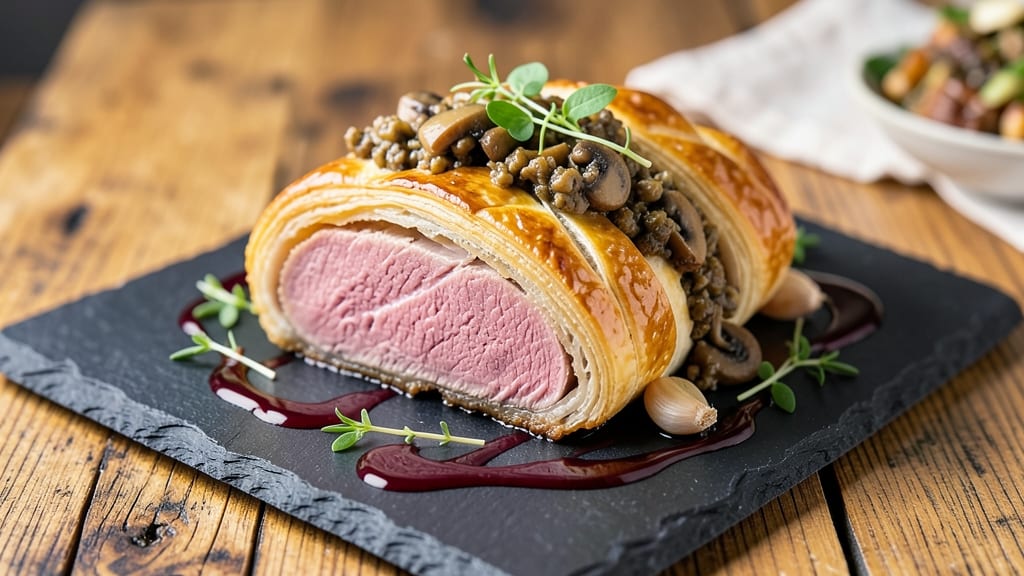
This American beef Wellington recipe transforms a simple beef fillet into a showstopping centerpiece that feels like a five-star restaurant dish. The secret lies in perfectly seared beef wrapped in rich mushroom duxelles and encased in flaky puff pastry—creating layers of flavor and texture that impress even skeptical guests.
Unlike traditional versions, this adaptation uses accessible puff pastry while keeping the dish's luxurious feel intact.
The process starts with a 1-inch-thick beef tenderloin, seared to a golden crust before being layered with homemade mushroom duxelles—a finely chopped blend of mushrooms, shallots, and herbs that adds deep umami flavor.
The beef rests while you roll out the puff pastry, ensuring it stays warm and pliable for wrapping. This is where the magic happens: the pastry's crisp layers contrast beautifully with the tender beef and rich filling.
After a 20-25 minute bake at 425°F, you'll have a golden, puffed pastry with a crisp exterior and juicy, perfectly cooked beef inside. The mushroom duxelles will be tender but still hold its shape, creating a harmonious balance of textures.
This dish isn't just about the beef—it's about the experience of unwrapping something that looks and tastes like it belongs on a fine-dining menu.
Serve with classic American sides like red wine reduction, creamy mashed potatoes, or roasted asparagus to complete the meal. The presentation is just as important as the execution—use a sharp knife to slice the pastry cleanly for an elegant reveal.
This recipe delivers restaurant-quality results with techniques any home cook can master.
Ingredients for american beef wellington
Transform a simple beef fillet into a restaurant-worthy centerpiece with these premium ingredients.
| Ingredient | Amount | Notes |
|---|---|---|
| Beef Tenderloin 🥩 | 1 ½ lb | Center-cut, 1-inch thick |
| Puff Pastry Sheets 🍞 | 2 whole | Store-bought or homemade |
| White Button Mushrooms 🍄 | 1 lb | Finely chopped, stems removed |
| Shallots 🧅 | 3 whole | Minced, about 0.5 cup |
| Garlic Cloves 🧄 | 4 cloves | Minced, about 1 tbsp |
| Fresh Thyme Leaves 🌿 | 2 tbsp | Chopped, about 5 sprigs |
| Fresh Parsley Leaves 🌿 | 2 tbsp | Chopped, about 5 sprigs |
| Dijon Mustard 🍯 | 2 tbsp | High-quality, for binding |
| Unsalted Butter 🧈 | 4 tbsp | Cold, for searing |
| Extra-Virgin Olive Oil 🫒 | 2 tbsp | For cooking mushrooms |
| Dry White Wine 🍷 | ¼ cup | For deglazing, optional |
| Diamond Crystal Kosher Salt 🧂 | 1 ½ tsp | For seasoning |
| Freshly Ground Black Pepper 🌶️ | 1 tsp | For seasoning |
| Heavy Cream 🥛 | ¼ cup | For mushroom duxelles |
| Prosciutto 🥓 | 4 oz | Thinly sliced, optional |
| Egg Wash 🥚 | 1 whole | Beaten, for pastry |
The beef tenderloin is non-negotiable—look for a center-cut, 1-inch-thick piece with even grain. Whole Foods or high-end butchers carry the best quality, but most grocery stores stock it too. Trim any excess fat or silver skin before searing. For the mushroom duxelles, white button mushrooms work best—their neutral flavor lets the herbs shine. If you're using prosciutto, high-quality, thinly sliced is key; skip it if you prefer a vegetarian-friendly version. The puff pastry should be room temperature before wrapping, so let it sit for 15 minutes if straight from the fridge.
No shallots? Substitute finely minced red onion at double the amount, but the flavor won't be identical. Fresh thyme and parsley are ideal, but dried works at half the quantity if needed. For the wine, dry white like Sauvignon Blanc is traditional, but a splash of beef broth works in a pinch. The Dijon mustard binds the duxelles—avoid whole-grain varieties, as they're too coarse. If you're short on time, pre-chopped mushrooms from the salad bar section save steps, though fresh is always better. The prosciutto adds luxury but can be omitted for a simpler presentation.
Beef should rest at room temperature for 30 minutes before cooking to ensure even doneness. The mushroom duxelles can be made a day ahead and stored in an airtight container in the fridge—it actually tastes better after resting. Puff pastry is best used within 2 hours of purchase for maximum flakiness, but wrapped tightly in plastic, it keeps for up to 3 days in the fridge. For make-ahead convenience, assemble the Wellington (without baking) and refrigerate for up to 12 hours before baking—just add 5 minutes to the cooking time.
Why You'll Love This Recipe
- Puff Pastry Shortcut: The store-bought puff pastry handles all the flaky stress—no rolling, no fuss. Just brush it with butter, wrap it around the seared beef, and let the oven do the work while you sip wine and pretend you’re a fancy chef.
- Umami Bomb: That mushroom-shallot-garlic duxelles isn’t just filling—it’s layered flavor. The mushrooms caramelize into deep, meaty sweetness while the shallots add bright bite, and the garlic? Oh, it’s the secret weapon that makes this taste like a restaurant dish.
- Weeknight to Dinner Party: Same recipe, totally different vibes. Weeknights? Serve with roasted potatoes and a simple salad. Fancy night? Add truffle oil to the mushrooms and a glass of Bordeaux. It’s the one dish that works for both your pajamas and your best linen napkins.
- Leftovers That Don’t Suck: Cold slices the next day? Still rich, still satisfying—just slice thin and pile on crusty bread with a smear of Dijon. Honestly, I make this on Sundays just so I can have effortless beef sandwiches all week. No sad, dry meat here.
Step-by-step instructions for American beef Wellington
Master this classic technique for a perfectly wrapped, golden-brown Wellington with tender beef and rich mushroom duxelles.
Prepare the Beef Tenderloin
Begin by trimming the 1.5 lb beef tenderloin of any excess fat or silver skin using a sharp boning knife. The goal is to create an even surface for cooking. Pat the meat thoroughly dry with paper towels—this is critical for achieving a good sear and preventing steam from interfering with the crust.
Season the tenderloin generously with 1.5 tsp Diamond Crystal kosher salt and 1 tsp freshly ground black pepper, pressing the seasoning into the meat to ensure even distribution. Place the seasoned tenderloin on a wire rack set over a baking sheet and refrigerate for 30 minutes to bring it to room temperature. This step ensures even cooking throughout the meat.
Create the Mushroom Duxelles
Heat 2 tbsp extra-virgin olive oil in a large skillet over medium heat. Add the 1 lb finely chopped white button mushrooms and cook, stirring occasionally, for 8-10 minutes until all moisture has evaporated and the mushrooms begin to brown. This process transforms the mushrooms into a paste-like consistency, which is essential for binding the filling.
Add the 3 minced shallots and 4 minced garlic cloves to the skillet, cooking for an additional 3-4 minutes until softened and fragrant. Stir in the 2 tbsp chopped fresh thyme leaves and 2 tbsp chopped fresh parsley leaves, then remove the skillet from heat. Transfer the mushroom mixture to a bowl and let it cool slightly before mixing in the 2 tbsp Dijon mustard and 0.25 cup heavy cream. This creates a rich, flavorful duxelles that will complement the beef beautifully.
Assemble the Wellington
Preheat your oven to 400°F. Lay out one of the 2 puff pastry sheets on a lightly floured surface and spread the mushroom duxelles evenly over the center, leaving a 1-inch border around the edges. Place the seasoned beef tenderloin on top of the duxelles, centering it carefully. If using, layer the 4 oz thinly sliced prosciutto over the beef.
Fold the second puff pastry sheet over the top, pressing gently to seal the edges. Trim any excess pastry with a sharp knife, leaving about 0.5 inch of overhang. Brush the entire surface with the 1 whole egg wash, ensuring the pastry is completely coated. This step is crucial for achieving a golden-brown finish. Place the assembled Wellington seam-side down on a parchment-lined baking sheet.
Sear and Bake to Perfection
Heat 4 tbsp unsalted butter in a large oven-safe skillet over medium-high heat. Once the butter is foaming, carefully transfer the Wellington to the skillet, seam-side down. Sear for 2-3 minutes on each side until the pastry is golden brown and crispy. This searing step adds depth of flavor and ensures a beautiful presentation.
Transfer the skillet to the preheated oven and bake for 25-30 minutes, or until the internal temperature of the beef reaches 130°F for medium-rare. Remove the Wellington from the oven and let it rest for 10-15 minutes before slicing. This resting period allows the juices to redistribute, ensuring a tender and flavorful result.
Serve with Confidence
Slice the Wellington into 0.5-inch thick pieces and serve immediately. The pastry should be crisp and golden, the beef perfectly pink in the center, and the mushroom duxelles rich and aromatic. Pair with a simple red wine reduction or a side of roasted vegetables to complete the dish.
Here's the thing—this dish is all about precision. The key to success lies in the searing, the even cooking of the beef, and the perfect crust on the pastry. Don't rush the process, and you'll achieve a restaurant-quality Wellington every time.
Pro Tips For Making American Beef Wellington
- SEAR THE LOIN HOT AND FAST: I learned this the hard way—slow searing on medium heat means gray, dry beef instead of that perfect caramelized crust. Crank your pan to high, let it scream for 2 minutes, then add the tenderloin. A few minutes per side with just enough oil to coat (about 2 tablespoons) gives you that golden, flavor-packed sear without burning the mushrooms later.
- SALT THE MUSHROOM DUPE: Skip the fancy wild mushrooms—button mushrooms work just fine, but they need a flavor boost. Toss them in 1 teaspoon of salt (yes, even before cooking) while you prep the shallots. This draws out moisture, concentrates their umami, and makes the mushroom duxelles taste like it came from a gourmet market. Rinse and pat dry before cooking.
- DON’T SKIP THE REST: The moment you pull that beef from the oven, tent it with foil and let it sit for 5-10 minutes. I know, I know—you’re starving, but cutting into it too soon turns juicy into sad. The internal temp should drop just enough to make it fork-tender, not a science experiment. Use a meat thermometer (130°F for medium-rare) if you’re nervous.
- WRAP THE PASTRY LIKE A PRO: This isn’t the prettiest method, but it’s the tastiest. Roll out the puff pastry, then fold it over the beef lengthwise first—this keeps the filling contained. Brush the top with egg wash after sealing the edges, not before, or it’ll steam instead of crisp. Press the seams firmly with your fingers, then chill the whole thing for 20 minutes before baking. Trust me, it makes all the difference.
Dietary considerations for american beef wellington
Gluten-Free Adaptation
Traditional puff pastry contains wheat flour, but you can easily adapt this recipe for gluten-free diets using gluten-free puff pastry sheets like Schär or King Arthur. These brands deliver a similar flaky texture while avoiding cross-contamination risks.
Simply follow the same assembly steps, ensuring all tools (rolling pins, knives) are thoroughly cleaned to prevent gluten exposure.
Dairy-Free Options
For dairy-free diners, replace the heavy cream in the duxelles with full-fat coconut cream or cashew cream (blend soaked cashews with water). Use olive oil instead of butter for searing the Wellington—Avocado oil works beautifully too.
The prosciutto can be omitted entirely or replaced with dairy-free ham slices if needed.
Vegetarian Substitutes
Swap the beef tenderloin for a large portobello mushroom or extra-firm tofu marinated in balsamic and soy sauce. For a meaty texture, try seitan or lentil loaf wrapped in the duxelles.
The prosciutto can be replaced with sun-dried tomatoes or caramelized onions for depth. The pastry assembly remains identical, ensuring the same elegant presentation.
Lower-Carb Version
Cut carbs by using cauliflower crust instead of puff pastry—brands like Caulipower or homemade cauliflower crust work well. Reduce the duxelles portion to ½ cup and add extra mushrooms for volume. Serve with zucchini noodles or a cauliflower mash to keep the meal low-carb while maintaining richness.
Allergen-Friendly Tips
For nut allergies, avoid cashew cream and stick with coconut cream. If mustard is a concern, replace Dijon with white miso paste (1 tbsp) for binding. Always check labels on pre-made puff pastry for hidden allergens—Pillsbury Gluten-Free is a safe bet.
Cross-contamination is the biggest risk, so clean surfaces meticulously when switching between allergen-friendly and regular ingredients.
Nutrition facts
Frequently asked questions
Can I use ground beef instead of tenderloin for this recipe?
No, tenderloin is essential for this dish—it's the most tender and flavorful cut that holds up to the long cooking process. Ground beef would release too much moisture and fat, making the pastry soggy. If you're looking for a more budget-friendly option, consider using a top round roast or sirloin tip, but avoid leaner cuts that dry out easily.
How do I prevent the pastry from puffing too much and cracking?
To avoid over-puffing, use room-temperature puff pastry and handle it gently when wrapping. Brush the egg wash lightly—too much liquid can cause steam buildup. Bake at 400°F for 25-30 minutes max; if it puffs too much, reduce heat to 375°F for the last 10 minutes. A light spray of water on the pastry before baking also helps create a crisp crust without excessive puff.
What's the best way to reheat leftover Wellington?
Leftover Wellington reheats best in a 350°F oven for 10-15 minutes, covered loosely with foil to retain moisture. For a crispy crust, broil for 2-3 minutes at the end. Avoid microwaving—it makes the pastry rubbery. If reheating sliced pieces, wrap them in foil and warm in a 200°F oven for 8-10 minutes to keep the texture intact.
Can I make the mushroom duxelles ahead of time?
The duxelles actually tastes better when made 1-2 days ahead—the flavors meld more deeply. Store it in an airtight container in the fridge, then reheat gently in a skillet before assembling the Wellington. If it thickens too much, stir in 1 tsp heavy cream or water to restore its consistency. The prosciutto should be added fresh, though, to prevent wilting.
Why is my beef tough after baking?
Overcooking is the most common cause—beef Wellington should reach 130°F for medium-rare. Use a meat thermometer to avoid guesswork. Another issue is not letting the beef rest after searing (30 minutes at room temp) or slicing too soon after baking (10-15 minutes rest). If the beef is still tough, try marinating it overnight in olive oil, garlic, and rosemary before cooking next time.