
Main Courses
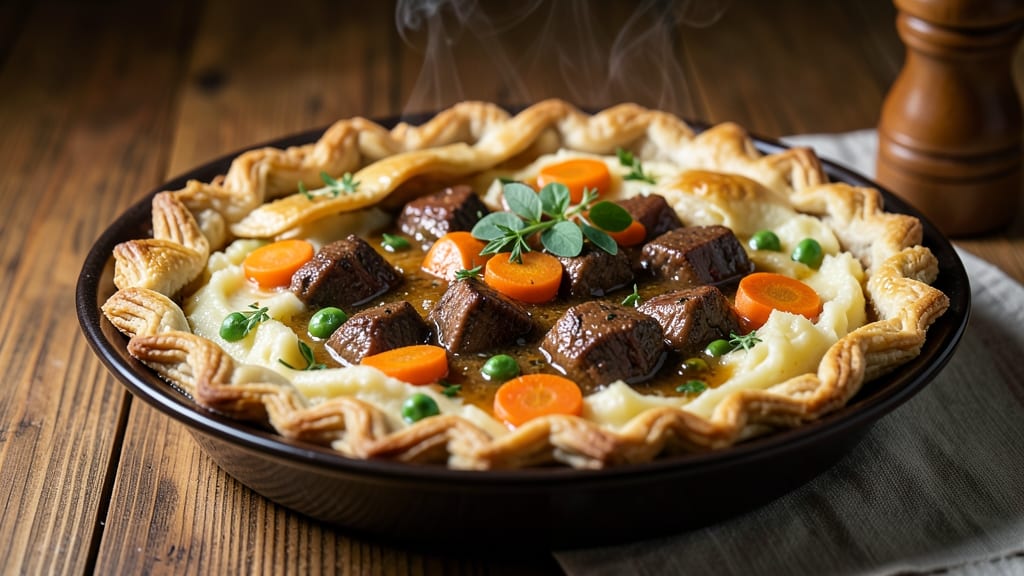
This banquet beef pot pie recipe delivers the ultimate comfort food experience—tender beef, hearty vegetables, and a golden, flaky crust that seals in every savory bite. The secret lies in a well-seasoned filling that simmers until the flavors meld perfectly, creating a rich, velvety texture beneath that irresistible top layer.
Unlike shortcut versions, this recipe builds layers of flavor through slow cooking and a proper double-crust technique, ensuring each forkful feels like a warm hug on a chilly evening.
What sets this pot pie apart is the balance between simplicity and sophistication. You'll start with a classic beef and vegetable filling—carrots, peas, and potatoes—cooked until tender, then topped with a buttery, flaky crust that bakes to a perfect golden brown. The key to that signature flakiness?
Chilling the dough and working quickly when rolling it out, so the layers stay distinct and crisp. This isn’t just a meal; it’s a centerpiece for gatherings, a dish that transforms a simple dinner into an event.
The result is a pot pie with a flaky crust that shatters slightly with each bite, revealing a filling so rich and aromatic it disappears faster than you can say "seconds."
The beef stays tender and juicy, while the vegetables retain their natural sweetness, all blanketed in a creamy gravy that ties everything together. It’s the kind of dish that tastes even better the next day, making it perfect for meal prep or holiday feasts.
Every bite is a reminder of why pot pies are a timeless classic.
Pair it with a simple green salad or buttery mashed potatoes to round out the meal, and you’ve got a complete, satisfying dinner that feels like a restaurant-worthy creation. Ready to master this crowd-pleaser? Let’s get started with the ingredients and steps that make it shine.
Ingredients for banquet beef pot pie
Sixteen ingredients for a showstopping pot pie—flaky crust, tender beef, and veggies that melt in your mouth.
| Ingredient | Amount | Notes |
|---|---|---|
| Beef Chuck Roast 🥩 | 2 lb | Trimmed of excess fat |
| Yellow Onion 🧅 | 1 whole | Diced, medium size |
| Carrots 🥕 | 4 medium | Peeled, sliced into rounds |
| Russet Potatoes 🥔 | 3 medium | Peeled, cubed evenly |
| Frozen Peas 🌱 | 1 cup | No need to thaw |
| All-Purpose Flour 🌾 | 4 cups | Plus 2 tbsp for dusting |
| Unsalted Butter 🧈 | 1 cup | Cold, cubed |
| Ice Water 💧 | ½ cup | For dough |
| Beef Broth 🍲 | 2 cups | Low-sodium preferred |
| Heavy Cream 🥛 | ½ cup | Full-fat for richness |
| Garlic Cloves 🧄 | 4 cloves | Minced for flavor |
| Salt 🧂 | 2 tsp | Kosher or sea salt |
| Black Pepper 🌶️ | 1 tsp | Freshly ground |
| Thyme Leaves 🌿 | 1 tbsp | Fresh, chopped |
| Parsley Flakes 🌿 | 1 tbsp | For garnish |
The beef is non-negotiable here. Chuck roast is a must—it stays tender while cooking, unlike leaner cuts. Grab one from the butcher counter if you can, or the pre-trimmed packages at Costco work perfectly. Look for good marbling; that fat keeps the meat juicy. The potatoes and carrots should be firm and vibrant—no soft spots. For the peas, frozen is ideal (no thawing needed), but fresh works if you're using them right away. Thyme and parsley? Fresh is best, but dried works in a pinch at half the amount.
No beef broth? Chicken broth plus 1 tbsp soy sauce gets you close. Short on butter? Vegetable shortening works for the crust, though it won’t be as flavorful. The dough needs to stay cold—chill it for 30 minutes before rolling. For the filling, if you’re prepping ahead, cook the beef and veggies, then refrigerate them separately. The crust can be made a day in advance and stored wrapped in plastic. And if you’re worried about the crust getting soggy, brush it with a little egg wash before baking—trust me on this.
This pot pie is a meal-prep dream. The filling keeps 3 days in the fridge, and the crust can be prepped ahead. Assemble it just before baking—the crust stays crispest that way. Leftovers reheat beautifully; cover with foil and warm at 350°F for 20 minutes. The crust gets even more golden and flaky when reheated. Freeze portions for up to 3 months—just thaw overnight in the fridge before reheating. And if you’re making it for a crowd, double the crust recipe; it’s worth the extra effort.
Why You'll Love This Recipe
- One-Pot Magic: I swear by this recipe when I’m too tired to dirty three pans. The chuck roast slow-cooks right in the filling—no separate braising, no extra pots—just layer, bake, and let the oven do the work.
- Rich & Rustic: That deep, savory beef flavor from the chuck roast? It’s the star. The onions caramelize just enough to melt into the creamy sauce, while the potatoes soak up all the goodness—no dry bites here.
- Weeknight to Dinner Party: Honestly, I’ve served this to both my roommates on a Tuesday and my in-laws for Thanksgiving. The same recipe works for a lazy night or a special occasion—just adjust the portion size and add a side salad for company.
- Budget-Friendly Feast: A whole chuck roast feeds six for under $20, and the veggies stretch further than takeout. The leftovers? Even better the next day—if they last that long. (Yes, even my picky kids ask for seconds.)
Step-by-step instructions for banquet beef pot pie
Here's how to create a showstopping beef pot pie with layers of flavor and that perfect flaky crust.
Brown the Beef and Sauté the Vegetables
Pat the 2 lb beef chuck roast dry with paper towels and cut it into 1-inch cubes. Heat 1 tablespoon olive oil in a large Dutch oven over medium-high heat. Working in batches, brown the beef for 3-4 minutes per side until deeply caramelized. Remove and set aside.
In the same pot, add 1 tablespoon butter and the 1 whole yellow onion (diced). Cook for 5 minutes until softened. Add 4 medium carrots (peeled and sliced) and 3 medium russet potatoes (peeled and cubed). Stir in 4 cloves garlic (minced), 1 tbsp thyme leaves, 2 tsp salt, and 1 tsp black pepper. Cook for 5 minutes until the vegetables begin to soften slightly.
Build the Rich Filling
Return the browned beef to the pot. Pour in 2 cups beef broth and bring to a simmer. Reduce heat to low, cover, and let it cook for 30 minutes until the beef is tender and the vegetables are fork-tender. Stir in 1 cup frozen peas and 0.5 cup heavy cream, then simmer for another 5 minutes. The filling should be thick but still saucy—this ensures a perfect texture when baked.
Season with additional salt and pepper if needed. The filling should have deep, savory flavors with tender beef and vibrant vegetables. Let it cool slightly before assembling the pie.
Make the Flaky Crust
In a large bowl, combine 4 cups all-purpose flour and 2 tbsp salt. Cut in the 1 cup cold unsalted butter using a pastry cutter or your fingers until the mixture resembles coarse crumbs. Gradually add 0.5 cup ice water, mixing just until the dough comes together. Avoid overworking it—this keeps the crust tender.
Divide the dough into two equal portions. Roll one portion into a 12-inch circle to fit the top of your Dutch oven. Roll the second portion into a 14-inch circle for the bottom. Chill both dough rounds for 15 minutes while you prepare the pie.
Assemble and Bake the Pot Pie
Preheat your oven to 375°F. Spread the cooled filling evenly into the bottom of your Dutch oven. Drape the larger dough round over the filling, pressing gently to seal. Trim any excess dough, then cut 4-5 slits in the center to allow steam to escape. Brush the top with a beaten egg for a golden finish.
Bake for 45-50 minutes until the crust is deep golden brown and the filling is bubbling. For extra crispiness, broil for 2-3 minutes at the end. Let the pot pie rest for 10 minutes before serving to allow the filling to set.
Garnish and Serve
Sprinkle the top with 1 tbsp parsley flakes just before serving. The crust should be crisp and golden, while the filling remains rich and savory. Slice carefully—this pot pie is built for sharing! Serve with a side salad or crusty bread to soak up every last bit of the flavorful juices.
Pro Tips For Making Banquet Beef Pot Pie
- SEAR THE CHUCK FIRST: That beef chuck roast won’t tenderize itself—get it browned deep on all sides before adding liquid. I used to skip this and ended up with flavorless shreds; now I sear until the pan smells like a Sunday dinner.
- CUT POTATOES UNIFORM: No one wants mushy potatoes or crunchy chunks—slice them all the same size (about ½-inch thick) so they cook at the same pace. Use a mandoline if you’re impatient; I was skeptical until I tried it.
- DON’T DUMP FROZEN PEAS: Toss those peas in boiling water for 30 seconds first, then drain. Dumping them straight from the freezer turns your filling into a soggy mess—trust me, your pot pie crust will thank you.
- LOW AND SLOW AFTER SEALING: Once the lid’s on, drop the heat to 300°F (150°C) and let it cook for 3 hours. I used to rush it, and the beef stayed chewy; patience here means fork-tender meat every time.
Essential equipment for perfect results
Dutch Oven Essentials
The heart of your pot pie is the Dutch oven—it’s non-negotiable for even heat distribution and that signature crust. I swear by a 5.5-quart Lodge cast iron Dutch oven (about $50) for its durability and heat retention.
If you’re on a budget, a Le Creuset stoneware Dutch oven (around $40) works beautifully too. Just avoid non-stick versions—they can’t handle the high heat needed for a flaky crust. 🔥
For the crust, you’ll need a rolling pin (I love the OXO Good Grips for its non-slip handle) and a pastry brush (like the Westcott brand) to apply the egg wash.
A bench scraper (about $10) helps transfer the dough without tearing. Don’t skip the parchment paper—it prevents sticking when chilling the dough rounds.
Mixing Tools Matter
Your pastry cutter or fork is critical for cutting cold butter into flour. I use a KitchenAid pastry blender (around $20), but two forks work in a pinch. For mixing the filling, a wooden spoon (like Oxo’s heat-resistant version) prevents scratching your Dutch oven.
A fine-mesh strainer (about $15) comes in handy if you prefer smoother gravy—just strain the filling before assembling.
For measuring, a digital kitchen scale (like the OXO Good Grips) ensures precision with butter and flour—critical for that perfect crust. A laser thermometer (around $30) helps monitor the internal temp of the beef filling to avoid overcooking.
Trust me, these small investments make a world of difference. ✨
Optional Upgrades
If you’re baking for a crowd, consider a 9x13-inch baking dish (like Pyrex) as a backup—it holds more filling than a Dutch oven. For extra flakiness, a pie bird (about $15) helps steam escape without letting in air, keeping the crust crisp.
And if you’re feeling fancy, a mandoline (around $30) makes even potato slices for a restaurant-worthy finish.
Pro tip: Keep a small bowl of ice water nearby when making the dough—it’s essential for that tender texture. And if you’re short on time, a food processor (like KitchenAid’s) can quickly mix the dough, but hand-mixing gives you more control over the texture. 💫
Nutrition facts
Frequently asked questions
Can I make this pot pie ahead of time?
The filling keeps well in the fridge for 3 days, and the crust can be prepped separately. Assemble it just before baking for the freshest crust. For freezing, wrap the assembled pie tightly and bake straight from frozen—add 10-15 extra minutes to the baking time. Thaw overnight in the fridge if reheating.
Why does my crust get soggy?
Soggy crust happens when steam can't escape properly. Always cut 4-5 slits in the top crust before baking. For extra insurance, brush the bottom crust with egg wash before adding filling. Chilling the dough for 30 minutes before rolling also helps prevent steam buildup.
What's the best way to reheat leftovers?
Cover with foil and warm at 350°F for 20 minutes. The crust gets even crispier when reheated this way. For microwave quick fixes, cover with a damp paper towel and heat for 1-2 minutes—just know the crust won't be as perfect. The filling reheats beautifully either way!
Can I substitute chicken or pork for the beef?
While beef is traditional, you can use chicken thighs (bone-in for flavor) or pork shoulder—both stay tender. Adjust cooking time: chicken needs 20-25 minutes while pork may take 40 minutes. For pork, increase broth to 2.5 cups to compensate for fat content. The crust technique remains the same!
How do I make the crust extra flaky?
Cold butter is key—keep everything chilled! Work quickly when rolling, and don't overwork the dough. For extra flakiness, fold the dough in half like a letter before rolling it out. Brush the bottom crust with 1 tbsp melted butter before adding filling. The 15-minute chill before baking is non-negotiable too!