
Soups & Stews
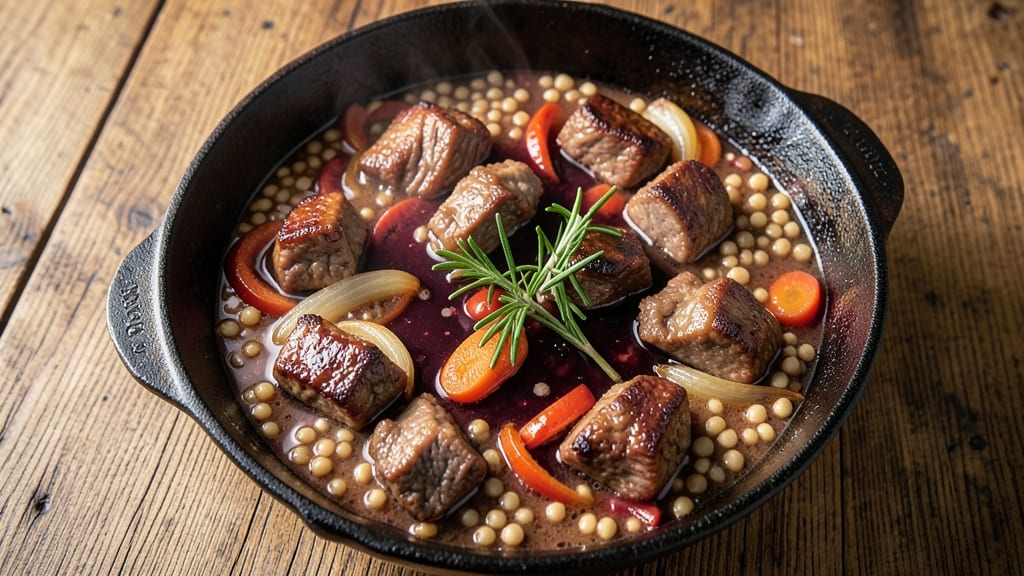
This beef and barley stew recipe transforms tough cuts of beef into melt-in-your-mouth tenderness with just a one-pot simmer on your stovetop. The secret lies in slow cooking—allowing flavors to meld and the barley to soften into a hearty, creamy texture that absorbs every rich note from the broth. I developed this recipe during a particularly chilly winter when I needed a dish that could feed a crowd with minimal effort, yet deliver restaurant-quality depth.
The beauty of this stew is its simplicity: no fancy techniques, just a 30-minute prep followed by hours of hands-off simmering. The beef breaks down into tender shreds, while the barley plumps up, creating a naturally thickened gravy that coats every bite.
A splash of red wine and a bouquet of fresh herbs elevate the flavor without overpowering the dish, making it both comforting and sophisticated.
By the time you serve it, you’ll have a steaming bowl of hearty, aromatic stew with deep, savory notes and a satisfying bite from the barley.
The aroma alone will have everyone gathered at your table, and the leftovers—if there are any—will be even better the next day as the flavors deepen. This is the kind of dish that feels like a hug in a bowl.
Perfect for weeknight dinners or special occasions, this stew scales easily and tastes just as good reheated. The one-pot method means minimal cleanup, leaving you more time to enjoy the meal. Let’s get started—your kitchen will smell like home in no time.
Ingredients for beef and barley stew recipe stove top
One-pot magic with beef, barley, and rich broth—simple ingredients for a soul-warming stew.
| Ingredient | Amount | Notes |
|---|---|---|
| Chuck Roast 🥩 | 2 lb | Cut into 1-inch cubes |
| Pearl Barley 🌾 | 1 cup | Uncooked, rinsed well |
| Yellow Onion 🧅 | 1 whole | Chopped into 1/2-inch pieces |
| Carrots 🥕 | 4 medium | Peeled and chopped into 1-inch pieces |
| Garlic Cloves 🧄 | 4 cloves | Minced finely |
| Red Wine 🍷 | 1 cup | Bold dry variety preferred |
| Beef Broth 💧 | 4 cups | Low-sodium preferred |
| Tomato Paste 🍅 | 2 tbsp | Smooth, not chunky |
| Fresh Thyme 🌿 | 2 sprigs | Leaves only, stems removed |
| Fresh Bay Leaves 🍃 | 2 whole | Remove after cooking |
| Olive Oil 🫒 | 2 tbsp | Extra-virgin preferred |
| Salt 🧂 | 1 ½ tsp | Kosher or sea salt |
| Black Pepper 🌶️ | 1 tsp | Freshly ground |
| Flour 🌾 | 1 tbsp | All-purpose, for thickening |
The chuck roast is your flavor anchor here. Look for cuts with good marbling at Costco or your butcher counter—they'll have it pre-cubed for convenience, but if you're feeling ambitious, trim any large fat chunks yourself. Pearl barley is the secret to that creamy texture—don't substitute pearl for quick barley, or you'll end up with mush. The carrots can be baby carrots if that's what's in the fridge, but organic carrots from the store section have better flavor. Fresh thyme and bay leaves are non-negotiable for that restaurant-quality aroma, so grab a bunch if they're on sale—you'll use them again.
No red wine? Beef broth with a splash of balsamic vinegar works in a pinch, though the acidity will be milder. Short on tomato paste? Crushed tomatoes at half the amount add body without thickening too much. The flour is just for the final gravy boost—skip it if you prefer a naturally thinner consistency. For the barley, make sure you rinse it well before adding to the pot (cold water, drain, repeat twice). This removes excess starch that could make your stew gluey. And trust me on the low-sodium broth—you'll adjust the salt at the end anyway.
This stew tastes even better the next day—plan ahead and make a double batch. It keeps for 5 days in the fridge, or 3 months frozen. For freezing, portion into airtight containers with a layer of broth on top to prevent freezer burn. Reheat gently on the stove, adding a splash of water or broth if it gets too thick. The barley will soften further when reheated, so don't worry if it seems slightly undercooked when you first make it.
Why You'll Love This Recipe
- No Fuss, One Pot: I swear by this recipe—just dump everything in a pot and walk away. The chuck roast practically melts itself, while the barley soaks up all the flavor without needing constant stirring.
- Deep, Rich Payoff: That first bite? The tender beef falling apart with each spoonful, the barley soft but still holding shape, and the onions caramelizing into sweet perfection. It’s the kind of stew you’ll want to eat straight from the pot.
- Leftovers That Please: This makes way more than two servings, and honestly? The second day is even better. The flavors meld overnight, and reheating it is just dumping into a pan and letting it simmer—no fuss.
- Budget-Buster Win: A chuck roast is cheap, barley lasts forever, and you’re using basic veggies. For a meal that feels fancy but costs next to nothing, this is my go-to. (Yes, even on a Tuesday night.)
Step-by-step instructions for beef and barley stew
This hearty stew comes together in one pot with minimal effort—just follow these simple steps for rich, comforting flavors.
Sear the Chuck Roast for Deep Flavor
Heat the 2 tablespoons olive oil in a large Dutch oven over medium-high heat until shimmering. Add the 2 lb chuck roast cut into 1-inch cubes and cook in batches, stirring occasionally, until deep golden brown on all sides—about 5-6 minutes per batch. This searing step builds layers of flavor that infuse into the stew.
Don't overcrowd the pot—work in batches if needed. The goal is to develop a rich, caramelized crust on each piece of beef. Once all the meat is browned, transfer it to a plate and set aside. You'll want to keep the pan for the next steps.
Sauté Vegetables and Build the Base
In the same Dutch oven, add the 1 whole yellow onion chopped into ½-inch pieces and the 4 medium carrots cut into 1-inch pieces. Cook for 5-6 minutes until the vegetables begin to soften and the onions turn translucent. Stir occasionally to prevent burning.
Add the 4 cloves minced garlic and cook for 30 seconds until fragrant—this releases the garlic's full flavor. Stir in the 2 tablespoons tomato paste and cook for another 1 minute, stirring constantly. This creates a rich, slightly sweet base that deepens the stew's complexity.
Deglaze and Simmer the Stew
Pour in the 1 cup red wine and scrape up any browned bits from the bottom of the pot with a wooden spoon. This deglazing step captures all the flavorful fond that's built up during searing. Let the wine simmer for 2-3 minutes until reduced by half, allowing the alcohol to cook off and intensify the flavor.
Add the 4 cups beef broth, 1.5 teaspoons salt, 1 teaspoon black pepper, the 2 sprigs fresh thyme leaves, and the 2 whole fresh bay leaves. Return the seared beef to the pot, along with any accumulated juices. Bring to a gentle boil, then reduce heat to low and cover partially. Let it simmer for 1 hour, stirring occasionally.
Add Barley and Thicken the Stew
After the initial 1 hour of simmering, stir in the 1 cup rinsed pearl barley. The barley needs time to absorb the flavors and soften properly. Continue simmering uncovered for another 30-40 minutes, stirring occasionally, until the barley is tender and the stew has thickened slightly.
If the stew becomes too thick, add ½ cup water or broth to reach your desired consistency. The barley should be fork-tender but still have a slight bite. Remove the bay leaves at this point—they've done their job and can be quite bitter if left in too long.
Finish and Serve with Rich Gravy
In a small bowl, whisk together the 1 tablespoon flour with 2 tablespoons cold water to create a slurry. Stir this into the stew and simmer for 5-7 minutes until the stew thickens to a velvety consistency. Taste and adjust seasoning with more salt or pepper if needed.
Let the stew rest for 10 minutes off the heat before serving. This allows the flavors to meld and the barley to finish absorbing any remaining liquid. Ladle into bowls and enjoy immediately with crusty bread or over mashed potatoes. The result should be a hearty, flavorful stew with tender beef, perfectly cooked barley, and a rich, velvety gravy.
Pro Tips For Making Beef And Barley Stew Recipe Stove Top
- Brown the Beef Slowly: Chuck roast is stubborn—don’t rush the sear. Let it sit in the pot for 3–4 minutes per side after the initial brown, even if it looks uneven. I used to flip it constantly, but patience here means deeper flavor and less risk of dry meat later.
- Soak the Barley First: Pearl barley swells up like a sponge if you don’t soak it for 30 minutes before adding it to the stew. Skipping this step turns your creamy texture into a mushy mess—trust me, I’ve made that mistake. Use twice the water (1 cup barley to 2 cups water) and drain well.
- Don’t Overcrowd the Pot: If you dump all your chopped onions, carrots, and garlic in at once, they’ll steam instead of caramelize. Work in batches—sauté half the veggies until they’re soft and slightly golden, then add the rest. This isn’t the prettiest method, but it’s the tastiest.
- Simmer, Don’t Boil: A rolling boil turns barley to mush and makes the stew watery. Keep it at a gentle simmer—small bubbles, occasional shakes to check—so the barley absorbs flavor instead of falling apart. Sounds weird, but it works: the stew thickens naturally over time.
Essential equipment for great beef and barley stew recipe stove top
Dutch Oven
A heavy-bottomed Dutch oven is my go-to pot for this stew—it distributes heat evenly and handles the long simmer beautifully. Look for a 5-6 quart model with a tight-fitting lid, like the Le Creuset Stoneware or Lodge Cast Iron.
The cast iron version retains heat exceptionally well and adds a subtle iron flavor over time. If you don’t own one, a heavy stainless steel pot with a lid works too, though it may require slightly more attention to temperature control. 🔥
Wooden Spoon
Never use metal utensils when stirring this stew—especially during the simmering phase. A long-handled wooden spoon (I love the OXO Good Grips) prevents scratching your Dutch oven and helps you stir gently without disturbing the barley.
Wood also won’t conduct heat like metal, keeping your stew at a consistent temperature. Pro tip: Soak your wooden spoon in hot, soapy water for 10 minutes before first use to prevent warping.
Measuring Tools
Precision matters when balancing flavors in stew. Invest in a stainless steel measuring cup set (like Farberware) for accurate liquid measurements and a small kitchen scale (I use the OXO Good Grips) to weigh ingredients like barley for consistency.
For spices, a spice grater or microplane ensures even distribution of fresh herbs. A laser thermometer (such as Thermoworks) helps monitor internal beef temperature if you’re concerned about doneness—aim for 203°F for fork-tender results. ✨
Slow Cooker
While this recipe is designed for stovetop, a 6-quart slow cooker (like Hamilton Beach) can handle it too—just adjust the timing. Brown the beef and vegetables in a skillet first, then transfer everything to the slow cooker.
Cook on low for 8 hours or high for 5-6 hours, then finish with the barley and flour slurry on the stove. The slow cooker excels at maintaining steady heat, but you’ll lose some of the caramelized depth from searing.
Mise en Place
Before you start, gather all your ingredients and pre-measure everything. Use small bowls for chopped onions, garlic, and herbs to keep your workspace organized. A sharp chef’s knife (I recommend Mercer Culinary) and cutting board (like John Boos Maple) make prep faster and safer.
For the barley, a fine-mesh strainer helps rinse away excess starch efficiently. Trust me, spending 10 minutes prepping saves 30 minutes of stress during cooking. 💡
Optional Tools
For elevated results, consider these extras: A mortar and pestle crushs dried herbs more effectively than a spoon, while a fine-mesh tamis sieve strains out any unwanted bits from your broth. If you love wine-infused dishes, a wine funnel helps pour that 1 cup red wine cleanly without spills.
And for serving, a ladle with a strainer (like Cuisinart) lets you portion stew without barley overflow. These aren’t essential, but they make the process smoother.
Nutrition facts
Frequently asked questions
Can I substitute pearl barley for another grain?
Pearl barley is ideal for its chewy texture, but you can use wild rice or brown rice in a pinch. For best results, increase cooking time by 15-20 minutes since these grains take longer to soften. Avoid quick oats—they’ll turn mushy and ruin the stew’s consistency. If using wild rice, reduce the amount to ¾ cup since it expands more.
How do I make this stew more flavorful?
Boost depth with a 2-minute caramelization of the onions until golden, or add 1 teaspoon smoked paprika during the searing step. For extra richness, stir in 1 tablespoon tomato paste at the end of cooking. A splash of red wine vinegar (1 teaspoon) brightens flavors if your wine is too mild.
Can I make this stew in an Instant Pot?
Yes! Sear the beef as directed, then add all ingredients except barley. Cook on high pressure for 30 minutes, then quick-release. Stir in barley and cook on high pressure for 5 minutes more. The Instant Pot cuts cooking time by 2 hours, but the texture will be slightly different—barley may be softer. Finish with the flour slurry on the stove.
Why did my stew turn out too thin?
This usually happens if you skipped the flour slurry or overcooked the barley. For next time, simmer uncovered after adding barley to thicken naturally. If it’s already too thin, mix 1 tablespoon cornstarch with 2 tablespoons water, stir into the stew, and simmer 2 minutes until thickened.
How long can I store leftovers?
Leftovers keep for 5 days in the fridge or 3 months in the freezer. For freezing, cool completely first, then portion into airtight containers with a layer of broth on top. Reheat gently on low heat, adding water or broth as needed—barley absorbs extra liquid when reheated.