
Soups & Stews
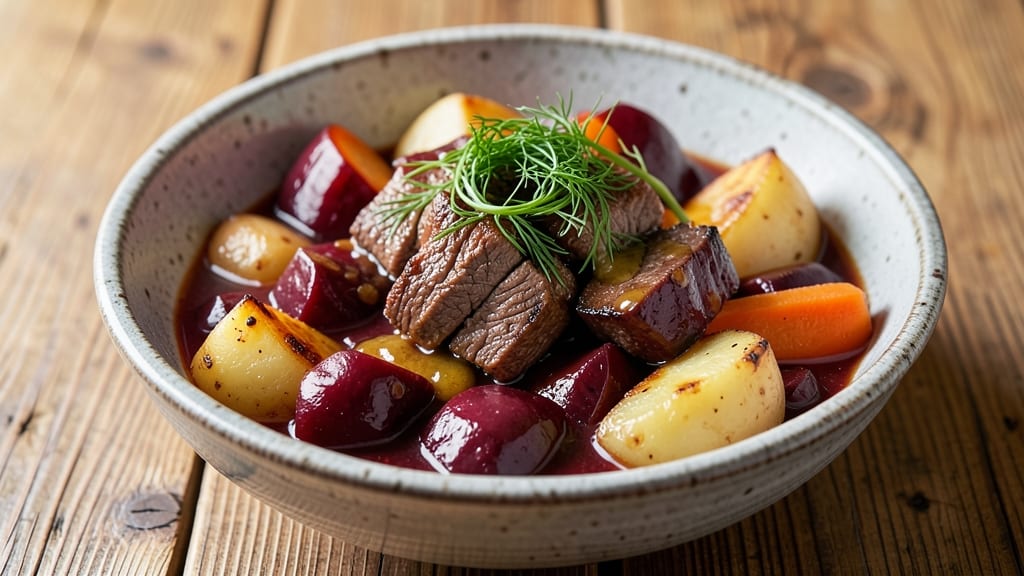
This beef and beet borscht recipe transforms humble ingredients into a rich, velvety soup with deep ruby hues and layers of earthy sweetness. Born from Eastern European traditions, this hearty dish balances tender beef, caramelized beets, and aromatic vegetables in a broth so flavorful it becomes the star.
The secret lies in slow-cooked meat and properly roasted beets—no shortcuts here, just time-honored techniques that deliver restaurant-quality depth at home.
The magic begins with a deeply flavorful beef broth, where onions, garlic, and bay leaves infuse the liquid with warmth. Roasted beets add natural sweetness without overpowering the savory notes, while potatoes and carrots create a satisfying, creamy texture.
This isn't just soup—it's a complete meal with protein, vegetables, and umami-rich broth that warms you from the inside out. The result? A bowl so rich and comforting, it feels like a hug on a chilly day.
What sets this borscht apart is the balance of textures: tender beef, silky beets, and the slight bite of fresh dill. Traditional versions skip cream, but a modern twist adds a dollop for extra richness—your choice.
Served with a dollop of sour cream and a sprinkle of fresh herbs, this dish is elegant enough for dinner parties yet simple enough for weeknight suppers. Every spoonful tells a story of heritage and homestyle cooking.
Ready in about 2 hours (mostly hands-off time), this borscht proves that slow cooking yields big rewards. The aromas alone—smoky meat, caramelized beets, and simmering spices—will have your kitchen smelling like a cozy Eastern European tavern.
Whether you're serving a crowd or treating yourself to a comforting bowl, this recipe delivers the perfect marriage of tradition and modern convenience.
Ingredients for beef and beet borscht
Rich beef, caramelized beets, and aromatic vegetables create this velvety Eastern European classic.
| Ingredient | Amount | Notes |
|---|---|---|
| Beef Chuck Roast 🥩 | 2 lb | Cut into 1-inch cubes |
| Medium Beets 🧅 | 4 whole | Roasted with skins on |
| Yellow Onions 🧅 | 2 large | Chopped into wedges |
| Garlic Cloves 🧄 | 4 cloves | Smashed for depth |
| Russet Potatoes 🥔 | 2 lb | Peeled, cut into chunks |
| Carrots 🥕 | 4 medium | Peeled, cut into thick slices |
| Fresh Parsnips 🥕 | 2 medium | Peeled, cut into chunks |
| Bay Leaves 🌿 | 2 whole | Dried, standard size |
| Fresh Dill 🌿 | ½ cup | Chopped, stems removed |
| Tomato Paste 🍅 | ¼ cup | High-quality, no sugar added |
| Apple Cider Vinegar 🍋 | 1 tbsp | For brightness |
| Black Peppercorns 🌶️ | 1 tsp | Freshly cracked |
| Salt 🧂 | 2 tsp | Kosher or sea salt |
| Sour Cream 🧀 | ½ cup | Full-fat, for serving |
| Vegetable Oil 🫒 | ½ cup | For roasting beets |
The beef chuck roast is non-negotiable—it delivers that deep, meaty flavor that defines traditional borscht. Look for well-marbled cuts at your local butcher or the meat department at Whole Foods. If you're short on time, pre-cubed beef works fine, but trimming any visible fat ensures a cleaner broth. For the beets, organic medium beets from the grocery store's produce section work perfectly—no need for specialty stores. The key is roasting them whole with skins on, which intensifies their natural sweetness. Trader Joe's often carries pre-washed, ready-to-use beets if you're in a hurry.
No fresh dill? Dried dill at one-third the amount works in a pinch, though fresh is ideal for that bright, herbal note. Substituting parsnips for some carrots adds a subtle sweetness that complements the beets beautifully. The tomato paste can be swapped for 1 cup crushed tomatoes if you prefer, though paste gives a deeper, more concentrated flavor. For extra richness, a splash of beef broth instead of water when reconstituting the roasted vegetables makes all the difference. The apple cider vinegar might seem unusual, but it cuts through the richness and brightens the entire dish—don't skip it.
This borscht tastes even better the next day as flavors meld together. Store leftovers in an airtight container in the fridge for up to 5 days, though the broth will thicken slightly—just add a splash of water when reheating. For longer storage, freeze portions for up to 3 months. The roasted beets can be prepped a day ahead and stored in the fridge, saving you time on cooking day. The sour cream should be added just before serving to prevent curdling—keep it chilled until the very end.
Why You'll Love This Recipe
- One-Pot Wonder: I swear by this—just toss everything into a Dutch oven and let it simmer. No chopping like a fine-dining chef, no multiple pans, just raw ingredients transforming into something hearty with minimal fuss. That beef chuck roast practically melts into the broth, and the beets? They caramelize right in the pot.
- Deep, Earthy Richness: The beets give this soup a natural sweetness that balances the savory beef and garlic, while the potatoes add that perfect creamy texture. It’s not just a soup—it’s a flavor explosion where every spoonful tells a story, especially when you let the onions slow-cook until they’re golden and jammy.
- Weeknight to Dinner Party: Make a big batch on Sunday, and you’ve got lunch, dinner, and leftovers covered for days. Or serve it at your next gathering—it’s rustic enough for a casual night in but hearty enough to impress guests. My friends always ask for the recipe after their first bowl.
- Budget That Feeds: A chuck roast and a bag of beets stretch farther than you’d think, and this recipe turns cheap cuts into something luxurious. Plus, the leftovers? Even better the next day—just reheat and enjoy that deeper flavor that comes with time. It’s my secret for stretching groceries without sacrificing taste.
Step-by-step instructions for beef and beet borscht
Here's how to craft a rich, hearty borscht with deep ruby hues and layers of savory-sweet flavor.
Roast the Beets for Sweet Depth
Preheat your oven to 400°F. Toss the 4 whole medium beets with the 0.5 cup vegetable oil until evenly coated. Spread them on a baking sheet in a single layer. Roast for 45-50 minutes until fork-tender and caramelized at the edges. The skins should be tender enough to peel easily after roasting.
Here's the thing—roasting concentrates the beets' natural sweetness and develops that signature deep ruby color. If you're tempted to peel them before roasting, resist. The skins add texture and prevent the beets from turning mushy during cooking. Once roasted, let them cool slightly before peeling and chopping into ½-inch cubes.
Sear the Beef for Rich Flavor
In a large Dutch oven, heat 1 tablespoon vegetable oil over medium-high heat. Working in batches, sear the 2 lb beef chuck roast cut into 1-inch cubes until deeply browned on all sides—about 3-4 minutes per batch. This step builds deep, meaty flavor that infuses the broth.
Don't overcrowd the pan or the beef will steam instead of sear. Transfer the browned beef to a plate as you work. Once all the beef is seared, remove the Dutch oven from heat and set it aside for now. The residual heat will help develop the fond, which we'll deglaze later.
Build the Vegetable Base
In the same Dutch oven, add 2 tablespoons vegetable oil over medium heat. Sauté the 2 large yellow onions (chopped into wedges) for 5-6 minutes until softened and golden. Add the 4 smashed garlic cloves and cook for 30 seconds until fragrant.
Next, add the 2 lb russet potatoes (cut into chunks), 4 medium carrots (peeled and sliced), and 2 medium fresh parsnips (peeled and chopped). Stir to coat the vegetables in the oil, then pour in 8 cups water and bring to a boil. Add the 2 whole bay leaves, 1 tsp black peppercorns, and 2 tsp salt. Return the seared beef to the pot.
Simmer the Broth
Bring the broth to a rolling boil, then reduce heat to low-medium and simmer uncovered for 1 hour 15 minutes. Skim off any foam that rises to the surface during the first 15 minutes of simmering. This ensures a clear, clean broth.
After 1 hour, add the roasted beet cubes and 0.25 cup tomato paste. Stir well to distribute the beets evenly. The broth should now take on a deep ruby hue. Continue simmering for another 20-25 minutes until the beef is fork-tender and the vegetables are fully cooked. Taste and adjust seasoning with additional salt or pepper if needed.
Finish and Serve
Remove the beef from the broth and let it rest on a plate for 5 minutes. Strain the broth through a fine-mesh sieve into a clean pot, pressing gently on the vegetables to extract all the flavor. Discard the solids.
Return the broth to the pot and stir in the 1 tablespoon apple cider vinegar and 0.5 cup chopped fresh dill. Keep the broth warm over low heat. To serve, shred the beef into bite-sized pieces and return it to the broth. Ladle the borscht into bowls, then swirl in 2 tablespoons sour cream per serving. The sour cream should float on top, adding a creamy contrast to the rich, earthy broth.
Pro Tips For Making Beef And Beet Borscht
- SEAR THE BEEF CHUCK: I learned this the hard way—rushing the beef chuck in a crowded pot leads to steamed gray meat, not flavor. Instead, cut it into 1.5-inch chunks, pat them very dry, and sear in batches over medium-high heat with 1 tablespoon of oil until deep brown (about 3-4 minutes per side). The crust locks in juices and builds the base for a rich broth—don’t skip this, even if you’re impatient.
- PEEL AND CUBE BEETS: Raw beets bleed like crazy, turning your broth murky if you toss them in whole. Peel them first, then cut into ½-inch cubes—this ensures even cooking and vibrant color. Pro move: Soak the cubes in ice water for 10 minutes after cutting to remove excess bitterness (yes, even with medium beets).
- DON’T BOIL THE POTATOES: Russets release starch like crazy, turning your borscht into glue if you let them simmer too long. Add them last (after the beef and beets have cooked 45 minutes) and remove them when fork-tender (about 12-15 minutes). Mash a few into the broth at the end for thickness—this gives you control, not a mushy mess.
- SALT THE BEEF TWICE: I was skeptical until I tried it—season the beef chuck before searing with 1 teaspoon of salt per pound, then add another ½ teaspoon to the pot after the initial 30 minutes of simmering. This two-step approach guarantees seasoning penetrates the meat and the broth, not just the surface. (Your future self will notice the difference.)
Regional styles of beef and beet borscht
Ukrainian Classic
In Ukraine, this borscht is a centerpiece for holidays and family gatherings, often served with a side of pampushky (garlic bread). The Ukrainian version skips cream entirely, relying on the natural sweetness of roasted beets and the depth of beef chuck for richness.
I've made it with Whole Foods grass-fed beef for an even deeper flavor profile. 🥩
Polish Hearty Version
Poland's borscht leans heavier on smoked sausage (like kielbasa) alongside beef, adding a smoky depth that contrasts beautifully with the beets. The Polish tradition also includes a splash of red wine (about ½ cup) when building the broth for extra complexity.
I've used Polish-style smoked paprika for that signature Eastern European warmth.
Russian Creamy Style
Russian borscht often includes a smooth dollop of sour cream (about ¼ cup per bowl) mixed directly into the soup, not just swirled on top. They also add a touch of vinegar (I use apple cider vinegar) to balance the richness.
The Russian version sometimes includes a small amount of barley (about ½ cup) for extra heartiness and texture.
Belarusian Sour Cream Twist
Belarusian borscht is known for its extra-thick sour cream (I use full-fat Belarusian-style sour cream when possible) and often includes a splash of kefir (about ¼ cup) for tanginess.
They also add a pinch of allspice (about ¼ tsp) during the simmer for a subtle warmth that complements the beets beautifully. 🧀
Lithuanian Herb-Forward
Lithuanian borscht emphasizes fresh herbs like dill and parsley, often adding a handful of fresh chives (about 2 tbsp chopped) at the end. They also include a splash of lemon juice (about 1 tsp) instead of vinegar for brightness.
The Lithuanian version sometimes uses a small amount of cream (about 2 tbsp) for extra richness without overwhelming the dish.
Modern American Adaptation
For a contemporary twist, many American cooks add a touch of cream (about 2 tbsp heavy cream per bowl) and smoked paprika (about ½ tsp) for depth. I've also seen versions with roasted garlic (about 2 cloves) instead of raw for a sweeter, more complex flavor.
This adaptation keeps the traditional heartiness while adding a modern sophistication. 🌶️
Nutrition facts
Frequently asked questions
Can I make this borscht without roasting the beets?
Roasting beets is key for their natural sweetness and deep color, but you can boil them first if needed. Parboil 4 whole beets for 20 minutes, then cool, peel, and chop. The flavor won't be as rich, but it still works in a pinch. For best results, roast them—it's worth the 45 minutes!
How do I make the broth clearer?
Skimming foam during the first 15 minutes of simmering removes impurities. For extra clarity, strain the broth twice: once through a fine-mesh sieve after simmering, then again after adding roasted beets. Chilling the broth overnight also helps fat solidify on top for easy removal.
What's the best way to reheat leftovers?
Reheat gently on low heat with a splash of water or broth to prevent thickening. Avoid microwaving—it can make the broth watery. For best texture, reheat only until warm, then finish with fresh dill and sour cream. Leftovers taste even better the next day as flavors meld!
Can I substitute beef with another protein?
For a lighter version, use chicken thighs (2 lbs) or pork shoulder. Vegetarians can swap beef for mushrooms or lentils, but the flavor will differ. For authenticity, beef chuck is ideal—its richness balances the earthy beets perfectly.
Why is my borscht too acidic?
Too much vinegar or tomato paste can make borscht acidic. Balance it by adding 1 tsp sugar or a pinch of salt, or stir in 1 tbsp cream to mellow the tang. Taste as you go—adjust gradually. The apple cider vinegar should enhance, not overpower, the dish!