
Soups & Stews
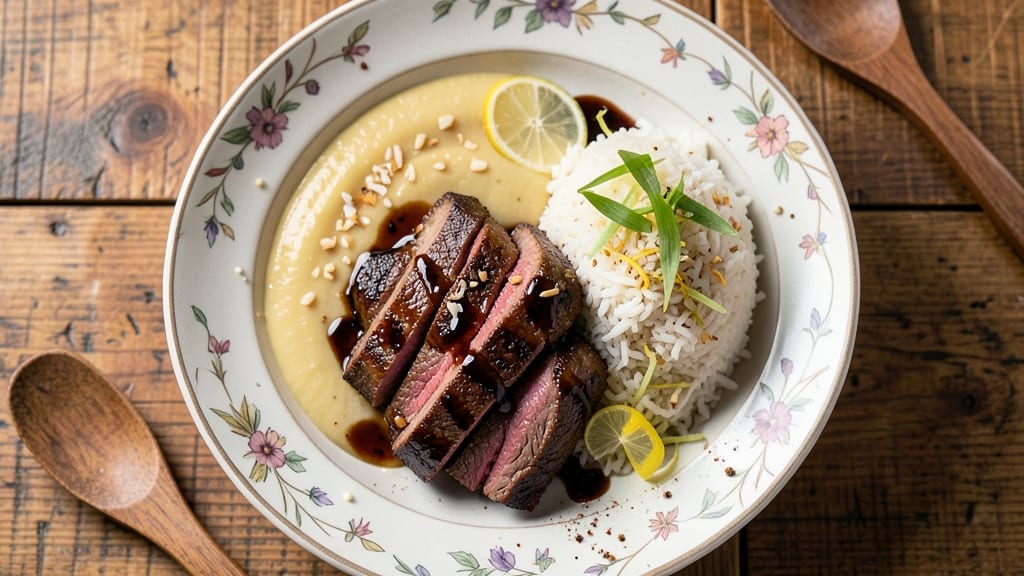
This Singapore-style beef and kaya recipe brings the heart of a traditional breakfast table to your morning routine. The tender beef stir-fry, infused with aromatic spices and sweet soy sauce, pairs perfectly with homemade kaya—a fragrant coconut custard that’s creamy yet subtly sweet.
I’ve perfected this combination over years of weekend breakfasts, balancing rich flavors with the comforting texture of kaya’s signature golden crust.
The beef dish starts with thinly sliced cuts, quickly stir-fried to lock in tenderness while absorbing the savory-sweet glaze. Meanwhile, the kaya simmers slowly, blending coconut milk, sugar, and pandan leaves into a velvety custard with a delicate caramelized top.
What makes this recipe special is how the two components complement each other—salty meets sweet, hearty meets light—creating a meal that’s both nostalgic and satisfying.
By the time you’re done, you’ll have a restaurant-quality breakfast that’s ready in under an hour. The beef retains its juiciness, while the kaya’s aroma fills your kitchen, making every bite feel like a visit to a bustling Singaporean café.
Serve with buttered toast or steamed rice to complete the experience, and you’ll understand why this pairing is a beloved staple.
This recipe is foolproof for weekdays or weekend brunches, and the kaya can be made ahead for convenience. Whether you’re introducing your family to Singaporean flavors or recreating a childhood favorite, this dish delivers authenticity and warmth in every spoonful.
Ingredients for beef and kaya
Authentic Singapore flavors start with these twelve simple yet essential ingredients.
| Ingredient | Amount | Notes |
|---|---|---|
| Flank Steak 🥩 | 1 lb | Thinly sliced against the grain |
| Coconut Milk 🥥 | 1 can (13.5 oz) | Full-fat, unsweetened preferred |
| Granulated Sugar 🍚 | ¾ cup | White or brown preferred |
| Pandan Leaves 🌿 | 4 whole | Fresh, tied in a bundle |
| Dark Soy Sauce 🍶 | 2 tbsp | Kecap manis for authentic flavor |
| Fresh Ginger 🧄 | 2 tbsp | Finely grated, aromatic |
| Garlic Cloves 🧄 | 6 cloves | Minced, aromatic |
| Vegetable Oil 🫒 | 2 tbsp | High smoke point preferred |
| White Peppercorns 🌶️ | ½ tsp | Freshly ground preferred |
| Salt 🧂 | 1 ½ tsp | Diamond Crystal preferred |
| Corn Starch 🌾 | 1 tbsp | For kaya thickening |
| Eggs 🥚 | 4 large | Room temperature preferred |
| Green Onion 🧅 | 2 whole | Thinly sliced, for garnish |
The flank steak is non-negotiable—it needs to be thinly sliced against the grain for tenderness. Costco or Asian markets usually have it pre-cut, but if you're slicing yourself, use a sharp knife and angle it at 45 degrees. For the kaya, pandan leaves are the soul of the dish—fresh ones from Asian grocery stores have the best aroma. If you can't find them, a few drops of pandan extract works, though it's not the same. The coconut milk should be full-fat for that rich, velvety texture—Thai Kitchen brand is reliable, but anything unsweetened will do.
No kecap manis? Double the soy sauce and add 1 tsp of brown sugar to mimic the sweet-savory balance. Fresh ginger and garlic can be swapped for paste, but freshly grated ginger gives the beef that bright, zesty kick. For the kaya, if you're short on eggs, aquafaba (chickpea brine) works at half the amount—just whisk it well. The corn starch is crucial for that signature golden crust, but if you're out, arrowroot powder at the same quantity does the trick. And trust me, the white peppercorns add a subtle depth that rounds out the flavors perfectly.
The beef cooks in minutes, so keep everything prepped while it heats. The kaya, on the other hand, needs gentle simmering—low and slow for 40-45 minutes. Store the beef in an airtight container for 2-3 days in the fridge, but the kaya? It’s even better the next day once the flavors meld. Portion into small jars—it reheats beautifully in the microwave, and the crust stays intact if you cover it loosely. Freezes for up to 3 months, making it perfect for lazy mornings.
Why You'll Love This Recipe
- One-Pan Magic: I swear by this recipe when I’m too tired to scrub pots—just sear the flank steak, toss in the coconut milk and pandan, and let it simmer. The dark soy sauce caramelizes right in the pan, so you’re left with one dish, one spatula, and zero guilt over cleanup.
- Sweet-Savory Balance: That first bite of tender beef with the creamy coconut and just a hint of sweetness from the sugar? It’s the kind of dish that makes you pause mid-chew. The pandan leaves add this subtle floral note that elevates everything—like a secret ingredient only the locals know.
- Weeknight to Party: Honestly, I make this for lazy Tuesdays, but it’s also the star of my potlucks. The rich, caramelized flavors hold up in big batches, and the creamy coconut sauce feels fancy enough for company. (Yes, even when I’m serving it with store-bought rice.)
- Leftovers That Don’t Suck: Between us, most beef dishes dry out or get boring after day two. Not this one—the coconut milk keeps it moist, and the sweet-savory glaze makes it taste fresh. I’ll reheat a portion for lunch the next day, and no one bats an eye. Budget win, flavor win.
Step-by-step instructions for Singapore-style beef and kaya
Here's how to create this beloved Singaporean pairing—tender marinated beef with fragrant coconut custard.
Marinate and Prepare the Flank Steak
Slice the 1 lb flank steak thinly against the grain for maximum tenderness. In a bowl, combine the 2 tbsp dark soy sauce, 2 tbsp finely grated fresh ginger, 6 minced garlic cloves, 1.5 tsp salt, and 0.5 tsp freshly ground white peppercorns. Add the steak slices and toss gently to coat evenly. Let it marinate for at least 30 minutes—this allows the flavors to penetrate deeply.
While marinating, tie the 4 whole pandan leaves into a bundle using kitchen twine. This will infuse the kaya with its signature aroma. I like to press the bundle gently to release the essential oils before adding it to the coconut mixture later. The longer the pandan steeps, the more fragrant your kaya will become.
Cook the Marinated Beef
Heat 2 tbsp vegetable oil in a large skillet over medium-high heat until shimmering. Add the marinated beef in a single layer, being careful not to overcrowd the pan. Cook undisturbed for 2-3 minutes per side until the edges are deep golden brown and the steak reaches an internal temperature of 145°F for medium-rare.
Real talk: Don't skip the high heat for the initial sear. This creates that beautiful caramelization that forms the flavor base for your beef. Once cooked, transfer the beef to a plate and tent loosely with foil to keep it warm while you prepare the kaya. The residual heat will keep it tender as you finish the dish.
Prepare the Signature Kaya
In a medium saucepan, combine the 1 can (13.5 oz) full-fat coconut milk, 0.75 cup granulated sugar, and the tied pandan bundle. Bring to a gentle simmer over medium-low heat, stirring occasionally to dissolve the sugar completely. The mixture should smell sweet and coconutty—this is your first sensory checkpoint.
Once simmering, whisk in the 4 large eggs gently to create ribbons in the coconut mixture. This technique prevents scrambled eggs and creates that signature silky texture. Let it cook for 5-7 minutes until the custard thickens slightly but still has a gentle wobble when you tilt the pan. Here's where it gets fun—taste and adjust the sweetness if needed, adding more sugar if your preference runs sweeter.
Thicken and Finish the Kaya
In a small bowl, whisk together 1 tbsp corn starch with 2 tablespoons water to create a slurry. Slowly pour this mixture into the simmering kaya while stirring constantly with a silicone spatula. The kaya will thicken noticeably within 1-2 minutes—this is your visual cue that it's ready.
Remove the pandan bundle and discard it. Stir in the 2 whole thinly sliced green onion for a fresh finish. The kaya should now have a glossy sheen and a texture between custard and pudding. If you're serving immediately, divide it into small ramekins or a serving dish. For best results, let it cool to room temperature before serving with the beef.
Serve the Perfect Pairing
Slice the beef against the grain into ¼-inch thick strips. Arrange the beef on a platter and spoon the kaya alongside it. The contrast of the savory, slightly sweet beef with the creamy, fragrant coconut custard is what makes this dish so special. Garnish with additional sliced green onion if desired.
I know it seems like a lot of steps, but each one builds on the last to create this iconic Singaporean breakfast. The beef should be tender with a perfect sear, while the kaya should be smooth and just sweet enough to complement the savory beef. Serve with warm toast or steamed rice for the complete experience.
Pro Tips For Making Beef And Kaya
- Sear the Flank First: Hit the steak with a screaming-hot pan for 2-3 minutes per side before simmering in coconut milk. I learned this the hard way—skipping the sear leaves you with mushy beef instead of tender, caramelized edges that hold up in the sauce.
- Blanch the Pandan: Tear the pandan leaves, tie them in a bundle, and blanch for 30 seconds in boiling water first. This softens the fibers so they release aroma without turning the sauce into a leafy mess—trust me, your future self will notice the difference.
- Control the Sugar: Add the sugar gradually, 1 tablespoon at a time, while stirring constantly. I used to dump it all in at once and ended up with a sticky, uneven glaze—now I taste-test after each addition for that perfect balance of sweetness and depth.
- Simmer Low and Slow: Keep the heat at a gentle simmer, not a rolling boil, after adding coconut milk. The steak needs to absorb the flavors, not get tough from aggressive cooking—think "whisper-quiet bubbles," not "splashing chaos."
Make-ahead tips for beef and kaya
Kaya Prep Ahead
Make the kaya the night before—it develops deeper flavor as it sits. After thickening, transfer it to a glass baking dish and refrigerate uncovered. The exposed surface will form that signature golden crust by morning.
I like to portion it into small ramekins for easy grab-and-go breakfasts. Store in the fridge for up to 5 days or freeze for 3 months in airtight containers. 🥥
Beef Make-Ahead
Cook the beef completely through (to 165°F internal temp) if prepping ahead. Let it cool, then store in an airtight container with a splash of 1 tbsp soy sauce to keep it moist.
Reheat gently in a skillet with 1 tsp oil over medium heat for 3-4 minutes—just enough to warm through without drying. The marinade flavors intensify overnight, making it even more delicious the next day. 🥩
Combination Strategy
For the ultimate time-saver, cook the beef and kaya separately the night before. Reheat the beef in the morning while the kaya comes to room temperature. This creates a restaurant-quality breakfast with minimal effort.
Keep both components covered until serving to preserve textures. The contrast of warm beef with room-temperature kaya is what makes this pairing sing. ✨
Freezing Tips
Freeze kaya in single-serving portions (about ½ cup each) for easy thawing. Place portions in silicone molds or small jars with ½ inch headspace. When ready to use, thaw overnight in the fridge or microwave for 1-2 minutes on 50% power.
The texture remains creamy if handled gently. For beef, freeze in single layers between parchment paper to prevent sticking. 🧊
Morning Routine
Set out your ingredients the night before: beef in the fridge, kaya ready to reheat, and toast pre-sliced. In the morning, simply reheat the beef while the kaya warms to room temperature.
This 5-minute morning ritual transforms your breakfast into a Singaporean café experience without the fuss. Trust me, your taste buds will thank you. ☕
Portion Control
For balanced portions, serve 3 oz beef with ½ cup kaya alongside 1 slice toast. This ratio keeps the meal satisfying without being overwhelming. Store leftovers in individual containers for quick lunches or snacks.
The kaya's rich texture pairs perfectly with yogurt or fresh fruit if you want variety. 🍽️
Nutrition facts
Frequently asked questions
Why does traditional Singaporean beef pair so well with kaya?
The contrast between savory and sweet creates a perfect balance. The umami-rich beef, marinated in soy and ginger, cuts through the creamy sweetness of coconut custard, while the pandan aroma in kaya adds depth. This combination is rooted in Singapore's multicultural cuisine where British-style breakfast meets Southeast Asian flavors.
Can I substitute flank steak with another cut?
Skirt steak or ribeye work well—just slice thinly against the grain. For leaner options, try sirloin, but marinate longer (up to 2 hours) to prevent dryness. Avoid tough cuts like chuck—they won't tenderize properly in this quick cooking method.
What if I can't find pandan leaves?
Use 1 tsp pandan extract or ½ tsp vanilla extract as a substitute. For a more authentic flavor, blend 1 tbsp toasted coconut flakes with 1 tsp sugar and add it to the kaya. The aroma won't be identical, but it'll still taste delicious.
How do I fix runny kaya?
If your kaya is too thin, whisk 1 tsp corn starch with 1 tbsp water and stir it in while simmering. Cook for 1-2 extra minutes until thickened. For a smoother texture, blend briefly with an immersion blender. Never add more eggs—they'll scramble instead of blend.
Can I make this dish gluten-free?
Yes! Replace dark soy sauce with tamari (gluten-free soy sauce) plus 1 tsp honey for sweetness. For the kaya, ensure your corn starch is certified gluten-free. The beef marinade will still deliver rich flavor without traditional soy sauce.