Soups & Stews
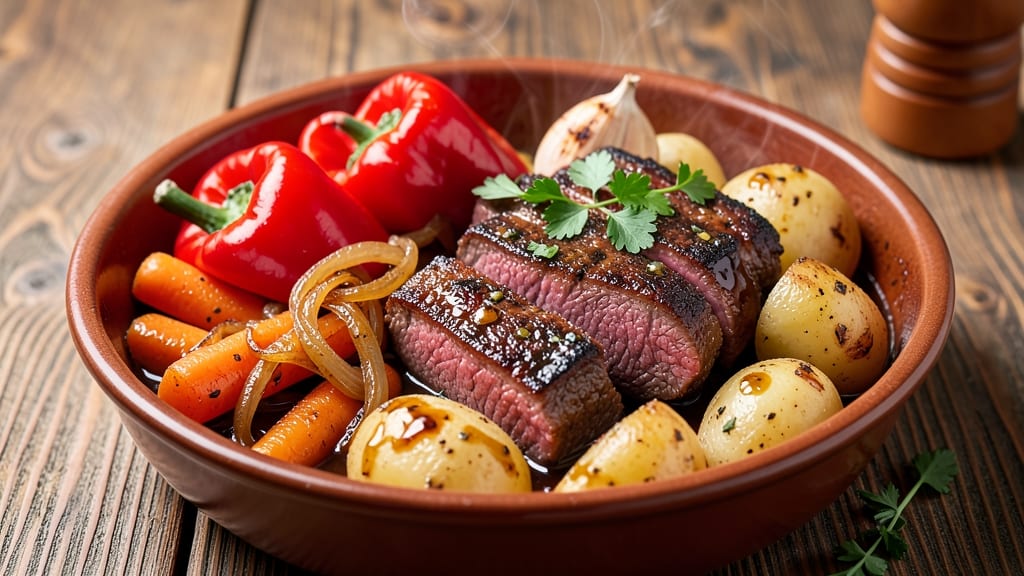
This one-pot beef and mixed vegetables recipe transforms tough cuts into tender, flavorful bites while caramelizing vegetables into sweet, savory perfection. The secret lies in a slow simmer that develops deep, layered flavors without requiring multiple dishes or complicated techniques.
I've perfected this method after years of testing—it's the kind of meal that feels like a restaurant-quality dinner with minimal effort.
The foundation begins with a proper sear on the beef, locking in juices before a gradual cook that turns carrots, bell peppers, and potatoes into caramelized sweetness.
A simple sauce base of soy sauce, garlic, and ginger builds complexity, while aromatics like bay leaves and thyme elevate the dish without overpowering. The beauty of this recipe is its balance—protein and vegetables cook together, absorbing flavors equally for a cohesive, satisfying meal.
By the time you're ready to serve, you'll have fork-tender beef swimming in a rich, slightly thickened sauce with vegetables that are tender yet still hold their shape. The aroma alone will have everyone gathering at the table, and each bite delivers that perfect harmony of textures and flavors.
This is comfort food at its finest—warm, hearty, and impossible to resist.
Serve over rice or noodles to soak up every last bit of that flavorful sauce, or enjoy it as-is for a complete, satisfying meal. The leftovers reheat beautifully, making this an excellent option for meal prep or busy weeknights. Let's get cooking—this recipe delivers restaurant-quality results with one simple pot.
Ingredients for beef and mixed vegetables
Restaurant-quality flavors start with these carefully selected ingredients for a one-pot beef and vegetable masterpiece.
| Ingredient | Amount | Notes |
|---|---|---|
| Chuck Roast 🥩 | 2 lb | Cut into 1.5-inch cubes for even cooking |
| Yellow Onions 🧅 | 2 whole | Medium size, sliced into half-moons |
| Carrots 🥕 | 4 whole | Medium size, cut into 1-inch chunks |
| Red Bell Peppers 🌶️ | 2 whole | Stemmed, seeded, sliced into strips |
| Russet Potatoes 🥔 | 2 lb | Peeled, cut into 1-inch cubes |
| Garlic Cloves 🧄 | 6 cloves | Minced for aromatic depth |
| Fresh Ginger 🌿 | 2 tbsp | Finely grated, peeled |
| Soy Sauce 🥢 | ½ cup | High-quality, low-sodium preferred |
| Dry Red Wine 🍷 | 1 cup | Bold variety like Cabernet Sauvignon |
| Beef Broth 💧 | 2 cups | Homemade or high-quality store-bought |
| Tomato Paste 🍅 | 2 tbsp | Smooth, not chunky |
| Olive Oil 🫒 | 2 tbsp | Extra-virgin for high smoke point |
| Fresh Thyme 🌿 | 2 tbsp | Leaves only, chopped |
| Bay Leaves 🌿 | 2 whole | Dried, standard size |
| Salt 🧂 | 1 ½ tsp | Diamond Crystal kosher salt |
| Ground Black Pepper 🌶️ | 1 tsp | Freshly ground for best flavor |
The chuck roast is non-negotiable for this dish—its marbling ensures tender, flavorful bites. Costco or Whole Foods typically carry high-quality cuts, but any reputable butcher will have the right selection. Look for pieces with good marbling; this fat renders down during cooking, creating a rich sauce. For vegetables, farmers markets often have fresher produce, particularly for the carrots and bell peppers which should be firm and vibrant. The potatoes should be starchy varieties like Russets or Yukon Golds—these hold up better to long cooking times without turning mushy. If you can't find fresh thyme, Penzeys or bulk spice sections at grocery stores carry excellent dried alternatives.
No red wine on hand? Substitute with an extra 1/2 cup beef broth plus 1 tbsp balsamic vinegar for depth. Fresh ginger can be swapped for 1 tbsp ground ginger, though fresh has more complexity. For the tomato paste, San Marzano canned tomatoes can replace it in a pinch by blending 1/2 cup of the purée. If you're using pre-cut vegetables, pat them dry thoroughly before adding to the pot—excess moisture can dilute the sauce. The soy sauce can be reduced-sodium if preferred, but high-sodium versions build more umami flavor. For a vegetarian adaptation, swap the beef for extra-firm tofu or hearty mushrooms like portobellos.
This dish tastes even better the next day as flavors meld, making it perfect for meal prep. Store in an airtight container in the refrigerator for up to 5 days, or freeze portions for 3 months. The sauce thickens upon reheating, so add a splash of water or broth if it becomes too concentrated. For serving, I recommend jasmine rice—its delicate floral notes complement the rich beef flavors beautifully. Leftovers reheat perfectly in a skillet with a splash of water or broth to restore moisture. The vegetables will soften further but maintain their caramelized sweetness.
Why You'll Love This Recipe
- One-Pot Magic: I swear by this—just toss everything in one pot, and the chuck roast practically melts into tender perfection while the potatoes and carrots soak up all that savory beef juice. No extra dishes, no stress.
- Deep, Savory Love: That slow-cooked chuck roast? It’s got this rich, almost smoky depth from the onions caramelizing at the bottom, and the bell peppers add just enough sweetness to balance it out. Honestly, the first bite makes me forget I’m eating something simple.
- Lunchbox Hero: Between us, this is my go-to for meal prep. The beef stays juicy for days, and the veggies hold up beautifully—toss it in a container, and you’ve got a hearty lunch that’ll keep you full until dinner. (Yes, even on a Tuesday night.)
- Budget-Busting Feast: A big cut of chuck roast and a handful of affordable veggies stretch into six servings without breaking the bank. I’ll be real: it’s the kind of meal that makes grocery day feel like a win.
Step-by-step instructions for one-pot hearty beef and vegetable stew
This method delivers deep flavor and tender textures in a single pot—no transfers, no mess.
Sear the Chuck Roast for Rich Foundation
Heat the 2 tablespoons olive oil in a heavy Dutch oven over medium-high heat until shimmering. Working in batches to avoid crowding, sear the 2 lb chuck roast (cut into 1.5-inch cubes) until deeply browned on all sides—about 3-4 minutes per batch. This step builds the stew's fundamental flavor through the Maillard reaction.
Transfer the browned beef to a plate as you work. If the oil starts smoking excessively, reduce heat slightly—you want color, not combustion. The goal is a caramelized crust that will dissolve into the simmering liquid, creating complexity. Keep the rendered beef fat in the pot; it's liquid gold for your stew.
Caramelize Vegetables for Sweet Depth
In the same Dutch oven, add the 2 whole yellow onions (sliced into half-moons) and 4 whole carrots (cut into 1-inch chunks). Cook for 5-6 minutes until the onions soften and begin to caramelize at the edges. Add the 2 whole red bell peppers (sliced into strips) and continue cooking for another 4-5 minutes until they soften and release their natural sweetness.
Here's where patience pays off—don't rush this step. The vegetables should develop a golden hue and begin to stick slightly to the pot. Stir occasionally to promote even browning. When the onions are translucent and the carrots yield slightly to pressure, you're ready for the next aromatic layer.
Build the Flavor Base with Aromatics
Add the 6 cloves minced garlic, 2 tablespoons finely grated fresh ginger, 2 tablespoons chopped fresh thyme, and 2 whole bay leaves to the pot. Stir for 30 seconds until fragrant—you should smell the pungent garlic and earthy thyme immediately. This aromatic trio forms the flavor backbone of your stew.
Next, stir in the 2 tablespoons tomato paste and cook for 1 minute to deepen the sauce's richness. The paste will darken slightly, creating a glossy, concentrated base. This is the moment when all your ingredients begin to meld into a cohesive foundation. The tomato paste adds umami depth that balances the acidity from the wine and soy sauce coming next.
Deglaze and Simmer the Stew
Pour in the 1 cup dry red wine and scrape up any browned bits from the bottom of the pot with a wooden spoon. This deglazing step captures all the flavor you've built. Let the wine simmer for 2-3 minutes until reduced by half, then add the 0.5 cup soy sauce, 2 cups beef broth, and 1.5 teaspoons salt. Stir well to combine.
Bring the mixture to a gentle boil, then reduce heat to low and add the 2 lb russet potatoes (cut into 1-inch cubes). The potatoes should be partially submerged—if not, add a splash of water. Cover the pot and let it simmer for 45-50 minutes, stirring occasionally, until the potatoes are fork-tender and the beef is easily shreddable with a fork.
Finish with Seasoning and Rest
Uncover the pot and increase heat to medium to reduce the stew slightly for 5-10 minutes, allowing excess liquid to evaporate and intensify the flavors. Taste and adjust seasoning with additional salt or 1 teaspoon ground black pepper as needed. The stew should be rich but not overly salty—balance is key.
Let the stew rest for 10 minutes before serving. This resting period allows the flavors to fully meld and the potatoes to absorb any remaining liquid, resulting in a perfectly balanced one-pot meal. Serve hot with crusty bread to soak up every last drop of that caramelized vegetable broth.
Pro Tips For Making Beef And Mixed Vegetables
- SEAR THE ROAST FIRST: Chuck roast needs that deep, caramelized crust to stay juicy. Hit it hard with 2 tablespoons of oil in a hot pan—no rushing—until it’s golden in spots before you even think about adding onions or potatoes. I used to skip this, and the beef always ended up dry and flavorless.
- CUT POTATOES UNIFORM: Russet potatoes take forever to cook if they’re chunky. Cut them into 1.5-inch cubes—same size as carrots—so they all finish at the same time. I learned this the hard way when my potatoes turned to mush while the beef was still tough.
- SAVE THE BELL PEPPER JUICE: Those red bell peppers bleed like crazy. Instead of tossing the juice, scrape it into your sauce or braising liquid—it adds sweetness and depth. I started doing this after wasting a whole pepper’s worth of flavor down the drain.
- LOW AND SLOW IS NON-NEGOTIABLE: Chuck roast needs 3 hours minimum at 300°F (150°C) to break down properly. Don’t speed it up—just cover it and let it work. I tried rushing it once, and the beef was chewy enough to make my dog turn away.
Essential equipment for great beef and mixed vegetables
Dutch Oven
A heavy-duty Dutch oven is non-negotiable for this recipe—it distributes heat evenly and prevents burning. I recommend a 5-6 quart enameled cast-iron Dutch oven from Le Creuset or Lodge for durability and heat retention. The enameled coating prevents rust and makes cleanup easier.
If you're on a budget, a 5-quart stainless steel Dutch oven from All-Clad works well too. Avoid thin, lightweight pots—they can't handle the prolonged simmering without hot spots. 🔥
Measuring Tools
Precision matters when balancing flavors. Use a stainless steel measuring cup set (like OXO Good Grips) for liquids and a digital kitchen scale for the beef—it's more accurate than volume measurements. A microplane for ginger and garlic ensures fine, even grating.
For mincing, a sharp chef's knife and cutting board (I love Teakha for its stable surface) are essential. Don't skimp on quality here—dull tools make prep frustrating and uneven.
Wooden Spoon
A long-handled wooden spoon (like OXO Good Grips) is your best friend for stirring and deglazing without scratching the pot. Wood is gentle on enameled surfaces and won't conduct heat like metal. Keep it nearby for scraping up those flavorful browned bits—they're packed with caramelized goodness.
I also recommend having a silicon spatula on hand for scraping stubborn bits from the bottom of the pot after cooking.
Instant-Read Thermometer
An instant-read thermometer (I swear by ThermoWorks Smoke) ensures your beef reaches 195-203°F for perfect tenderness. Insert it into the thickest piece of beef during the final simmer—this is the "probe test" that guarantees melt-in-your-mouth texture.
For vegetables, check potatoes at 210°F (they'll soften further while resting). This tool takes guesswork out of doneness and prevents overcooking. 🌡️
Fine-Mesh Strainer
A fine-mesh strainer (like OXO Good Grips) comes in handy if you want to strain the sauce for a smoother consistency before serving. It also works for rinsing fresh herbs if you prefer a cleaner presentation.
For this recipe, I use it to remove bay leaves before plating—nothing ruins a dish like a chewy herb surprise. Keep it nearby for any last-minute adjustments to texture or presentation.
Storage Containers
For leftovers, glass airtight containers (like Pyrex or Rubbermaid) preserve flavor better than plastic. I store my stew in quart-sized containers for easy portioning. If freezing, use freezer-safe bags with ziplock seals to prevent freezer burn.
Label with the date—this stew tastes even better the next day! Pro tip: Leave 1-inch headspace for expansion when freezing to avoid messy spills. ❄️
Nutrition facts
Frequently asked questions about beef and mixed vegetable stew
Can I use a different cut of beef instead of chuck roast?
For a quicker cook, try sirloin or flank steak (cut into strips) that cooks in 20-25 minutes instead of hours. For extra tenderness, use short ribs (simmer 2-3 hours) or ground beef (brown first, then proceed). The key is matching cook time to your beef choice—tougher cuts need longer simmering.
What vegetables can I swap in if I don't have all the suggested ones?
This recipe is flexible! Try zucchini, mushrooms, or green beans for freshness, or frozen peas/corn for convenience. For heartier options, add cauliflower or butternut squash. Just adjust cook time—harder veggies (like squash) need 10-15 minutes longer. The goal is color and texture contrast for visual appeal.
How do I make this dish spicier?
Add 1-2 teaspoons of chili flakes or 1/2 teaspoon cayenne pepper when you add the tomato paste. For depth, stir in 1 tablespoon of sriracha during the final 5 minutes of simmering. If you love heat, finish with fresh chili slices or a drizzle of hot sauce before serving. Always taste first—spices intensify as the stew cooks.
Can I make this recipe in an Instant Pot or slow cooker?
Yes! For the Instant Pot, sear the beef first, then add all ingredients except potatoes. Cook on high pressure for 25 minutes, then add potatoes and natural release. For slow cooker, combine everything (including potatoes) and cook on low for 6-8 hours or high for 3-4 hours. The Instant Pot version will be slightly more tender, while the slow cooker gives deeper flavor development.
Why did my beef turn out tough instead of tender?
This usually happens from overcooking or not enough fat in the pot. Always sear the beef first to create a flavorful crust, and use a heavy pot that maintains even heat. For chuck roast, aim for 195-203°F internal temperature. If using leaner cuts, add 1 tablespoon of beef fat or butter during cooking. Never rush the simmering—low and slow is key for tenderness.