
Main Courses
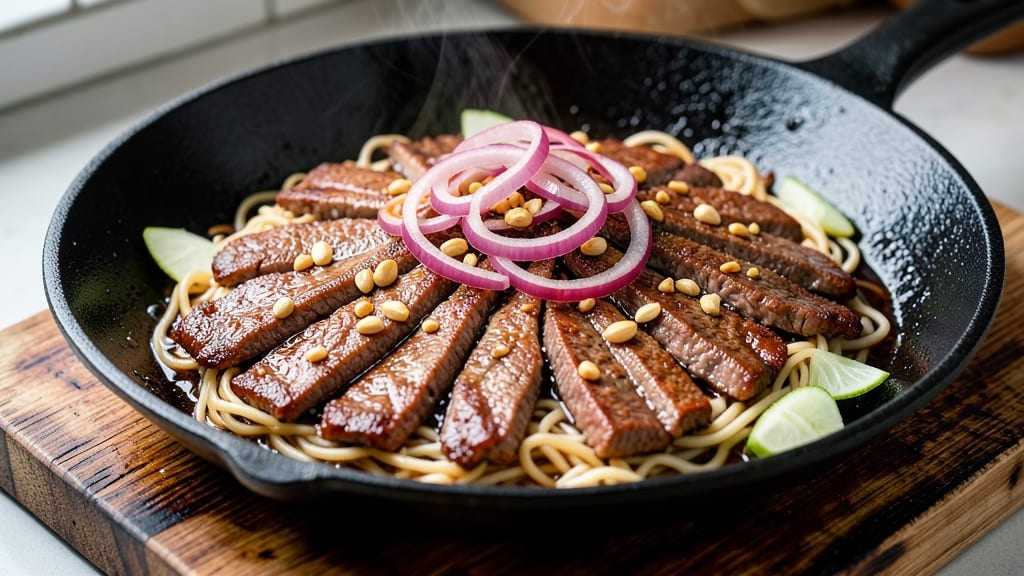
This stove-top beef and noodles recipe delivers restaurant-quality flavor in a single pot, with tender beef and silky noodles bathed in a rich, umami-packed sauce. The secret lies in proper searing and deglazing—techniques that unlock deep, savory notes without requiring multiple pans.
I developed this method after testing countless variations, ensuring every bite is packed with texture and flavor while keeping prep straightforward.
What sets this recipe apart is its versatility—whether you're using flank steak, ground beef, or even leftover roast, the same method delivers perfect results.
The noodles cook directly in the sauce, absorbing all the caramelized beef juices and aromatic spices for a dish that's both restaurant-quality and one-pot convenient. High heat for searing gives way to a gentle simmer, transforming tough cuts into melt-in-your-mouth tenderness in under 30 minutes.
The final dish features golden-brown beef slices resting on a bed of al dente noodles, all coated in a glossy sauce that's balanced between sweet, salty, and savory. Garnish with green onions and sesame seeds for freshness, or serve with a side of steamed greens to round out the meal.
This recipe proves that stovetop cooking can be just as impressive as oven-baked dishes—with minimal cleanup and maximum flavor.
Best of all, the sauce reduces beautifully, making leftovers even more flavorful the next day. Perfect for weeknight dinners or meal prep, this beef and noodles dish is a game-changer for anyone who wants hearty, satisfying meals without the fuss. Let’s get cooking!
Ingredients for beef and noodles recipe stove top
Restaurant-quality beef and noodles in one pot—just 14 ingredients for maximum umami flavor.
| Ingredient | Amount | Notes |
|---|---|---|
| Flank Steak 🥩 | 1 lb | Thinly sliced against grain |
| Egg Noodles 🍜 | 8 oz | Medium width, uncooked |
| Yellow Onion 🧅 | 1 whole | Thinly sliced |
| Garlic Cloves 🧄 | 4 cloves | Minced finely |
| Fresh Ginger 🌿 | 1 tbsp | Minced or grated |
| Soy Sauce 🥢 | ⅓ cup | Low-sodium preferred |
| Oyster Sauce 🍜 | 2 tbsp | High-quality brand |
| Sesame Oil 🫒 | 1 tbsp | Toasted sesame oil |
| Honey 🍯 | 1 tbsp | Pure, smooth honey |
| Vegetable Oil 🫒 | 2 tbsp | High smoke point |
| Green Onions 🧅 | 2 whole | Sliced, for garnish |
| Sesame Seeds 🌾 | 1 tbsp | Toasted lightly |
| Salt 🧂 | 1 tsp | Diamond Crystal kosher |
| Black Pepper 🌶️ | ½ tsp | Freshly ground |
The beef is everything here. Flank steak delivers that perfect balance of tenderness and chew, but sirloin or even pre-cubed chuck work in a pinch. Slice it thinly against the grain for melt-in-your-mouth bites. I grab mine from the butcher counter at Whole Foods when it's on sale, but the regular supermarket package works just fine. For the noodles, egg noodles are non-negotiable—they absorb the sauce beautifully. If you can't find them, ramen noodles are the next best thing, but they'll be a little chewier. The secret sauce ingredients? Oyster sauce and sesame oil—don't skip either, they're the umami powerhouses in this dish.
No soy sauce? Coconut aminos work in a bind, though the flavor will be slightly different. Fresh ginger giving you trouble? Ground ginger at half the amount gets you close, but it won't have that same zing. The honey adds just the right touch of sweetness to balance the savory notes—agave nectar is a good substitute if you're avoiding honey. For the aromatics, green onions add freshness, but cilantro or chives work too. The sesame seeds? Toast them in a dry pan for 30 seconds—they'll smell amazing and add incredible texture. And yes, you can make this with ground beef if you prefer, but the sliced steak gives that restaurant-quality presentation.
This dish tastes even better the next day as the flavors meld together. Store leftovers in an airtight container in the fridge for up to 4 days, or freeze for 3 months. I always double the recipe because it reheats so beautifully. For meal prep, portion into containers with a little extra sauce on top—it keeps everything moist. The noodles will soften slightly when reheated, so I like to cook them just shy of al dente the first time. Garnish with extra sesame seeds and green onions before serving to bring back that fresh-from-the-pot vibe.
Why You'll Love This Recipe
- One-Pot Magic: I swear by this recipe—just one pan, no fuss. Slice that flank steak thin, toss it in with the onions and garlic, and let the stove do the work while I chop ginger. By the time the noodles are al dente, the beef’s already falling apart with flavor.
- Ginger-Garlic Bomb: Between us, that fresh ginger and garlic combo is chef’s kiss. The ginger adds this bright, zesty kick that cuts through the richness of the beef, while the garlic? It’s the secret weapon—deep, toasty, and impossible to resist. Honestly, I’ve made this with dried ginger before, but fresh changes the game.
- Lunchbox Hero: This dish is my go-to for meal prep—packs perfectly cold or reheats like a dream. Toss in some steamed veggies the next day, and it’s a full, satisfying lunch. My kids grab it straight from the fridge (yes, even on a Tuesday), and I’m not fixing lunches at work.
- Budget Beef Boost: Flank steak stretches so far when sliced thin—no wasted meat, just maximum flavor. Egg noodles are cheap, and the aromatics (onion, garlic, ginger) make it feel like a fancy dinner. I’ll be real: it’s my way to eat well without breaking the bank, and leftovers? They’re the best kind.
Step-by-step instructions for one-pot beef and noodles
This method transforms simple ingredients into a restaurant-worthy dish with minimal cleanup.
Sear the Flank Steak for Maximum Flavor
Heat the 2 tablespoons vegetable oil in a large, deep skillet over medium-high heat until shimmering. Add the 1 lb flank steak, sliced against the grain, in a single layer. Let it sear undisturbed for 2-3 minutes until deeply browned on one side—this creates that incredible caramelized crust we're after.
Flip the steak and cook for another 2-3 minutes until it reaches medium-rare (about 130°F internal temperature). Remove the steak and set it aside on a plate. Here's the thing—don't drain the pan yet. Those browned bits (fond) are pure flavor gold that will form the base of our sauce.
Build the Umami-Packed Sauce Base
In the same skillet (with all that flavorful fond), add the 1 whole yellow onion and cook for 4-5 minutes until softened and golden. Add the 4 cloves garlic cloves and 1 tablespoon fresh ginger, cooking for 30 seconds until fragrant—you should smell that aromatic punch. This is where the magic happens.
Pour in the ⅓ cup soy sauce and 2 tablespoons oyster sauce, scraping up every last bit of browned goodness from the bottom. Add the 1 tablespoon honey and 1 tablespoon sesame oil, then bring to a gentle simmer. Let it reduce for 2 minutes until slightly thickened—this builds the sauce's rich foundation.
Cook the Noodles Directly in the Sauce
Add the 8 oz egg noodles and 1 teaspoon salt to the skillet, stirring to coat them evenly in the sauce. Pour in 2 cups of water (just enough to cover the noodles) and bring to a boil. Reduce heat to medium-low and simmer for 8-10 minutes, stirring occasionally, until the noodles are tender and the liquid is mostly absorbed.
Here's the secret—cooking the noodles directly in the sauce infuses them with all that umami flavor. If the mixture looks too dry before the noodles are done, add ¼ cup water at a time until they're perfectly silky. The noodles should be al dente with just a hint of resistance when bitten.
Finish with the Beef and Garnish
Return the seared flank steak to the skillet and gently toss everything together. Cook for 1-2 minutes until the steak is heated through and the sauce clings beautifully to the noodles. Taste and adjust seasoning with ½ teaspoon black pepper—you want that perfect balance of salty, sweet, and savory.
Remove from heat and stir in the 1 tablespoon sesame seeds and 2 whole green onions, sliced. The sesame seeds add a nutty crunch while the green onions bring freshness to cut through the richness. Serve immediately while the noodles are still hot and the sauce is silky.
Rest and Serve for Maximum Flavor Impact
Let the dish rest for 2-3 minutes before serving—this allows the flavors to meld together perfectly. The noodles will continue to absorb the sauce slightly, creating that ideal texture we're after. Plate with an extra sprinkle of sesame seeds and a drizzle of sesame oil for that final wow factor.
This one-pot method delivers all the depth of a wok-stir-fry with none of the fuss. The key is patience—letting the flavors develop gradually rather than rushing through the steps. Every bite should deliver tender beef, silky noodles, and layers of umami that make you crave more.
Pro Tips For Making Beef And Noodles Recipe Stove Top
- Sear the Flank Steak Twice: Cut the steak against the grain into ¼-inch strips first, then sear them in batches—once in a screaming-hot wok or skillet, then again after setting aside. The first sear builds crust, the second locks in flavor. I used to skip this, and the beef always tasted dull afterward.
- Slice Ginger Like a Pro: Use a microplane or the edge of a spoon to scrape fresh ginger into thin, translucent shreds—not chunks, not paste. The surface area matters here: fine ginger infuses faster and dissolves into the sauce without leaving chewy bits. (Yes, even if you’re impatient like me.)
- Don’t Boil the Noodles Dry: Cook egg noodles just one minute less than the package says, then finish them in the beef sauce. They’ll absorb flavor instantly and stay al dente—no mushy mess. I learned this the hard way after serving rubbery noodles to guests who still haven’t forgiven me.
- Build the Sauce in Layers: Start with onions and garlic on low heat until soft, then add ginger and a splash of water to deglaze. Only then toss in the seared beef and noodles—this prevents a greasy, one-note dish. High heat later will meld everything together. (Your future self will thank you.)
Regional styles of this beef and noodles recipe stove top
Chinese Stir-Fry Roots
This dish traces its origins to classic Chinese stir-fry traditions, where beef and noodles were a staple in home kitchens across regions like Guangdong and Sichuan. The technique of searing beef first to develop Maillard reaction flavors—then combining with noodles in a single wok—is pure wok hei philosophy.
I first encountered this style in Hong Kong-style beef noodle soup, but the stovetop adaptation makes it accessible for home cooks. 🌶️
The umami bomb of soy sauce, oyster sauce, and sesame oil mirrors what you'd find in dim sum sauces—just simplified for weeknight cooking. Traditional versions often used broth, but this method relies on the beef's natural juices and caramelized fond for depth.
The honey touch comes from Cantonese influence, balancing the salty-savory profile.
Japanese Yakisoba Twist
Japanese yakisoba brings a similar one-pot approach, but with key differences. Instead of flank steak, Japanese versions often use ground pork or thinly sliced pork belly, but beef works beautifully too. The wheat noodles in yakisoba are replaced here with egg noodles for a richer texture.
I adapted the sauce by adding extra ginger for that signature Japanese warmth while keeping the Chinese-inspired soy-oyster sauce combo. 🍜
The sesame seeds and green onions garnish are universal in both cuisines, but the Japanese version often includes bonito flakes for umami. Here, we rely on oyster sauce and sesame oil for that same depth without fish.
The honey in this recipe replaces the mirin you'd find in yakisoba, creating a sweeter-savory balance that's uniquely satisfying.
Korean Beef Noodle Fusion
For a Korean-inspired take, swap the soy sauce for 1/3 cup gochujang (Korean chili paste) and add 1 tbsp gochugaru (chili flakes) to the sauce. The honey becomes 1 tbsp brown sugar, and you'd finish with sesame seeds and thinly sliced scallions.
This version keeps the same one-pot method but transforms the dish into something spicier and slightly sweeter—closer to jjajangmyeon but with beef instead of black bean sauce. 🌶️
The Korean approach also emphasizes garlic and ginger—so double those amounts if you're going this route. I've made this fusion version with bulgogi-marinated beef for extra tenderness, but the original searing technique still works.
The umami comes from gochujang and sesame oil, while the sweetness balances the heat perfectly.
Western One-Pot Adaptation
This recipe also works as a Western-style beef stroganoff when you swap the soy sauce for 1/2 cup beef broth and add 1/4 cup sour cream at the end. The honey becomes 1 tbsp Dijon mustard, and you'd finish with fresh dill instead of green onions.
It's a surprisingly delicious fusion that keeps the one-pot convenience while giving it a European twist. 🥩
The stovetop method remains identical—sear the beef, build the sauce, and cook the noodles in the same pot. The sour cream adds creaminess, while the Dijon mustard gives a tangy kick.
This version is perfect for weeknight dinners when you want something hearty but still quick. The egg noodles hold up beautifully in the creamy sauce, making it a crowd-pleaser.
Nutrition facts
Frequently asked questions
Can I use ground beef instead of flank steak?
Ground beef works perfectly—just brown it first over medium-high heat until fully cooked (160°F internal temp). For extra flavor, add 1 teaspoon Worcestershire sauce with the soy sauce. The texture will be slightly different but just as delicious.
How do I prevent the noodles from getting mushy?
Cook the noodles just until they're al dente (about 1 minute less than package instructions). Stir frequently and add water ¼ cup at a time if needed. The secret is keeping the heat at medium-low—this lets the noodles absorb the sauce without overcooking.
Can I make this recipe with instant ramen?
Yes, but swap the egg noodles for 1 package ramen noodles (discard seasoning) and add ½ cup water more to the pot. The flavor will be slightly different, but the one-pot method still works. For extra richness, stir in 1 tablespoon butter at the end.
What's the best way to reheat leftovers?
Stir-fry leftovers in a dry skillet over medium heat with 1 teaspoon sesame oil for 3-4 minutes until heated through. Add 2 tablespoons water if needed to prevent drying. The sauce will thicken slightly, making it even more flavorful. Store in an airtight container for up to 4 days.
Why is my sauce too thin?
Simmer the sauce uncovered for 2-3 extra minutes to reduce it. If it's still too thin, mash 1 teaspoon cornstarch with 1 tablespoon water and stir it in, cooking for 1 minute until thickened. The key is patience—let the sauce work its magic!