
Soups & Stews
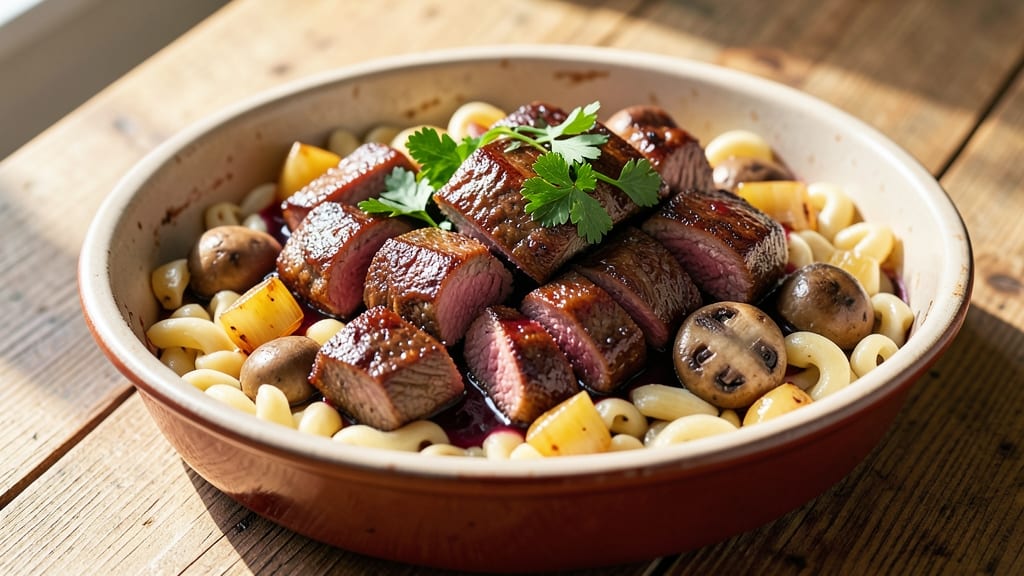
This beef and spaetzle recipe transports you to the heart of Alpine cuisine with tender beef bites and golden, crispy spaetzle that cling together like a cozy hug. The secret lies in slow-braised beef infused with aromatic herbs and a rich gravy that transforms simple ingredients into a restaurant-worthy dish.
What makes this recipe special is the perfect balance of textures—crispy spaetzle edges that contrast beautifully with the juicy, melt-in-your-mouth beef.
Traditional German and Austrian kitchens rely on this comforting dish, where spaetzle—hand-ripped egg noodles—absorb the savory beef broth while maintaining their signature crispy exterior. The beef, braised to perfection, stays succulent and packed with flavor, while the spaetzle gets its signature texture from a quick sear in butter.
This isn’t just a meal; it’s an experience that brings warmth and satisfaction to any table.
What you’ll achieve is a hearty, one-pan wonder that’s as impressive as it is simple. The beef, tender and flavorful, sits atop a bed of spaetzle that’s crispy on the edges and soft in the center, all blanketed in a rich, savory gravy.
Serve it with a side of rye bread to soak up every last drop or pair it with a crisp green salad for balance. This dish is perfect for family dinners, holiday gatherings, or whenever you crave a taste of home.
The beauty of this recipe lies in its versatility—you can adjust the beef cut (chuck or round works best) and customize the gravy with mushrooms, onions, or a splash of beer for added depth.
The spaetzle can be made ahead and reheated, making this a foolproof meal for busy weeknights or special occasions. Let’s get cooking and bring a little Alpine charm to your kitchen.
Ingredients for beef and spaetzle
Tender beef bites and crispy spaetzle—this Alpine classic needs just 14 simple ingredients for a cozy hug in every bite.
| Ingredient | Amount | Notes |
|---|---|---|
| Beef Chuck Roast 🥩 | 1 ½ lb | Cut into 1.5-inch cubes |
| All-Purpose Flour 🌾 | 1 ½ cups | For spaetzle dough |
| Large Eggs 🥚 | 4 whole | Room temperature preferred |
| Unsalted Butter 🧈 | ½ cup | Cold, cubed for spaetzle |
| Beef Broth 💧 | 3 cups | Low-sodium preferred |
| Red Wine 🍷 | ½ cup | Dry, like Cabernet |
| Yellow Onion 🧅 | 1 whole | Diced, medium size |
| Garlic Cloves 🧄 | 4 cloves | Minced, fresh preferred |
| Fresh Thyme 🌿 | ¼ cup | Chopped, stems removed |
| Fresh Parsley 🌿 | ¼ cup | Chopped, for garnish |
| Salt 🧂 | 1 ½ tsp | Kosher or sea salt |
| Ground Black Pepper 🌶️ | 1 tsp | Freshly ground |
| Bay Leaves 🍃 | 2 whole | For beef braising |
| Olive Oil 🫒 | 2 tbsp | For searing beef |
The beef is everything here. Chuck roast delivers that perfect melt-in-your-mouth texture—sirloin stays too tough. Grab it pre-cut at Costco or your butcher shop for convenience. Look for good marbling (white flecks in the meat) to ensure juiciness. If you're feeling fancy, ask for the roast to be cubed for you—saves time and avoids uneven pieces. The spaetzle flour? King Arthur or Bob's Red Mill are my go-tos—they give that signature crispy edge. And trust me on the cold butter for the spaetzle—it's worth the extra minute to cube it yourself.
No red wine? Beef broth with a splash of balsamic works in a pinch, though the acidity won't be quite the same. Fresh thyme is ideal, but dried at one-third the amount gets you close. The parsley is just for garnish—skip it if you're in a rush, but it adds that bright pop of color. For the spaetzle dough, room-temperature eggs blend smoother (microwave them 40 seconds if they're cold). And if you're worried about the flour measurement, spoon it into the cup and level it off—don't pack it down. The bay leaves? Toss 'em in with the beef, then fish them out before serving—no one wants a leafy surprise!
This dish tastes even better the next day—honestly, it's a great make-ahead meal. Store the beef and gravy separately in the fridge for 4-5 days, then reheat gently. The spaetzle? Freeze it cooked for up to 3 months—just toss it in boiling water for 2 minutes to revive. I always double the spaetzle batch because it disappears faster than the beef. And if you've got leftovers, rye bread is your best friend for soaking up that rich gravy.
Why You'll Love This Recipe
- One-Pot Magic: I swear by this when I’m too tired to wash extra dishes. The chuck roast slow-cooks in its own juices while the spaetzle noodles melt into the broth—no strainers, no fuss. Just dump, simmer, and let the flavors marry.
- Rich, Rustic Comfort: That deep, caramelized beef with tender, eggy spaetzle? It’s the kind of meal that makes you slow down. The butter in the noodles adds a velvety finish, and the broth keeps everything moist—like a hug on a plate.
- Weeknight to Weekend: Between us, this is my go-to for busy nights and lazy Sundays. Double the recipe, freeze half, and you’ve got a ready-to-reheat dinner when you least expect to cook. (Yes, even on a Tuesday night.)
- Budget-Friendly Feast: A chuck roast stretches across multiple meals, and flour, eggs, and butter are pantry staples. I’ve fed six people for under $20 with this—leftovers taste just as good reheated, and the spaetzle soaks up any extra broth like a sponge.
Step-by-step instructions for beef and spaetzle
Here's how to create tender beef bites and crispy spaetzle that'll make your dinner unforgettable.
Sear the Beef for Maximum Flavor
Heat a large Dutch oven over medium-high heat and add the 2 tablespoons olive oil. Once shimmering, add the 1.5 lb beef chuck roast, cut into 1.5-inch cubes, in a single layer. Let them sear undisturbed for 2-3 minutes until a deep golden crust forms.
Here's where the magic happens: don't move the beef until it releases easily from the pan. You'll know it's ready when the edges are deep brown and the meat develops that irresistible caramelized crust. This step builds the foundation for rich, beefy flavor that'll infuse your entire dish.
Once browned on one side, carefully turn each piece and sear the other side for another 2-3 minutes. Transfer the seared beef to a plate and set aside. We'll return to it later after building the flavor base.
Build the Rich Braising Liquid
In the same Dutch oven, add the diced yellow onion and cook for 3-4 minutes until softened and just beginning to caramelize. Add the minced garlic cloves and chopped fresh thyme, cooking for 30 seconds until fragrant.
Pour in the 0.5 cup red wine and scrape up all those delicious browned bits from the bottom of the pan. These bits, called fond, are packed with flavor. Let the wine simmer for 2 minutes until reduced by half and slightly thickened.
Add the 3 cups beef broth, 1.5 teaspoons salt, 1 teaspoon ground black pepper, and 2 whole bay leaves. Stir to combine, then return the seared beef to the pot, making sure each piece is coated with the flavorful liquid.
Braise the Beef Until Fork-Tender
Bring the liquid to a gentle boil, then reduce heat to low and cover the pot. Let the beef braise for 2.5-3 hours until fork-tender. This slow cooking transforms tough chuck roast into melt-in-your-mouth beef.
Here's the thing—don't peek or stir during this time. Every time you lift the lid, you lose heat and moisture. Instead, trust the process. The beef is done when it's so tender that a fork slides in with no resistance and the meat practically falls apart.
About 30 minutes before the beef is done, prepare the spaetzle while the beef finishes braising. This way, everything will be ready at the same time for maximum convenience.
Make the Spaetzle for Crispy Perfection
In a large bowl, whisk together the 1.5 cups all-purpose flour, 1.5 teaspoons salt, 1 teaspoon ground black pepper, and 4 whole large eggs until smooth. The batter should be thick but pourable—like pancake batter.
Bring a large pot of water to a rolling boil. Using a spaetzle maker or a potato ricer, press the batter through directly into the boiling water. If you don't have a spaetzle maker, use a colander with large holes or a grater.
Cook the spaetzle for 2-3 minutes until they float to the surface. They should be light golden brown and slightly crispy on the edges. Use a slotted spoon to transfer them to paper towels to drain, then toss with 2 tablespoons olive oil to keep them from sticking together.
Finish and Serve with Fresh Herbs
Once the beef is fork-tender, remove the bay leaves and adjust the seasoning if needed. The braising liquid should be rich and slightly reduced, coating the beef beautifully. If it's too thin, simmer uncovered for another 5-10 minutes to thicken slightly.
To serve, divide the spaetzle among plates, then top with the beef and any accumulated braising liquid. Garnish with chopped fresh parsley for a pop of color and freshness. The contrast of crispy spaetzle hugging tender, juicy beef bites in every bite is what makes this dish truly special.
Serve immediately while the spaetzle is still crispy and the beef is piping hot. The flavors will meld together perfectly, creating a comforting yet elegant meal that's sure to impress.
Pro Tips For Making Beef And Spaetzle
- SEAR THE ROAST FIRST: I learned this the hard way—skipping the sear means flavorless broth. Pat the chuck roast bone-dry with paper towels, then hit it with a hot pan and 2 tablespoons of butter (yes, even if you’re impatient like me). Let it brown for 5-6 minutes per side until deep golden—this locks in juices and builds the base for the dish.
- USE COLD WATER FOR SPAETZLE: This isn’t the prettiest method, but it’s the tastiest. Mix your flour, eggs, and salt with cold water (about 1 cup per 1 cup flour) instead of hot. The cold water keeps the dough from cooking prematurely as you push it through the spaetzle maker, and the result is tender, not gummy. Trust the process.
- DON’T OVERCOOK THE BEEF: The chuck roast is forgiving, but that doesn’t mean you should ignore it. Pull it at 195°F internal temp—yes, it’ll still be slightly pink. Tent it with foil and let it rest for 20 minutes before slicing. Resist the urge to rush; the meat will firm up and stay juicy, while overcooking turns it into shoe leather.
- SAVE TIME WITH BROTH REDUCTION: Instead of simmering beef broth for hours to concentrate flavor, start with a 50/50 mix of broth and water. After the roast is in the pot, bring it to a boil, then reduce to a simmer and let it cook uncovered. The water will evaporate first, leaving you with rich, reduced broth in about 30 minutes—no babysitting required.
Storing and reheating this dish
Refrigerator Storage
Store the beef and gravy separately in an airtight container for up to 4-5 days—the flavors actually deepen overnight. Let the beef cool completely before refrigerating, then transfer it to a container with a tight-fitting lid.
The spaetzle, once cooled, can be stored in a separate container with a sprinkle of olive oil to prevent drying. 💪
Freezer Prep Tips
For long-term storage, freeze the cooked spaetzle in a single layer on a baking sheet before transferring to a freezer bag—this prevents clumping. The beef and gravy freeze beautifully for up to 3 months in a sealed container.
Label everything with dates to track freshness. I always freeze half the batch for lazy weeknights! ❄️
Reheating Beef
Thaw overnight in the fridge, then reheat the beef and gravy gently in a skillet over low heat for 10-15 minutes, stirring occasionally. Add 1-2 tablespoons of water or beef broth if the gravy looks too thick.
Never microwave—it ruins the texture. The beef should reach 165°F internally for safety. 🔥
Reviving Spaetzle
Toss frozen spaetzle directly into boiling water for 2-3 minutes until they float. Drain and toss with 1 tablespoon butter to restore crispiness. For extra flavor, add a pinch of salt and pepper while reheating.
If using refrigerated spaetzle, warm in a dry skillet over medium heat for 2-3 minutes until golden. ✨
Gravy Rescue
If the gravy separates after reheating, whisk in 1 tablespoon cornstarch mixed with 2 tablespoons cold water until smooth. Simmer for 1-2 minutes until thickened. For extra richness, stir in 1 tablespoon butter at the end. The gravy should coat the back of a spoon—this ensures perfect texture. 💡
Serving Leftovers
Use leftover spaetzle to make a quick spaetzle casserole—layer with cheese, breadcrumbs, and a splash of milk, then bake at 375°F for 15 minutes. For beef leftovers, shred and mix into spaetzle soup with extra broth.
Always save a little gravy to drizzle over the top—it’s the secret to restaurant-quality leftovers! 🍽️
Nutrition facts
Frequently asked questions
Can I substitute spaetzle with another pasta?
While you can use fresh egg noodles or wide ribbon pasta in a pinch, they won't give you that signature crispy texture. For the best results, try homemade spaetzle or store-bought versions from specialty shops. The dough's high egg content creates those perfect crispy edges that make this dish special. If you're short on time, ricotta gnocchi works surprisingly well as a substitute!
How do I make the beef extra tender?
The secret is in the braising time and cut of meat. Use chuck roast—it's more forgiving than sirloin and becomes melt-in-your-mouth tender when braised. For maximum tenderness, sear the beef first to create a flavorful crust, then braise it covered at low heat for the full 2.5-3 hours. If you're in a hurry, try slow cooking on low for 6-8 hours—it works beautifully and requires less attention.
Can I make spaetzle without a spaetzle maker?
You can use a potato ricer, a colander with large holes, or even a grater for a rustic texture. For a more traditional hand-ripped look, try pressing the batter through a fine-mesh strainer with a spoon. The key is to get the batter into boiling water quickly—this creates those signature crispy edges. Just be prepared for slightly irregular shapes!
What's the best way to reheat this dish?
Reheat the beef and gravy together in a skillet over low heat for 10-15 minutes, adding 1-2 tablespoons of broth if needed to loosen the gravy. For spaetzle, either toss frozen pieces into boiling water for 2-3 minutes or warm refrigerated spaetzle in a dry skillet over medium heat for 2-3 minutes until golden. Never microwave—it turns the spaetzle soggy and the beef dry. The goal is to restore that perfect crispy-tender contrast!
Can I make this dish ahead of time?
This recipe actually tastes better the next day! Store the beef and gravy separately in airtight containers for up to 4-5 days in the fridge. The flavors deepen as they sit. For the spaetzle, freeze cooked pieces in a single layer before transferring to a freezer bag—this prevents clumping. Reheat as directed above. It's perfect for meal prep or holiday gatherings when you want to impress without last-minute stress!