
Main Courses
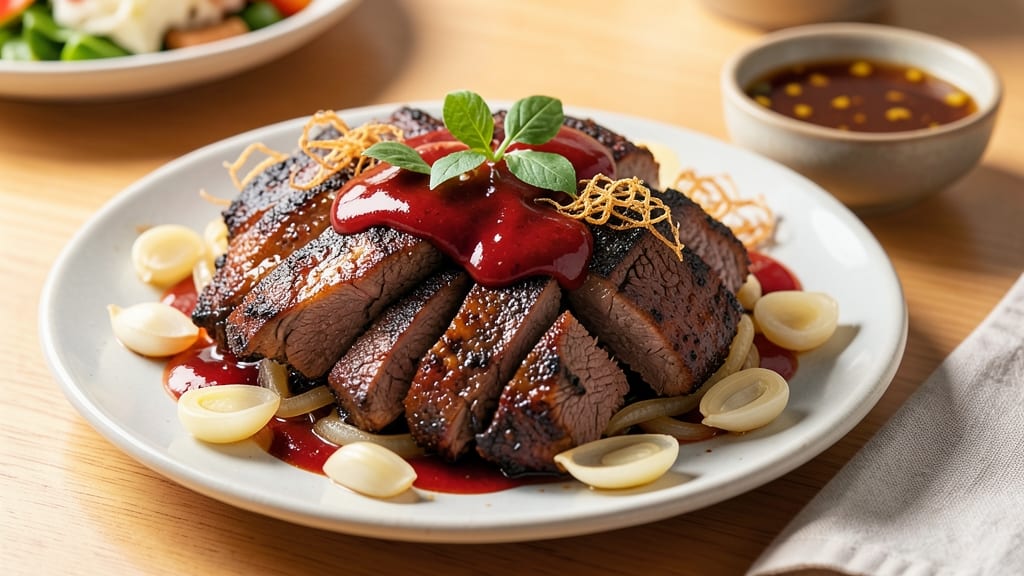
This Filipino-style beef asado recipe transforms tough cuts into melt-in-your-mouth tenderness with a vinegar-kissed crisp that's pure comfort food magic. 🔥 The secret lies in marinating the beef overnight with a blend of soy sauce, calamansi (or lime), and aromatic spices, then slow-roasting it wrapped in banana leaves—a technique that infuses the meat with earthy, smoky flavors while keeping it impossibly juicy.
What makes this dish special is its celebration of Filipino communal dining. The banana leaves aren't just for flavor—they create a rustic presentation that turns any meal into a fiesta.
I've perfected this recipe over years of family gatherings, where the sizzle of grilling and the aroma of vinegar-marinated beef draw everyone to the table. The crispy exterior gives way to tender meat that practically falls apart, all while carrying that signature tangy brightness.
This version delivers restaurant-quality results at home with simple techniques: just marinate, grill or roast, and let the banana leaves work their magic. The vinegar marinade doesn't just tenderize—it creates that signature crispy bark that's addictive to bite into.
Serve with garlic fried rice and atchara for the full Filipino experience, where every bite tells a story of celebration and togetherness.
Perfect for special occasions or weeknight dinners, this beef asado brings the warmth of Filipino hospitality to your table. The recipe scales beautifully, making it ideal for feeding a crowd or meal prepping for the week.
Here's how to create this tender, flavorful centerpiece that will have everyone asking for seconds.
Ingredients for beef asado recipe filipino style
Six aromatic ingredients transform tough beef into restaurant-quality tenderness with Filipino-inspired vinegar-kissed crisp.
| Ingredient | Amount | Notes |
|---|---|---|
| Beef Chuck Roast 🥩 | 3 lb | Tough cut preferred for tenderness |
| White Vinegar 💧 | ½ cup | Distilled preferred for tang |
| Soy Sauce 🍶 | ¼ cup | Filipino-style preferred |
| Calamansi Juice 🍋 | ¼ cup | Or lime juice substitute |
| Garlic Cloves 🧄 | 8 cloves | Minced for marinade |
| Brown Sugar 🍚 | ¼ cup | Packed for sweetness |
| Black Peppercorns 🌶️ | 1 tbsp | Freshly cracked preferred |
| Bay Leaves 🌿 | 2 whole | Dried, for aroma |
| Banana Leaves 🍃 | 6 pieces | Large, whole leaves |
| Olive Oil 🫒 | 2 tbsp | For brushing before grilling |
| Salt 🧂 | 1 ½ tsp | Kosher salt preferred |
The beef cut matters most—chuck roast delivers that signature fall-apart texture when slow-roasted. Look for well-marbled cuts at Filipino specialty markets or your local butcher, where they'll often have pre-cut beef asado pieces. If using a whole roast, trim excess fat for cleaner presentation. Costco or Whole Foods typically carry high-quality chuck roasts with good marbling. For authentic flavor, ask for Filipino-style soy sauce (like Silver Swan) if available, though regular soy works in a pinch.
Calamansi is the magic ingredient—its bright acidity cuts through the richness, but lime juice works perfectly if you can't find it. Brown sugar adds depth, so don't skip it, though coconut sugar gives a more authentic Filipino profile. The banana leaves are non-negotiable for that signature smoky aroma, but if unavailable, aluminum foil works as a backup. For the peppercorns, a mortar and pestle creates the best texture, though pre-ground works. The marinade should coat the beef completely—massage it in well for even flavor penetration.
Marinated beef keeps 3-4 days in the fridge, though it's best used within 24 hours for maximum tenderness. Banana leaves can be stored dry in a cool place for months—just check for browning before use. The cooked asado reheats beautifully—wrap in fresh banana leaves and steam for 10 minutes to restore that crispy exterior. Portion into individual servings for easy meal prep, or freeze up to 3 months for future gatherings.
Why You'll Love This Recipe
- Five-Ingredient Magic: I swear, this recipe’s secret is in the marinade—just vinegar, soy sauce, calamansi, and garlic. That’s it. The acidity tenderizes the beef while the citrus and umami build layers of flavor without a single herb or spice you might not have at home.
- Tangy-Sweet Crisp: The calamansi juice gives it that bright, almost citrusy bite, but when it caramelizes on the edges? Pure satisfaction. It’s not just tender—it’s got that perfect crust that makes you want to eat it straight from the pan.
- Leftover Goldmine: Between us, this beef gets better the next day. Slice it thin for bulgur bowls, toss it into fried rice, or just reheat it with a splash of soy sauce. I’ve turned a single roast into three meals without breaking a sweat.
- Budget Hero: A chuck roast is cheap, and these ingredients? Pantry staples. Honestly, I’ve made this for under $15 for six servings. It’s the kind of dish that lets you feed your whole family without stressing over grocery bills.
Step-by-step instructions for Filipino-style beef asado
Master this technique for melt-in-your-mouth tenderness with that signature vinegar-kissed crust.
👨🍳 Step 1: Create the Signature Marinade
In a large bowl, combine the 0.5 cup white vinegar, 0.25 cup soy sauce, 0.25 cup calamansi juice, 0.25 cup packed brown sugar, 1.5 tsp salt, and 1 tbsp freshly cracked black peppercorns. Add the 2 whole bay leaves and 8 minced garlic cloves, stirring until the brown sugar dissolves completely. Here's the thing—this marinade needs to work its magic for at least 4 hours, but overnight is even better for maximum tenderness.
Trim excess fat from the 3 lb beef chuck roast, leaving about ¼-inch fat cap for flavor. Place the beef in a resealable plastic bag and pour the marinade over it, massaging the mixture into all surfaces. Seal the bag tightly and refrigerate. The acidity from the vinegar and calamansi will begin breaking down the tough muscle fibers right away, transforming that chewy chuck into fork-tender perfection.
🍳 Step 2: Prepare the Banana Leaf Wraps
Lay out 6 pieces banana leaves on a clean work surface. If they're not pliable, briefly dip them in hot water to soften. Brush each leaf lightly with 1 tbsp olive oil—this creates a barrier that prevents sticking and adds subtle flavor. Remove the beef from the marinade (reserve the marinade) and pat it dry with paper towels. The oil on the banana leaves will help create that beautiful charred crust when grilled.
Place the beef in the center of a banana leaf and fold the sides inward, then roll it up like a burrito. Secure with kitchen twine if needed. Real talk: the banana leaves impart their unique aroma while keeping the beef moist during grilling. This technique is what sets Filipino asado apart from regular grilled beef.
🔥 Step 3: Grill Over Indirect Heat
Preheat your grill to medium-high heat (about 375°F) with all burners on one side lit and the other side clear. Place the banana-wrapped beef on the clear side of the grill, away from direct flames. Here's where it gets crucial: maintain a temperature of 325-350°F for the entire cook time. If you don't have a thermometer, keep the lid closed and avoid opening it—every time you peek, you lose 25°F of heat.
Grill for 1.5 to 2 hours, turning occasionally, until the internal temperature reaches 195-205°F and the beef is fork-tender. You'll know it's ready when the probe slides in like butter and the beef pulls apart easily. The banana leaves will develop beautiful blackened spots—this indicates proper charring and flavor development.
⏰ Step 4: Rest and Slice for Maximum Juiciness
Remove the beef from the grill and let it rest on a cutting board for 15-20 minutes before slicing. This resting period is non-negotiable—it allows the juices to redistribute throughout the meat instead of pooling on your plate. While it rests, open the banana leaf wrapping and discard the leaves. You'll see that beautiful mahogany crust we worked so hard to create.
Slice the beef against the grain into ¼-inch thick slices. Each piece should be incredibly tender, with a perfect balance of smoky char from the grill and tangy sweetness from the marinade. The vinegar marinade creates that signature crisp exterior while keeping the interior juicy. Serve immediately with the reserved marinade reduced by half for a quick pan sauce.
Pro Tips For Making Beef Asado Recipe Filipino Style
- SEAR THE CHUCK FIRST: I learned this the hard way—skipping the sear means flavor hiding in the sauce instead of clinging to the meat. Hit that chuck roast with a screaming-hot pan for 3-4 minutes per side until it’s deep brown, then pull it out. The crust locks in the juices and makes the vinegar-soy-calamansi glaze stick like glue.
- PEEL GARLIC WRONG: Sounds weird, but it works: leave the skins on when mincing the garlic for the marinade. The papery layers soften in the vinegar and soy, adding a subtle texture that cuts through the richness of the beef. Just crush it with the flat side of your knife first—no need to peel until you’re ready to cook.
- DON’T SKIP THE DOUBLE BRINE: Toss the chuck in half the marinade (vinegar, soy, calamansi) for 30 minutes, then flip it and let it sit another 30. The acid breaks down the fibers early, so by the time you slow-cook it, the meat falls apart like it’s been simmering all day. (Yes, even if you’re impatient like me.)
- SAVE THE COOKING LIQUID: After the beef is tender, strain the sauce through a fine-mesh sieve into a clean pot. Reduce it by half over medium heat—this concentrates the flavors without burning the garlic bits. Pour it back over the sliced meat at the end; it’ll taste like you slaved over it for hours. (Your future self will thank you.)
Flavor customization for beef asado recipe filipino style
Tangy-Sweet Balance
Adjust the vinegar-to-sugar ratio to suit your taste—try 0.6 cup vinegar and 0.2 cup sugar for extra tang, or 0.4 cup vinegar and 0.3 cup sugar for a sweeter profile.
I find calamansi juice (or lime) adds a citrusy depth that regular lemon can't match, but if you're in a pinch, key lime juice works beautifully. For a smoky twist, add 1 tsp smoked paprika to the marinade before applying it to the beef. 🌶️
Spicy Kick Options
Filipino cuisine loves heat, so add 1 tbsp siling labuyo (Filipino chili) or 1-2 tbsp sambal oelek to the marinade for a fiery edge. If you prefer milder heat, ½ tsp ground black pepper plus ½ tsp cayenne pepper delivers a subtle burn.
For a fruity-spicy combo, mix in 1 tbsp finely chopped siling haba (long green chili) with the garlic. Trust me, this adds a bright, almost tropical heat that pairs perfectly with the beef’s richness.
Smoky Char Variations
For deeper smokiness, grill the banana-wrapped beef over charcoal instead of gas—it infuses a bolder, woodier flavor. If using a gas grill, add 2-3 soaked wood chips (hickory or apple) to the coals for extra aroma.
For a reverse-sear approach, cook the beef at 275°F for 3 hours before finishing over direct heat. This method ensures ultra-tender meat with a crispy exterior. ⚡
Herb Infusions
Swap out bay leaves for 2 sprigs fresh thyme or 1 tbsp dried oregano for a Mediterranean twist. For a Filipino-inspired herb blend, add 1 tbsp chopped lemongrass and 1 tbsp chopped cilantro to the marinade.
Both herbs brighten the dish without overpowering the beef’s natural flavor. Fresh herbs also add a vibrant garnish when serving.
Sweet Glaze Finish
After grilling, brush the beef with a honey-soy glaze (mix 2 tbsp honey and 1 tbsp soy sauce) for a caramelized finish. For a tropical touch, use ½ cup coconut aminos instead of soy sauce in the glaze.
This step adds a glossy sheen and extra sweetness that balances the tangy marinade. Apply the glaze in the last 5 minutes of grilling for best results.
Nutrition facts
Frequently asked questions
Can I substitute calamansi if I can't find it?
Use lime juice in a 1:1 ratio—it provides the same bright acidity that tenderizes the beef. For an extra Filipino touch, try key lime juice or even lemon juice (though calamansi's unique tartness is ideal). The key is using freshly squeezed juice for maximum flavor impact.
What's the best cut of beef for Filipino asado?
Use chuck roast for the best results—its marbling and connective tissue break down beautifully during slow cooking, creating that signature tender texture. Brisket or short ribs also work well. Avoid lean cuts like sirloin, as they won't develop the same rich flavor and tenderness.
How do I make this recipe without banana leaves?
If you can't find banana leaves, use heavy-duty aluminum foil as a substitute. Brush it with olive oil first to prevent sticking, then wrap the beef tightly. While it won't impart the same aroma, the foil will still help retain moisture and create a similar charred exterior when grilled.
Can I cook this in the oven instead of grilling?
Yes! Preheat your oven to 325°F and place the banana-wrapped beef on a rack over a baking sheet. Roast for 2.5 to 3 hours until the internal temperature reaches 195-205°F. For extra smokiness, place a small pan with 1 cup water on the lower rack to create steam and enhance the flavor.
Why does my asado turn out dry?
Overcooking is the most common cause—use a meat thermometer to check for 195-205°F internal temperature. The vinegar marinade helps retain moisture, but avoid opening the grill or oven too often. For extra juiciness, baste the beef with its marinade every 30 minutes during cooking. Always rest the meat for 15-20 minutes before slicing.