
Soups & Stews
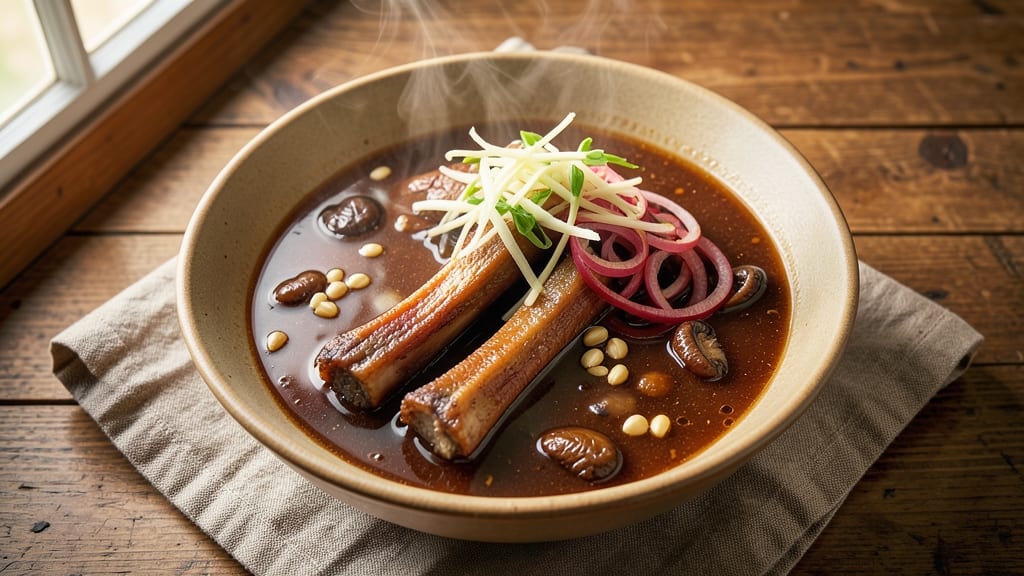
Asian beef bone soup recipe transforms tough cuts into a silky, marrow-rich masterpiece that carries centuries of tradition in every spoonful. The secret lies in slow simmering—6+ hours of gentle heat unlocking collagen and transforming bones into a velvety broth that coats your tongue like liquid silk. This isn't just soup; it's a flavor journey where every ingredient plays its part in harmony.
The foundation begins with bones—preferably marrow-rich beef shanks or knuckle bones—roasted first to deepen their natural sweetness before the long simmer. We'll build layers of umami with fermented pastes like doenjang or miso, while aromatic vegetables and mushrooms add depth.
The result? A broth so rich it needs no garnish, though a drizzle of toasted sesame oil and chili flakes elevates it to restaurant-quality perfection.
What makes this recipe stand out is its versatility—adapt it to Korean galjin-tang with jujubes and ginseng, or keep it simple with just beef, ginger, and scallions. The broth develops complex flavors over time, rewarding patience with a depth you won't find in instant versions.
Each sip carries warmth, nourishment, and the essence of Asian culinary tradition.
Perfect for cold evenings or as a healing remedy, this soup scales beautifully for gatherings. The technique is straightforward, but the results are extraordinary—proof that great flavor comes from time, not shortcuts. Let's begin building your broth from scratch.
Ingredients for asian beef bone soup
Marrow bones, fermented pastes, and aromatic roots create this soul-warming broth masterpiece.
| Ingredient | Amount | Notes |
|---|---|---|
| Beef Marrow Bones 🦴 | 3 lb | Knuckle or shank bones preferred |
| Yellow Onion 🧅 | 2 whole | Chopped, outer layers removed |
| Fresh Ginger Root 🌿 | 2 oz | Unpeeled, roughly chopped |
| Garlic Cloves 🧄 | 8 cloves | Smashed with side of knife |
| Doenjang Fermented Soybean Paste 🍶 | ½ cup | Korean fermented soybean paste |
| Dried Shiitake Mushrooms 🍄 | 4 whole | Rehydrated, stems removed |
| Daikon Radish 🥕 | 1 lb | Cut into thick chunks |
| Green Onion 🧅 | 1 whole | White and green parts separated |
| Sesame Oil 🫒 | 2 tbsp | Toasted, for finishing |
| Gochugaru Korean Chili Flakes 🌶️ | 1 tbsp | For finishing, optional |
| Salt 🧂 | 1 ½ tsp | Kosher or sea salt |
| Black Peppercorns 🌶️ | 1 tsp | Coarsely crushed |
| Asian Pear 🍐 | 1 medium | Cut into wedges, optional |
The bones are the heart of this soup—marrow-rich knuckle bones from Costco or local butchers give the deepest flavor. Look for bones with visible marrow cavities; these are your gold standard. Doenjang, the fermented soybean paste, is non-negotiable for authentic umami—Korean markets carry it in jars, or order online if you can't find it locally. Fresh ginger and garlic? Buy organic if possible; the skin adds subtle bitterness that balances the richness. For shiitake mushrooms, dried is best—they rehydrate perfectly and add earthy depth without overpowering. The daikon radish? Substitute with regular white radish if needed, but it's worth tracking down for that signature sweetness.
No doenjang? Miso paste at half the amount works in a pinch, though it'll lack that funky, fermented depth. Running low on shiitake? Cremini mushrooms are a solid swap, but add a splash of soy sauce to mimic the umami. The Asian pear is optional but adds natural sweetness—Fuji apples work too if you can't find Asian pears. For the sesame oil, toasted is key—skip the unrefined version, which can taste bitter. The chili flakes? Gochugaru gives that authentic Korean heat, but regular red pepper flakes will do if that's all you've got. Pro tip: if your ginger is old or fibrous, microwave it for 30 seconds before chopping—it'll be easier to grate and more aromatic.
This broth gets better with time—4-5 days in the fridge is perfect, with flavors deepening daily. For long-term storage, freeze in ice cube trays for easy portioning. The bones can be roasted ahead and frozen for up to 3 months, saving you prep day-of. When reheating, add a splash of water and simmer gently—never boil, or you'll break the delicate emulsified fat. The finished soup keeps its richness for 5-7 days refrigerated or 3 months frozen. Make a double batch—you'll want leftovers, trust me.
Why You'll Love This Recipe
- Minimal Chopping Needed: That onion and ginger? Just two quick slices—no dicing, no tears. The marrow bones go in whole (or cracked open), so you’re basically measuring and simmering. Honestly, the hardest part is waiting for the broth to deepen.
- Umami Bomb: The doenjang paste alone transforms this from "soup" to "I-will-make-this-again." That deep, funky, slightly salty fermented punch cuts through the richness of the marrow bones like a knife. Add a splash of sesame oil at the end? Pure satisfaction.
- Leftovers That Shine: This soup only gets better the next day—like a flavor upgrade you didn’t pay extra for. Reheat it with a sprinkle of toasted sesame seeds and a drizzle of soy sauce, and suddenly you’ve got a whole new bowl. My freezer’s full of these, and I’m not sorry.
- Budget-Friendly Bone Broth: Marrow bones are cheaper than you think, and they turn into liquid gold. One pot of this feeds my family for days, and the gel-like broth? Perfect for stir-fries or rice bowls later. Between us, this is how I stretch my grocery budget without sacrificing taste.
Step-by-step instructions for Asian beef bone soup
This method unlocks deep, marrow-infused broth with layers of umami and subtle sweetness.
Prepare the Bones and Aromatics
Rinse the 3 lb beef marrow bones thoroughly under cold water to remove any surface impurities. I like to soak them in a bowl of cold water for 15 minutes while I prep the vegetables—this helps remove any blood or residue that could cloud the broth. Pat them completely dry with paper towels, then place them in a large stockpot.
In a separate bowl, combine the 2 whole chopped yellow onion, 2 oz roughly chopped fresh ginger root (unpeeled), and 8 smashed garlic cloves. This aromatic base will form the flavor foundation of your soup. I always use unpeeled ginger because the skin adds subtle bitterness that balances the richness of the marrow bones.
Toast and Layer the Base Ingredients
Set your stockpot over medium-high heat and add 1.5 tsp salt and 1 tsp coarsely crushed black peppercorns. Let the bones toast for 5-7 minutes, stirring occasionally, until they develop a deep golden color. This step caramelizes the bone surfaces, creating a rich, nutty depth that infuses into the broth.
Add the onion-ginger-garlic mixture to the pot and stir to combine. Cook for another 3-4 minutes until the onions soften slightly and become translucent. Here's the thing—don't let them brown too much, or they'll release bitterness. You want them to mellow and sweeten the broth without overpowering it.
Simmer the Broth Low and Slow
Pour in 8 cups cold water (enough to cover the bones by about 2 inches) and bring to a gentle boil. Once boiling, reduce heat to low and maintain a barely simmer—you should see tiny bubbles breaking the surface, but no vigorous rolling. This slow cook is crucial for extracting marrow flavor without making the broth cloudy.
Simmer uncovered for 3 hours, skimming off any foam or impurities that rise to the surface with a fine-mesh skimmer. I check the broth every 30 minutes during the first hour to ensure it stays at a gentle simmer. After the initial hour, you can reduce checks to every 45 minutes—just make sure the water level doesn't drop below halfway up the bones.
Build Depth with Fermented Paste and Mushrooms
After 3 hours, remove the bones from the pot and set them aside (you'll use them later for serving). Strain the broth through a fine-mesh sieve into a clean pot, pressing gently on the solids to extract maximum flavor. Return the strained broth to the pot and bring it back to a simmer over medium heat.
Add the 0.5 cup doenjang fermented soybean paste and the 4 rehydrated shiitake mushrooms (stems removed). Stir well to dissolve the paste completely—this is where the soup gets its signature umami punch. Simmer for another 20 minutes to allow the flavors to meld. The doenjang will darken the broth slightly, giving it that rich, fermented depth that's characteristic of Korean bone broths.
Finish with Vegetables and Garnishes
Cut the 1 lb daikon radish into thick chunks and add them to the simmering broth along with the 1 lb beef marrow bones (returned to the pot). Simmer for 15 minutes until the daikon softens but doesn't fall apart. The marrow bones will release their rich, velvety marrow into the broth during this final stage.
Just before serving, stir in the 2 tbsp toasted sesame oil and 1 tbsp gochugaru Korean chili flakes (if using). Add the 1 medium Asian pear cut into wedges and the white parts of 1 whole green onion (chopped) to the broth. Let everything heat through for 2-3 minutes, then ladle the soup into bowls. Garnish each serving with the green onion tops and serve immediately with the marrow bones on the side for scooping up the rich broth.
Pro Tips For Making Asian Beef Bone Soup
- BLANCH BONES FIRST: Skip the direct boil—give those marrow bones a quick 3-5 minute blanch in hot water first. This loosens dirt and impurities without overcooking the collagen, so your broth stays crystal clear instead of cloudy. (Yes, even if you’re impatient like me.)
- SWEAT ONIONS LOW: Don’t rush the onions—cook them on medium-low for 10-12 minutes until they’re deep golden and almost caramelized. Burnt bits ruin the broth’s depth, and half-cooked onions just taste sad. (Your future self will notice.)
- SMASH DOENJANG GENTLY: Don’t dump the whole paste at once—mix it with a splash of broth first, then stir in gradually. Lumpy doenjang makes the soup taste bitter and uneven. Think of it like dissolving salt: patience pays off.
- USE GINGER JUICE: After grating ginger, squeeze out the excess liquid with your hands—it prevents a watery, thin broth. The solids still pack all the heat, but without the extra moisture dragging down flavor. (Sounds weird, but it works.)
Flavor customization for this dish
Spice Level Control
Adjust heat to your preference by controlling the gochugaru Korean chili flakes. For mild heat, use just ½ tbsp or skip entirely—this soup shines with its natural richness. If you love spice, add 1-2 tbsp and let it steep for 5 minutes before serving.
I like to serve the chili flakes on the side so everyone can customize their bowl. 🌶️
Sweetness Balance
The Asian pear adds natural sweetness that cuts through the richness, but you can substitute with ½ cup apple juice or 2 tbsp honey if unavailable. For a deeper sweetness, add 1 tbsp brown sugar during the final 15 minutes of simmering. Trust me, this balances the umami perfectly.
Umami Boosters
Want even more depth? Add 1 tbsp fish sauce or 1 tsp soy sauce during the final simmer. For a Korean twist, stir in 1 tbsp anchovy paste (like Bonggwang) with the doenjang. These ingredients amplify the savory notes without overpowering the broth.
Herbal Infusions
Brighten the soup with fresh herbs like cilantro or thyme. Add 2 sprigs fresh thyme during the final 10 minutes of simmering, then remove before serving.
For a more aromatic touch, infuse the broth with 1 cinnamon stick or 2 star anise pods during the initial 3-hour simmer—remove before adding the doenjang.
Protein Variations
Serve with sliced beef from the bones or add shredded chicken for a lighter option. For extra richness, top each bowl with crispy fried shallots or toasted sesame seeds. The broth works beautifully with soft tofu or rice noodles for a lighter version.
Regional Twists
For a Chinese-style broth, swap doenjang for 1 tbsp hoisin sauce and add 1 tbsp Shaoxing wine. For a Japanese-inspired version, use 1 tsp miso paste instead of doenjang and add ½ cup shiitake mushrooms earlier in the simmer.
Each variation keeps the marrow-rich base but shifts the flavor profile dramatically. 🗺️
Nutrition facts
Frequently asked questions
Can I use regular beef bones instead of marrow bones?
You can, but you'll miss the rich, velvety texture that marrow bones provide. Marrow bones release their gelatinous center during cooking, creating that signature silky mouthfeel. If you only have regular bones, look for knuckle bones—they contain more connective tissue and flavor. For best results, use a mix of marrow and knuckle bones to balance richness and depth.
How do I know when the broth is done?
The broth should simmer gently for 6-8 hours total, with the first 3 hours being the most critical. After straining, check its consistency—it should coat the back of a spoon and have a jelly-like quality when chilled. The aroma should be deeply savory with notes of roasted bones, ginger, and fermented paste. Taste it after 6 hours; if it's still bland, continue simmering for another 1-2 hours.
What if I don't have doenjang? Can I substitute?
For a Korean-inspired version, use ½ cup miso paste (white or red) or 1 tbsp soy sauce + 1 tbsp fish sauce. For a deeper umami, add 1 tbsp anchovy paste or 2 tbsp fermented black beans. These substitutes won't replicate doenjang's funky complexity, but they'll still add rich, savory depth. The broth will taste more balanced but slightly less fermented.
Can I make this soup in an Instant Pot?
Yes, but with adjustments! Use the High Pressure setting for 90 minutes after the initial toast and aromatics. After releasing pressure, strain and return to the pot. Add doenjang and mushrooms, then simmer on Low for 20 minutes. The Instant Pot will reduce cooking time but may yield a slightly less gelatinous broth. For best results, use a mix of pressure cooking and traditional stovetop simmering.
How do I store and reheat leftovers?
Store broth in airtight containers in the fridge for 5-7 days or freeze for 3 months. To reheat, warm gently on the stove over low heat—never boil, or the fat will separate. For frozen broth, thaw overnight in the fridge, then reheat. Add a splash of water if it thickens too much. Pro tip: Freeze in ice cube trays for easy portioning in future recipes!