
Main Courses
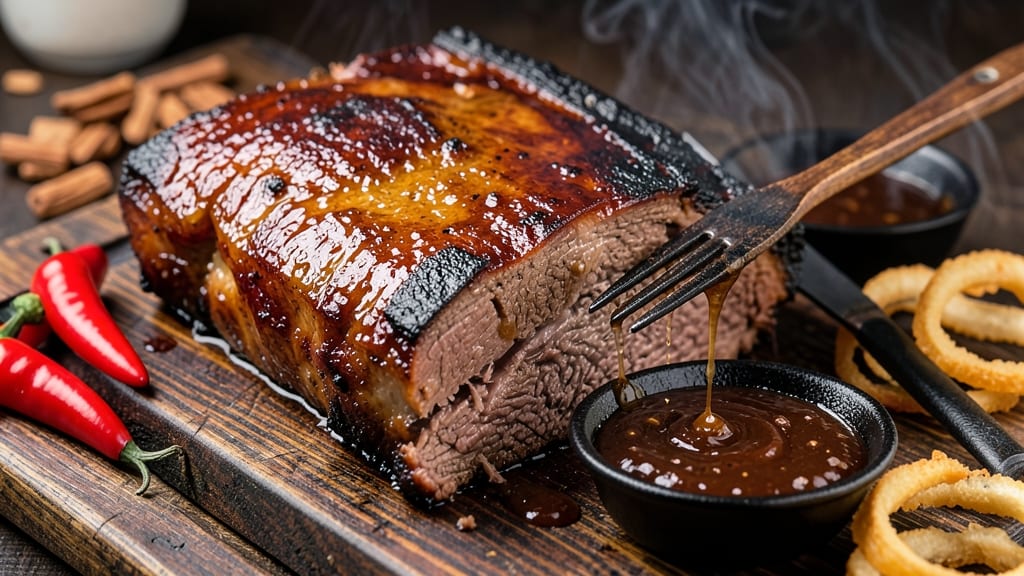
This Texas-style barbecue beef brisket recipe delivers the legendary combination of smoky bark and buttery tenderness that defines Central Texas pitmasters. 🔥 I’ve spent years perfecting the low-and-slow method—where post-oak wood smoke and a bold pepper-heavy rub transform tough meat into melt-in-your-mouth perfection.
The secret lies in patience: letting the brisket rest at 195°F for hours until it practically falls apart, then slicing against the grain for that signature Texas-style texture.
The process starts with a dry rub of coarse salt, black pepper, and smoked paprika, which creates that iconic dark crust while keeping the interior juicy. Unlike rushed methods, this recipe demands time—12 to 16 hours in the smoker—but the result is worth every minute.
The bark should be deep mahogany, the meat so tender it nearly dissolves, and the aroma enough to fill your neighborhood with anticipation.
What sets this apart is the Texas tradition of slicing thin—against the grain—and serving it on toasted white bread with tangy pickles and creamy baked beans. The contrast of textures and temperatures (hot brisket, cool pickles, buttery bread) is what makes this dish legendary.
This isn’t just a recipe; it’s a weekend project that turns your backyard into a Central Texas pitmaster’s dream.
Ready to tackle it? Here’s everything you need to know—from rub application to smoke ring secrets—to achieve restaurant-quality brisket at home. Let’s get started.
Ingredients for barbecue beef brisket recipe texas style
Eight pounds of brisket, a bold pepper rub, and post-oak smoke—this is Texas barbecue at its most authentic.
| Ingredient | Amount | Notes |
|---|---|---|
| Beef Brisket 🥩 | 8 lb | Packer cut, fat cap intact |
| Coarse Kosher Salt 🧂 | ½ cup | Diamond Crystal preferred |
| Ground Black Pepper 🌶️ | 2 tbsp | Freshly cracked for bold flavor |
| Smoked Paprika 🌶️ | 2 tbsp | Deep, smoky variety |
| Garlic Powder 🧄 | 1 tbsp | Freshly ground preferred |
| Onion Powder 🧅 | 1 tbsp | For balanced depth |
| Post Oak Wood Chips 🌳 | 4 lb | Soaked for 1 hour minimum |
| Yellow Onion 🧅 | 1 whole | Sliced for serving |
| White Bread 🍞 | 12 slices | For serving, toasted |
| Dill Pickles 🥒 | 1 jar | Sliced for serving |
| Baked Beans 🥫 | 4 cups | Store-bought or homemade |
| Apple Cider Vinegar 🍎 | 2 tbsp | For spritzing during cook |
| Mustard Powder 🌶️ | 1 tsp | For dry rub variation |
| Brown Sugar 🍚 | 1 tbsp | Lightly coats the bark |
The brisket is non-negotiable—packer cut with the fat cap intact is what gives you that legendary bark and tenderness. Costco or local butchers are your best bets for quality; look for good marbling and a deep red color. If you're buying a whole packer, trim the silver skin off the flat end (that thin membrane) before applying the rub—it won’t cook through and can make the meat tough. The fat cap should be at least 1/4-inch thick, which protects the meat from drying out during those 12+ hours in the smoker. Pro tip: Buy it a day ahead and let it sit uncovered in the fridge—this helps the rub adhere better.
No post-oak wood chips? Hickory or pecan will work in a pinch, but you’ll lose that signature Central Texas flavor. The rub is where the magic happens—Diamond Crystal kosher salt1 tbsp brown sugar over the rub before the first smoke session. The apple cider vinegar spritz (every 2 hours) keeps the bark from getting too hard while adding tang. For serving, Texas toast (buttered, toasted white bread) is a must—skip the sourdough, this isn’t Kansas City. And yes, you can use store-bought baked beans, but homemade with bacon and molasses takes it to another level.
Brisket reheats best at 165°F in the oven with a splash of beef broth—it’ll be juicier than straight from the smoker. Wrap leftovers tightly in butcher paper (not foil) and store for up to 5 days in the fridge. Freeze portions for 3 months by vacuum-sealing or wrapping tightly in plastic wrap, then butcher paper. The bark stays crispy if you reheat it uncovered at 300°F for 15 minutes. Pro move: Label your freezer bags with the date and ‘brisket’—trust me, you’ll forget what’s in there after a month of holiday leftovers.
Why You'll Love This Recipe
- One-Pan Magic: I swear by this recipe because it’s that simple—just the brisket, a handful of salt, pepper, smoked paprika, and garlic powder. No fancy prep, no last-minute grocery runs. Honestly, I’ve made it while waiting for the grill to heat up, and it still comes out with that perfect crust.
- Smoky Depth in Minutes: That smoked paprika and garlic powder combo? It’s the secret weapon. The brisket soaks up the flavor like a sponge, giving you that rich, smoky Texas taste without needing hours of marinating. I’ll be real: my first bite always makes me pause mid-conversation.
- Tailgate to Tuesday: This isn’t just for summer cookouts—it’s my go-to for game days, lazy Sundays, or even a weeknight when I’m craving something hearty. Slice it thin, toss it in tacos, or pile it on toast with pickles. Between us, it’s the only brisket recipe I trust to impress and feed a crowd without stress.
- Leftovers That Don’t Suck: Let’s talk about the practical stuff: this brisket tastes even better the next day. I make a big batch, portion it out, and freeze it—perfect for quick sandwiches or reheating for dinner. Not the prettiest leftovers, but the taste makes up for it every time. Plus, it stretches my grocery budget without sacrificing flavor.
Step-by-step instructions for Texas style barbecue beef brisket
Here's how to transform that tough packer cut into melt-in-your-mouth Texas-style brisket.
🔥 Step 1: Prep the Brisket for Maximum Flavor
Start by trimming the fat cap down to about ¼ inch thickness using a sharp boning knife. Leave the fat intact on the edges—this creates the iconic Texas bark while protecting the meat during the long cook. Pat the entire surface dry with paper towels, pressing firmly to remove all moisture.
In a small bowl, combine the 0.5 cup coarse kosher salt, 2 tbsp smoked paprika, 2 tbsp ground black pepper, 1 tbsp garlic powder, 1 tbsp onion powder, 1 tsp mustard powder, and 1 tbsp brown sugar. Rub this mixture all over the brisket, pressing hard so it adheres well. The salt will break down the proteins, while the brown sugar helps develop that coveted dark bark.
🔥 Step 2: Smoke at Low and Slow with Post Oak
Soak the 4 lb post oak wood chips in water for at least 1 hour before using. Set up your smoker to maintain a steady 225°F temperature—this is where Texas-style brisket magic happens. Place the brisket fat-side up on the smoker grate and close the lid immediately. Resist the urge to peek—every time you open it, you lose heat and moisture.
Here's the Texas secret: Spritz the brisket every 45-60 minutes with a mix of 2 tbsp apple cider vinegar and ¼ cup hot water. This keeps the surface moist enough to develop that perfect bark while preventing it from drying out. Smoke for 6-8 hours until the internal temperature reaches 165-170°F—this is when you'll hit "the stall."
🥘 Step 3: Wrap and Finish for Buttery Tenderness
When the brisket hits 165-170°F, it's time for the Texas crutch. Wrap the brisket tightly in pink butcher paper (not foil—it breathes better), sealing all edges completely. Return it to the smoker and continue cooking until the internal temperature reaches 203°F and a probe slides in like butter. This usually takes another 4-6 hours, but don't rush it.
Real talk: The paper wrap lets moisture escape gradually while maintaining that crispy bark. The brisket should have a deep mahogany color and that unmistakable Texas smoke ring just beneath the surface. If it's not probe-tender, keep it in there—this is where patience pays off.
⏰ Step 4: Rest and Slice for Perfect Texture
Remove the brisket from the smoker and let it rest in the butcher paper for at least 1 hour (I prefer 2 hours wrapped in towels in a cooler). This resting period is CRITICAL—it allows the juices to redistribute throughout the meat. If you skip this, you'll end up with dry slices instead of that buttery tenderness we're after.
While it rests, slice the 1 whole yellow onion into rings and arrange them on a serving platter. Slice the 1 jar dill pickles into rounds and place them around the onion. Warm the 4 cups baked beans in a saucepan with their juices, then spoon them onto the platter. Toast the 12 slices white bread and place them on the side.
🍽️ Step 5: Serve Texas-Style with All the Fixings
Unwrap the brisket and locate the grain direction—you'll see lines running through the meat. Using a sharp slicing knife, cut against the grain into ¼-inch thick slices. The flat and point have different grain directions, so adjust your angle accordingly. Serve the brisket over the warm baked beans, topped with onion slices and pickle rounds.
Here's the thing—Texas-style brisket is all about the experience. The bark should be dark and crispy, the meat so tender it nearly falls apart, and the flavors should sing with that perfect balance of smoky, sweet, and tangy notes. Each bite should deliver that buttery tenderness we worked so hard to achieve, with the pickles cutting through the richness and the beans adding hearty texture.
Pro Tips For Making Barbecue Beef Brisket Recipe Texas Style
- Salt the Night Before: The first time I tried salting brisket right before cooking, I ended up with a soggy crust. Now I salt the whole brisket—fat cap and all—with about 2 tablespoons of kosher salt and let it sit uncovered in the fridge overnight. The salt penetrates deeper, and the fat renders cleaner when you hit the smoker.
- Start with a Hot Smoker: I used to waste hours waiting for my smoker to reach 225°F, but that’s not how Texas-style brisket works. Crank it to 275°F for the first hour to sear the meat—this locks in juices and builds that dark bark faster. Once the bark forms, drop to 225°F and let it slow-cook. (Yes, even if you’re impatient like me.)
- Skip the Crowding: Nothing ruins a brisket faster than steam. If you’re cooking on a grill or smoker, leave space between the brisket and other foods—at least 2 inches. I learned this the hard way when my brisket turned out more boiled than smoked. Let that heat circulate, or you’ll end up with a sad, watery mess.
- Upgrade with a Spritz: Texas pitmasters swear by spritzing, and it’s not just for show. Every 2-3 hours, spray the brisket with a mix of apple cider vinegar and water (1:1 ratio) while it’s resting under foil. It keeps the meat moist and adds a subtle tang that cuts through the richness. (Your future self will thank you.)
Pro cooking tips for perfect results
Texas Crutch Mastery
The Texas crutch—wrapping your brisket in butcher paper at 165-170°F—isn’t cheating, it’s science. This technique bypasses the dreaded stall by trapping steam while allowing moisture to escape gradually.
I’ve found pink butcher paper (not foil) works best—it breathes better, preventing a soggy bark. Seal the edges tightly with aluminum tape to lock in that smoky flavor. 🔥
Timing is everything: Wrap when the internal temp hits 165-170°F, then return to the smoker until it reaches 203°F. The paper will crisp up as it cooks, creating that iconic Texas texture.
Pro tip: Spritz the brisket with apple cider vinegar before wrapping—it adds tang and keeps the bark from getting too hard.
Temperature Control Secrets
Your smoker’s temperature is the single most critical factor. Aim for a steady 225°F—fluctuations above 230°F will dry out the meat, while dipping below 220°F wastes time. I use a dual-probe thermometer (like the ThermoWorks Smoke) to monitor both the smoker and the brisket.
If your smoker runs hot, add more wood chips or move it to a cooler spot. 🌡️
Watch for the stall—when the internal temp plateaus around 165°F. This is normal and expected! The Texas crutch (wrapping) helps push through it.
If your brisket stalls for more than 2 hours, consider adding a hot water spritz (½ cup hot water + 2 tbsp vinegar) to break the barrier.
Wood Choice Matters
Post oak is the gold standard for Texas brisket, but don’t stress if you can’t find it. Hickory or pecan are great substitutes, though they’ll have a slightly different flavor profile. Soak your wood chips for at least 1 hour before using—this prevents flare-ups and ensures steady smoke.
I like to soak them in a 50/50 mix of water and apple juice for extra flavor. 🌳
For a stronger smoke ring, add a handful of fresh wood chips every 2-3 hours after the initial load. Avoid over-smoking—your brisket should taste like smoke, not charcoal. If the smoke gets too thick, open the smoker’s vents slightly to increase airflow.
Resting Like a Pro
Resting your brisket is where buttery tenderness is made or broken. After reaching 203°F, wrap it in towels and place it in a cooler for at least 1 hour (I often rest mine for 2 hours).
This redistributes juices and lets the meat relax. Skipping this step means dry, tough slices—don’t be that person. ⏰
While it rests, use the time to prep your sides. Slice the onions and pickles, warm the baked beans, and toast the white bread. The brisket’s juices will settle, making slicing cleaner and more precise. Trust me, the wait is worth it for that first perfect bite.
Slicing Against the Grain
Texas brisket is all about thin, clean slices—about ¼ inch thick. Locate the grain direction (the lines running through the meat) and slice perpendicular to it. The flat and point have different grain directions, so rotate your cutting board mid-slice.
A sharp slicing knife (like the Dexter-Russell) is a game-changer—it glides through the meat without tearing. 💡
Slice the point first—it’s leaner and more tender. The flat can be slightly thicker since it’s more connective-tissue-rich. Serve immediately over the baked beans with pickles and toasted bread for that classic Texas combo. The contrast of textures and temperatures is what makes this dish legendary.
Nutrition facts
Frequently asked questions
How long does it take to cook an 8-pound Texas-style brisket?
The total cooking time ranges from 12 to 16 hours, depending on your smoker's consistency. The first 6-8 hours are spent smoking at 225°F until the internal temp hits 165-170°F, then another 4-6 hours wrapped in butcher paper until it reaches 203°F. Patience is key—rushing leads to dry meat!
Can I use a different wood besides post oak?
While post oak is traditional, hickory or pecan work well as substitutes. For extra flavor, soak wood chips in a 50/50 mix of water and apple juice before using. Just avoid fruit woods like cherry—they can overpower the brisket's natural taste.
Why does my brisket turn out tough?
Most common causes are not resting long enough (always rest 1-2 hours after cooking) or overcooking past 203°F. Another mistake is slicing with the grain instead of against it. The Texas method relies on low-and-slow cooking—don't rush the process!
What's the deal with the Texas 'crutch' (wrapping in paper)?
The Texas crutch is a game-changer! Wrapping in butcher paper (not foil) at 165-170°F traps steam while allowing moisture to escape, creating that perfect bark. It bypasses the stall and helps develop tenderness. Just seal the edges tightly with aluminum tape to lock in all that smoky flavor!
How do I store leftover brisket?
Wrap leftovers tightly in butcher paper (not foil) and store in the fridge for up to 5 days. For longer storage, vacuum-seal portions and freeze for 3 months. To reheat, warm at 165°F in the oven with a splash of beef broth to restore moisture.