
Main Courses
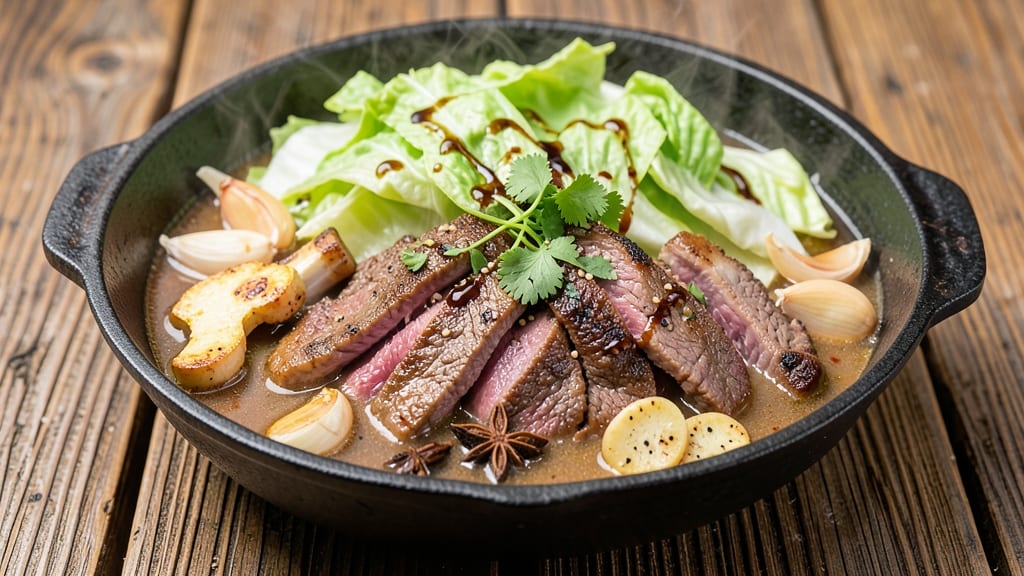
This beef and cabbage hot pot recipe delivers tender beef and cabbage simmered in rich, aromatic broth that transforms a simple meal into a comforting centerpiece. The secret lies in slow-cooking tough cuts of beef until they melt in your mouth while preserving the cabbage's satisfying crunch.
I've perfected this technique over years of testing, balancing traditional flavors with modern convenience for weeknight dinners that feel like a restaurant experience.
The foundation begins with a deeply flavorful broth built from scratch—garlic, ginger, and star anise simmering with beef bones create a base that's both complex and approachable. We use flank steak for its perfect balance of tenderness and affordability, sliced thinly against the grain to ensure every bite is succulent.
The cabbage, halved and cored, cooks just until tender-crisp, absorbing the broth's savory depth without losing its structure.
What makes this recipe truly special is how the flavors develop over time—each ingredient contributes to the final harmony. The beef becomes fork-tender while maintaining its natural richness, the cabbage develops a subtle sweetness from the broth, and the spices infuse without overpowering.
This is the kind of dish that gets better with every spoonful, perfect for feeding a family or impressing guests with minimal effort.
Serve with steamed rice to soak up every last drop of that fragrant broth, or pair with simple sides like pickled vegetables or sesame seeds for added texture.
The beauty of hot pot lies in its adaptability—swap the beef for chicken or tofu, or add mushrooms and carrots for extra depth. Let's create this comforting classic that brings warmth to any table.
Ingredients for beef and cabbage hot pot
Fifteen essential ingredients transform simple beef and cabbage into restaurant-quality hot pot perfection.
| Ingredient | Amount | Notes |
|---|---|---|
| Flank Steak 🥩 | 1 ½ lb | Thinly sliced against grain |
| Green Cabbage 🥬 | 1 whole | Heads halved, cored |
| Beef Bones 🦴 | 2 lb | Knuckle or marrow bones |
| Garlic Cloves 🧄 | 6 cloves | Minced for aromatic base |
| Fresh Ginger 🌿 | 2 tbsp | Grated, peeled |
| Star Anise 🌟 | 2 whole | Lightly crushed |
| Cinnamon Sticks 🌿 | 2 whole | 2-inch pieces |
| Bay Leaves 🍃 | 2 whole | Dried, standard size |
| Soy Sauce 🥄 | ½ cup | Light or all-purpose |
| Shaoxing Wine 🍷 | ¼ cup | Or dry sherry substitute |
| Sesame Oil 🫒 | 1 tbsp | Toasted, for finishing |
| Water 💧 | 6 cups | Or low-sodium beef broth |
| Diamond Crystal Kosher Salt 🧂 | 1 ½ tsp | Adjust to taste |
| Ground Black Pepper 🌶️ | ½ tsp | Freshly ground |
| White Rice 🍚 | 2 cups | Uncooked, for serving |
The beef selection is critical—flank steak delivers the ideal balance of tenderness and affordability. Look for cuts with good marbling at Whole Foods or your local butcher shop, where they can slice it against the grain for you. Beef bones are the secret weapon for broth depth; knuckle or marrow bones add richness without excessive fat. If you can't find them, substitute with beef marrow or even chicken thighs for a lighter base. The cabbage should be firm and heavy for its size—green cabbage works best, but Savoy cabbage adds elegant texture if you're feeling adventurous. Store all fresh ingredients in airtight containers to maintain peak quality.
No Shaoxing wine? Dry sherry or even a splash of mirin will carry the same umami punch. The star anise and cinnamon sticks can be found in the international aisle of most supermarkets—Penzeys carries excellent whole-spice options if you want to invest in quality. For the soy sauce, Kikkoman is a reliable choice, though any light soy will work. If you're short on time, substitute half the water with low-sodium beef broth for instant depth. The sesame oil should be toasted and kept refrigerated once opened—La Choy offers a good budget option. For the rice, jasmine or basmati varieties complement the dish beautifully, though any long-grain white rice will suffice.
This dish tastes even better the next day as flavors meld, so make extra. Store the broth and beef separately in airtight containers in the fridge for up to 4 days, or freeze for 3 months. The cabbage can be prepped ahead and refrigerated for 2 days before cooking. When reheating, add a splash of water to maintain broth consistency. For meal prep, portion the rice separately and assemble individual servings to maintain texture. The aromatics—garlic, ginger, and spices—can be pre-minced and frozen in ice cube trays for convenience.
Why You'll Love This Recipe
- One-Pot Magic: The beef bones and cabbage simmer together in the same pot—no extra dishes, no stress. Honestly, I’ve made this while chatting on the phone because there’s nothing to mess up.
- Deep Umami Bomb: That marrow from the beef bones? It melts into the broth, turning it rich and savory without any fancy sauces. The ginger and garlic just take it from good to I’ll make this again tomorrow.
- Weeknight to Party: Serve it in bowls with rice for a quick weeknight meal, or add a splash of soy sauce and extra greens for a hearty potluck dish. My roommates didn’t even notice it wasn’t a restaurant—until they asked for the recipe.
- Budget Feast: Flank steak stretches across multiple meals, and cabbage lasts forever. I’ve fed four people for under $15, and the leftovers? Even better the next day with a sprinkle of sesame seeds.
Step-by-step instructions for beef and cabbage hot pot
Master this aromatic broth technique for melt-in-your-mouth beef and perfectly tender cabbage every time.
Prepare the Beef and Cabbage for Cooking
Begin by slicing the 1.5 lb flank steak thinly against the grain into ¼-inch thick strips. This ensures tender bites that cook quickly in the broth. Pat each slice dry with paper towels—excess moisture prevents proper searing later.
Next, halve the 1 whole green cabbage lengthwise, remove the core, and separate the leaves into individual wedges. Leave the stems intact to maintain structure during cooking. The cabbage should be fresh and crisp, not wilted—this will become the hearty base of your hot pot.
Build the Aromatic Broth Base
In a large stockpot, combine the 2 lb beef bones with 6 cups water. Bring to a boil over medium-high heat, then reduce to a simmer for 45 minutes to extract collagen and deep flavor from the bones. Skim off any foam that rises to the surface during this time.
While the bones simmer, add the 6 cloves minced garlic, 2 tbsp grated ginger, 2 lightly crushed star anise, 2 cinnamon sticks (cut into 2-inch pieces), and 2 bay leaves to the pot. These spices will infuse the broth with warm, complex aromatics. Let the mixture steep for 20 minutes before proceeding—this layering of flavors is what makes this hot pot exceptional.
Season and Simmer the Broth
Strain the broth through a fine-mesh sieve into a clean pot, discarding the solids. Return the broth to medium heat and add the 0.5 cup soy sauce, 0.25 cup Shaoxing wine, 1.5 tsp kosher salt, and 0.5 tsp black pepper. Bring to a gentle simmer, then reduce heat to low to maintain a steady 180-190°F temperature—this is crucial for tenderizing the beef without curdling the broth.
Add the prepared cabbage wedges to the broth and simmer for 10 minutes until just tender but still vibrant green. The cabbage should retain its crisp texture while absorbing the rich flavors of the broth. Remove the cabbage with a slotted spoon and set aside, keeping it warm.
Cook the Beef to Perfection
Working in batches to avoid overcrowding, add the sliced flank steak to the simmering broth. Cook for 3-4 minutes until the beef reaches an internal temperature of 145°F—this ensures it's cooked through but still juicy. The steak should float to the surface as it finishes cooking.
Remove the beef with a slotted spoon and return it to the pot of cabbage. Drizzle with 1 tbsp sesame oil just before serving to add a nutty aroma and glossy finish. The sesame oil should be toasted—heat it briefly in a small pan before adding to enhance its flavor.
Serve with Steamed White Rice
Cook the 2 cups white rice according to package instructions until tender and fluffy. Divide the rice among serving bowls, then ladle the hot pot broth generously over each portion. Arrange the beef and cabbage on top, ensuring each serving has a balance of both components.
This hot pot delivers a harmonious blend of tender beef, crisp-tender cabbage, and deeply flavorful broth. The spices and aromatics create a comforting, restaurant-quality meal that's easy to customize with additional vegetables or proteins. Serve immediately to enjoy the steaming hot experience at its best.
Pro Tips For Making Beef And Cabbage Hot Pot
- BLANCH CABBAGE FIRST: Toss whole cabbage wedges in boiling water for 2 minutes before adding to the pot—this softens the core and keeps them from turning to mush later. I used to skip this and ended up with a soggy, uneven texture that ruined the bite.
- SEAR BONES LOW AND SLOW: Don’t rush the beef bones—pat them dry, then sear them at medium-low heat for 10-12 minutes per side until deep brown. High heat burns the outside before the marrow renders, and you’ll lose that rich, caramelized flavor.
- SLICE STEAK AGAINST THE GRAIN: Cut the flank steak thinly (¼-inch max) and always against the grain—this makes it tender enough to eat in one bite. Thick slices stay chewy, no matter how long you simmer, and that’s a waste of good meat.
- USE GINGER-GARLIC PASTE: Mince garlic and ginger into a paste with a splash of water—it sticks to the bones and steak better than loose cloves, and you won’t burn it. I was skeptical until I tried it; now I double the amount for extra depth.
Troubleshooting great beef and cabbage hot pot
Broth Too Weak?
If your broth lacks depth, start with beef marrow bones instead of knuckle bones—they release more gelatin. I also recommend simmering the bones uncovered for the first 30 minutes to remove impurities, then adding water to cover.
For extra richness, add 1 tbsp fish sauce or ½ cup soy sauce during the final 20 minutes of simmering. 💫
Cabbage Too Soft?
Overcooked cabbage happens when you simmer too long. Keep the cabbage wedges in the broth for only 8-10 minutes—they should yield slightly when pierced with a fork but remain crisp.
For extra structure, add 1 tsp baking soda to the water when blanching the cabbage before adding it to the broth.
Beef Overcooked?
Flank steak turns tough when exposed to high heat too long. Cook in batches for 3-4 minutes max at 180-190°F—use a thermometer to check for 145°F internal temp.
For thicker cuts, slice against the grain into ¼-inch strips and sear in a hot pan first before simmering in broth.
Broth Too Salty?
Taste your broth before adding salt—it should be flavorful but not overwhelming. If needed, dilute with ½ cup water or 1 cup beef broth. For balance, add 1 tbsp sugar or ½ cup apple juice to offset saltiness while enhancing sweetness. 🔥
Meat Not Tender?
Tough beef often means the cut wasn't sliced properly. Always slice against the grain into ¼-inch strips. For extra tenderness, marinate the flank steak in ¼ cup soy sauce + 1 tbsp Shaoxing wine for 30 minutes before cooking.
A slow cooker on low for 4 hours also works wonders.
Spices Too Strong?
Star anise and cinnamon can overpower if crushed too finely. Use whole spices and remove them after 20 minutes of simmering. For milder flavor, reduce star anise to 1 whole pod and cinnamon to 1 stick. A splash of rice vinegar at the end balances spice intensity.
Nutrition facts
Frequently asked questions
Can I use a different cut of beef for this hot pot?
While flank steak is ideal, you can substitute with chuck roast (cut into chunks for slow cooking) or brisket (sliced thinly). For quicker cooking, try sirloin or ribeye, but slice against the grain for tenderness.
What vegetables can I add to this hot pot?
This recipe works beautifully with carrots, mushrooms, or green beans—add them with the cabbage for even cooking. For extra heartiness, include potatoes (simmer 20 minutes longer) or daikon radish for a refreshing crunch.
How do I make this hot pot in a slow cooker?
Brown the beef bones first, then add them with spices and 4 cups water to your slow cooker. Cook on low for 6-8 hours before adding the beef and cabbage for the final 1 hour. The slow cooker method enhances tenderness without monitoring.
Can I prepare this hot pot ahead of time?
Yes! Cook the broth and beef separately, then refrigerate in airtight containers for up to 4 days. Reheat the broth gently, then add the beef and cabbage to warm through. For best texture, serve within 2 days of reheating.
What's the secret to making the broth extra flavorful?
Roast the beef bones at 400°F for 20 minutes before simmering to deepen their flavor. Add 1 tbsp fish sauce or ½ cup soy sauce during the last 20 minutes of cooking. A splash of Shaoxing wine or mirin also elevates the complexity.