
Soups & Stews
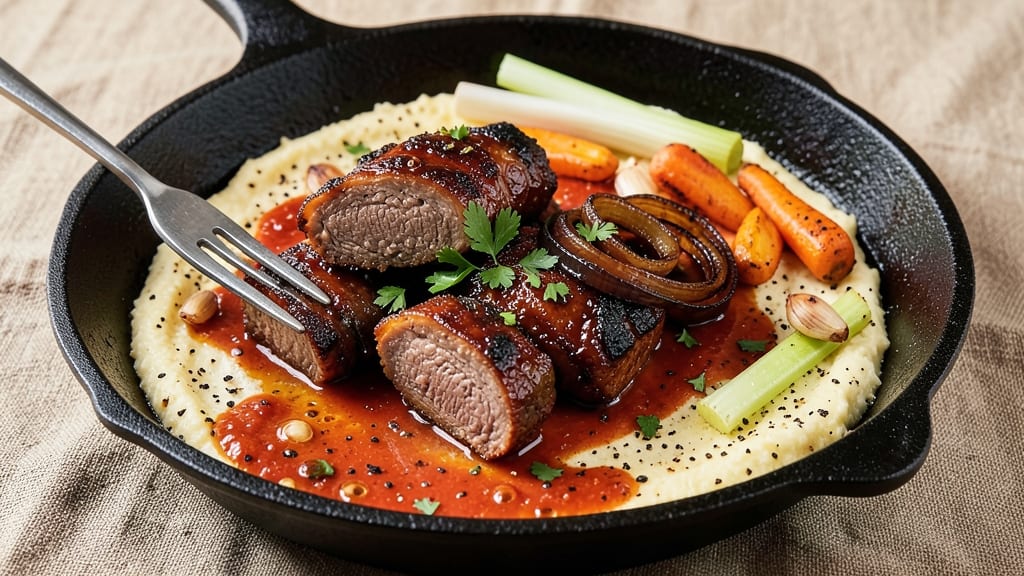
This beef banana shank recipe transforms tough cuts into melt-in-your-mouth perfection through slow-braising and caramelized sweetness. The key lies in its unique combination of spices and natural sugars that tenderize the meat while creating a rich, aromatic sauce.
Professional chefs rely on this technique to elevate simple ingredients into restaurant-quality dishes.
What sets this recipe apart is the balance of bold spices and caramelized sweetness that develops during the long cooking process. With just a few simple ingredients and 3-4 hours of hands-off time, you'll achieve tender beef that falls apart at the touch of a fork.
The sauce thickens beautifully, coating each bite with layers of flavor.
By the time you serve this dish, you'll have perfectly tender beef banana shanks swimming in a glossy, aromatic sauce that's deeply flavorful yet balanced. The caramelized sweetness complements the savory meat, creating a harmony that makes this dish unforgettable.
Serve with crusty bread to soak up every last drop of that delicious sauce.
This recipe works beautifully as a centerpiece for family dinners or special occasions, delivering professional results without requiring advanced techniques. The slow-cooking process allows flavors to meld perfectly, ensuring every bite is packed with rich, satisfying taste. Let's get started on creating this showstopping dish.
Ingredients for beef banana shank
Professional-quality beef banana shanks begin with these carefully selected ingredients designed for deep flavor infusion and tender results.
| Ingredient | Amount | Notes |
|---|---|---|
| Beef Banana Shank 🥩 | 2 ½ lb | Bone-in, cut into 2-inch chunks |
| Yellow Onion 🧅 | 1 whole | Chopped into 1-inch pieces |
| Carrots 🥕 | 4 whole | Cut into 2-inch chunks, peeled |
| Celery Stalks 🥬 | 3 whole | Cut into 1-inch pieces |
| Garlic Cloves 🧄 | 6 cloves | Smashed, not minced |
| Tomato Paste 🍅 | ½ cup | High-quality, no sugar added |
| Dry Red Wine 🍷 | 1 cup | Bold variety like Cabernet Sauvignon |
| Beef Broth 💧 | 2 cups | Homemade or low-sodium store-bought |
| Brown Sugar 🍯 | ¼ cup | Light or dark, packed |
| Ground Cumin 🌿 | 1 tbsp | Toasted for enhanced aroma |
| Ground Coriander 🌿 | 1 tbsp | Freshly ground preferred |
| Ground Turmeric 🌶️ | ½ tsp | Freshly ground for vibrant color |
| Ground Black Pepper 🌶️ | ½ tsp | Freshly cracked for intensity |
| Bay Leaves 🍃 | 2 whole | Fresh preferred, dried acceptable |
| Olive Oil 🫒 | 2 tbsp | Extra-virgin for richness |
| Salt 🧂 | 1 ½ tsp | Diamond Crystal kosher salt |
The beef banana shank is the foundation of this dish, and quality matters most. Look for cuts with good marbling and vibrant color—local butchers or specialty grocers often carry superior options. If using frozen, thaw overnight in the refrigerator. The bone-in pieces ensure maximum flavor extraction during braising. For the best results, Costco or Whole Foods typically stock high-quality cuts, but don't overlook your local market's meat counter where butchers can identify the perfect pieces. Avoid pre-cut, vacuum-sealed packages that may have lost some natural tenderness.
No red wine on hand? Substitute with additional beef broth and a splash of balsamic vinegar for similar depth. The brown sugar can be swapped for maple syrup or honey if preferred, though it will alter the caramelization slightly. Fresh herbs like thyme or rosemary can replace bay leaves for a different aromatic profile. For spice adjustments, reduce cumin by half if you prefer milder flavor, or increase turmeric for more vibrant color. The tomato paste is crucial for building the sauce's richness—San Marzano is ideal—but any quality brand will work. If you're using dried spices, toast them in a dry pan for 30 seconds to enhance their aroma before adding to the braise.
This dish rewards patience, with flavors peaking after 4-5 days of refrigeration as the sauce continues to develop. Portion the shanks and sauce into airtight containers for easy reheating. The sauce freezes beautifully for up to 3 months, though the texture may slightly thicken upon thawing. For meal prep, cook an extra batch and freeze individual portions—simply reheat with a splash of broth to restore moisture. The braised shanks keep well in the refrigerator for 5-6 days, making them perfect for busy weeknights when you want restaurant-quality results with minimal effort.
Why You'll Love This Recipe
- One-Pot Magic: I swear by this recipe—just toss the shank, veggies, and spices into a single pot. No chopping boards, no extra pans, and the aromas fill the kitchen while you sip your coffee. The onions and carrots soften into sweet, buttery perfection without any fuss.
- Rich Umami Bomb: That beef banana shank? It’s packed—deep, savory, and tender enough to melt. The celery and garlic add a bright, herby punch that cuts through the richness, making every bite feel like a hug from your favorite home cook. (Yes, even on a Tuesday night.)
- Leftovers That Shine: This dish actually improves the next day. The flavors meld into something even richer, and reheating it? Just a splash of water, 10 minutes in the pot. I’ve sent it to work lunches, packed it for road trips, and even frozen portions for lazy Sundays.
- Budget-Friendly Feast: Beef shank is cheaper than steak, but it delivers way more satisfaction. The veggies stretch the meal, and a single pot serves four—no wasted ingredients. Honestly, it’s the kind of recipe that makes me feel like I’m feeding a crowd without breaking the bank.
Step-by-step instructions for beef banana shank with spiced sweetness
This method transforms tough shank into melt-in-your-mouth tenderness through precise timing and layered flavors.
Sear the Beef for Deep Flavor Foundation
Heat a heavy Dutch oven over medium-high heat until hot. Add the 2 tablespoons olive oil and swirl to coat the bottom evenly. Working in batches to avoid crowding, add the 2.5 lb beef banana shank cut into 2-inch chunks, searing each piece for 2-3 minutes per side until deeply browned with a crust forming.
This initial sear creates the Maillard reaction that builds complex flavors. Don't rush this step - you'll know it's ready when the meat releases easily from the pan. Transfer the seared shank to a plate and set aside, leaving all the browned bits in the pot (they're pure flavor).
Build the Aromatic Base with Vegetables
In the same Dutch oven, add the 1 whole yellow onion, 4 whole carrots, and 3 whole celery stalks all cut to 1-inch pieces. Cook over medium heat for 8-10 minutes until the vegetables begin to soften and develop golden edges. Stir occasionally to prevent burning.
Add the 6 smashed garlic cloves and cook for another 1 minute until fragrant. Here's where the foundation forms - these vegetables will form the flavor base for the entire braise. Their caramelization is crucial for depth, so don't skip this step.
Develop the Spiced Tomato-Wine Sauce
Reduce heat to medium-low and stir in the 0.5 cup tomato paste, spreading it evenly over the vegetables. Cook for 2 minutes until it darkens slightly. Add the 1 cup dry red wine, scraping up all the browned bits from the bottom with a wooden spoon. Let this simmer for 3-4 minutes until reduced by half.
Now add the spices: 1 tablespoon ground cumin, 1 tablespoon ground coriander, 0.5 teaspoon ground turmeric, 0.5 teaspoon ground black pepper, and 1.5 teaspoons salt. Stir well to distribute the spices evenly throughout the sauce. This is where the complex spice profile begins to develop.
Braise Until Fork-Tender Perfection
Return the seared beef to the Dutch oven along with the 2 cups beef broth and 0.25 cup brown sugar. Stir to combine, then add the 2 bay leaves. Bring to a gentle simmer, then reduce heat to low and cover tightly. Here's the critical part: braise for 2.5-3 hours until the beef is fork-tender and falls apart easily.
Check periodically after 2 hours - if the liquid reduces too much, add ¼ cup water to maintain moisture. The beef should have a deep mahogany color and the sauce should coat the back of a spoon. This slow cooking transforms tough connective tissue into silky tenderness.
Finish with Caramelized Sweetness
Once tender, remove the beef and vegetables to a serving platter. Increase heat to medium-high and simmer the braising liquid uncovered for 5-7 minutes until it reduces to a syrupy consistency. The brown sugar should caramelize slightly, adding depth to the sauce.
Taste and adjust seasoning if needed. Return the beef and vegetables to the sauce, spooning the caramelized liquid over everything. Let it rest for 5 minutes before serving to allow the juices to redistribute. The result should be rich, aromatic, and perfectly balanced between sweet and savory.
Pro Tips For Making Beef Banana Shank
- SEAR THE SHANK FIRST: Start with a screaming-hot pan—no need to wait for it to preheat. The shank’s fat should sizzle aggressively for 3-4 minutes per side before you even think about adding onions. I learned this the hard way when my first batch turned out gray instead of golden-brown. That crust? It’s what keeps the meat tender and flavorful.
- CHOP ONIONS SMALLER THAN YOU THINK: Banana shanks cook slow. If your onions are bigger than ¼-inch dice, they’ll turn to mush before the meat is done. I used to eyeball it, but now I measure my knife strokes—tiny, even pieces dissolve into the sauce without turning to sludge. (Yes, even if you’re impatient like me.)
- DON’T CROWD THE POT: If your Dutch oven is packed tight, the shank will steam instead of caramelize. Leave at least ½-inch space between pieces—this isn’t a sardine can. I once stuffed mine in, and the liquid stayed cloudy instead of rich and brown. Patience here means deeper flavor later.
- ADD GARLIC LATE: Toss the whole cloves in with the onions? Big mistake. Wait until the last 15 minutes of cooking, then smash them into the sauce—this prevents bitter, overcooked garlic. My grandmother swore by this, and she was right: fresh, bright garlic flavor is the difference between "meh" and "wow."
Storing and reheating this dish
Refrigerator Storage
Let your braised beef banana shanks cool to room temperature for no more than 2 hours before refrigerating. Transfer to airtight glass containers—I prefer Pyrex with snap-on lids—and store at 40°F or below.
The flavors actually deepen over 3-4 days as the spices meld, making it perfect for meal prep. The sauce will thicken slightly but remains luscious when reheated. 🥫
Freezer Storage
For longer preservation, freeze the shanks and sauce in quart-sized freezer bags with 1-inch headspace for expansion. I use Vacuum Sealer Bags from FoodSaver to prevent freezer burn.
Label with the date—this dish maintains quality for up to 3 months. Thaw overnight in the fridge before reheating for best texture.
Stovetop Reheating
My preferred method preserves the sauce's richness. Pour the shanks and sauce into a heavy pot, add ¼ cup beef broth, and simmer over medium-low heat for 10-15 minutes until heated through.
Stir occasionally to prevent sticking. The sauce should reduce slightly, intensifying its caramelized sweetness. Taste and adjust salt if needed—reheated braises often need a pinch more. 🔥
Microwave Reheating
For quick meals, transfer a portion to a microwave-safe dish, cover loosely with a paper towel, and heat on 50% power in 2-minute intervals, stirring between each. Add 1 tablespoon broth if the sauce looks dry.
Avoid full power—it can make the sauce watery. This method works best for individual servings and takes about 4-5 minutes total.
Sauce Restoration
If the sauce thickens too much after storage, revive it by adding 1-2 tablespoons beef broth and simmering for 3-5 minutes until smooth. For extra richness, stir in ½ teaspoon brown sugar to restore the caramelized balance.
The key is gentle heat—never boil, or the sauce will separate. This trick works perfectly for both refrigerated and frozen dishes. ✨
Serving Suggestions
Reheated shanks pair beautifully with crusty sourdough bread for soaking up sauce. For a complete meal, serve with mashed potatoes or creamy polenta to complement the rich flavors. Garnish with fresh parsley or cilantro just before serving to brighten the dish.
The leftovers make fantastic sandwiches the next day—just pile high on fresh bread with extra sauce. 🍽️
Nutrition facts
Frequently asked questions
Why does beef banana shank need such a long cooking time?
The long braising time—2.5-3 hours—is essential for transforming tough connective tissue into tender, melt-in-your-mouth beef. This slow cooking method breaks down collagen naturally, while the spices and caramelized sugars infuse every bite with deep flavor. Patience here makes all the difference!
Can I substitute beef broth with something else?
Yes! For a richer flavor, use a mix of ½ cup beef broth and ½ cup red wine instead of full broth. If you're avoiding wine, substitute with extra tomato paste (¼ cup) and 1 teaspoon balsamic vinegar for similar depth. The key is maintaining the liquid balance for proper braising.
What's the best way to test if the beef is tender enough?
Use two methods: First, insert a fork or skewer—the meat should slide in easily with no resistance. Second, check for visual cues: the beef should appear deep mahogany and pull apart cleanly. If it's still slightly tough after 3 hours, add ¼ cup water and cook another 30 minutes.
How can I make this dish ahead of time for a party?
Prepare the full recipe up to 2 days ahead and refrigerate in airtight containers. The flavors actually improve! Reheat gently on the stovetop with ¼ cup broth for 10-15 minutes before serving. For a crowd, double the recipe—this braise tastes even better the next day.
What if my sauce turns out too thin?
Simmer the sauce uncovered over medium-high heat for 5-10 minutes to reduce it. For extra thickness, mix 1 tablespoon cornstarch with 2 tablespoons water, stir into the sauce, and cook until it reaches your desired consistency. Avoid boiling, or the sauce may separate.