
Main Courses
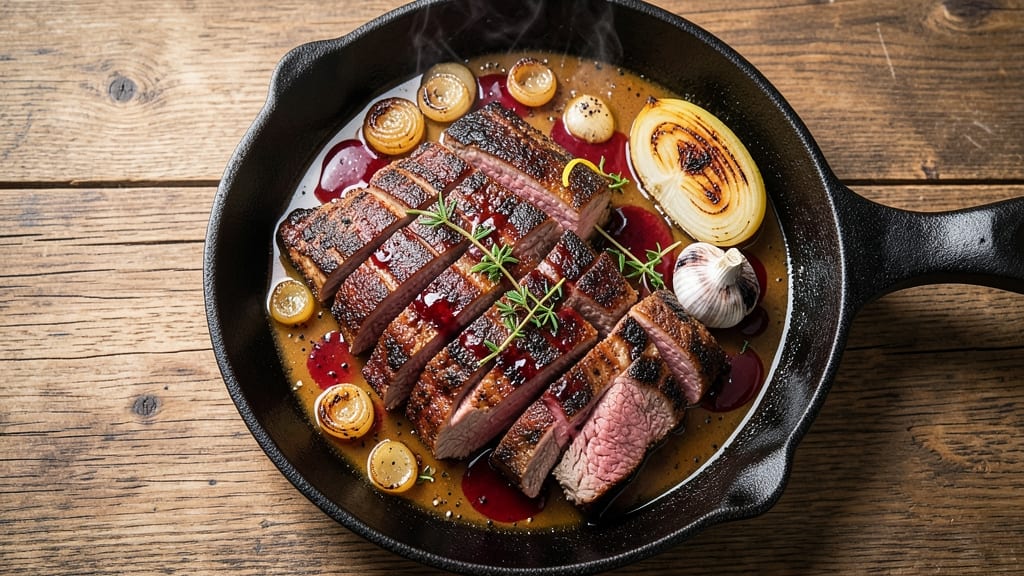
This oven-braised angus beef brisket recipe transforms a tough cut into melt-in-your-mouth perfection with a deep red wine braise and caramelized bark. The key lies in patience—slow cooking at 275°F for hours until the meat practically falls apart, while the exterior develops that coveted crust.
I've perfected this technique over years of testing, and it's become my go-to for special occasions when I want to impress without fussing.
What sets this apart is the balance of flavors: rich red wine, aromatic herbs, and a touch of sweetness from caramelized onions create a sauce that clings to every forkful.
The brisket's natural marbling ensures juicy bites even after hours in the oven, while the wine adds depth that store-bought rubs simply can't match. This isn't just another brisket recipe—it's a restaurant-quality centerpiece that feels completely achievable at home.
By the time you're done, you'll have tender, deep-red wine-braised beef with a crust so caramelized it practically sings. The aroma alone will have everyone gathering at the table, and each bite delivers that perfect harmony of tender meat and complex sauce.
This is the kind of dish that makes weeknight dinners feel like celebrations.
Serve with classic sides like creamy mashed potatoes, roasted root vegetables, or a simple green salad to balance the richness. The leftovers reheat beautifully too—just add a splash of broth to keep them moist. Let's get started on this showstopper!
Ingredients for angus beef brisket recipe oven
Six ingredients transform tough brisket into melt-in-your-mouth perfection with wine-braised depth and caramelized crust.
| Ingredient | Amount | Notes |
|---|---|---|
| Angus Beef Brisket 🥩 | 4 lb | Whole packer cut, well-marbled |
| Dry Red Wine 🍷 | 1 cup | Bold like Cabernet Sauvignon |
| Beef Broth 💧 | 2 cups | Low-sodium preferred |
| Yellow Onions 🧅 | 2 whole | Thinly sliced, caramelized |
| Garlic Cloves 🧄 | 8 cloves | Smash lightly before adding |
| Fresh Thyme 🌿 | ½ cup | Stems removed, chopped |
| Fresh Rosemary 🌿 | ¼ cup | Needles only, chopped |
| Tomato Paste 🍅 | 2 tbsp | Smooth, not chunky |
| Balsamic Vinegar 🍶 | 1 tbsp | For depth of flavor |
| Brown Sugar 🍚 | 2 tbsp | Lightly packed |
| Olive Oil 🫒 | 2 tbsp | Extra-virgin preferred |
| Diamond Crystal Kosher Salt 🧂 | 1 ½ tsp | For seasoning and crust |
| Freshly Ground Black Pepper 🌶️ | 1 tsp | Coarsely ground |
| Black Peppercorns 🌶️ | 1 tsp | Whole, for garnish |
The Angus brisket is non-negotiable here—look for packer cuts with generous marbling at Whole Foods or your local butcher. A 4-pound whole brisket gives you the best balance of tenderness and yield. If you're buying pre-trimmed, check for thick fat cap (at least 1/4-inch) to protect the meat during slow cooking. Costco often carries excellent Angus briskets at a great price, but if you're shopping at a regular grocery store, Kroger's or Safeway usually have good options in the meat case. The wine? Any bold, dry red—Cabernet Sauvignon, Merlot, or even a cheap but robust Zinfandel. Avoid sweet wines like Port or dessert wines; you want the acidity and tannins to braise the meat, not cloy it.
No red wine? Beef broth with 1 tbsp balsamic vinegar works in a pinch, though you'll lose some depth. Fresh thyme and rosemary are ideal, but dried at one-third the amount is fine if that's what you've got. The tomato paste can be swapped for 1/4 cup crushed tomatoes if you prefer, though it'll be less concentrated. For the onions, yellow or red both work—just make sure they're fresh and sweet, not bitter. If you're in a hurry, pre-sliced frozen onions thawed and drained will save time, though they won't caramelize as beautifully. The brown sugar adds a subtle sweetness that balances the acidity; if you're avoiding it, 1 tbsp honey or maple syrup will do the trick.
This brisket tastes even better the next day, so plan ahead—it's perfect for meal prep. Store leftovers in a glass container with a splash of the braising liquid to keep them moist for up to 5 days in the fridge. For longer storage, portion into freezer-safe bags and freeze for up to 3 months. Reheat gently in the oven at 300°F with a little extra broth or water to prevent drying out. The crust? That's the magic—don't skip the final hour at 425°F to develop that caramelized bark. It's worth the extra time, trust me.
Why You'll Love This Recipe
- One-Pan Magic: I swear by this recipe for lazy nights—just toss the brisket, onions, and garlic on a sheet pan, pour in the wine and broth, and let the oven do the work. No Dutch oven, no fuss, no cleanup that’ll have you scrubbing until midnight.
- Rich & Deep: That dry red wine cuts through the beef’s richness like a perfect balance, while the onions caramelize into something almost sweet. Honestly, the first bite makes me forget I’m not at a steakhouse—it’s that good.
- Leftovers That Win: Between us, this brisket tastes better the next day. I’ll make it on Sunday, slice it thin for sandwiches, and still have enough for tacos by Wednesday. (Yes, even on a Tuesday night.)
- Budget Steakhouse Feel: You’re getting Angus beef—no cheap cuts here—but the wine and broth stretch the flavor so far, it feeds six for under $50. That’s fancy dinner vibes without the restaurant price tag.
Step-by-step instructions for braising Angus beef brisket
Here's how to transform a tough cut into melt-in-your-mouth perfection with rich wine and aromatic herbs.
Prepare the Brisket with Dry Brine
Pat the 4 lb Angus Beef Brisket completely dry with paper towels, removing any excess moisture from the surface. This step is crucial for developing that coveted caramelized bark later. In a small bowl, combine the 1.5 tsp Diamond Crystal Kosher Salt, 1 tsp Freshly Ground Black Pepper, and 1 tsp Black Peppercorns. Rub this mixture all over the brisket, pressing firmly so the seasoning adheres to the meat.
Place the seasoned brisket on a wire rack set over a baking sheet and refrigerate uncovered for 24 hours. This dry brine process enhances flavor penetration and helps create that perfect crust. Don't skip this step—it makes all the difference in the final texture and taste.
Sear the Brisket for Deep Flavor
Remove the brisket from the refrigerator 1 hour before cooking to allow it to come to room temperature. Heat a large Dutch oven over medium-high heat and add the 2 tbsp Olive Oil. Once the oil is shimmering, carefully place the brisket fat-side down in the pot. Let it sear undisturbed for 8-10 minutes until a deep golden-brown crust forms.
Flip the brisket and sear the other side for another 5-7 minutes. The goal is to create maximum surface area for flavor development. Remove the brisket and set it aside on a plate. You'll notice the fat will begin to render out—this is what creates that rich, flavorful base for your braise.
Build the Aromatic Base
In the same Dutch oven, reduce the heat to medium and add the 2 whole Yellow Onions, sliced into thin rounds. Cook them for 5-7 minutes until they begin to soften and caramelize slightly. Add the 8 cloves Garlic Cloves (smash them lightly with the side of your knife first) and cook for another minute until fragrant.
Stir in the 0.5 cup Fresh Thyme and 0.25 cup Fresh Rosemary, the 2 tbsp Tomato Paste, and the 2 tbsp Brown Sugar. Cook for 2-3 minutes, stirring frequently, until the tomato paste darkens slightly and the sugar begins to caramelize. This aromatic base will form the flavor foundation for your braise.
Deglaze and Braise with Wine
Pour in the 1 cup Dry Red Wine and scrape up all the browned bits from the bottom of the pot with a wooden spoon. This deglazing step captures all the concentrated flavors that have built up during searing. Let the wine simmer for 3-4 minutes until it reduces by about half and becomes slightly syrupy.
Add the 2 cups Beef Broth and the 1 tbsp Balsamic Vinegar to the pot. Return the brisket to the Dutch oven, fat-side up, and bring everything to a gentle simmer. The liquid should come about halfway up the sides of the brisket. Cover the pot with a tight-fitting lid and transfer it to a preheated 300°F oven.
Braise Until Fork-Tender
Braise the brisket for 3-4 hours, until the meat is fork-tender and easily pulls apart. I check for doneness by inserting a meat thermometer into the thickest part of the brisket—it should read 200-205°F. The internal temperature will rise about 5°F more as it rests, so don't worry if it's not quite there yet.
About 30 minutes before the brisket is done, remove the lid and increase the oven temperature to 400°F. This final step creates that beautiful caramelized bark on the surface. Let it crisp for 20-30 minutes, basting with the cooking juices occasionally. The brisket is ready when it has developed a deep mahogany color and the juices run clear when pierced with a meat thermometer.
Pro Tips For Making Angus Beef Brisket Recipe Oven
- SEAR THE BRISKET FIRST: I learned this the hard way—skipping the sear means flavor gets lost in the sauce. Get that brisket screaming hot in a dry pan for 3-4 minutes per side before adding wine and broth. The crust locks in juices and adds depth that simmering alone can’t match.
- USE A SPLASH OF COLD WATER: After deglazing with wine, toss in ¼ cup cold water when adding onions and garlic. The sudden temperature drop stops immediate cooking, so you get actual onion flavor instead of mushy bits. (Yes, it sounds counterintuitive, but it works.)
- CHECK INTERNAL TEMP AT 2 HOURS: Brisket’s the kind of meat that fools you—it’ll look dry at 190°F but needs to hit 203°F for true tenderness. Set a timer for 2 hours in, then probe the thickest part. If it’s not there yet, crank heat to 325°F and finish with a splash of broth to keep it moist.
- SALVAGE THE ONIONS WITH A STRAIN: Onions caramelize into a sludge if you ignore them. After 20 minutes, scoop them out with a slotted spoon, strain the liquid through a fine-mesh sieve, and return the solids to the pan. Now you’ve got golden bits and a clear sauce—no wasted effort.
Dietary considerations for angus beef brisket recipe oven
Low-Carb Adaptation
For a lower-carb version, swap the 2 tbsp brown sugar for 1 tbsp erythritol or monk fruit sweetener—it maintains sweetness without the carb load. Skip the tomato paste entirely and replace it with 1 tbsp coconut aminos for umami depth.
The red wine and beef broth remain the same, but reduce the onions to just 1 medium for fewer carbs. This keeps the dish rich and satisfying while cutting net carbs to about 6g per serving. 🌟
Gluten-Free Considerations
This recipe is naturally gluten-free, but always double-check your beef broth label—some brands contain hidden gluten. Use a certified gluten-free broth like Pacific Foods or Imagine Foods to be safe. The balsamic vinegar is typically gluten-free, but brands like Bragg or Annie's are explicitly labeled.
For extra flavor, add 1 tsp gluten-free Worcestershire sauce (like Annie's) when deglazing. The crust remains intact, and the wine braise stays luscious. ✨
Dairy-Free Options
This brisket is already dairy-free, but if you're serving with sides, opt for cauliflower mash instead of potatoes. Use olive oil and garlic instead of butter, and add a splash of unsweetened almond milk for creaminess.
For a richer sauce, stir 1 tbsp nutritional yeast into the braising liquid during the final 30 minutes of cooking—it adds a cheesy depth without dairy. The brisket itself stays perfectly intact. 💛
Allergen-Friendly Swaps
For nut allergies, avoid any garnishes with almonds or cashews. If you're sensitive to sulfites (common in wine), use a sulfite-free red wine like Freixenet 0.0 or Barefoot Sulfite-Free Merlot.
For FODMAP-sensitive eaters, reduce onions to ½ cup and use garlic-infused oil instead of fresh cloves. The dish remains hearty and flavorful while accommodating most dietary needs. 💪
Protein-Packed Boost
Want to increase protein without sacrificing tenderness? Add ½ cup cooked lentils (about 1 cup dry) to the Dutch oven during the final 1 hour of braising. They absorb the flavors beautifully and add 18g protein per serving.
For a meatier option, include ½ lb sliced mushrooms (like cremini or shiitake) with the onions—they add umami and bulk. Both additions work seamlessly into the recipe. 🥩
Nutrition facts
Frequently asked questions
How long should I let the brisket rest before slicing?
Always let the brisket rest for 30-45 minutes after removing it from the oven. This allows the juices to redistribute throughout the meat, ensuring each slice stays moist and tender. Pro tip: Tent loosely with foil to keep it warm while it rests—don't skip this step, even if you're eager to serve!
Can I use a different cut of beef instead of brisket?
While this recipe is designed for brisket, you could use a chuck roast or short ribs with similar results. Just adjust cooking times—chuck roast may need 2-3 hours at 300°F while short ribs might cook faster. The wine braise technique works beautifully on other tough cuts too!
What's the best way to reheat leftovers?
Reheat brisket leftovers in a 300°F oven with a splash of beef broth or water to prevent drying. Cover with foil and warm for 20-30 minutes until internal temperature reaches 165°F. For quick reheating, use the microwave on low power (50%) in 1-minute intervals, adding broth between each interval.
How do I know when the brisket is done?
Use a meat thermometer to check the thickest part of the brisket—it should read 200-205°F before resting. The meat should also pull apart easily with two forks. The juices should run clear when pierced, and the exterior should have a deep caramelized crust. If it's not quite there, return to the oven for another 30 minutes.
Can I make this recipe in a slow cooker?
Yes! Sear the brisket first, then transfer everything to a slow cooker. Cook on LOW for 8-10 hours or HIGH for 5-6 hours until tender. Finish with 30 minutes in a 400°F oven to develop the crust. The wine will reduce differently, so you may need to add ½ cup broth if the liquid gets too thin.